What's On

Showing posts with label 9-5. Show all posts

Thursday, January 12, 2023

History of Saab 9-5


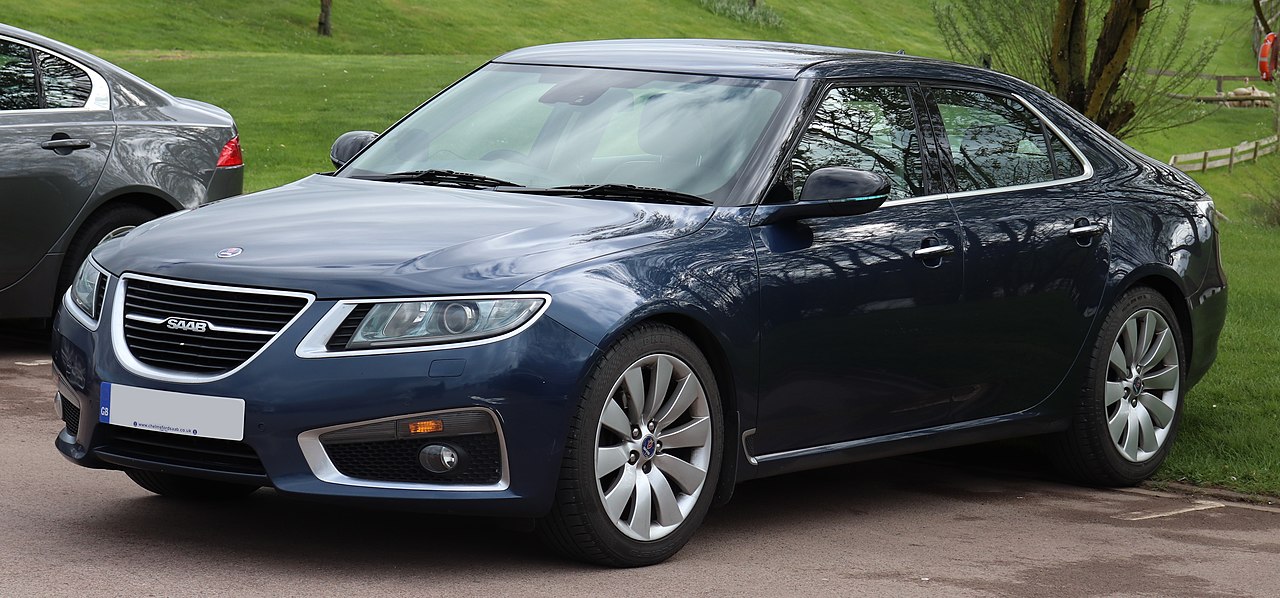
2012 Saab 9-5 Aero Turbo4 Automatic 2.0 Front.jpg


The Saab 9-5 is an executive car that was produced by the Swedish automobile maker Saab.

The first generation 9-5 was introduced in 1997, for the 1998 model year, as the replacement to the Saab 9000. At the time, the car represented a significant development for the manufacturer. In the United States, the 9-5 was introduced in the spring of 1998, for the 1999 model year.

On September 15, 2009, the second generation was presented at the Frankfurt Motor Show and production began in June 2010. It was the first Saab to be launched under Spyker Cars' ownership, even though it was developed almost completely under GM's ownership.

Saab badged the model as the Saab 95, but consistently advertised it as the Saab 9-5, pronounced "nine five" rather than "ninety-five". This model should not be confused with the Saab 95, produced from 1959 to 1978.

The first generation 9-5 was available with sedan and station wagon body styles. Aerodynamically, the sedan's drag coefficient is 0.29, and the station wagon's is 0.31 (U.S. version 0.33). Introduced in 1999, the wagon features innovations such as floor tracks to secure cargo and a sliding load floor to make loading easier.

The 9-5 was the first production vehicle to offer ventilated seats, as well as asymmetrical turbocharging in the case of the 3.0L V6 engine.

The last 9-5 sedan of the first generation rolled off the Trollhättan production line at the beginning of July 2009, and the last wagon was assembled on February 1, 2010. Between the summer of 1997, when 9-5 production began, and 2010, 252,236 sedans, and 231,357 wagons were built. The total production 483,593 units, was narrowly beaten by its predecessor, the 9000, of which 503,000 were built.

Production equipment for the first-generation 9-5 was sold by General Motors to BAIC of China in 2009.
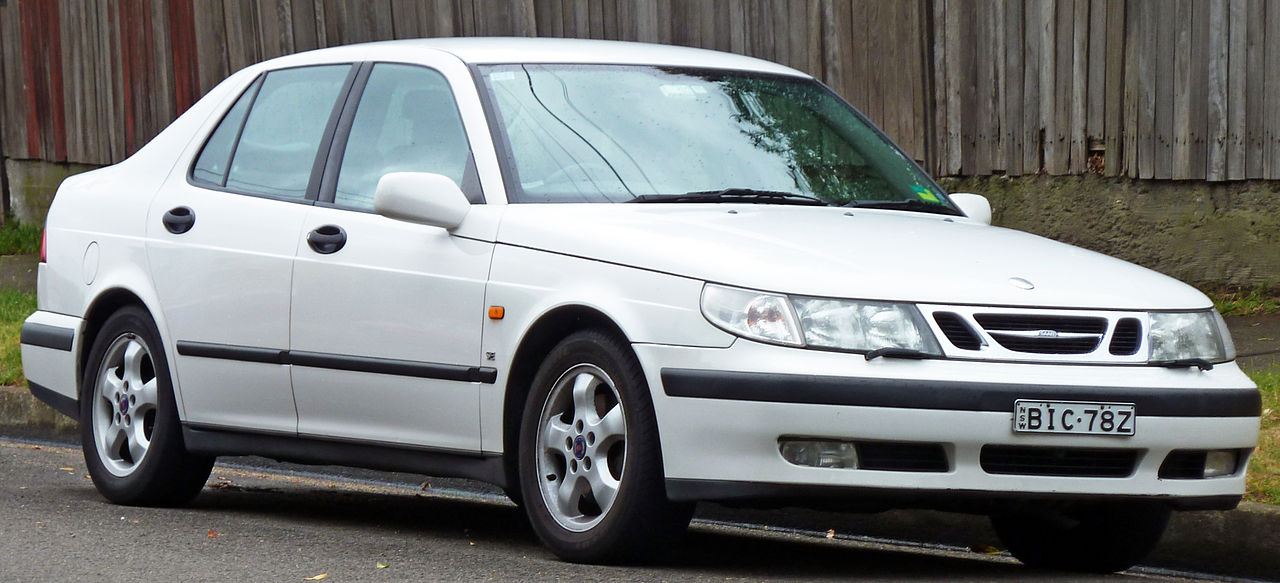
1997-2001 Saab 9-5 SE sedan 01.jpg

The first-generation 9-5 was powered by Saab's B205 and B235 straight-4 engines, and from 2002 in Europe by an Opel Ecotec X22DTH 2.2 diesel engine (Saab D223L), replaced in 2006 by Fiat's 1.9 JTD 16V diesel straight-4. A turbocharged version of the GM 54° V6 engine, designated by Saab as B308, had a unique asymmetrical low-pressure turbocharger and was available from 1999 to 2003. This engine was available only with an automatic transmission, and cars with this engine installed are distinguishable by their twin tailpipes. The V6 was only available on Arc, SE, and Griffin models. In 2004, the V6 engine was replaced by a high pressure turbo straight-4 engine producing 220 hp (160 kW). By 2006 this engine was producing 260 hp (190 kW) even in the non-Aero or non-sport models (US models).

The B205 & B235-based 9-5 models have suffered a high rate of engine failures due to engine oil sludge. This primarily affected the 1999–2003 models. Saab refined the engine's positive crankcase ventilation system (PCV) for the 2004 and later model years and required use of fully synthetic oil, virtually eliminating the problem. Additionally, SAAB created update kits to retrofit to the 1999–2003 cars since they cannot be easily modified to accept the 2004 and later system. Mounting complaints by 9-5 owners forced GM to offer an eight-year warranty on the engine in 4-cylinder models for original owners, provided the owner can produce proof that they followed the manufacturer's oil change intervals. Saab recommended the use of fully synthetic or synthetic-blend oil as a preventative measure.

The 9-5 was available with an Aisin AW 4-speed automatic transmission from 1997 until 2001, when a new Aisin AW unit replaced the dated four-speed automatic with a five-speed automatic. A five-speed manual transmission is fitted as standard to the base models and the Aero. Six-speed manual transmission was not offered in first-generation 9-5s.

In 2005, an updated version of the 2.0 L turbocharged I4 was introduced in the European market together with the 2006 9-5. The engine was sold as 2.0T BioPower, optimized to run on E85 producing 132 kW (180 hp) at 5500 rpm. There was also a 2.3T BioPower version sold from 2007. It was also introduced in Australia.

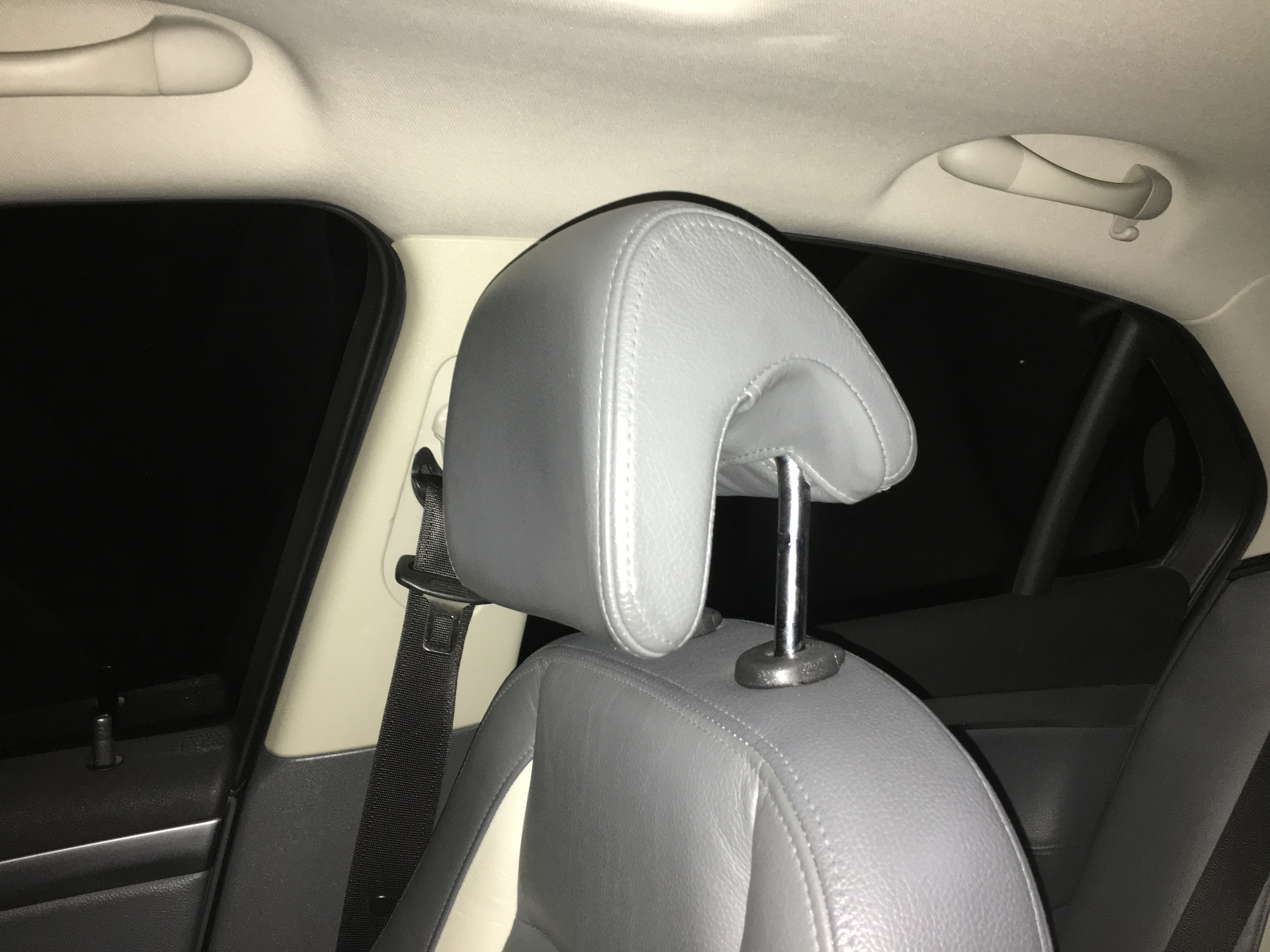
The 9-5 introduced Saab's Active Head Restraints (SAHR), which moved up and forward to prevent whiplash when the car was struck from the rear. This feature won technology and safety awards in Australia, Denmark, and the United Kingdom. The Saab 9-5 also was one of the first cars to have extensive side-crash protection.

The front seats featured torso airbags and head airbags even on even the earliest models, which few contemporary vehicles did in the late 1990s. The basic structure included a robust passenger safety cage, front and rear deformation zones, reinforced door posts and pillars, as well as the "Pendulum B-Pillar", which combined high-strength low-alloy steel at chest and head height with tailored blank steel at the floorpan, designed to direct the crash forces down toward the floor. The design was proven by the Insurance Institute for Highway Safety (IIHS) to protect occupants in side crashes, even without the addition of curtain airbags or rear side airbags. From 2002, ESP (electronic stability control) was included as standard.

Another Saab feature, the "Night Panel", permitted dousing of the instrument panel lighting, except for essential information, for less distraction when driving at night. Once activated, only essential information such as current speed is displayed except, for example, if the car requires fuel or the engine overheats.

In the United States OnStar was available, and provided as standard equipment in selected 9-5's from 2001 onward.

The 9-5 had various comfort features both as standard and cost options over the years.

While early models frequently had dash mounted cassette decks, CD changers were standard features on many cars and in-dash satellite navigation was also available. Factory-fitted phone kits were similarly optional

.

Many models featured leather or part-leather upholstery and both front and rear heated seats were also available. A few models were shipped with the optional ventilated seats.

Cruise control was available on various models and xenon headlamps were fitted as standard on high-end variants.

The performance 9-5 Aero, the earliest versions of which were sometimes referred to as the HOT Aero, was first released in 2000 with a 2.3T B235R engine. The B235R engine of the 9-5 Aero was capable of providing immense torque and, in terms of acceleration, outperformed the contemporary Porsche 911 Turbo from 40-90 mph.

Initially badged as a 230ps engine, Saab later conceded that the 230 hp power figure was quite conservative, with the manual versions rated 250 hp and having more torque than stated. This flagship model had a long list of standard features, a sport tuned suspension, and body side moldings. In 2002 a 253 PS (186 kW; 250 hp) 2.3 turbo engine was made standard, which allowed for more torque after 4500 rev/min. All Aero models from 2002-2005 have an identical engine layout and management system, with the 2002-05 models just having a slightly remapped version of that ECU from factory. The high-powered version of the 9-5 in the final form produces 264 PS (194 kW; 260 hp) and 350 N⋅m (260 lb⋅ft) of torque (370 N⋅m (270 lb⋅ft) with its 20-second overboost function accessible on the manual transmission equipped version.

From model year 2006 to end of production, the 264 PS (194 kW; 260 hp) B235R was the standard engine in the 9-5 in both the 2.3T and Aero trims. 2006 had only one badge designation, the 2.3T and appointments normally found on the Aero could be added via a "Sport Package".

From 2007 onwards, SAAB added an Aero badge to the trunk lid to distinguish from regular 2.3T models. In addition, almost all standard features on the Aero were standard on the 2.3T, the exceptions being sport-tuned chassis, two-tone leather upholstery, "Anniversary" wheels and brushed aluminum interior trim, all of which were standard on Aero and not available on the 2.3T.
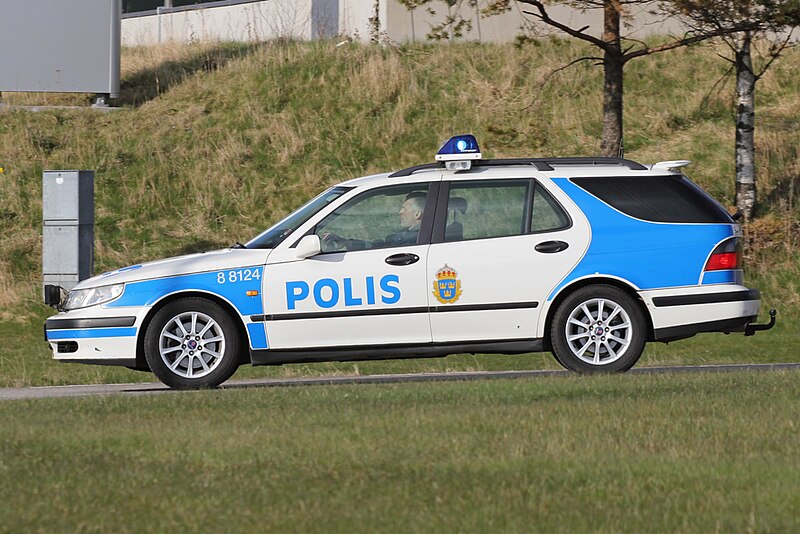


The 9-5 was used as a liveried patrol vehicle, as well as undercover, in several parts of its native Sweden, alongside the Volvo V70. Several police forces in the UK also used the 9-5 in their fleets, mostly in Aero specification. The city of Aspen, Colorado, used Saabs as patrol cars from early 1970s until 2005, when the 9-5 was discontinued in favor of Volvo XC90. The town of Vail, Colorado likewise used Saabs from 1980 onwards, but in 2005, the black 9-5 patrol cars were replaced by Ford Explorers, due to budget reasons.

In 2006, Lothian and Borders Police in Edinburgh, Scotland, began operating three Saab 9-5 Aero 2.3T patrol cars as part of a fleet of 580 vehicles. These 9-5s were customised to police specifications by the Saab, Vauxhall and Chevrolet Special Vehicles Operation (SVO) in Papworth, Cambridgeshire. In undercover guise, these cars were outwardly identical to the Linear Sport models, but featured the 260 bhp Aero drivetrain.

In Poland, an unmarked 9-5 is used as a video-pursuit vehicle, in the Płock area.


A next generation 9-5 built on the Global Epsilon platform was presented at the Frankfurt International Auto Show in September 2009. The vehicle had its North American debut in October 2009 at the South Florida Auto Show in Miami. On November 24, 2009, the first pre-series Saab 9-5 of the new generation rolled off the Trollhättan production line.

With the announcement of the sale of Saab to Spyker on January 26, 2010, it was confirmed that the new generation Saab 9-5 was already taken into production at the Saab plant in Trollhättan. Full production began in April 2010, with the cars appearing in dealerships on June 19. Saab introduced a wagon variant of the new 9-5, dubbed "SportCombi," at the 2011 Geneva Motor Show. The Saab 9-5 Sedan 2.8V6 Turbo was named Car of the Year in Singapore by "Wheels Asia".

As Saab's business issues came to a head, production of 2011 9-5 models essentially ended in March 2011, when the production line in Trollhättan was stopped due to supply chain issues that were related to the company's lack of liquidity. Total production numbers of the Gen II Saab 9-5 ended at 11,280 units.

Although some prototype pilots and a number of production SportCombis were produced, the official variant did not enter serial production prior to Saab's bankruptcy in December 2011, and the vehicles never reached dealerships.

Trim/equipment levels vary from country to country.

In the US Saab 9-5 trim levels were: Turbo4, Turbo4 Premium, Turbo6 XWD, and Aero. Turbo4 models come with a turbocharged four-cylinder and features that included power adjustable driver and passenger’s seats, leather upholstery, five-spoke alloy wheels, fog lamps, and rain-sensing wipers. The Turbo4 Premium added a panoramic sunroof, headlamp washers, Saab parking assistance, keyless entry and start, memory seats, and 18-inch alloy wheels, while the Turbo6 XWD was powered by a turbocharged six-cylinder engine and features an all-wheel-drive system. The top trim Aero featured 15-spoke “Rotor” 18-inch alloy wheels, leather-trimmed sports seats, a multi-color central information display, Bi-Xenon SmartBeam headlamps, dark titanium-effect interior trim, aluminum sports pedals, a sports-tuned suspension system with real-time damping, and Aero exterior elements.

UK equipment levels for the 2012 model year included the Vector SE and Aero and both sedan and estate. The previous base models, Linear and Vector were replaced by the Vector SE model.

In Australia the base trim (Linear) was not part of the line up, only the Vector and Aero trims were available.

In North America, the engine choices were either a turbocharged V6 or an Ecotec I4. Other countries also had an optional turbodiesel I4 engine. Engine performance upgrades that were available from Hirsch Performance (Saab's only factory approved tuner) increased the power of the V6 engine to 330 bhp (246 kW; 335 PS) from 296 bhp (221 kW; 300 PS) and the I4 engine to 260 bhp (194 kW; 264 PS) from 220 bhp (164 kW; 223 PS).

Friday, January 6, 2023

History of Saab


In 1938, the Saab factory was built in Trollhattan Sweden. At this time, they were not an automobile manufacturer. With World War II on the horizon, the Royal Swedish Air Force was in need of aircraft. On September 1, 1939 war broke out and Saab built bombers and fighters.

The Saab factory was prepared for the task with two previous years of modernizing their production methods. These airplanes were mainly copies of German and American design. Saabs first in-house designed aircraft rolled off the line in 1941, the Saab 17. It was far from perfect, but the bugs were worked out quickly. A Bomber, Saab 18 was also produced.

In 1944, seeing the close of World War II Saab began work on non-military aircraft. The Saab 90 and the Saab 91 were introduced, the 90 was a passenger plane seating 25-30, and the 91 was a small plane for private use. The rest of our timeline will outline only Saab's automotive history. However, Saab to this date still makes the highest quality civilian and military aircraft not to mention trucks, buses, spacecraft and the famous jet fighter Viggen and the latest innovation Gripen.

1955saab92b.jpg

The Swedish Ur best translates as original and Ursaab was the Saab's first prototype automobile.

Project 92, so-called as numbers 90 and 91 had already been assigned to civilian aircraft, was agreed in 1945. Saab had decided that, with the Second World War ending, there would be a need to diversify away from military aircraft. Ideas included motorcycles, cars, commercial vehicles and even fitted kitchens! Other Swedish companies, however, had the motorcycle market sewn up, Volvo already produced cars, and trucks were manufactured by Scania-Vabis. A Saab had to be the right size, type, construction and price - a small, affordable car. Thus, Saab had found its niche.

A 1:10 scale model Ursaab was tested in a wind tunnel by the Swedish Royal Institute of Technology and gave a drag coefficient of 0.32, an impressive figure even by today's standards. Sister cars 92.002 and 92.003 were driven on every possible type of road surface and with 92.001; they have clocked up over 530,000km (approx 331,000 miles) - equivalent to 13 journeys around the world and typical of Saab's commitment to thorough testing.

Full-scale production of the Saab 92 commenced in December 1949, 700 of which were made. The engine was a 750cc two-cylinder two-stroke, transversely mounted ahead of the front axle. Saab engineers also created a safety cage for the passengers, to protect them in case of accident, one of the first cars ever designed for safety. 

Production cost was critical to Saab at the time and only 17% of the cost was from imported materials, hence the Henry Ford principle of any color you like as long as it's… green in Saab's case!

Saab entered two cars in the 1950 Monte Carlo rally. Both finished the rigorous event. Saab  continued active in rallying until 1980, when some factories began to spend so much on the sport that little Saab could no longer be competitive. 

The Saab 93 was announced in August 1955 in response to press speculation regarding the development of a three-cylinder two-stroke engine. The Saab 93 was the first modelto be officially exported, primarily to the United States. 
Image result for 1955 saab no copyright image

At the New York Automobile Show of April 1958, Saab exhibited a car that they called the Gran Turismo 750, a sporty and luxurious model that was pitched specifically at the growing US market.

The GT750 had twin carburetors and the engine had been tuned to develop 50hp. It was the first model to have factory fitted seat belts.

Image result for saab sonnet no copyright image
The Saab Sonett was unofficially known as the Saab 94, even though this number had already been assigned to an aircraft project. Only six Sonett were built, the cars being intended as either experimental or competition cars. The Sonett was much in demand by dealers and was shipped to the United States for the Saab introduction in April 1956.

Saab unveiled the Saab 95 Station Wagon in May 1959. The early 95 had the two-stroke engine, but later models carried the Ford V4 engine (the V4 was an instant success). It was equipped with a four-speed gearbox. The last Saab 95 was manufactured in 1978.The Ford 1.5 Liter V4 engine delivered 65hp at 4,700rpm and saw 100 Km/h from rest in just 16 seconds. 

The new Saab 96 was revealed at a Stockholm press conference in February 1960. This model lived on until 1980 equipped with the V4 engine. The Saab 96 was for Swedes what the VW beetle was for Germans.

Diagonally divided brake system with double brake circuits was introduced on all Saabs of 1964 models.

Formula Junior was an international class for single-seat racers with engines from standard road cars. In 1960, some enthusiasts at Saab's combined testing and competition department decided to have a go at Formula Junior, even though the engine was well below the permitted displacement of 1100cc.Taking an approach that was different to the conventional was not unusual for Saab and this case was no different. The engineers at Saab constructed an advanced monocoque car in contrast to the space frame designs of their competitors. 

The Saab 97 project based upon the MFI 13 made good progress. By the winter of 1966, it was on display earlier than expected, and in Stockholm, rather than New York as had been anticipated.

Sonett3.jpg
The Saab Sonett II suffered increasing criticism of its awkward lines by both customers and within Saab itself. After just two years of production, Saab contracted the Italian stylist Sergio Coggiola to redesign the Sonett II. Coggiola had a tough task, forbidden by Saab to redesign the complicated central section.

Saab board passed a resolution in April 1964, to develop a new and larger Saab. The Saab 99 was on its way. Despite widespread enthusiasm within Saab for the two-stroke engine, it was decided that a four-stroke unit was the only real choice. Without the means to embark on its own costly development, a contract was signed for Triumph to deliver a 1.5-liter (later 1.7 liter), engine to Saab. The joint engine design was to be inclined at 45° since Triumph was planning a V8 from the same basic engine design. The Saab engine was essentially half of a V8. 

1970 A milestone is passed in February when Saab turns out Car No. 500,000

The Sonett III, the product of the Swedish-Italian cooperation, was unveiled in spring 1970.

Two unique Saab innovations are presented on the 1972 models: an electrically heated driving seat and self-repairing (up to 8 Km/h, 5 mph) bumpers.

The Saab 98 project began just two years after the production of the Saab 99 started. A new concept termed by Saab as Combi Coupé. Saab 98 never went into production, but the Combi Coupe did as a 99.

1976 The one-millionth Saab car comes off the line at Trollhättan in January. Catalytic converter and a lambda sensor are introduced on cars for the US. 

The first Saab 99 Turbo goes on sale as a 1978 model.

This particular Turbo had great success in the Swedish Rally with Stig Blomquist behind the wheel.

In 1979 the new 900 is released.

Yet another world "first" is introduced with the 1979 Saab 900: the unique compartment air/pollen filter.

Beginning with the 1983 models, Saab fits all its cars with asbestos-free brake linings.

The Saab 900 was a model that spanned the entire 1980s, being in production for some fifteen years! During its lifetime over 900,000 units were produced, almost 50,000 of which were the successful and stylish 900 convertible.

Despite being an evolution of the 99, the 900 was not merely a facelift. It had been given a new front section and Saab wanted to exploit new market sectors. This was especially true of the United States.

Another product of the small but perfectly formed design department at Trollhättan, the EV-1 was a sport Coupé based on the 900 Turbo 16. The EV-1, or Experimental Vehicle Number One, was never destined for production.

The front and rear sections of the EV-1 were constructed from Aramid reinforced fiberglass and had the ability to resume their original shape after impact.

The toughest safety standards are satisfied with the lightweight carbon fiber side impact protection within the doors. Continuing the lightweight theme, the front seats are half the weight of conventional seats but retain electronic functionality including the ability to adjust the side supports. With the 0-100 Km/h in just 5.9 seconds, the performance of the EV-1 is comparable to some of the best sports cars.

The Saab 9000 of the 1987 model becomes the first front-wheel-drive car to offer ABS brakes.

Styled by Italian Giorgetto Giugiaro, the 9000, a front-wheel drive with a transversely mounted engine meant that the interior was more spacious than the Saab 900 despite a slightly shorter external length. 

The combination of the folding rear seat and the estate/saloon opening rear hatch made for superb load-lugging characteristics. The Saab 9000 was the only imported car, bar the Rolls Royce, to be classified by the United States authorities as a "large car". 

Image result for saab 9000 wagon no copyright image
1986 On 7 October, three Saab 9000 Turbo 16s in guaranteed  standard condition get off the mark on the world's fastest racetrack, the Alabama International Motor Speedway in Talladega, U.S.A. 31 drivers take turns at the controls of the three cars, with stops only for refueling and service. In nearly twenty days of uninterrupted driving they break 2 world records and 21 international speed records. The fastest car covers 100,000 km at an average speed of 213 Km/h, the other 2 average around 210 and 208 Km/h.

1987 The two-millionth Saab is manufactured.

1989 At a press conference on 15 December, GM announces that it is buying 50% of Saab's car operation.

The new Saab 900 made its debut in front of the press and 35,000 residents of Trollhättan, in the town's main square, in July 1993. The new 900 was the first completely new model since GM (General Motors) took a 50% stake in Saab Automobile AB in 1990. 

Saab is the first carmaker to present a Freon-free (CFC-free) air-conditioning system.
In 1994, Saab introduces the first V6 engine in its 900 SE model.

1996 Ten years later Saab returns to Talladega, this time with six Saab 900s, absolut standard cars, powered by different engines: a 2-litre turbo, a 2.5-litre V6 and a 2-litre injection engine. They clock up 40 new international speed records. The fastest car, a 900 Turbo, turns in an average speed of 226 Km/h. 

The Saab 9-3 was launched in 1998 essentially as a re badge Saab 900. There was very little to tell them apart externally, except for a redesigned grill and the relocation of the third brake light from the boot ridge to the top of the rear screen. 

Image result for saab active head restraints no copyright image
Internally, the 9-3 acquired the innovative SAHR or Saab Active Head Restraint system - as introduced as an industry first on the Saab 9-5.

It was under the body that the changes had been made on the 9-3. Over 1,100 changes including suspension, in an attempt to tighten up the handling characteristics of its predecessor, the Saab 900.

1997, The new Saab 9-5 is presented in Trollhättan, and the three-millionth Saab is produced that summer. 

The development of the Saab 9-5 retained existing Saabisms such as its world famous attention to safety, the curved C-pillar and the ergonomics of the vehicle - especially in respect of the driver. Saab set out to exceed the already high safety standards of the Saab 9000 and design the safest car possible.

Data from Saabs own tests and surveys from Folksam (the Swedish insurer), Euro NCAP and American HLDI all show that the Saab 9-5 is indeed the safest car that you can drive to date.

Image result for 2000 saab 9-5 sedan no copyright image
Saab reintroduced for the 9-5, the return of the floor mounted ignition and reverse gear lock that was absent from its predecessor, the Saab 9000.

Yet, another Saab innovation: ventilated front seats. It is the first time a passenger car, the new Saab 9-5, is offered with this feature.

2000, GM buys the reminder of Saab.

In 2003, the completely redesigned 9-3 SS is released in US.

The new Saab convertible is scheduled to be introduced to the US market in the Fall of 2003 (Swedes have to wait until Feb 2004). It's manufactured at the Magna-Steyr plant in Graz, Austria. It have automatic rollover bars that pops up from behind the rear seat, and the whole convertible frame is built out of Magnesium.

What the future holds may be within what  concept car 9-3 and prototype 9X shows, or the rumors of a 9-2 based on Subaru Impreza.

First official photo of the new 9-2X planned for release on the US and Canadien market early 2004. The 9-2X is built by Fuji Heavy Industries, Japan; which GM holds a 20 percent stake in.