What's On

Showing posts with label estate. Show all posts

Thursday, January 12, 2023

History of Saab 9-5


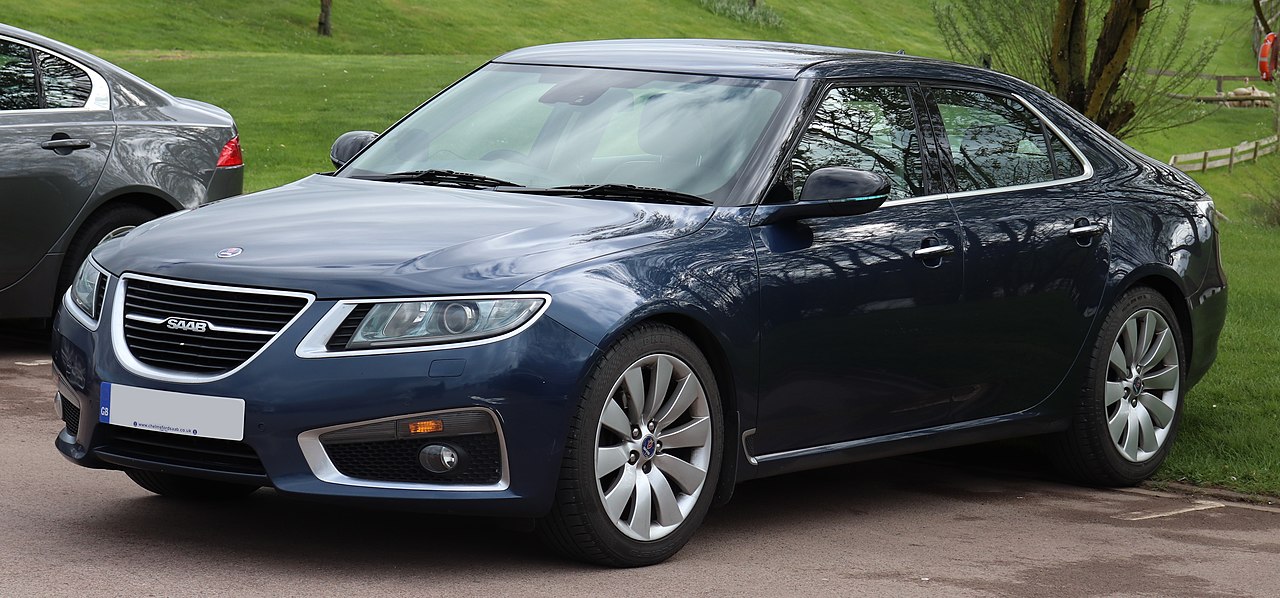
2012 Saab 9-5 Aero Turbo4 Automatic 2.0 Front.jpg


The Saab 9-5 is an executive car that was produced by the Swedish automobile maker Saab.

The first generation 9-5 was introduced in 1997, for the 1998 model year, as the replacement to the Saab 9000. At the time, the car represented a significant development for the manufacturer. In the United States, the 9-5 was introduced in the spring of 1998, for the 1999 model year.

On September 15, 2009, the second generation was presented at the Frankfurt Motor Show and production began in June 2010. It was the first Saab to be launched under Spyker Cars' ownership, even though it was developed almost completely under GM's ownership.

Saab badged the model as the Saab 95, but consistently advertised it as the Saab 9-5, pronounced "nine five" rather than "ninety-five". This model should not be confused with the Saab 95, produced from 1959 to 1978.

The first generation 9-5 was available with sedan and station wagon body styles. Aerodynamically, the sedan's drag coefficient is 0.29, and the station wagon's is 0.31 (U.S. version 0.33). Introduced in 1999, the wagon features innovations such as floor tracks to secure cargo and a sliding load floor to make loading easier.

The 9-5 was the first production vehicle to offer ventilated seats, as well as asymmetrical turbocharging in the case of the 3.0L V6 engine.

The last 9-5 sedan of the first generation rolled off the Trollhättan production line at the beginning of July 2009, and the last wagon was assembled on February 1, 2010. Between the summer of 1997, when 9-5 production began, and 2010, 252,236 sedans, and 231,357 wagons were built. The total production 483,593 units, was narrowly beaten by its predecessor, the 9000, of which 503,000 were built.

Production equipment for the first-generation 9-5 was sold by General Motors to BAIC of China in 2009.
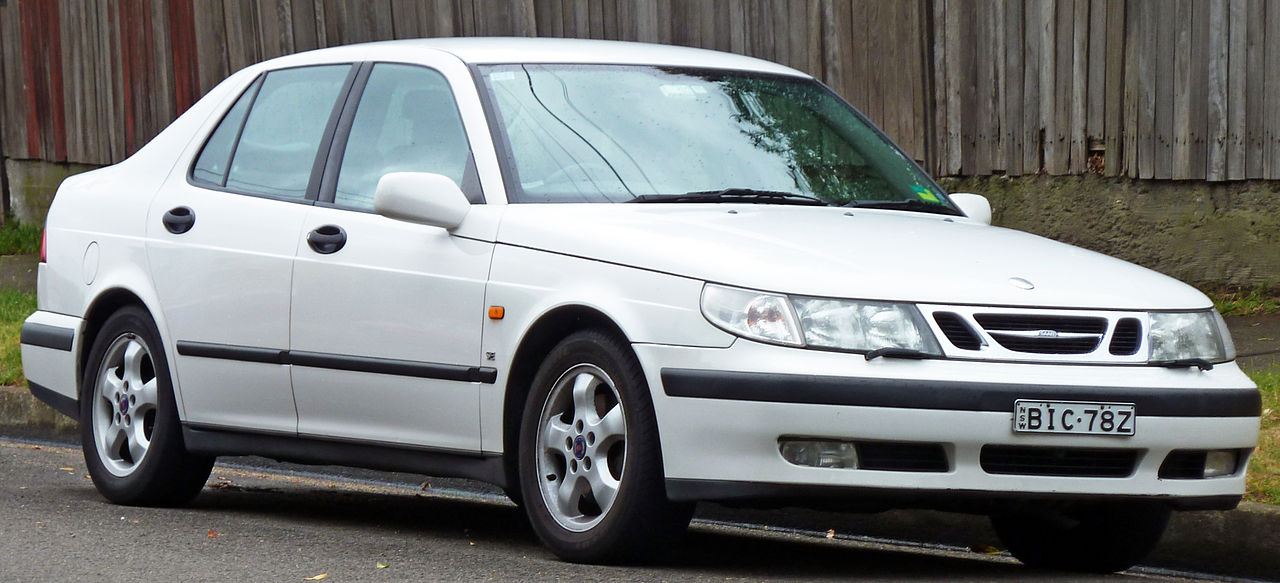
1997-2001 Saab 9-5 SE sedan 01.jpg

The first-generation 9-5 was powered by Saab's B205 and B235 straight-4 engines, and from 2002 in Europe by an Opel Ecotec X22DTH 2.2 diesel engine (Saab D223L), replaced in 2006 by Fiat's 1.9 JTD 16V diesel straight-4. A turbocharged version of the GM 54° V6 engine, designated by Saab as B308, had a unique asymmetrical low-pressure turbocharger and was available from 1999 to 2003. This engine was available only with an automatic transmission, and cars with this engine installed are distinguishable by their twin tailpipes. The V6 was only available on Arc, SE, and Griffin models. In 2004, the V6 engine was replaced by a high pressure turbo straight-4 engine producing 220 hp (160 kW). By 2006 this engine was producing 260 hp (190 kW) even in the non-Aero or non-sport models (US models).

The B205 & B235-based 9-5 models have suffered a high rate of engine failures due to engine oil sludge. This primarily affected the 1999–2003 models. Saab refined the engine's positive crankcase ventilation system (PCV) for the 2004 and later model years and required use of fully synthetic oil, virtually eliminating the problem. Additionally, SAAB created update kits to retrofit to the 1999–2003 cars since they cannot be easily modified to accept the 2004 and later system. Mounting complaints by 9-5 owners forced GM to offer an eight-year warranty on the engine in 4-cylinder models for original owners, provided the owner can produce proof that they followed the manufacturer's oil change intervals. Saab recommended the use of fully synthetic or synthetic-blend oil as a preventative measure.

The 9-5 was available with an Aisin AW 4-speed automatic transmission from 1997 until 2001, when a new Aisin AW unit replaced the dated four-speed automatic with a five-speed automatic. A five-speed manual transmission is fitted as standard to the base models and the Aero. Six-speed manual transmission was not offered in first-generation 9-5s.

In 2005, an updated version of the 2.0 L turbocharged I4 was introduced in the European market together with the 2006 9-5. The engine was sold as 2.0T BioPower, optimized to run on E85 producing 132 kW (180 hp) at 5500 rpm. There was also a 2.3T BioPower version sold from 2007. It was also introduced in Australia.

The 9-5 introduced Saab's Active Head Restraints (SAHR), which moved up and forward to prevent whiplash when the car was struck from the rear. This feature won technology and safety awards in Australia, Denmark, and the United Kingdom. The Saab 9-5 also was one of the first cars to have extensive side-crash protection.

The front seats featured torso airbags and head airbags even on even the earliest models, which few contemporary vehicles did in the late 1990s. The basic structure included a robust passenger safety cage, front and rear deformation zones, reinforced door posts and pillars, as well as the "Pendulum B-Pillar", which combined high-strength low-alloy steel at chest and head height with tailored blank steel at the floorpan, designed to direct the crash forces down toward the floor. The design was proven by the Insurance Institute for Highway Safety (IIHS) to protect occupants in side crashes, even without the addition of curtain airbags or rear side airbags. From 2002, ESP (electronic stability control) was included as standard.

Another Saab feature, the "Night Panel", permitted dousing of the instrument panel lighting, except for essential information, for less distraction when driving at night. Once activated, only essential information such as current speed is displayed except, for example, if the car requires fuel or the engine overheats.

In the United States OnStar was available, and provided as standard equipment in selected 9-5's from 2001 onward.

The 9-5 had various comfort features both as standard and cost options over the years.

While early models frequently had dash mounted cassette decks, CD changers were standard features on many cars and in-dash satellite navigation was also available. Factory-fitted phone kits were similarly optional

.

Many models featured leather or part-leather upholstery and both front and rear heated seats were also available. A few models were shipped with the optional ventilated seats.

Cruise control was available on various models and xenon headlamps were fitted as standard on high-end variants.

The performance 9-5 Aero, the earliest versions of which were sometimes referred to as the HOT Aero, was first released in 2000 with a 2.3T B235R engine. The B235R engine of the 9-5 Aero was capable of providing immense torque and, in terms of acceleration, outperformed the contemporary Porsche 911 Turbo from 40-90 mph.

Initially badged as a 230ps engine, Saab later conceded that the 230 hp power figure was quite conservative, with the manual versions rated 250 hp and having more torque than stated. This flagship model had a long list of standard features, a sport tuned suspension, and body side moldings. In 2002 a 253 PS (186 kW; 250 hp) 2.3 turbo engine was made standard, which allowed for more torque after 4500 rev/min. All Aero models from 2002-2005 have an identical engine layout and management system, with the 2002-05 models just having a slightly remapped version of that ECU from factory. The high-powered version of the 9-5 in the final form produces 264 PS (194 kW; 260 hp) and 350 N⋅m (260 lb⋅ft) of torque (370 N⋅m (270 lb⋅ft) with its 20-second overboost function accessible on the manual transmission equipped version.

From model year 2006 to end of production, the 264 PS (194 kW; 260 hp) B235R was the standard engine in the 9-5 in both the 2.3T and Aero trims. 2006 had only one badge designation, the 2.3T and appointments normally found on the Aero could be added via a "Sport Package".

From 2007 onwards, SAAB added an Aero badge to the trunk lid to distinguish from regular 2.3T models. In addition, almost all standard features on the Aero were standard on the 2.3T, the exceptions being sport-tuned chassis, two-tone leather upholstery, "Anniversary" wheels and brushed aluminum interior trim, all of which were standard on Aero and not available on the 2.3T.
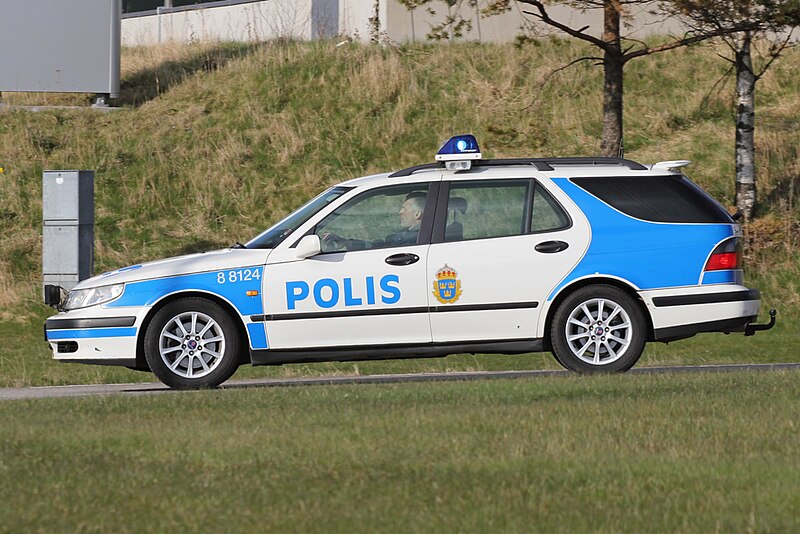


The 9-5 was used as a liveried patrol vehicle, as well as undercover, in several parts of its native Sweden, alongside the Volvo V70. Several police forces in the UK also used the 9-5 in their fleets, mostly in Aero specification. The city of Aspen, Colorado, used Saabs as patrol cars from early 1970s until 2005, when the 9-5 was discontinued in favor of Volvo XC90. The town of Vail, Colorado likewise used Saabs from 1980 onwards, but in 2005, the black 9-5 patrol cars were replaced by Ford Explorers, due to budget reasons.

In 2006, Lothian and Borders Police in Edinburgh, Scotland, began operating three Saab 9-5 Aero 2.3T patrol cars as part of a fleet of 580 vehicles. These 9-5s were customised to police specifications by the Saab, Vauxhall and Chevrolet Special Vehicles Operation (SVO) in Papworth, Cambridgeshire. In undercover guise, these cars were outwardly identical to the Linear Sport models, but featured the 260 bhp Aero drivetrain.

In Poland, an unmarked 9-5 is used as a video-pursuit vehicle, in the Płock area.


A next generation 9-5 built on the Global Epsilon platform was presented at the Frankfurt International Auto Show in September 2009. The vehicle had its North American debut in October 2009 at the South Florida Auto Show in Miami. On November 24, 2009, the first pre-series Saab 9-5 of the new generation rolled off the Trollhättan production line.

With the announcement of the sale of Saab to Spyker on January 26, 2010, it was confirmed that the new generation Saab 9-5 was already taken into production at the Saab plant in Trollhättan. Full production began in April 2010, with the cars appearing in dealerships on June 19. Saab introduced a wagon variant of the new 9-5, dubbed "SportCombi," at the 2011 Geneva Motor Show. The Saab 9-5 Sedan 2.8V6 Turbo was named Car of the Year in Singapore by "Wheels Asia".

As Saab's business issues came to a head, production of 2011 9-5 models essentially ended in March 2011, when the production line in Trollhättan was stopped due to supply chain issues that were related to the company's lack of liquidity. Total production numbers of the Gen II Saab 9-5 ended at 11,280 units.

Although some prototype pilots and a number of production SportCombis were produced, the official variant did not enter serial production prior to Saab's bankruptcy in December 2011, and the vehicles never reached dealerships.

Trim/equipment levels vary from country to country.

In the US Saab 9-5 trim levels were: Turbo4, Turbo4 Premium, Turbo6 XWD, and Aero. Turbo4 models come with a turbocharged four-cylinder and features that included power adjustable driver and passenger’s seats, leather upholstery, five-spoke alloy wheels, fog lamps, and rain-sensing wipers. The Turbo4 Premium added a panoramic sunroof, headlamp washers, Saab parking assistance, keyless entry and start, memory seats, and 18-inch alloy wheels, while the Turbo6 XWD was powered by a turbocharged six-cylinder engine and features an all-wheel-drive system. The top trim Aero featured 15-spoke “Rotor” 18-inch alloy wheels, leather-trimmed sports seats, a multi-color central information display, Bi-Xenon SmartBeam headlamps, dark titanium-effect interior trim, aluminum sports pedals, a sports-tuned suspension system with real-time damping, and Aero exterior elements.

UK equipment levels for the 2012 model year included the Vector SE and Aero and both sedan and estate. The previous base models, Linear and Vector were replaced by the Vector SE model.

In Australia the base trim (Linear) was not part of the line up, only the Vector and Aero trims were available.

In North America, the engine choices were either a turbocharged V6 or an Ecotec I4. Other countries also had an optional turbodiesel I4 engine. Engine performance upgrades that were available from Hirsch Performance (Saab's only factory approved tuner) increased the power of the V6 engine to 330 bhp (246 kW; 335 PS) from 296 bhp (221 kW; 300 PS) and the I4 engine to 260 bhp (194 kW; 264 PS) from 220 bhp (164 kW; 223 PS).

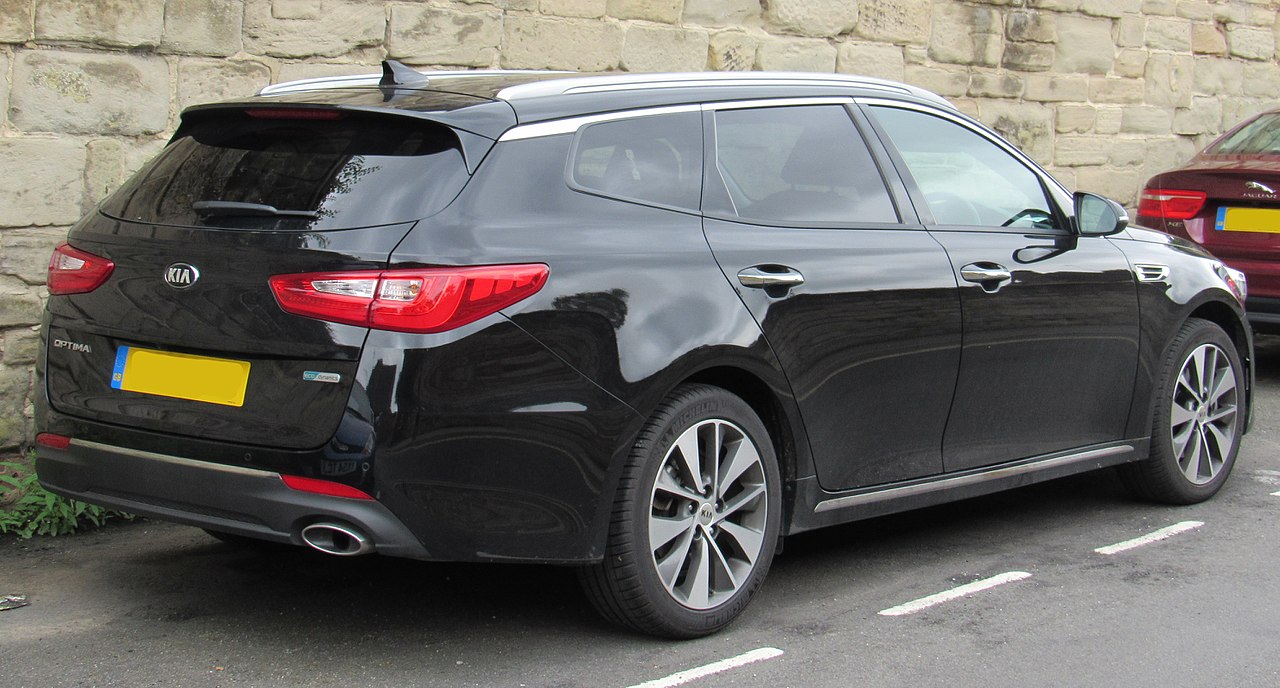
We try to be optimistic with this Optima Estate


When it comes to estates, the Ford Mondeo and Mazda6 seem to be top picks. However, we reckon that the Kia Optima Estate is a worthy contender if you are willing to overlook the shortcomings.

It’s a bit of a strange move on Kia’s part to offer only a single diesel engine in the Optima Estate. The 1.7 turbo-diesel offers decent flexibility but it loses steam quickly once you roam outside of the sweet spot in the rpm band. The torque is high, but you constantly have to change gears to keep that momentum going. We’ve driven diesel engines with similar outputs from Volkswagen and Mazda and they all seem to feel more flexible, but are also quieter and easier to live with. You can option for the seven-speed auto gearbox but low speed refinement is nothing to brag about either, but once you get it going it evens itself out well.

On the road the diesel engine feels a tad unrefined, especially from a cold start up. It’s slightly too clattery for our tastes, and never feels relaxed even at cruising speeds. The engine tends to vibrate a fair bit too which translates into the controls. Steering feedback isn’t all that great like we thought it would be and the handling is good but the ride comfort is slightly too firm and uncomfortable on anything but the smoothest of surfaces. We strongly suggest staying away from the large alloy wheels if ride comfort is top priority on your list. Wind noise isn’t pronounced but there can be some road noise with the larger alloy wheel option and the engine gets loud when revved.

The interior layout is pretty straight forward. The infotainment screen can get a little distracting while on the go, but it’s interface isn’t as confusing as some of its keen rivals. What we love the most about the Optima is the luxury features that you get standard. The driver’s seat moves back slightly to allow easy exiting and the wing mirrors fold in when you lock the vehicle; also there’s LED headlights and ventilated leather seats that really do come handy on those hot summer days. The rear seat offers ample space for two, three will be pushing it slightly due to the large transmission tunnel and the boot space is much more generous on the estate than the sedan counterpart that we get here in the US.

Our rental car came fitted with 18-inch alloy wheels, hands-free boot opening, LED headlights and a panoramic sunroof. The trim level that we had was the top of the range GT-Line S which has a very steep price tag  but many standard features to back up the price. We certainly wouldn’t choose it, but instead the more reasonable 2 or 3 trim seem more feasible for those that do need a large estate such as the Optima but care more about value for money factors.

The Kia Optima has a few shortcomings but they can be ignored if you care about value for money, however the diesel engine is the torn that prevents the Optima from being the exceptional offering it can be.

Likes: The boot space is as generous as the standard kit list, running costs are reasonable and the styling is sleeker than the sedan counterpart.

Dislikes: The diesel engine runs out of puff quickly and is not very refined.

Saturday, December 3, 2022

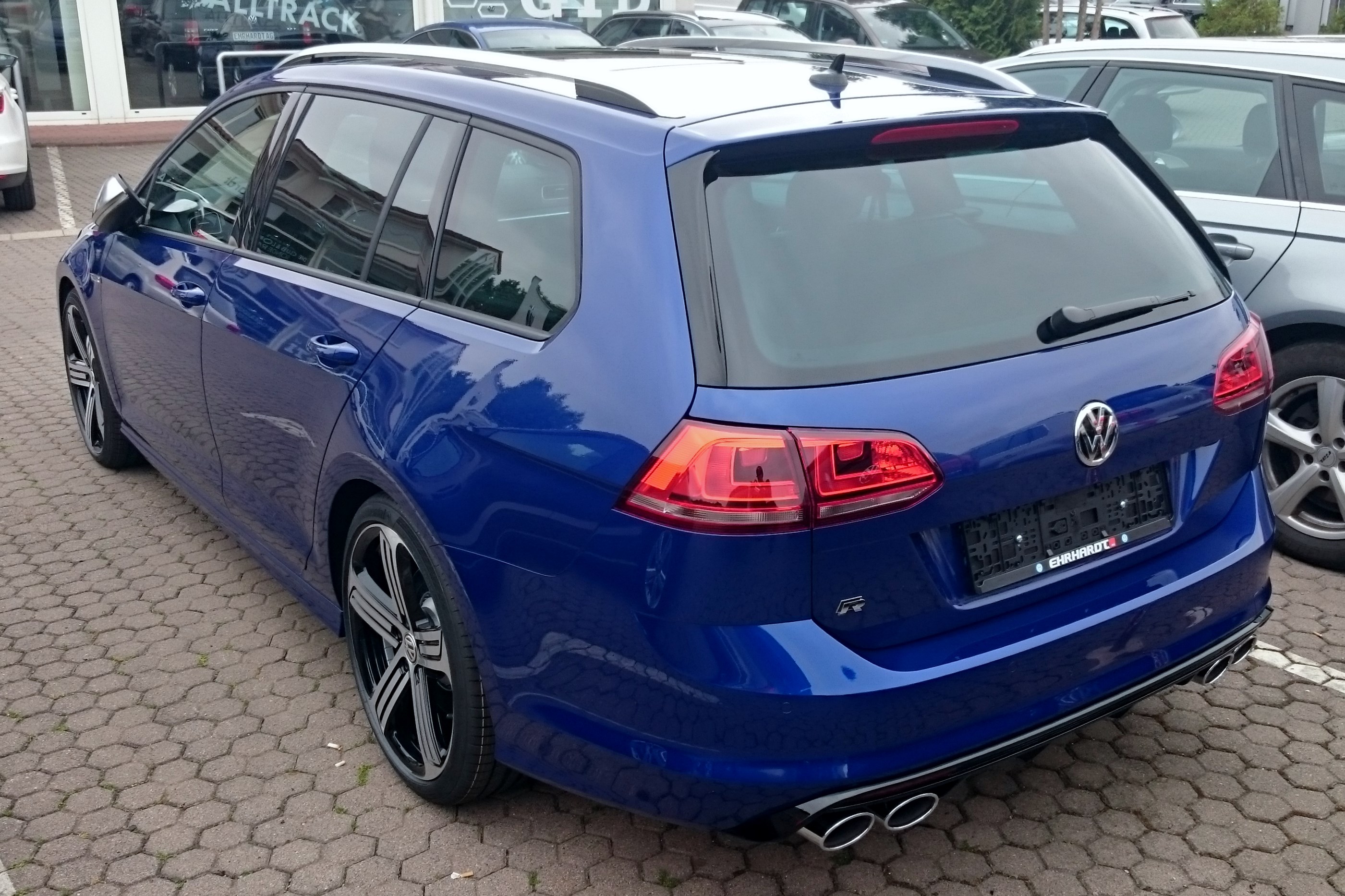
The Golf R Estate is best. Period.


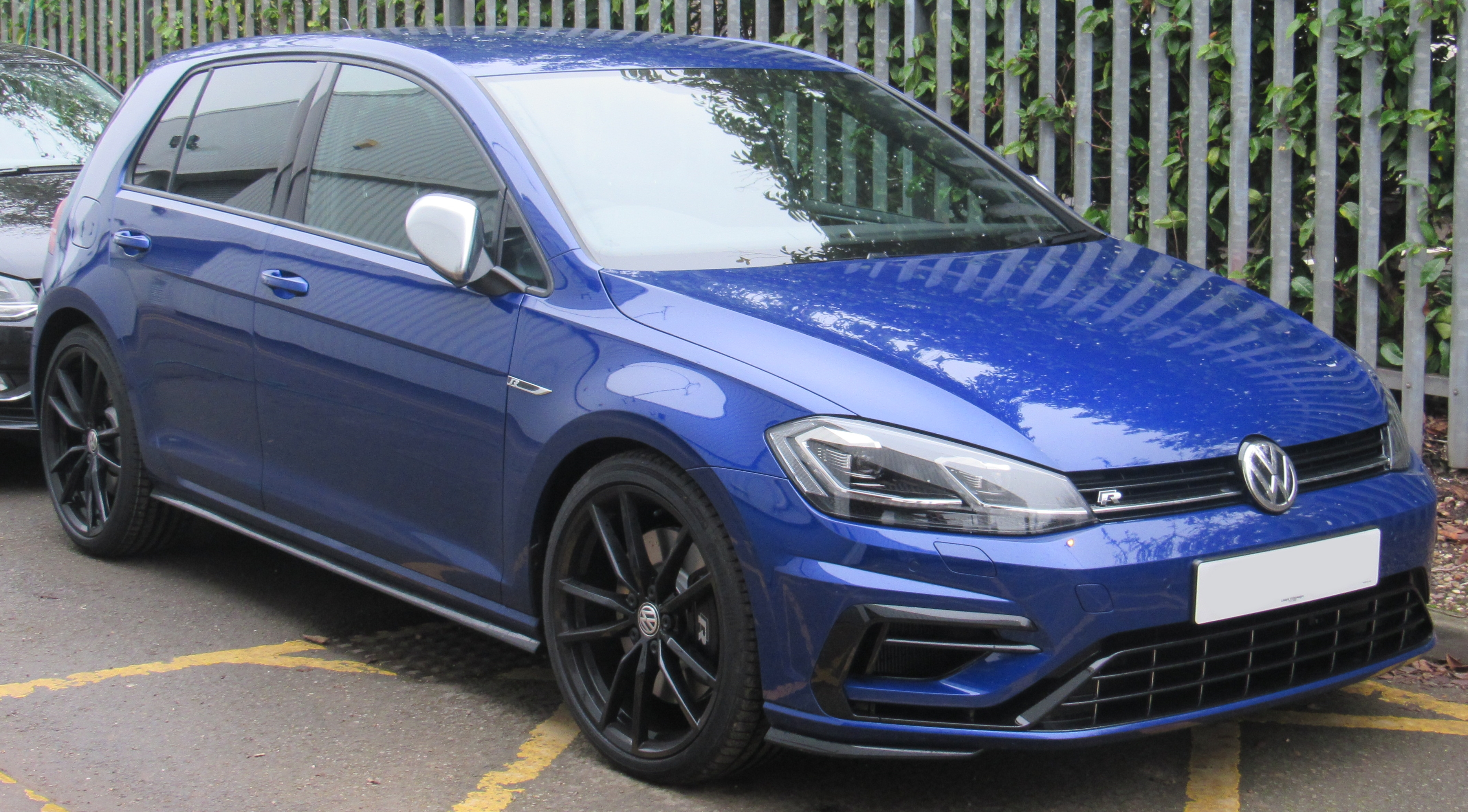
The Volkswagen Golf R is the hot hatch from grownups. But what if you want a hot hatch with a family? Well, there’s the Golf Estate R. 

The Golf Estate R comes with the same engine as the Golf R. A 2-liter turbo petrol four-cylinder which can be had with either a six-speed manual gearbox or a dual-clutch seven-speed auto gearbox. Driving enthusiast will certainly love the six-speed manual, however it does feel notchy at times. Our money certainly goes to the DSG gearbox option. However, even with the auto gearbox it does often feel jerky at low speeds. Both are just nitpicking at best. 

Driving the Golf Estate R is just fantastic. The engine is smooth and effortless and there’s an abundance of comfort and refinement. The large alloys don’t produce tons of road noise, although at times the ride can be a bit stiff. This is to be expected however, since this isn’t a car for leisure driving. It’s a hot hatch in the form of an estate car. You can chug it into corners and bends with sheer confidence and thanks to standard 4motion all-wheel-drive. You won’t have much to fret about when the roads get slippery. 

The front seats are superbly comfortable and those in the second row won’t have much to complain about. The large transmission tunnel may make life for the middleman a tad bit uncomfortable. However, that’s just nitpicking. The boot space is where the Golf Estate R shines. It’s plenty for most small family needs and when you fold down the second row. You’ve got yourself a cargo van. 

The Golf Estate R comes standard with power-folding wing mirrors. LED headlamps with auto operation. Leather trimmed interior and climate control. You also get Driver alert system with fatigue detection. Rain sensors for the front windscreen. Heated front seats, and a handsfree boot operation. 

The Golf R is a fantastic little hatchback. However, the Golf Estate R is the perfect compromise for anyone who wants an estate with hot hatch turn of pace. You better act fast however, as supplies are limited.  

Likes: It’s an estate with hot hatch performance. It handles just as good as the Golf R and looks just as good. 

Dislikes: Supplies are limited. 

Thursday, November 17, 2022

Volkswagen Golf Variant

For the first time an estate was produced, being launched in early 1993, and bringing it into line with key competitors such as the Ford Escort and Vauxhall/Opel Astra, which had long been available as estates. The GT variants included a 2.8LVR6 engine, and a convertible launched as the Cabrio (Type 1E).
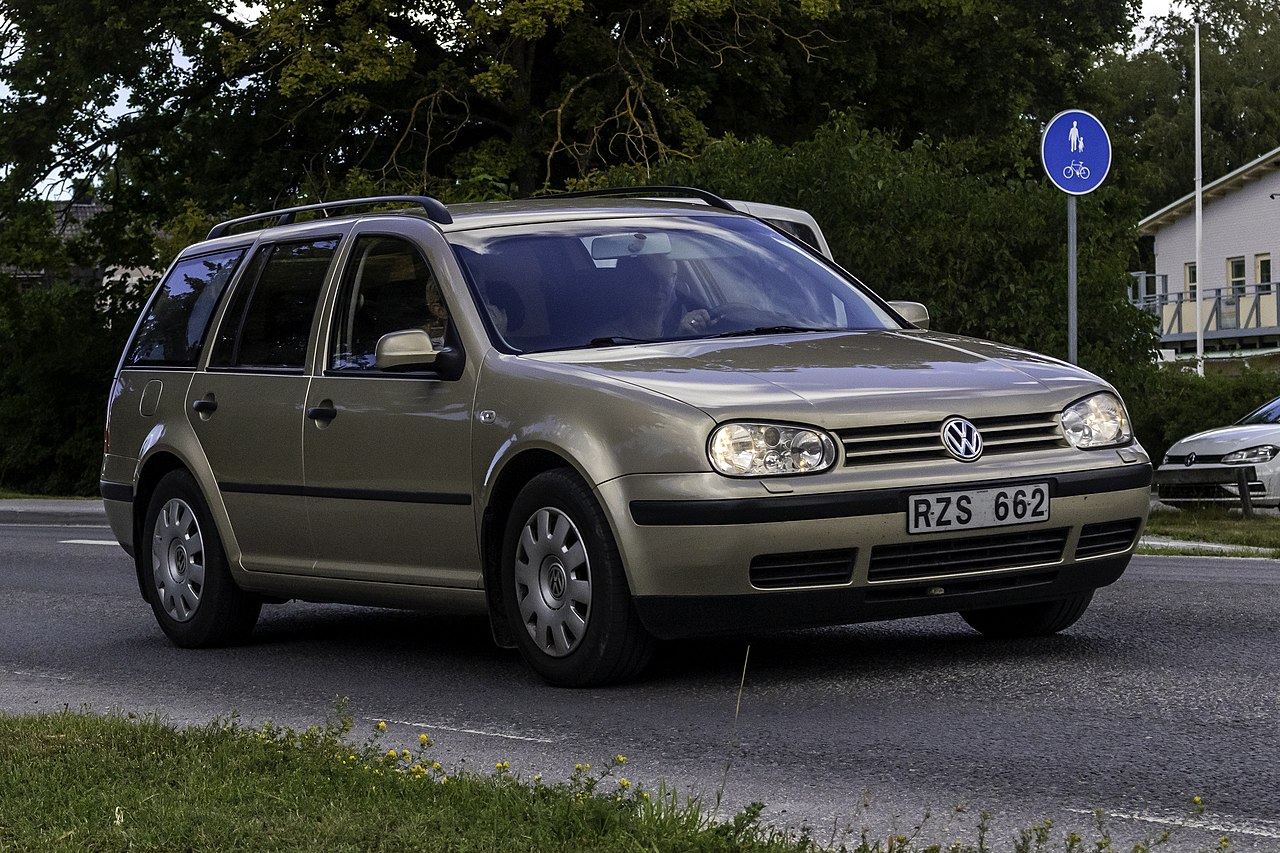
The Volkswagen Golf Mk4 Variant was introduced in 1999. It was discontinued in 2006, and succeeded in 2007 by the Volkswagen Golf Mk5 Variant. Unlike the Mk3, it was offered in North America with the "Jetta" name with corresponding front styling. The "Jetta Wagon" was used in North America instead of the "Bora" name.
Volkswagen introduced an estate/station wagon version of the fourth-generation car at the 2001 Los Angeles Auto Show[19] as the first A-segment wagon Volkswagen offered in North America — the body style solely manufactured in Wolfsburg. The wagon offered 963 l (34 ft3) of volume with the rear seat up, and wth rear seats were folded provided 1473 l (52 ft3). In Europe, the estate version was at times marketed as a Golf wagon, either in addition to or instead of the Bora. Other than different front bumpers, fenders, headlights, and hood, the cars were identical. In some countries, VW marketed both Golf Variant and Bora Variant, with the Bora Variant being more upmarket than its counterpart.
The station wagon version of the Golf Mk5 debuted at the International Geneva Motor Show in March 2007 and was marketed as the Golf Variant in the German domestic market, in The United States as the Jetta SportWagen, and in Argentina and Uruguay as the Vento Variant. Designed by Murat Günak, it is more closely related to the Jetta saloon with a shared front fascia design and front doors. It was produced in Puebla, Mexico since April 2007 alongside the similar Jetta with a targeted annual production of 120,000 units. Volkswagen did not intend to release the station wagon/estate version of the Golf Mk5 until later in its life cycle. Initially, Volkswagen expected the Golf Plus and Touran to be able to cover the station wagon segment left by the Golf, however it was reported that dealers and customers were asking for a replacement instead. It was facelifted in late 2009, with changes including the front clip and interior from the Golf Mk6, while the remaining is based on the pre-facelifted model. It is marketed as the station wagon version of the Golf Mk6 as it was sold alongside it. The facelifted model was also marketed as the Golf Wagon and Variant in the Canada and Mexico, while it continued to be sold as the Jetta SportWagen in the United States.
A facelifted variant Mk5 Golf Variant model was introduced in 2009 as the Mk6, despite carrying the front fascia, interior styling, and the powertrain from the new Golf, the body shell and underpinnings are based on its fifth-generation predecessor. It is sold in the US as the Jetta SportWagen, in Mexico and Canada as the Golf Wagon and in South America as the Jetta Variant or Vento Variant.
The estate/station wagon of the Golf was revealed at Geneva Motor Show in March 2013. It is marketed as the Golf Variant in Germany and Golf SportWagen in the United States and Canada, replacing the Jetta SportWagen nameplate previously used in the US. The Golf Estate's loadspace volume has been expanded from the 505 litres of its predecessor to 605 litres (loaded up to the back seat backrest) versus the 380 litres of the Golf hatchback. Loaded up to the front seat backrests and under the roof, the new Golf Estate offers a cargo volume of 1,620 litres (versus the 1,495 litres of the Golf Estate Mk6). The rear seat backrests can be folded remotely via a release in the boot. Four petrol engines and three diesel engines are available, ranging from 85 PS (63 kW; 84 hp) to 140 PS (103 kW; 138 hp) in the petrol and 90 PS (66 kW; 89 hp) to 150 PS (110 kW; 148 hp) for the diesel engines. For the first time, the Golf Estate will also be available as a "full" BlueMotion model (with other modifications, including revised aerodynamics). This model uses a 1.6-litre diesel engine producing 110 PS, has a six-speed manual gearbox, and is expected to achieve a combined fuel consumption of just 85.6 mpg (equivalent to 87 g/km of CO2). The Golf SportWagen is available in S, SE, and GT (Trendline, Comfortline, and Highline in Canada) (GT is SEL in the USA) trim levels. There is also a Golf Estate R, using the same EA888 2.0 engine found in the MkVII Golf R hatchback. The Golf Variant is also built as a rugged version called Alltrack with slightly-raised suspension, body cladding, and all-wheel drive.

Tuesday, December 8, 2020

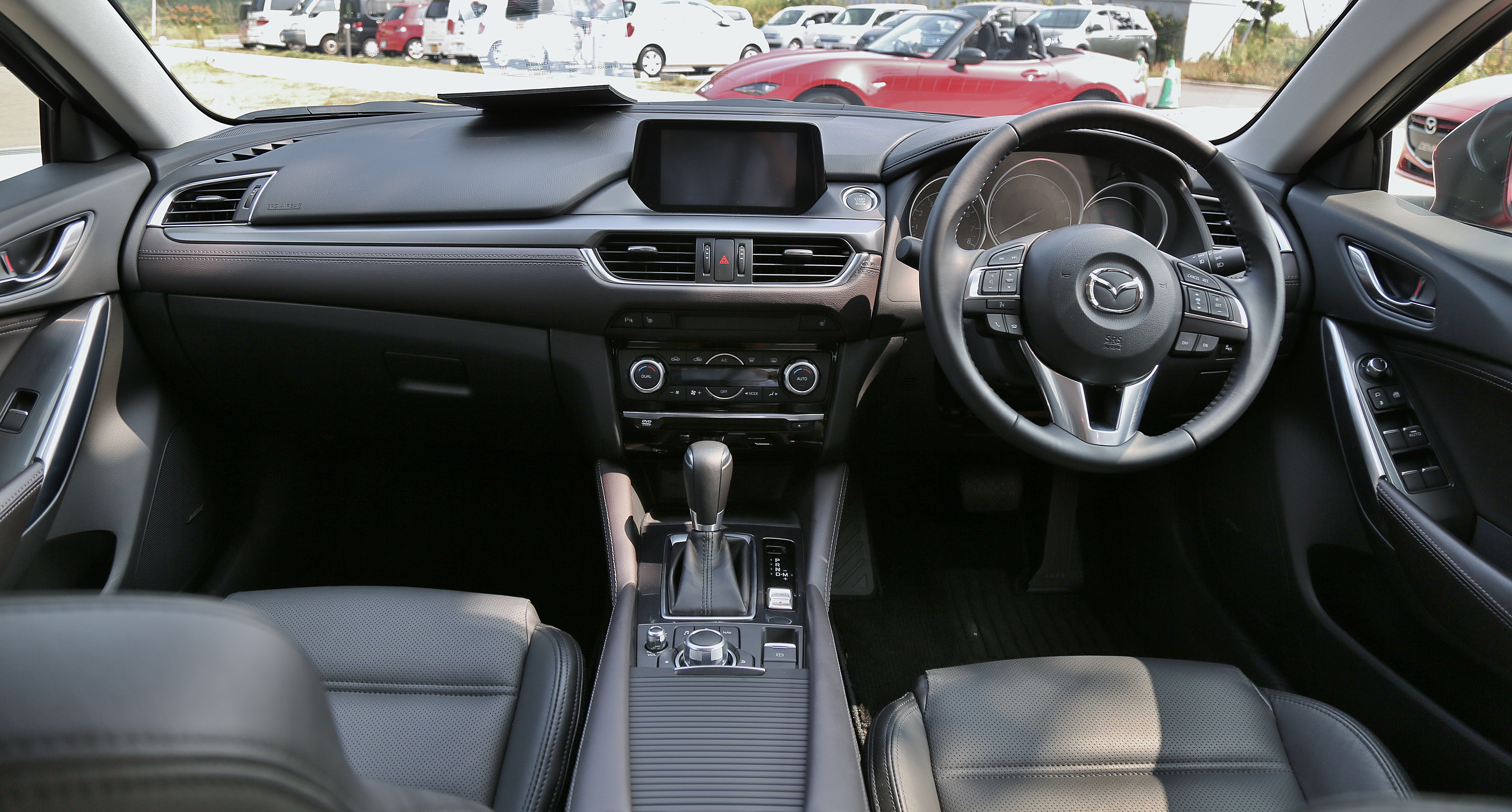
We get toured in a Mazda 6 Touring

The Mazda6 Tourer is the prime example of an estate without compromises. 

You can choose between one petrol and one diesel. Picking between the two depends upon your needs. We’d personally stick with the 2.2 turbo diesel if you’re planning to do tons of highway driving. Everyone else will be satisfied with the 2.5 petrol four-cylinder. It may not have the torque like the diesel engine, but it certainly is flexible enough for most buyers needs. 

Driving the Mazda6 Tourer is like any other Mazda. It’s quick on its toes when it comes to corners and bends, but most importantly it’s not dullard to drive. Steering feedback is communicative, and the ride comfort is smooth for the most part. However, on some road surfaces the ride comfort can be a little bit firm. Which is a bit disappointing seeing that most drivers will be spending majority of their time on the highway. Wind and road noise aren’t anything to complain of. Although with the larger alloy wheels some road noise can sneak into the cabin. It’s far from being a deal-breaker, however. 

What makes an estate car fantastic is the utilitarian aspects of it. The boot is generous in space and offers tons of versatility. Fold down the rear seats and you’ve got yourself a cargo van. If you find yourself lacking in space with this. You don’t need an estate. You really do need a cargo van. Space in the front seats plenty, while those in the rear won’t have much to complain about either. You can seat three abreast, although life for the middleman may not slightly shortchanged. However, that’s just nitpicking at best. 

Entry-level SE-L Nav+ comes with 17-inch alloy wheels. Auto-dimming rear-view mirror. High beam control for the headlights. Rear privacy glass and Smart City Brake Support. SE-L Lux Nav+ adds black leather trim, 3-stage heated front seats with memory and a reversing camera. Sport Nav+ adds Smart Keyless entry, 19-inch alloy wheels and a 11-speaker Bose premium audio system. Top of the range GT Sport Nav+ adds Nappa Leather trim, 360 View Monitor, ventilated front seats and frameless auto-dimming rear-view mirror. 

Crossovers seem to be the trend that most buyers are going for. However, if you desire a proper estate with decent running costs. One that’s also stylish and engaging to drive. The Mazda6 Tourer is an estate without compromise. 

Likes: The boot space is generous. Standard kit list is generous as well. It’s stylish and engaging to drive. 

Dislikes: The ride comfort can be a tad firm on the highway.