The BMW 3 Series is an entry-level luxury car manufactured by the German automaker BMW since May 1975. It is the successor to the 02 Series and has been produced in six different generations.
The first generation of the 3 Series was only available as a 2-door sedan, however the model range has since expanded to include a 4-door sedan, 2-door convertible, 2-door coupé, 5-door station wagon, 5-door hatchback, and 3-door hatchback body styles. Since 2013, the coupé and convertible models have been marketed as the 4 Series, therefore the 3 Series range no longer includes these body styles.
The 3 Series is BMW's best-selling model, accounting for around 30% of the BMW brand's annual total sales (excluding motorbikes). The BMW 3 Series has won numerous awards throughout its history.
The M version of the 3 series, M3, debuted with the E30 M3 in 1986.
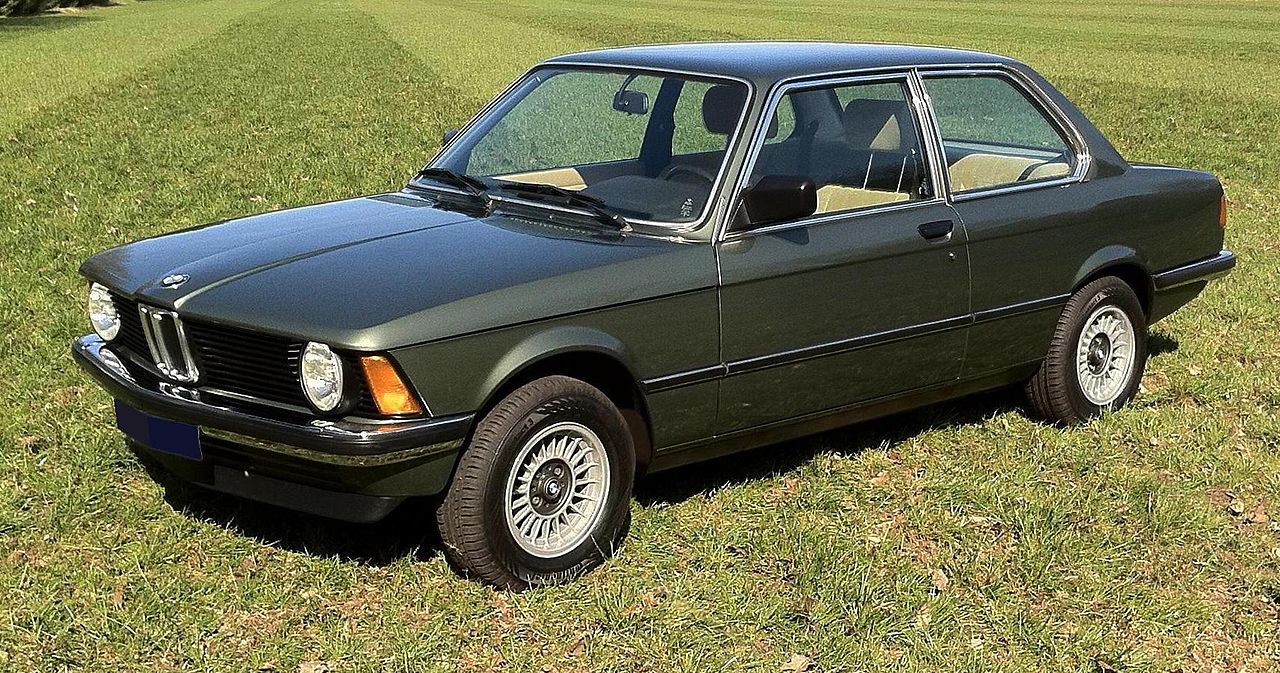
The BMW E21 is the first generation of the BMW 3 Series compact luxury vehicle and was produced from June 1975 to 1983. It was initially available as a 2-door sedan, to replace the 02 Series. At launch, all models used carburetted 4-cylinder engines, however fuel injected models were introduced in late 1975 and 6-cylinder engines were added in 1977. A cabriolet body style - manufactured by Baur - was available from 1978 to 1981.
The E21 was replaced by the E30 3 Series in 1982.
Under the direction of its majority (51%) shareholder, Herbert Quandt, BMW decided upon a replacement for their aging 02 Series. Paul Bracq, Director of Design at BMW from 1970 to 1974, is credited with setting the design direction of the E21.
In July 1975, BMW’s Board of Management introduced the 3 Series to the public at the Munich Olympic Stadium.
The frontal view of the new car was dominated by the BMW trademark kidney grille standing out clearly from the radiator cover. The styling of the new car bore a resemblance to the BMW E12 5 Series.
The wedge shape of the two-door model was distinctive, extending all the way to the unusually high rear end. In response to criticism of the tail design, a black plastic trim panel between the tail lights was added. Like many other BMW models, the C-pillar of the E21 features a Hofmeister kink.
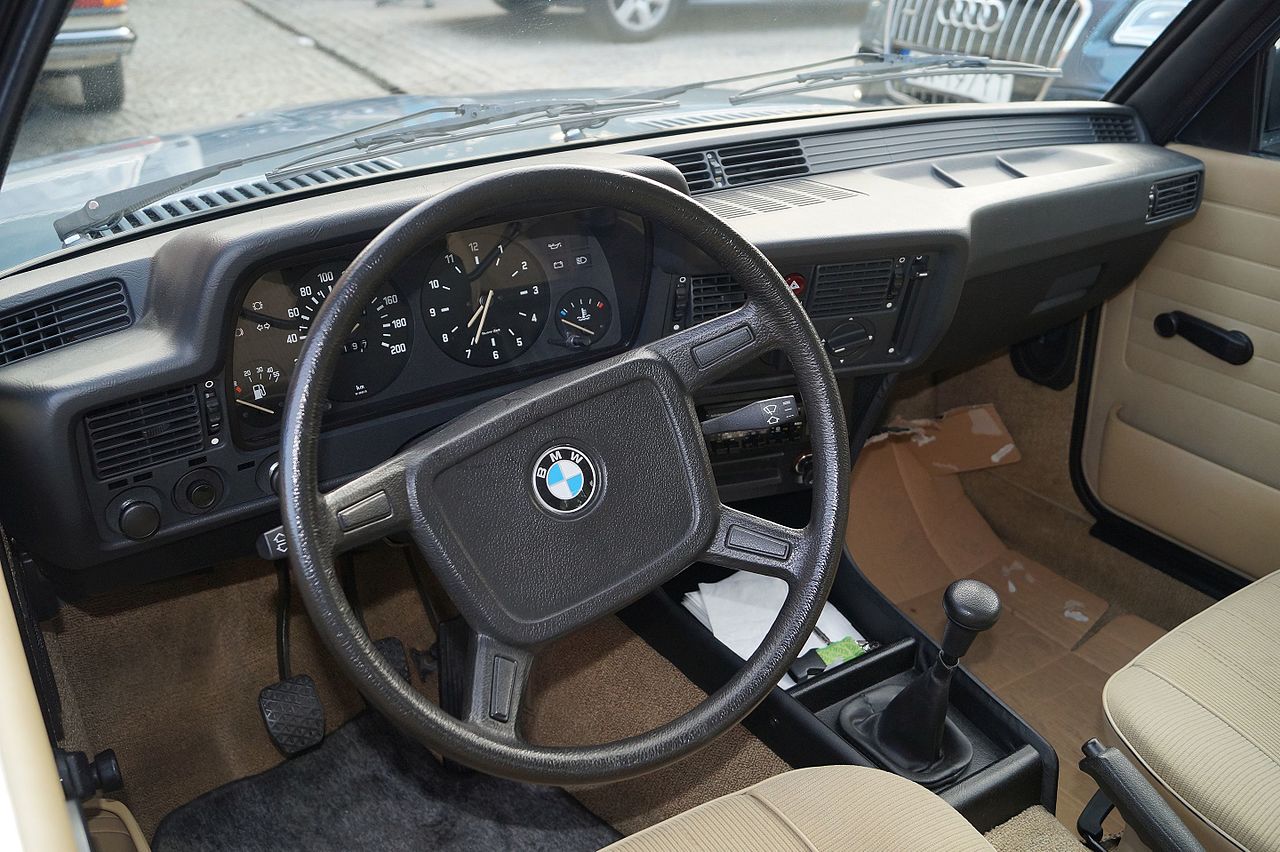
The cockpit design of the E21 marked the introduction of a new design concept, with the center console and central dashboard area angled towards the driver. This feature has become part of BMW’s interior design philosophy for many years. As a sign of passive safety, all edges and control elements within the interior were rounded off and padded.
Measuring 4,355 mm (171 in) long, 1,610 mm (63 in) wide, and 1,380 mm (54 in) high, the E21 continued the tradition of the New Class 2-door sedan models. With the wheelbase measuring 2,563 mm (101 in), there was little body overhang in the rear-wheel-drive design. The track measured 1,364 mm (54 in) at the front, and 1,377 mm (54 in) at the rear.
The suspension incorporated rack and pinion steering and MacPherson strut suspension at the front, and semi-trailing arm type independent suspension at the rear. The rear suspension design causes camber changes, which can introduce "snap oversteer" at the handling limits. The power assisted brakes were discs on the front wheels, while the rear wheels had drum brakes (except the 323i model which had discs all round).
Initially, a Getrag four-speed manual was the standard transmission fitment. Five-speed overdrive Getrag gearboxes were fitted as standard in 1980, but close ratio 'sport' gearboxes were available at the car's release as an option. Alternatively, purchasers could opt for the ZF 3 HP-22 three-speed automatic transmission.
The 315 was the base model for years 1981 to 1983, fitted with a version of the 316's 1.6-litre engine tuned for fuel economy. It accelerates to 100 km/h in 14.8 seconds and has a top speed of 154 km/h (96 mph).

This 316 was the base model for years 1975 to 1981. It accelerates to 100 km/h in 13.8 seconds and has a top speed of 160 km/h (99 mph).
In 1980 the engine size increased to 1.8 litres, however the model remained badged as 316. Acceleration to 100 km/h was reduced to 12.5 seconds and top speed increased to 167 km/h (104 mph).
The 318 was a mid-range model. It accelerates to 100 km/h in 11.9 seconds and has a top speed of 165 km/h (103 mph).
In 1980, the carburetted 318 was replaced by the fuel injected 318i. It accelerates to 100 km/h in 11.5 seconds and has a top speed of 173 km/h (107 mph). In Sweden, the 318i was badged 320i and had twin headlights.
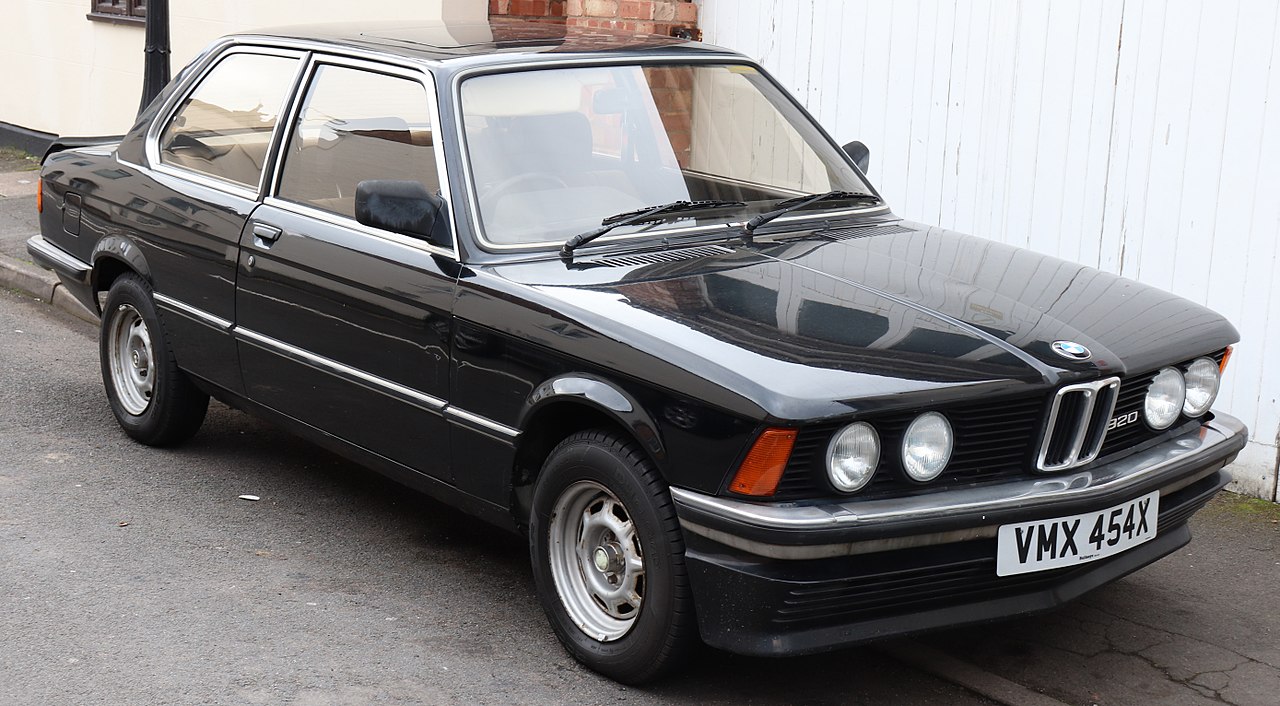
The 320 was a mid-range model, powered by a 2.0 litre engine using a Solex 2-barrel downdraft carburettor. It accelerates to 100 km/h in 11.2 seconds and has a top speed of 170 km/h (106 mph).
The fuel injected 320i was released in late 1975. It accelerates to 100 km/h in 9.9 seconds and has a top speed of 182 km/h (113 mph).
US models are fitted with a thermal reactor as a pollution control device. The 2.0 litre US model (1977-1979) accelerates to 100 km/h in 10.5 seconds and has a top speed of 165 km/h (103 mph). The 1.8 litre US 320i and 320is models (1980-1983) accelerate to 100 km/h in 11.1 seconds and have a top speed of 169 km/h (105 mph).
The 320/6 replaced the 320i. It uses a six-cylinder engine with a Solex 4-barrel downdraft carburetor. It accelerates to 100 km/h in 10.0 seconds and has a top speed of 180 km/h (112 mph).
The 323i was the top E21 model following its introduction in 1979. It is powered by a 2.3 litre six-cylinder engine using K-Jetronic fuel-injection. It accelerates to 100 km/h in 8.7 seconds and has a top speed of 200 km/h (124 mph).
The E21 was sold in the United States from model years 1977 to 1983 as the four-cylinder 320i and 320is. Six-cylinder models were not sold in America, because the E21 versions of the M20 engine did not meet U.S. emissions regulations at the time.

Due to American regulations, the following changes were required:
larger front and rear "diving board" bumper bars
sealed beam headlights, larger indicator lights and side reflectors
speedometer in miles-per-hour
fuel gauge markings changed from litres to "full, ½, reserve"
a detuned version of the M10 engine, initially using a thermal reactor to control exhaust emissions
in 1980, the engine was downsized from 2.0 L to 1.8 L and the thermal reactor was replaced with a catalytic converter.
At the E21's release, three models were available: with 316 (1.6-litre), 318 (1.8-litre) and 320 (2.0-litre) versions of the BMW M10 4-cylinder engine. To differentiate between models, the 320 model came with dual headlights, while the 316 and 318 had single headlights.
The fuel-injected 320i was introduced at the end of 1975. It featured the M10 4-cylinder engine with Bosch K-Jetronic fuel injection, and a limited slip differential was available as an option.
At the 1977 International Auto Show in Frankfurt, BMW unveiled its new variants of the E21, featuring the new straight-6 M20 engines (which were initially called "M60").
The 4-cylinder 320 model was replaced with the 320/6, featuring a 2.0 litre version of the M20 engine. The new range-topping 323i model was introduced, featuring 2.3 L with 105 kW (141 hp), which gave the 323i a top speed of 200 km/h (124 mph). The braking system was also upgraded, with the 323i featuring disc brakes on all wheels. Options include power steering, a 5-speed close-ratio 'dogleg' sport gearbox, and 25% limited slip differential.
For the 1980 model year, the four-cylinder models were upgraded: the 1.8 L carburetted M10 unit was revised to produce 66 kW (89 hp) and entered the market in the updated 316, while a fuel-injected version of the 1.8 L M10 was introduced in the 318i model (which replaced the carburetted 318 as the mid-range model). This fuel-injected 1.8 L M10 was also sold in Sweden with 320i badging (with a higher level of standard equipment to distinguish it from the 318i), because the 320/6 was never certified for sale there
The 320is model (US only) was released in 1980 using a 1.8 litre version of the M10.[21] The "S Package" featured Recaro sport seats, upgraded suspension components that included a rear anti-roll bar and a larger front anti-roll bar, a 5-speed transmission and limited-slip differential, cross-spoke alloy wheels, a larger and more extensive tool kit, a dual operation manual sunroof, an AM/FM Blaupunkt radio with cassette player, fog lights, a 3-spoke leather-wrapped steering wheel and leather shift knob, a front air dam, a "delete" of the alphanumeric 320i markers on the rear trunk lid and a limited color palate of white, silver or black. Just 2,500 320is's were produced.
The economy model 315 was introduced as a reaction to the second "oil crisis" in late 1979. More spartan than the other E21 models, it was the last E21 to be built and produced alongside the early E30 models.

A cabriolet conversion was offered by Karosserie Baur GmbH, based on regular E21 models. The cabriolet conversion was composed of a targa roof and an independent rear soft-top. Production of the Baur TopCabriolet began in 1978, and were sold via the BMW dealership network.
All TopCabriolets included the BMW warranty. A total of 4,595 vehicles were manufactured before production ended in 1981.

The BMW E30 is the second generation of BMW 3 Series, which was produced from 1982 to 1994. The initial models used the coupe (two-door sedan) body style, with four-door sedan models introduced in 1983, convertibles introduced in 1985 and wagon/estate models (marketed as "Touring") introduced in 1987.
The E30 was the first 3 Series to be available in wagon and four-door sedan body styles. It was also the first 3 Series to have a diesel engine option. All-wheel drive was introduced to the 3 Series range with the 325iX model. The BMW Z1 roadster was based on the E30 platform.
The E36 replaced the E30 coupe models in 1990. Sedan production concluded on April 30, 1991 at Regensburg, with a white example. Other variants were phased out gradually, until the final E30 model, a Touring, was produced in 1994.
The first BMW M3 was built on the E30 platform. The E30 M3 is powered by the high-revving BMW S14 four-cylinder petrol engine, which produced 175 kW (235 hp) in its final European-only iteration.

Development of the E30 3 Series began in July 1976, with styling being developed under chief designer Claus Luthe. In 1978, the final design was approved, with design freeze (cubing process) being completed in 1979. The car was released at the end November 1982.
Externally, the E30's appearance is very similar to twin headlight versions of its E21 predecessor, however there are various detail changes in styling to the E30. Major differences to the E21 include the interior and a revised suspension, the latter to reduce the oversteer for which the E21 was criticised. Like the E21, a Baur convertible was available.
Initially, the E30 models used the M10 straight-four and the M20 straight-six engines, like its E21 predecessor. Over the production run, the M10 was replaced with the M40 and M42, the M20 received various upgrades and the S14 engine was introduced in the M3.
A six-cylinder diesel was also introduced later, in both naturally aspirated and turbocharged forms.
At the launch of the E30 range in 1982, the 316 used a 1766 cc M10 fed by a carburetor and producing 66 kW (89 hp). The 318i had the same M10 engine, but with Jetronic fuel injection, pushing power to 77 kW (103 hp) while also improving fuel economy.
The 1987 Series 2 update introduced a new four-cylinder engine: the M40, which used Motronic fuel-injection. In the 318i, a 1,796 cc (109.6 cu in) version of the M40 was used. The 316i model replaced the 316, using a 1,596 cc (97.4 cu in) version of the M40.
The 318iS coupe was released in 1989, using the new M42 engine. This is the most modern engine available in the E30 range, incorporating DOHC, the updated Bosch Motronic 1.3, hydraulic valve adjusters and coil-on-plug ignition. In some markets, the M42 engine was used in the 318i (sedan) and 318iC (convertible) models, instead of the M40.

The M3 is powered by the S14 engine, a high-revving motorsport engine with a cylinder head derived from the M88 six-cylinder engine.
At the launch of the E30 range, the six-cylinder models consisted of the 320i, which had a 2.0 L (120 cu in) M20 engine producing 92 kW (123 hp),[22] and the 323i, with a 2.3 L (140 cu in) M20 making 102 kW (137 hp), both using Bosch L-Jetronic fuel injection. These models were not sold in North America, presumably for emissions reasons. In 1985, the 2.3 L engine was replaced with a 2.5 L version of the M20, which produced 126 kW (169 hp) and used Bosch Motronic fuel injection. This engine was available in the 325i variants, including the all-wheel drive 325iX.
An economy version called the 325e was released as a lower revving, more fuel efficient engine. The e is an abbreviation for eta, which is used to represent the thermal efficiency of a heat engine. To maximise low-rev torque, the engine was the largest available in an E30, aside from the South Africa-only 333i model. The 2.7 L (160 cu in) engine had a longer stroke than the 2.5 L, with a more restrictive head, four cam bearings instead of seven (less internal friction), and single valve springs (instead of the dual valve springs used by the 2.5 L engine). This resulted in 90 kW (120 hp) at 4250 rpm and, more importantly, 240 N⋅m (180 lb⋅ft) at 3250 rpm. (without catalytic converter) Peak torque for the 2.5 L (150 cu in) engine is 215 N⋅m (159 lb⋅ft) at 4000&nbp;rpm).
The 1987 Series 2 update boosted the 320i to 95 kW (127 hp) and the 325i to 126 kW (169 hp), and improved fuel economy.
In 1983 the 324td was unveiled at the IAA, Germany. The M21 diesel straight-six engine was turbocharged using a Garrett turbocharger, but without intercooler. The engine has a capacity of 2,443 cc (149 cu in) and uses mechanical (indirect) fuel injection.
In 1985 BMW introduced the 324d, a naturally aspirated version of the same M21 engine, which was popular in countries with a high motor vehicle tax.
In 1987 an electronically controlled fuel pump was used which increased the torque output by 10 N⋅m (7 lb⋅ft). The updated engine has a smaller turbocharger, decreasing turbo lag.

In total, eight transmissions were available for the various models of the E30: five manuals, and two automatics.
The standard gearbox for the 316 and some 318i models is the Getrag 242 4-speed, these models had the option of the 5-speed Getrag 240. The Getrag 242 does not have synchromesh on reverse.
The 5-speed 318i models use the Getrag 240 gearbox. This gearbox is also used on the 320i, however with a different bell housing to suit the M20 engine.
The 323i, 325e, 325es and 325i use the stronger Getrag 260 5-speed.
The M3 was fitted with a Getrag 265 five-speed manual gearbox. This featured a dog-leg shift pattern for European models and a standard H-pattern for North American models.
The 3-speed ZF 3HP22 was available on the M10 316 and 318i models until year 1985.
The 4-speed ZF 4HP22 was available on all models later.
One of the features that added to the roominess of the E30 was the suspension. The front MacPherson struts and rear semi-trailing arm suspension were a compact arrangement that left a lot of cabin and boot space for the car's overall size. The semi-trailing arms have been criticized for the dynamic toe and camber changes inherent to the suspension geometry, causing bump steer in hard cornering situations (such as racing and autocross). Nonetheless, reviewers praised the handling of the E30.
A widened version of the E30 front suspension and the drivetrain from the E30 325i were used in the BMW Z1 roadster. The BMW Z3 (E36/4) and BMW Compact (E36/5) rear suspensions are also very similar to the E30, but utilizing five-lug hubs. The Z3-based BMW M Coupe uses a widened version of the same rear semi-trailing arm suspension.
For the front wheels, all models use disk brakes. For the rear wheels, most models use disk brakes, except for some 4-cylinder models which use drum brakes. Anti-lock braking system (ABS) became available in 1986.

The BMW M3 utilised a widened and heavily redesigned variation of the coupe body style, therefore the M3 shares few body parts with other E30 models. The M3 suspension is also significantly different from regular E30 models, including five-lug wheel bolts.
For Portugal and Italy only, due to considerably higher VAT and vehicle tax for cars with engines exceeding 2000 cc, a special model was created: the 320is. The sedan version appeared in the dealers' showrooms in September 1987 while the coupe version arrived in March 1988. Production of the 320is continued until 1991.
This model was produced both in coupe and sedan versions and was equipped with a 1,990 cc (121 cu in) version of the S14 engine from the M3, with stroke reduced to 72.6 mm (2.86 in). This engine produced 143 kW (192 hp) at 6900 rpm and 155 lb⋅ft (210 N⋅m) at 4,900 rpm. The 320is shared the same dogleg Getrag 265 gearbox of the non-US M3 while it had a limited slip differential with the same 25% lock up rate but with a shorter differential ratio of 3.46:1. All the 320is models were left hand drive and without a catalytic converter. Sports suspension was fitted to all coupes, and to sedans produced from September 1989.
The interior of the 320is was identical to that of other 3 Series models, except an M3 instrument cluster (which features an oil temperature gauge instead of a fuel economy gauge) was used. The 320is was sold for three years, with 1,206 sedans and 2,542 coupes produced.
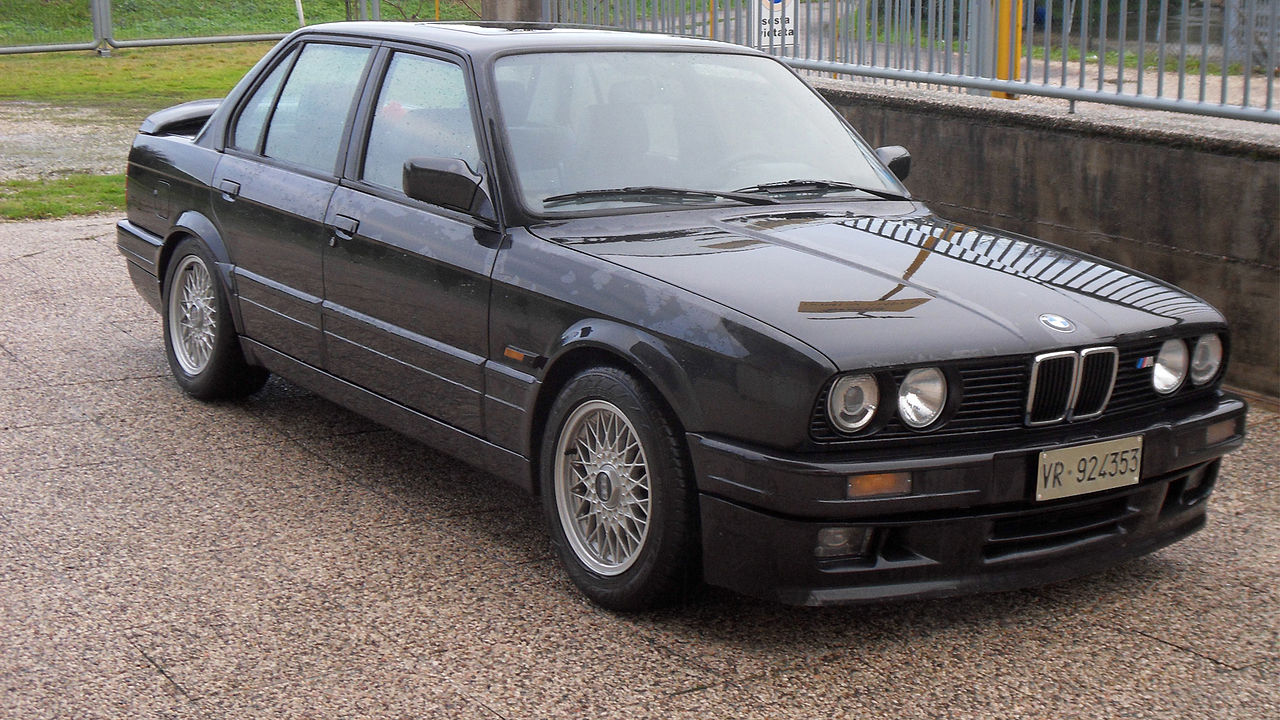
In New Zealand, where the M3 was never sold by BMW, the local importer created a sporting version of the sedan called M325i. About 100 such cars were imported beginning in late 1986 until at least 1990. Fitted with the standard non-catalyzed 126 kW (171 PS) 2.5 litre engine they benefitted from a Motorsport tuned suspension, the M-Technic body package, 15-inch BBS cross-spoke wheels with wide, low profile (225/50) tyres, and a limited-slip differential. The M325i is quite similar to the British market 325i Sport, also developed as a response to the absence of a right-hand-drive M3.
BMW South Africa's Motorsport division created the 333i in 1985 by fitting the 3.2 L M30 "big six" engine to a coupe E30. The resulting 333i was a success in South African saloon car racing. These cars were built with help from Alpina in Buchloe, Germany. Due to the space constraints caused by the large M30 engine, the buyer was forced to choose between air conditioning (vital in South Africa) and power steering. The 333i was produced from 1985 to 1987 and only 204 cars were produced.
The 333i engine produces 145 kW (194 hp) at 5500 rpm and 285 N⋅m (210 lb⋅ft) at 4300 rpm. BMW's official performance claims are 0–100 km/h (0–62 mph) in 7.4 seconds, and a top speed of 228 km/h (142 mph).
The 2.7 litre 325iS, commonly called Evo 1, was created by BMW South Africa to replace the 2.5 litre 126 kW 325i in Group N production car racing, as a response to the introduction of the Opel Kadett 2 litre 16V to the Class A category. It was launched in the first half of 1990 and was powered by an Alpina-fettled, 2.7 litre M20 engine which produced 145 kW (194 hp). Following the introduction of the upgraded Opel Kadett 16V SuperBoss, in 1991 BMW South Africa introduced the 325iS Evolution HP, commonly referred to as the Evo 2. The motor was upgraded to produce 155 kW (208 hp).
The Evolution HP won the Group N Class A title in 1993, winning 20 of the 24 races in the process. The Robbi Smith and Geoff Goddard Evolution HP won the season-ending 9hr race.
The JPS Edition is an Australian-only model built as a tribute to the 635CSi cars competing in local touring car racing. JPS refers to the race sponsor, John Player Special cigarettes. The cars are 323i manual coupes, painted in black with gold pinstripes and gold BBS wheels. They also had Recaro sports seats, JPS badging, a limited slip differential, sports suspension, a sunroof and a body kit. The initial production run was 70 cars, with a small number of additional cars produced afterwards.
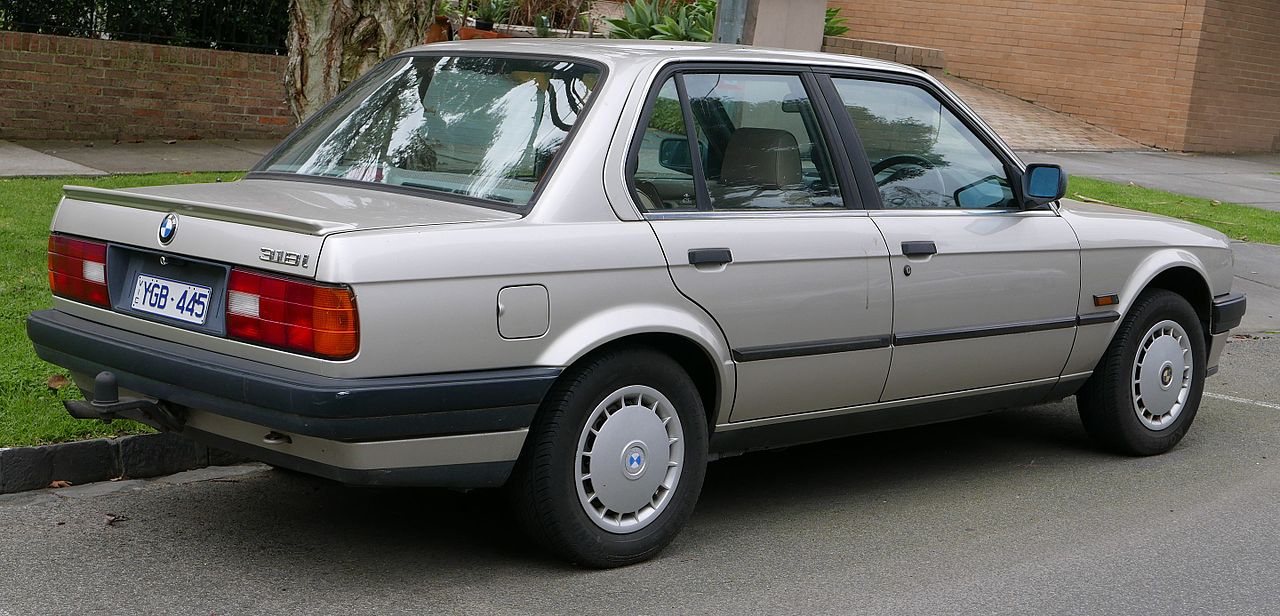
In 1985 the exterior and interior trim were updated. The 323i model was replaced with the 325i at this time and the diesel-engined 324d was introduced. A factory convertible entered the model range. However, the Baur remained on sale, alongside the factory convertible. The M3 convertible was only offered for the European market. The M3 convertible was only sold in Europe.
At the Frankfurt Motor Show in September 1987, BMW introduced a major update to the E30 (often called Series 2). The changes to the lineup were the addition of the Touring (station wagon) variant and removal of the 325e model. The M10 4-cylinder engine was replaced by the M40. External styling changes included a new front bumper, redesigned rear lights, rear apron, headlight reflectors, and licence plate frame, while the window frames lost their chrome trim. Rust protection was improved with the update. Various mechanical changes were made, including updating of the engine range. The 1987 update models remained largely unchanged until the end of production.

The BMW E36 series is the third generation of the BMW 3 Series range of compact executive cars, and was produced from 1990 to 2000. The initial models were the 4-door sedan body style, followed by the coupe, convertible, wagon ("Touring") and hatchback ("Compact") body styles in later years.
The E36 was the first 3 Series to be offered in a hatchback body style. It was also the first 3 Series to be available with a 6-speed manual transmission (in the 1996 M3), a 5-speed automatic transmission and a four-cylinder diesel engine. The multi-link rear suspension was also a significant upgrade compared with previous generations of 3 Series.
Following the introduction of its E46 successor in 1998, the E36 began to be phased out.
The E36 was named in Car and Driver Magazine's 10Best list for every year it was on sale.
The E36 M3 is powered by the S50 or S52 straight-six engine (depending on country). The E36 M3 was released in 1992 and was available in coupe, sedan and convertible body styles.
Development of the E36 began in 1981 and the exterior design was heavily influenced by aerodynamics- specifically the overall wedge shape, headlight covers and smaller wing mirrors.
The E36 was launched in October 1990.

The saloon, coupe, convertible and Touring models use the "Z-axle" multilink suspension in the rear, which was introduced in the Z1.
The hatchback body style (known as the "E36/5" or "BMW Compact") used a rear semi-trailing arm suspension based on the older E30 (also found in the Z3 and M Coupe), instead of the "Z-Axle" Multilink employed in all other E36's. This was done in order to save space due to its truncated rear end.

The E36 M3 is powered by the S50 and S52 straight-six engines, and was produced in coupe, sedan and convertible body styles.

BMW made an entry level version of the E36 called the "3 Series Compact", a three-door hatchback. This platform is often referred to as the E36/5. In the United States/Canada market the car was sold as the 318ti and was equipped with a 1.8L I4, 139 bhp (104 kW; 141 PS) M42B18 engine and was priced at USD23,000 in 1995. In 1996 the 1.8 liter engine was replaced with 1.9L M44B19 putting out 142 bhp (106 kW; 144 PS) and 133 ft⋅lbf (180 N⋅m) of torque. Ostensibly due to slow U.S. sales of the E36/5 Compact, the E46 Compact was not sold in the United States.
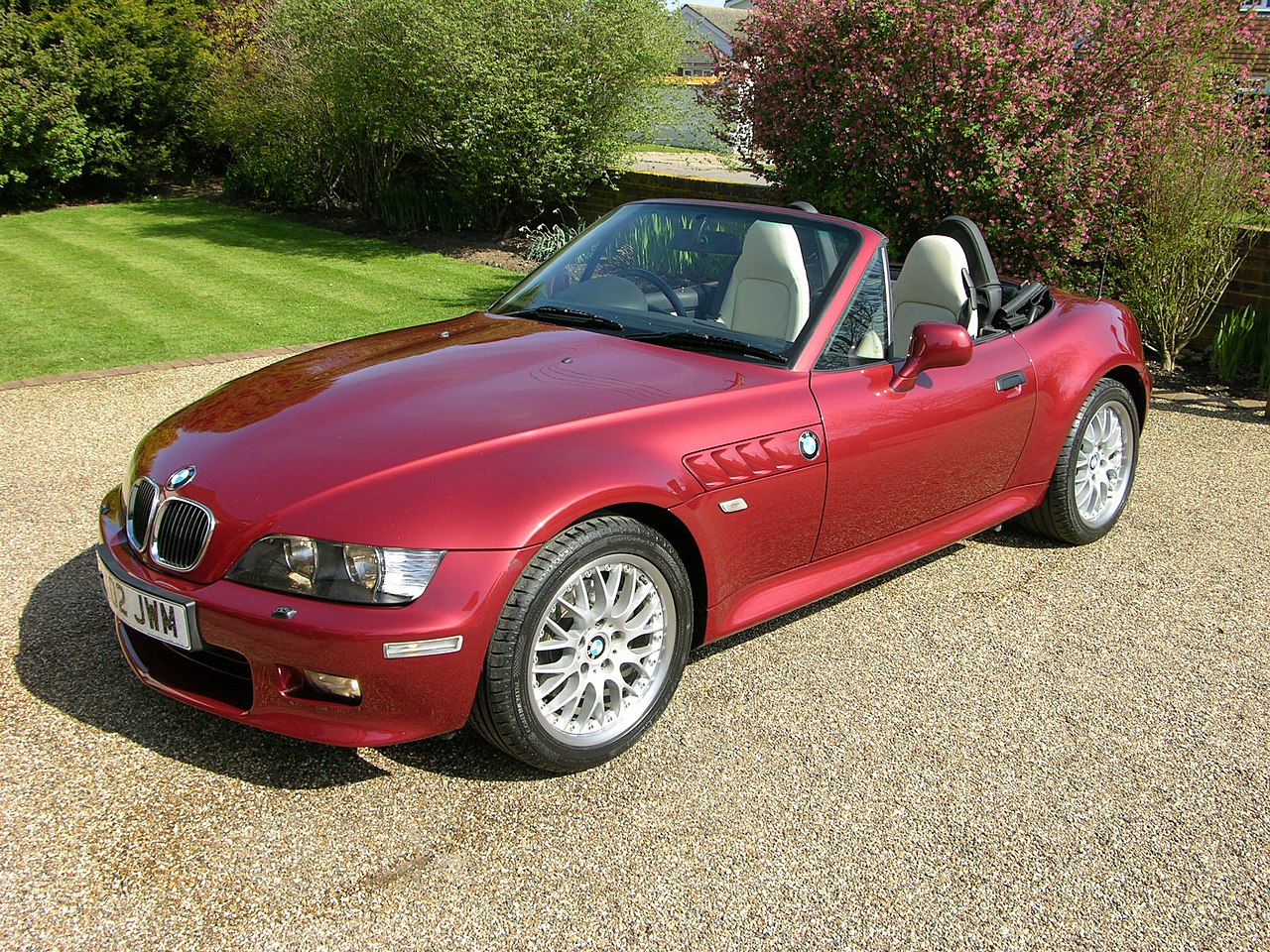
A modified version of the E36 platform designated as E36/7 was used for the Z3 roadster in 1996-2002. The modification for the Z3 Coupe was designed as E36/8.
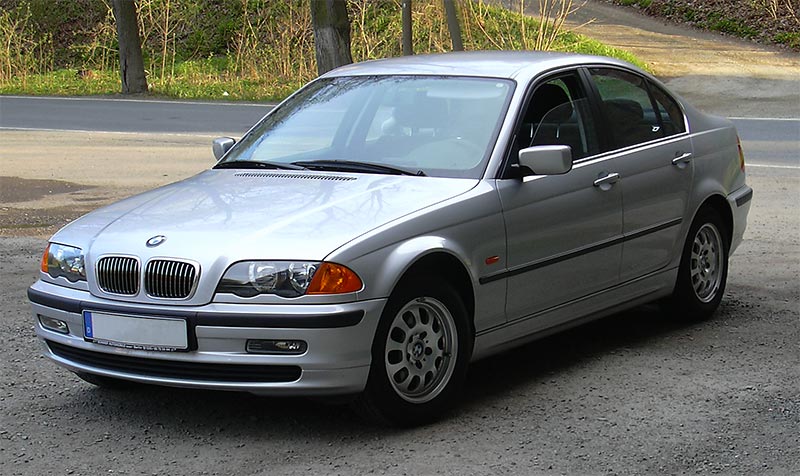
The BMW E46 is the fourth generation of the BMW 3 Series, which was produced from 1997 to 2006. The body styles of the range are:
4-door sedan, sold from April 1998 to 2005
2-door coupé, sold from June 1999 to 2006
2-door convertible, produced from December 1999 to 2006
5-door estate/wagon (marketed as "Touring"), sold from October 1999 to 2005
3-door hatchback (see BMW 3 Series Compact), sold from June 2001 to 2004
All-wheel drive, last available in the E30 3 Series, was reintroduced for the E46. It was available for the 325xi, 330xi and 330xd sedan/wagon models. The E46 was the first 3 Series to be available with an engine using variable valve lift ("valvetronic"). Various electronic features were also introduced to the 3 Series in the E46 generation, including satellite navigation, electronic brake-force distribution, rain-sensing wipers and LED tail-lights.
Following the introduction of the E90 sedans in late 2004, the E46 began to be phased out. However the E46 coupe and convertible body styles remained in production until 2006.
The M3 version of the E46 was powered by the S54 straight-six engine. The M3 was released in late 2000 and was available in coupé and convertible body styles.
In 1993, the development programme for the E46 began under chief engineer Wolfgang Ziebart, head of R&D Wolfgang Reitzle. In late 1993, design work began under Chris Bangle and continued into 1995. In May 1995, the general exterior design of the E46 by Erik Goplen of DesignworksUSA was approved and as a result DesignworksUSA was contracted by BMW to work alongside BMW Group's in-house design team to create the exterior body work for the 3 Series range in February 1996. The design team put an emphasis on improving aerodynamics and increasing the car's aggressive stance. Design patents were filed in Germany on 16 July 1997 and in the US on 16 January 1998.
Chris Bangle and Dr. Wolfgang Reitzle (BMW Head of R&D) were responsible through 1995 for the production saloon exterior, as evident in the 1997 design patent. Production development of the saloon took 24 months following design freeze and was 31 months from executive board styling approval in 1995 to 1997 start of production. Goplen designed the production coupé and estate during 1996–1997. The E46 sedan was revealed via press release on November 11, 1997 and was launched on the market at the end of April 1998 with customer deliveries. Production of the sedan concluded in May 2005.

The body shell of the E46 was claimed by BMW to be 70% more rigid than its E36 predecessor,[26] and aluminium was used for an increased quantity of suspension components, in order to decrease unsprung mass. However, with a curb weight of 1,450 kg (3,197 lb), the E46 328ci is 55 kilograms (121 lb) heavier than the E36 equivalent.
In tune with BMW's core values regarding handling dynamics, the E46 was released with a front engine rear-wheel drive layout and a 50/50 weight distribution.
The E46 electronics are more integrated than previous generations of 3 Series, including the use of a CAN bus system.[33] Drivetrain information (such as engine, transmission and stability control) is communicated using the CAN bus. Vehicle electronics (such as the radio, navigation, television and telecommunications) can communicate to each other via the K-bus.

The E46 M3, first introduced in October 2000, appeared with the 3.2 L S54 M-tuned engine. It was available in coupe and convertible body styles.
The M3's S54 engine has a redline of 8,000 rpm. As with most M engines, the S54 has 6 individual throttle bodies, in this case electronically operated (drive-by-wire throttle. The transmission options for the M3 were a 6-speed manual or the 6-speed "SMG-II" automated manual transmission.

The Performance Package was an inclusive option sold in North America, which was labelled the ZHP option code in the USA and ZAM in Canada. It was available for sedans from model years 2003 to 2005, and available for coupes and convertibles from 2004 to 2006. It included various aesthetic changes over the regular 3 series, as well as functional and mechanical enhancements.

The ZHP was equipped with sportier camshafts and revised engine tuning to increase power from 225 hp (168 kW) to 235 hp (175 kW) as well as an increase to the rev limiter from 6500 to 6800. Suspension was modified over the standard suspension with firmer springs and dampers, larger anti-roll bars, stronger front control arm ball joints, a lower ride height, heavy duty steering rack, and slightly more negative camber. Car and Driver magazine track-tested the car, which returned a 0–60 mph time of 5.6 seconds and passed through the 1/4 mile in 14.3 seconds.
BMW introduced a super ultra low emission vehicle (SULEV) into the selected regions of the United States to meet stricter emission standards. California, New York, and Massachusetts received the SULEV E46's in 2003, and Vermont in 2004. They received a variant of the M54 engine, the BMW M56. The M56 meets SULEV standards, as well as partial zero emission vehicle (PZEV) and zero evaporative emissions requirements. The M56 is claimed to have identical power as its M54 counterpart.
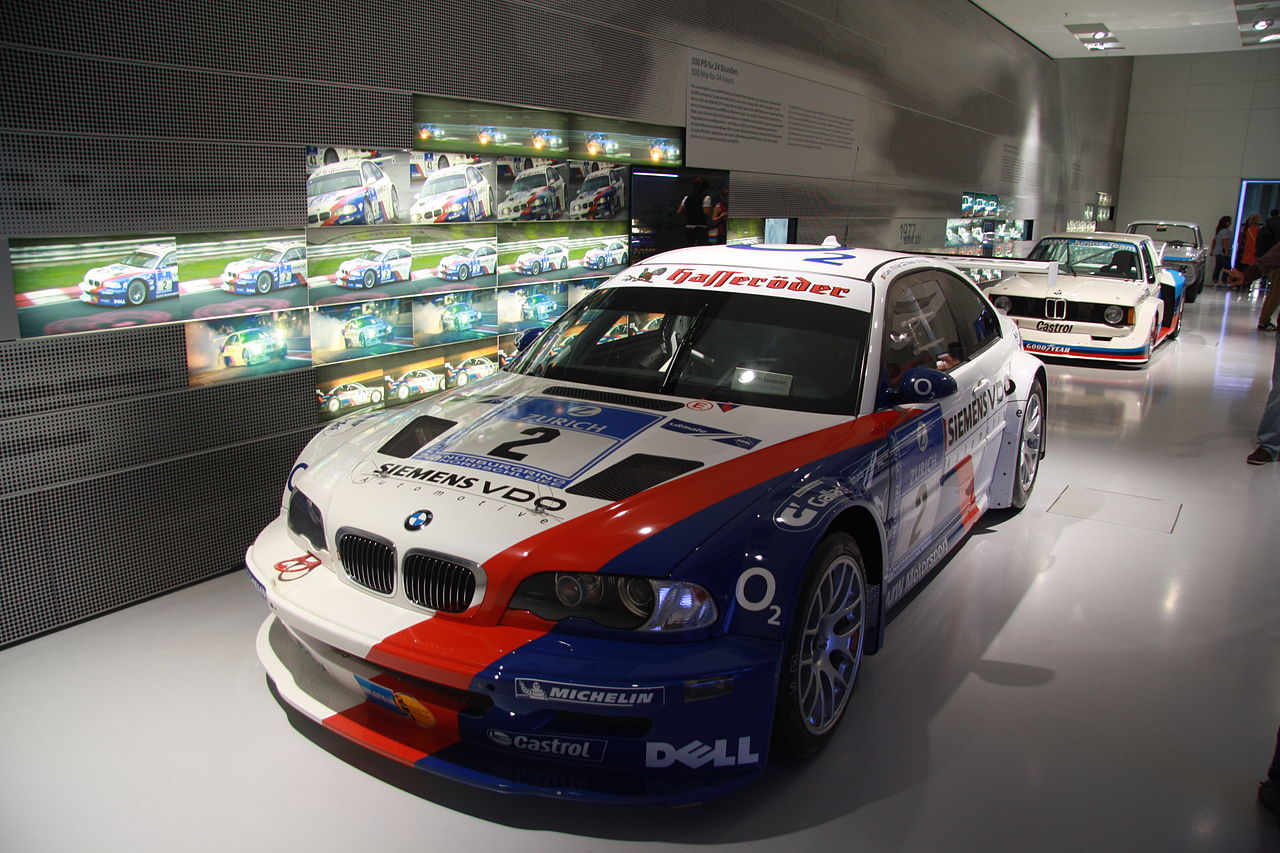
In order for the M3 GTR race car to compete in the American Le Mans Series, BMW produced 6 examples of the "M3 GTR Straßen Version" road car in 2001. As per the race M3 GTR, the roadgoing Version was powered by the BMW P60B40 4.0 L V8 engine.

The BMW E90/E91/E92/E93 Series is the fifth generation entry-level luxury car of the BMW 3 Series, which was produced from 2004 to 2013. The body styles of the range are:
4-door Sedan/Saloon (E90 Model Code)
Estate/Wagon (E91 Model Code, marketed as "Touring")
Coupé (E92 Model Code)
Cabriolet (E93 Model Code)
Due to the separate model codes for each body style, the term "E9X" is sometimes used to describe this generation of the 3 Series.
The E90/E91 sedans and wagons began to be phased out following the introduction of their F30/F31 successors in 2012. However, the E92/E93 coupes and cabriolets remained in production until 2013, when they were replaced by the F32/F33 models.
The E92 335i coupe, introduced in 2006, was the first 3 Series model to be sold with a turbocharged petrol engine. The E9X family also saw the introduction of run-flat tyres to the 3 Series range. Consequently, cars with run-flats are not equipped with a spare tyre.
The E90/E92/E93 M3 is the only generation of M3 to be powered by a V8 engine. Released in 2007, it uses BMW's S65 engine and was produced in sedan, coupe and cabriolet body styles.
The design for the fifth generation 3 Series was frozen in mid-2002, approximately 30 months before the start of production.
The sedan and Touring were designed by Joji Nagashima, and the coupe and cabriolet were designed by Marc Michael Markefka.

The sedan model was the first model sold of the 5th generation BMW 3 series, being launched on March 5, 2005 (as a 2006 model year) with the 318i, 320i, 320si, 323i, 325i, 325xi, 330i, and 330xi models. In later years, the following sedan models were added: 316i, 320d, 325d, 328i, 330d, 335i, 335xi, 335d and M3.
Optional features (some of which are standard on higher models) include Xenon headlamps, fog lamps, automatic climate control, power-adjustable seats, satellite navigation, premium audio, Dakota leather upholstery, glass sunroof, heated front seats, Bluetooth and USB audio input. In 2011, the BMW 323i Luxury Edition was released, which included an automatic transmission, 17-inch alloy wheels, electric front seats, Bluetooth and USB compatibility, and an electric glass sunroof.
This would be the last 3 Series to offer a naturally aspirated engine with the N52B30 (used in the 328i) and the S65B40 (used in the M3).

The E91 wagon body style is known as the 3 Series Touring or Sports Wagon. Optional equipment included a panoramic sunroof, which extends to the rear passenger area.
Trim levels typically were similar to the E90 sedan, however there was no M3 variant of the E91. As per the E90, powertrains used a range of petrol and diesel I-6 and I-4 engines, paired with RWD and/or xDrive AWD. Markets such as the United States and Canada, however, offered but a small subset of their already limited E90 trims. In these two markets, only the 325xi with AWD was available prior to 2007, and only the 328i in RWD and xDrive AWD forms was offered from 2007 onwards.

The coupe body style of the fifth generation 3 Series became available in August 2006 (as a 2007 model year), one year after the saloon. The E92 is available in the 316i, 318i, 320i, 323i, 325i, 325xi, 328i, 328xi, 330i, 330xi, 335i, 335is, 335xi, 320d, 320xd, 325d, 330d, 330xd, 335d, M3, and M3 GTS. This would be the last model to include the coupe and convertible as a part of the 3 Series; for the sixth generation (F32/F33/F36) onwards, these body styles changed to being marketed as the 4 Series.
The coupe has significant differences to the sedan, compared with previous generations. Differences include the tail-light design (L-shaped on the coupe), more steeply angled headlights and smaller side windows. The coupe door panels are also longer, it seats two passengers in the rear instead of the three-person bench, and also includes a rear centre console tray.
The coupé also features frameless doors like its E46 predecessor. There are also retractable arms that extend from the B-pillar to hand the seat belt to the driver and/or passenger when the key fob is in the ignition and the door is closed.

The 3 Series cabriolet is the first model in BMW's lineup with a 3-piece folding aluminium hard-top roof, instead of the cloth roof used by previous models. The E93 was one of first retractable hardtops in its price range. Other manufacturers have since produced similar retractable hardtop convertibles, such as the Lexus IS C and Infiniti G37 convertible. The "Comfort Access" option allows the roof to be raised and lowered using the key fob.
Overall visibility is up 38 percent, thanks to the side windows which are 30 percent larger, compared to the E46 3 Series Cabriolet.
The BMW 3 Series convertible was often priced higher than direct rivals, however reviewers have praised its passenger/boot space (even with the roof down), driving dynamics, weight and chassis rigidity.
At the front, aluminium MacPherson struts are used. The rear suspension is a steel 5-link Multi-link suspension.
Options could be ordered individually (such as Xenon headlights and audio upgrades) or combined into packages. Optional interior colours, known as BMW Individual, were also available at extra cost.
The contents of the Premium Package varies according to model year and market. It included items such as leather seats with power adjustments, memory seat function, lumbar support, auto-dimming mirrors, a digital compass, auto-folding exterior mirrors, bluetooth and universal garage opener.
The Cold Weather package includes headlight washers, heated front seats and split/folding rear seats.
The Sports package includes a leather 3-prong sports steering wheel, sports front seats, 18-inch wheels, sports suspension and an increase in the speed limiter to 148 mph (238 km/h).
The Technology package includes iDrive, navigation, keyless entry ("Comfort Access"), selectable driving modes ("M Drive"), HD radio and Electronic Damping Control.
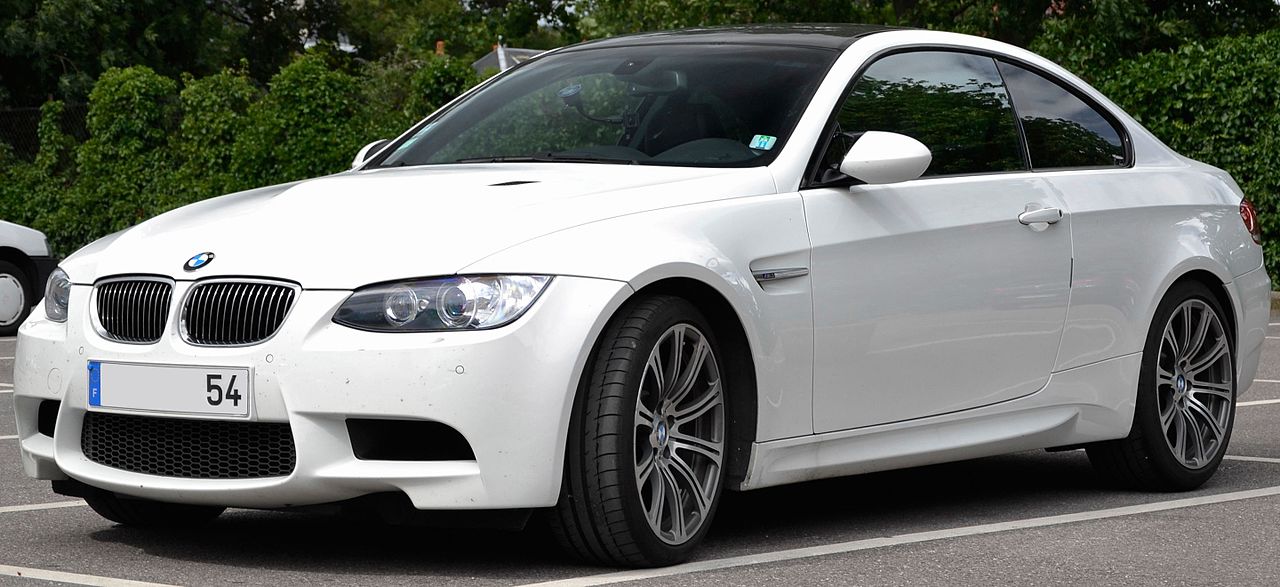
The M3 model was powered by the BMW S65 V8 engine and produced in sedan, coupe and cabriolet body styles.

To satisfy homologation requirements for the FIA World Touring Car Championship (WTCC), BMW built 2600 units of the 320si.
BMW WTCC works driver Andy Priaulx won two of his three consecutive World Championships in the 320si E90 as well as four other drivers achieving over 35 wins in the championship since the cars release. The BMW 320si is used by a few teams in the British Touring Car Championship (BTCC). Colin Turkington won the 2009 BTCC Drivers championship using the BMW 320si.

The 335is was produced in coupé and convertible models for the North American market. It sat between the regular 335i and the M3 in the model line-up, and approximately 6,300 units were produced. The 335is uses a higher performance version (N54T) of the N54 engine from the 2006-2013 335i, which increases boost from 8.7 to 11.6 PSI. This results in 320 horsepower and 332 lb-ft of torque, plus an overboost function raises torque to 370 lb-ft for up to 7 seconds.
The 335is has stiffer engine mounts and an upgraded cooling system, with a heavy-duty radiator fan and two heat exchangers, one an engine oil cooler, the other a secondary coolant radiator. To accommodate these heat exchangers, which are located ahead of each front wheel, the 335is has larger air openings, similar to the M3. Fog lights were removed from the coupé version to allow for the openings, although they remain on the convertible version. In addition, the 335is is equipped with a revised, high-flow exhaust system, with the twin exhaust pipes finished in matte black, and a rear bumper that incorporates a diffuser-style piece.
Transmission options were a 7-speed double clutch transmission (DCT) with launch control (Same DCT transmission as the M3 but with different software programming) or a 6-speed manual transmission controlled by a short-throw "M" stick. The manual transmission has a heavy-duty clutch with more holding power than the regular 335i.
Interior upgrades include a thicker, "M" steering wheel, "M" steel pedals, standard sport seats, "M" door sills, and textured aluminium trim with "335is" badging on dash and in instrument cluster. Exterior differences are black kidney grills, and "Style 313" split-five spoke "M" wheels in 18-inch or 19-inch size, standard Shadowline window trim (instead of chrome), gloss-black side mirrors (instead of body colored mirrors).

In September 2008, the facelift (LCI) versions of the Saloon and Estate were released for the 2009 model year. Compared to typically subtle BMW LCI changes, these changes were relatively extensive.
Mechanical changes included an increase in rear track of 24 mm (0.94 in) for some models, a power increase for the 320d from 177 to 184 PS (135 kW; 181 bhp) and the N57 engine replacing the M57 for the 330d model.
Styling changes included front and rear bumpers, wing mirrors, headlights, taillights, boot lid, wider kidney grilles and revised crease lines for the bonnet.
For the interior, crash-activated head restraints were added to the front seats, the optional "Professional" navigation system was updated, iDrive was updated and the resolution of the display was increased.
For the 2010 model year, the Sport, Lifestyle and Exclusive Edition were introduced for Saloon and Estate models. The 316d estate model was added, as was the 320d EfficientDynamics Edition saloon.
Mechanical changes included compliance with the EU5 emission standard, EU6 emission compliance (optional) for the 320d and 330d models, power increases for the 318d, 320d, 325d and 330d models, the N54 engine in the 335i being replaced by N55 engine, and additional features for BMW ConnectedDrive.

The BMW F30/F31/F34/F35 series is the sixth generation of the BMW 3 Series, which was launched on February 11, 2012 as the successor to the E90 3 Series. The body styles of the range are:
4-door sedan/saloon (F30 model code)
5-door estate/wagon (F31 model code, marketed as "Touring" or "Sports Wagon")
5-door fastback (F34 model code, marketed as 3 Series Gran Turismo)
4-door long-wheelbase sedan/saloon (F35 model code, only sold in China)
For the sixth generation, the coupe and convertible models were spun off to create the new BMW 4 Series nameplate. BMW also introduced a separate hatchback model under the 3 Series nameplate called the Gran Turismo.
The F30 is the first generation of 3 Series to be powered by a range of turbocharged engines exclusively and electric power steering (replacing the hydraulic power steering systems used previously). The F30 also marked the 3 Series' first use of a three-cylinder engine in its 2015 facelift. A new plug-in hybrid F30 model was also introduced in 2016.
The M3 model (designated F80) was released in 2014 and is powered by the S55 twin-turbo straight-6 engine.
The exterior designer for the F30 sedan was Christopher Weil and exterior designer for the F31 Touring was Michael de Bono.
The F30 was unveiled in Munich on 14 October 2011.
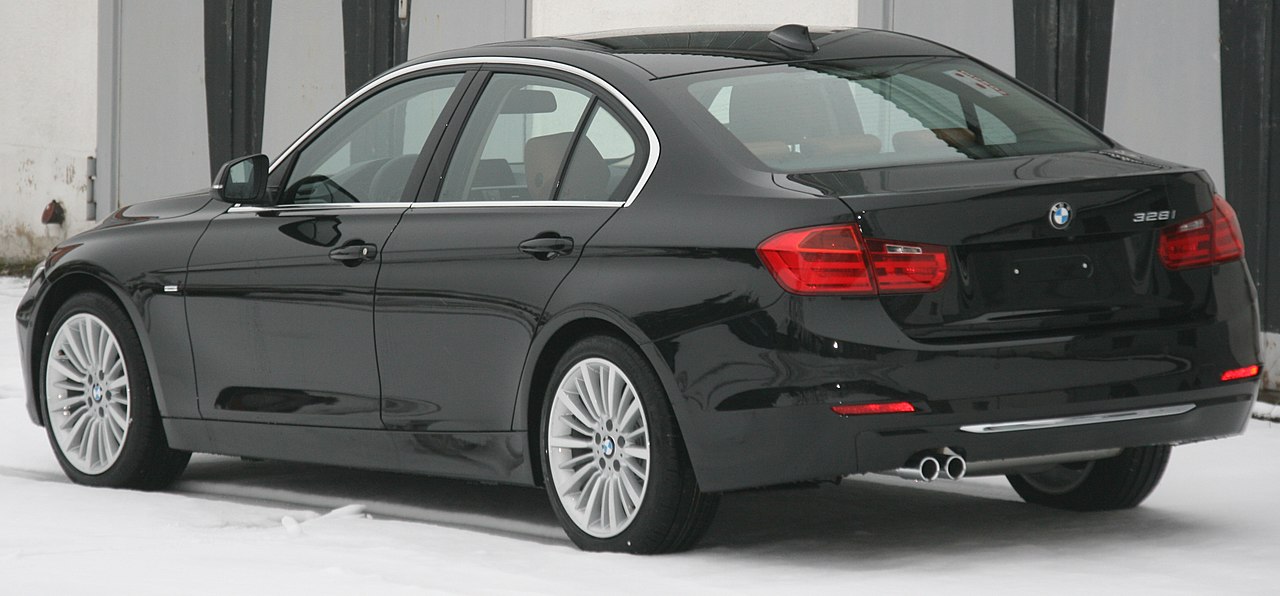
The F30 sedan received its auto show debut at the 2012 Geneva Motor Show in March 2012. It was released on February 11, 2012, being the first of the sixth generation 3 Series models to go on sale.
The 320i, 318d, and 316d sedans were added in March 2012, and the 320i EfficientDynamics Edition and 316i were added in autumn of 2012.
The BMW 320d Efficient Dynamics was the most widely used vehicle in the London 2012 Olympics due to BMW's official partnership.
The arrival of the four-cylinder models in the US was the first 3 Series to be sold with a four-cylinder petrol engine in this market since the E36 318i of the late 1990s. Early models included the 328i and 335i. The 328i xDrive and 335i xDrive went on sale in the summer of 2012.

The station wagon body style (marketed as "Estate", "Sports Wagon" or "Touring") was unveiled in 21st Auto Mobil International Leipzig 2012. This body style is designated as F31, and the launch models consisted of the 328i, 320d and 330d. The 320i, 316d and 318d models were added in autumn of 2012.

The 5-door hatchback body style is designated F34 and was marketed as the 3 Series Gran Turismo, with styling similar to the 5 Series Gran Turismo. At 4,824 mm (190 in), the F34 is 200 mm (8 in) longer than the Sedan and Touring models. This extra length is partly facilitated by the 110 mm (4 in) longer wheelbase of the platform used by the F35. The F34 is also 79 mm (3 in) taller than the F30/F31.
The vehicle was unveiled in the 83rd Geneva International Motor Show 2013. Early models included 320i, 328i, 335i, 318d, 320d, with the later introduction of the 325d. Several models were available with "xDrive" all-wheel drive.
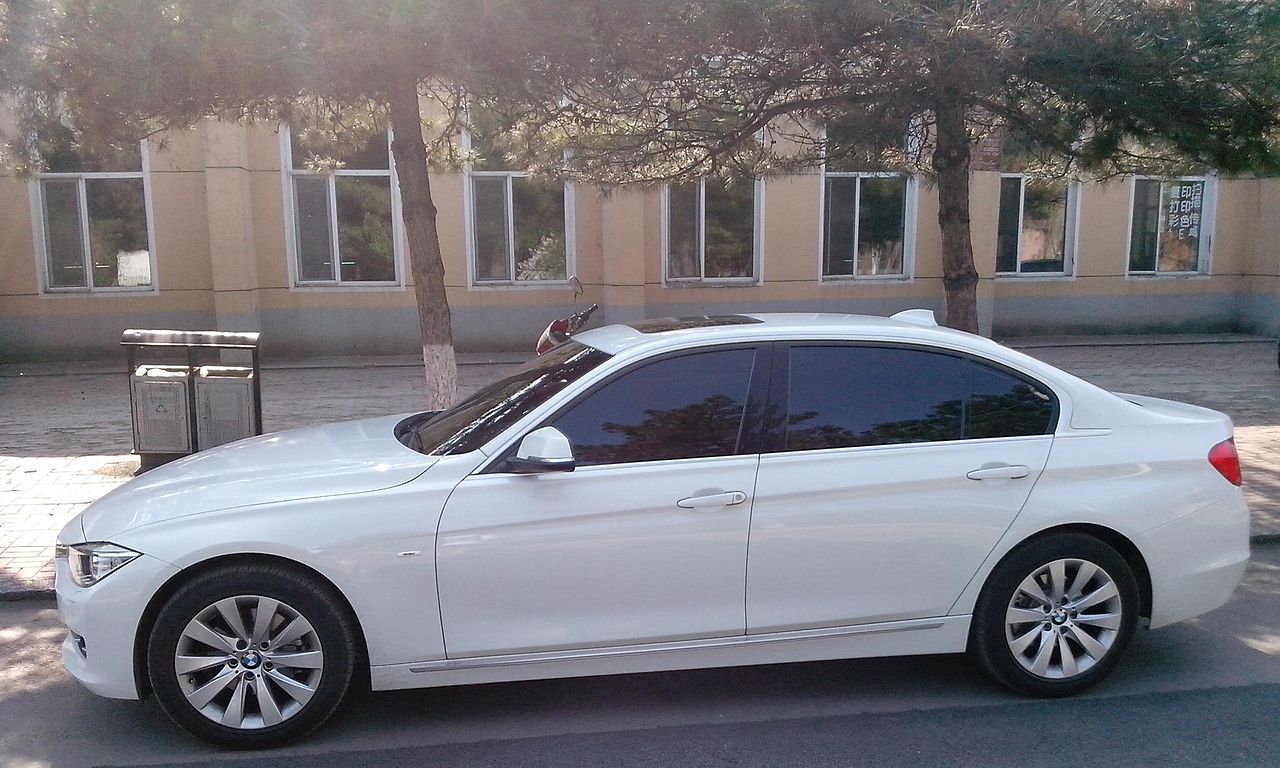
A long-wheelbase sedan, designated F35, was produced for the Chinese market. The wheelbase is increased by 110 mm (4.3 in), which increases rear knee room by 90 mm (3.5 in). This vehicle was produced in BMW's Shenyang production plant, and chrome trim on the doors distinguishes it from the F30 sedans.

The vehicle was unveiled in 2012 Auto China in Beijing. Initial models included the 320Li, 328Li and 335Li. Post-facelift (LCI) models were the 316Li, 320Li, 328Li, 328Li xDrive and 335Li.
Designed by Christopher Weil under design chief Adrian Van Hooydonk, the F30/F31 has grown in all dimensions compared to its predecessor. The styling is similar to previous generations with a sweeping bonnet, short front overhang and long wheelbase typical. Headlamps now connect to a wide kidney grill. Tail lamps sport a wide "L" shape design seen in many BMW models.
The traditional mechanical shift lever was replaced by a Shift by wire shifter, as introduced in the 2007 E70 X5 and the 2008 LCI update of the E60 5 Series. The LCD and iDrive scroll button on the steering wheel became standard equipment. GPS navigation and an 8.8 in (22.4 cm) widescreen display were included in the Technology and Navigation packages. Other options include heated front seats and split-fold rear seats. Rear headroom, leg room and shoulder room has increased, compared with its E90 predecessor.
Three trim options (called "lines" by BMW) have been available for the F30/F31: Modern line, Sports line and Luxury line. These lines form the base packages upon which extra options could be specified.
The Modern line includes a matte-chrome finish for the grille and exhausts, unique wheels and textured wood trim in the interior. The Modern line was discontinued in 2013.
The Sport line is a replacement of the Sports Package previously offered on the E36, E46 and E90. The Sport line included 18" wheels, sports suspension, a Sport Plus driving mode, sports steering wheel and sports seats. Cosmetic features included contrasting stitching and piping, a contrasting "accent strip" and aluminium sill plates.
The Luxury line includes chrome trim around the side windows, aluminium sill plates and a sports steering wheel.
In the US, the lines were discontinued (therefore specifying a car reverted to selecting individual options), however the lines continued in other markets.
The petrol models initially used the 4-cylinder N13, 4-cylinder N20 and 6-cylinder N55 engines, which are all turbocharged. This meant that the 325i and 328i models (traditionally powered by naturally-aspirated 6-cylinder engines) now used the turbocharged 4-cylinder N20 engine.[45] For the 2016 facelift (LCI), the engines were updated to the 3-cylinder B38, the 4-cylinder B48 and the 6-cylinder B58.
The diesel models initially used the 4-cylinder N47 and 6-cylinder N57 turbocharged engines. For the 2016 facelift, the 4-cylinder models were updated to the B47 engine, while the 6-cylinder models retained the N57 engine.

Based on the 335i Sedan, the ActiveHybrid 3 includes a 40 kW (54 hp) synchronous electric motor, a lithium-ion battery integrated underneath the luggage area and a 2-zone climate control system with stationary air conditioning. The electric motor produces 210 N⋅m (150 lb⋅ft). The maximum all-electric driving range is 4 km (2.5 mi), with top speed of 75 km/h (47 mph).
The BMW ActiveHybrid 3 was unveiled at the North American International Auto Show in January 2012.
The US EPA rated the 2013 ActiveHybrid 3 with a combined fuel economy of 28 mpg‑US (8.4 l/100 km), with 25 mpg‑US (9.4 l/100 km) in the city, and 33 mpg‑US (7.1 l/100 km) .

The BMW 330e iPerformance is a plug-in hybrid unveilled at the IAA in Frankfurt in September 2015. Retail sales began in Europe and North America in 2016. Sales in the American market are slated for mid-2016, with a price starting at US$44,695 before any applicable government incentives. The car was initially name 330e Plug-in Hybrid, however, in February 2016 BMW announced the introduction of the "iPerformance" model designation, which will be given to all BMW plug-in hybrid vehicles from July 2016. The aim is to provide a visible indicator of the transfer of technology from BMW i to the BMW core brand.
The 330e features a four-cylinder gasoline engine and an 88-hp electric motor. It produces a total of 252 hp and 310 lb-ft of torque. Under the U.S. Environmental Protection Agency (EPA) tests, the BMW 330e has an all electric range of 14 mi (23 km), with some gasoline consumption, so the actual all-electric range is rated between 0 to 14 mi (0 to 23 km).
The EPA, under its five-cycle tests, rated the 2016 model year 330e energy consumption in all-electric mode at 47 kWh per 100 miles, which translates into a combined city/highway fuel economy of 72 miles per gallon gasoline equivalent (MPG-e) (3.3 L/100 km; 86 mpg-imp gasoline equivalent). When powered only by the gasoline engine, EPA's official combined city/highway fuel economy is 31 mpg‑US (7.6 L/100 km; 37 mpg‑imp).
The first units were registered in Europe by late 2015. A total of 68 units were sold in the Netherlands by the end of 2015.
all-wheel drive became available with the wagon body style for 320i, 328i and 330i models
US sales of wagon body style begin in the Spring of 2013. Models included 328i, 328i xDrive, as well as the 328d xDrive, using the same engine tuning as the 320d elsewhere in the world.
US sales of 320i and 320i xDrive sedans begin late-Spring 2013.
328d is the first four-cylinder diesel BMW to be sold in the United States.
The facelift ("Life Cycle Impulse") versions were released in 2015 for the 2016 model year.[66][67] Changes include:

340i models (using the B58 engine) replace the 335i models (using the N55 engine).
330i model (using the B48 engine) replaces the 328i model (using the N20 engine), except for the United States market
320i engine changes to B48 from N20, except for the United States market
318i engine changes to the 3-cylinder B38 (therefore, for the first time in its 40-year history, the 318i model isn't powered by a 4-cylinder engine)
B47 engine replaces the N47 engine for the 4-cylinder diesel models.
ActiveHybrid 3 model discontinued
330e iPerformance plug-in hybrid model added
revised headlights and tail-lights, with LED replacing Xenon for the headlights
revised shock absorbers and front suspension mounts
revised electronic stability control (called "DSC" by BMW)
rev-matching (called "engine speed adaption" by BMW) for manual transmissions.
GPS-based gear selection (called "ConnectedShift" by BMW) for automatic transmissions.