What's On

Showing posts with label Aero. Show all posts

Thursday, January 12, 2023

[Tribute] we find a rare Saab 9-5 wagon


Saab was way ahead of its time and the proof of this is in the sudden rise and appeal of turbocharged engine technology, while everyone else was using non-turbo designs with large engine displacements. Saab used smaller four-cylinder engine which offered similar horsepower and torque to the larger six-cylinders and some eight-cylinder engines. It saddens us that Saab no longer produces vehicles and well this is another tribute to Saab. We managed to find a 2003 Saab 9-5 Linear Wagon and well we couldn’t resist driving it.

The Saab 9-5 wagon has always been a particular favorite of mine. I love way it’s styled inside and out. It’s a bit of an oddball but in a good way. The styling is still fresh even after all these years. Our tester car had a few scrapes here and there but for what is essentially a thirteen year old vehicle it surely doesn’t feel worn out or out of shape.

The engine that’s equipped in our 9-5 is a 2.3-liter light-pressure turbocharged four-cylinder which pumps out 185hp. There were two other engines available, a more potent 2.3-liter turbo pumping out 220hp and the top of the range high-output turbo four with 250hp. We’ve only driven this engine which was called Linear and the mid-range Arc trim. We loved how classy the Arc trim felt with the burled wood interior and fancier leather seats. The Linear trim which we have here has a lighter wood trim and well the leather seats are still fantastic. The ignition switch is in the center console which is a signature Saab design and the overall feel of the cabin is pretty much straight forward.

The engine is the sweet spot for the 9-5 wagon because it has a turbocharged design. It has oodles of torque at low revs which helps make it very smooth to drive around town and on the highway. Surprisingly this engine feels enough, you’d expect us to complain about how 185hp for such a large vehicle isn’t enough but it really does feel enough. It’s such a comfortable car to drive that you’d immediately forget about horsepower figures and you’re more focused on the driving experience at hand. The dashboard sort of wraps around you and everything is within reach of the hand. We even got a few glances from other drivers, because well let’s face the facts here. The 9-5 is so handsome looking and wagons are such a rare sight on the road that you can’t help but stare.

Highway ride comfort is excellent and dare we say better than most BMWs we’ve driven. Handling isn’t a strong point for the 9-5 but it does hold its own well. Steering feedback isn’t the greatest but it does the job good enough. We’ve tried hard to find fault in the 9-5 but it’s pretty hard to especially with such a rare gem like this. Visibility is actually good too thanks to large windows, which helps make the cabin feel airy and the optional sunroof our tester car had equipped makes things even better. What’s also rare is that most 9-5s we’ve driven had halogen headlights, and this one came equipped with factory installed xenon headlamps which both worked properly. Also in Saab tradition is the headlamps and tail lamps stay on the whole time you drive, whether it’s day time or night time. The headlamps also feature a follow-me-home feature which keeps the headlights on for 60-seconds after the engine has been shut off.

Rear seat space is roomy for three and the boot space is very generous. Fold the rear seats down and you’ve practically got yourself a cargo van. If you run out of space in this you need a Chevy Suburban. During our test we were able to fit a few weeks of shopping in the boot and still carry four aboard with no trouble.

Saab is very generous when it comes to standard kit. Along with xenon headlamps, our 9-5 came with climate control, auto-dimming mirrors, and power-folding mirrors as well as heated front seats. We wish that this also came fitted with Saab’s amazing perforated leather seats. The Arc and Aero are worth paying extra for because they trade the plain exterior looks for body-kit and flashier alloy wheels as well as added features.

Comparing the 9-5 wagon to today’s competition, the 9-5 wouldn’t be class leading but it would offer a very compelling package for those who aren’t swayed easily by everything less in the segment. We really do wish that Saab was still producing cars today because their different perspective on vehicles is a breath of fresh air.

2.3-liter turbocharged four-cylinder, 185hp.
5-speed automatic gearbox

History of Saab 9-5


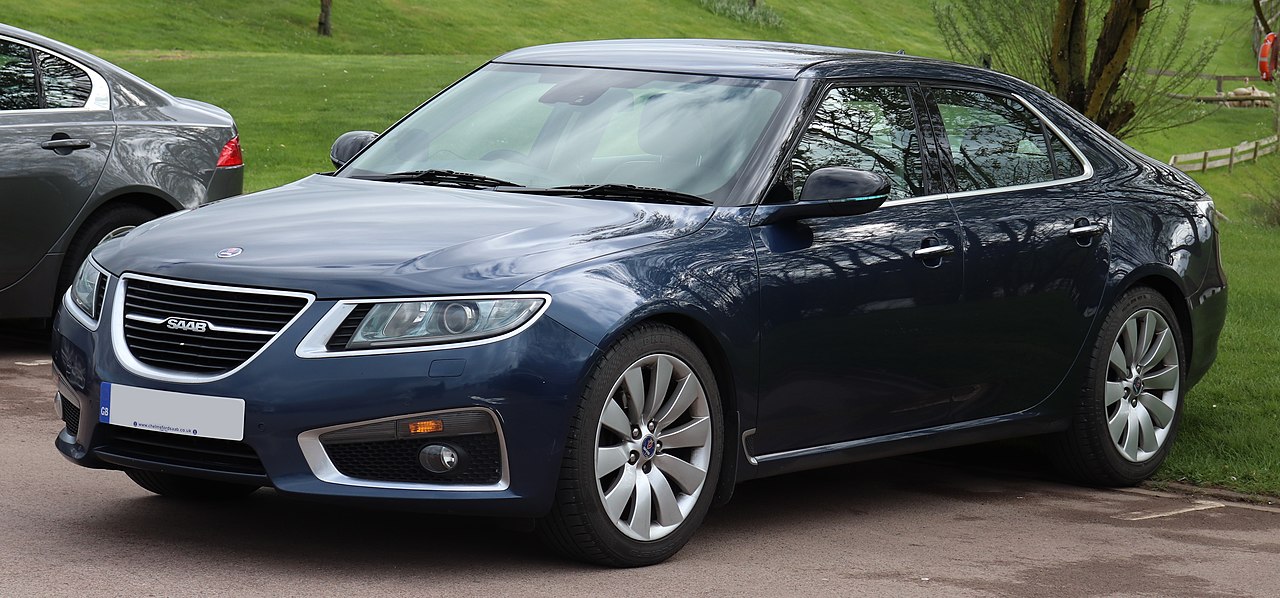
2012 Saab 9-5 Aero Turbo4 Automatic 2.0 Front.jpg


The Saab 9-5 is an executive car that was produced by the Swedish automobile maker Saab.

The first generation 9-5 was introduced in 1997, for the 1998 model year, as the replacement to the Saab 9000. At the time, the car represented a significant development for the manufacturer. In the United States, the 9-5 was introduced in the spring of 1998, for the 1999 model year.

On September 15, 2009, the second generation was presented at the Frankfurt Motor Show and production began in June 2010. It was the first Saab to be launched under Spyker Cars' ownership, even though it was developed almost completely under GM's ownership.

Saab badged the model as the Saab 95, but consistently advertised it as the Saab 9-5, pronounced "nine five" rather than "ninety-five". This model should not be confused with the Saab 95, produced from 1959 to 1978.

The first generation 9-5 was available with sedan and station wagon body styles. Aerodynamically, the sedan's drag coefficient is 0.29, and the station wagon's is 0.31 (U.S. version 0.33). Introduced in 1999, the wagon features innovations such as floor tracks to secure cargo and a sliding load floor to make loading easier.

The 9-5 was the first production vehicle to offer ventilated seats, as well as asymmetrical turbocharging in the case of the 3.0L V6 engine.

The last 9-5 sedan of the first generation rolled off the Trollhättan production line at the beginning of July 2009, and the last wagon was assembled on February 1, 2010. Between the summer of 1997, when 9-5 production began, and 2010, 252,236 sedans, and 231,357 wagons were built. The total production 483,593 units, was narrowly beaten by its predecessor, the 9000, of which 503,000 were built.

Production equipment for the first-generation 9-5 was sold by General Motors to BAIC of China in 2009.
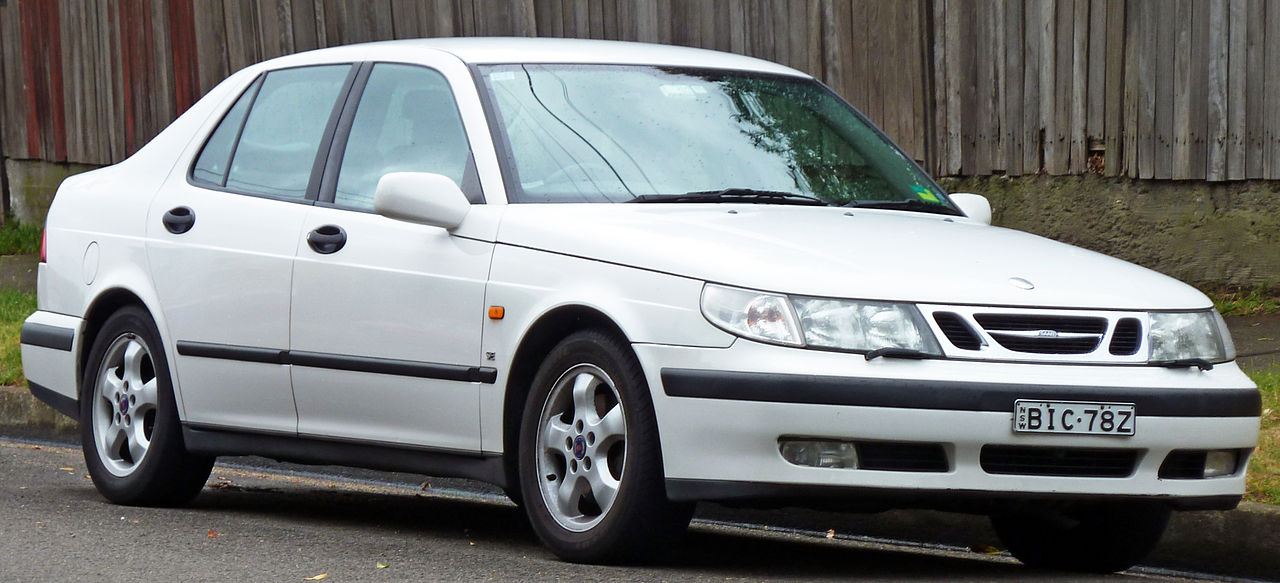
1997-2001 Saab 9-5 SE sedan 01.jpg

The first-generation 9-5 was powered by Saab's B205 and B235 straight-4 engines, and from 2002 in Europe by an Opel Ecotec X22DTH 2.2 diesel engine (Saab D223L), replaced in 2006 by Fiat's 1.9 JTD 16V diesel straight-4. A turbocharged version of the GM 54° V6 engine, designated by Saab as B308, had a unique asymmetrical low-pressure turbocharger and was available from 1999 to 2003. This engine was available only with an automatic transmission, and cars with this engine installed are distinguishable by their twin tailpipes. The V6 was only available on Arc, SE, and Griffin models. In 2004, the V6 engine was replaced by a high pressure turbo straight-4 engine producing 220 hp (160 kW). By 2006 this engine was producing 260 hp (190 kW) even in the non-Aero or non-sport models (US models).

The B205 & B235-based 9-5 models have suffered a high rate of engine failures due to engine oil sludge. This primarily affected the 1999–2003 models. Saab refined the engine's positive crankcase ventilation system (PCV) for the 2004 and later model years and required use of fully synthetic oil, virtually eliminating the problem. Additionally, SAAB created update kits to retrofit to the 1999–2003 cars since they cannot be easily modified to accept the 2004 and later system. Mounting complaints by 9-5 owners forced GM to offer an eight-year warranty on the engine in 4-cylinder models for original owners, provided the owner can produce proof that they followed the manufacturer's oil change intervals. Saab recommended the use of fully synthetic or synthetic-blend oil as a preventative measure.

The 9-5 was available with an Aisin AW 4-speed automatic transmission from 1997 until 2001, when a new Aisin AW unit replaced the dated four-speed automatic with a five-speed automatic. A five-speed manual transmission is fitted as standard to the base models and the Aero. Six-speed manual transmission was not offered in first-generation 9-5s.

In 2005, an updated version of the 2.0 L turbocharged I4 was introduced in the European market together with the 2006 9-5. The engine was sold as 2.0T BioPower, optimized to run on E85 producing 132 kW (180 hp) at 5500 rpm. There was also a 2.3T BioPower version sold from 2007. It was also introduced in Australia.

The 9-5 introduced Saab's Active Head Restraints (SAHR), which moved up and forward to prevent whiplash when the car was struck from the rear. This feature won technology and safety awards in Australia, Denmark, and the United Kingdom. The Saab 9-5 also was one of the first cars to have extensive side-crash protection.

The front seats featured torso airbags and head airbags even on even the earliest models, which few contemporary vehicles did in the late 1990s. The basic structure included a robust passenger safety cage, front and rear deformation zones, reinforced door posts and pillars, as well as the "Pendulum B-Pillar", which combined high-strength low-alloy steel at chest and head height with tailored blank steel at the floorpan, designed to direct the crash forces down toward the floor. The design was proven by the Insurance Institute for Highway Safety (IIHS) to protect occupants in side crashes, even without the addition of curtain airbags or rear side airbags. From 2002, ESP (electronic stability control) was included as standard.

Another Saab feature, the "Night Panel", permitted dousing of the instrument panel lighting, except for essential information, for less distraction when driving at night. Once activated, only essential information such as current speed is displayed except, for example, if the car requires fuel or the engine overheats.

In the United States OnStar was available, and provided as standard equipment in selected 9-5's from 2001 onward.

The 9-5 had various comfort features both as standard and cost options over the years.

While early models frequently had dash mounted cassette decks, CD changers were standard features on many cars and in-dash satellite navigation was also available. Factory-fitted phone kits were similarly optional

.

Many models featured leather or part-leather upholstery and both front and rear heated seats were also available. A few models were shipped with the optional ventilated seats.

Cruise control was available on various models and xenon headlamps were fitted as standard on high-end variants.

The performance 9-5 Aero, the earliest versions of which were sometimes referred to as the HOT Aero, was first released in 2000 with a 2.3T B235R engine. The B235R engine of the 9-5 Aero was capable of providing immense torque and, in terms of acceleration, outperformed the contemporary Porsche 911 Turbo from 40-90 mph.

Initially badged as a 230ps engine, Saab later conceded that the 230 hp power figure was quite conservative, with the manual versions rated 250 hp and having more torque than stated. This flagship model had a long list of standard features, a sport tuned suspension, and body side moldings. In 2002 a 253 PS (186 kW; 250 hp) 2.3 turbo engine was made standard, which allowed for more torque after 4500 rev/min. All Aero models from 2002-2005 have an identical engine layout and management system, with the 2002-05 models just having a slightly remapped version of that ECU from factory. The high-powered version of the 9-5 in the final form produces 264 PS (194 kW; 260 hp) and 350 N⋅m (260 lb⋅ft) of torque (370 N⋅m (270 lb⋅ft) with its 20-second overboost function accessible on the manual transmission equipped version.

From model year 2006 to end of production, the 264 PS (194 kW; 260 hp) B235R was the standard engine in the 9-5 in both the 2.3T and Aero trims. 2006 had only one badge designation, the 2.3T and appointments normally found on the Aero could be added via a "Sport Package".

From 2007 onwards, SAAB added an Aero badge to the trunk lid to distinguish from regular 2.3T models. In addition, almost all standard features on the Aero were standard on the 2.3T, the exceptions being sport-tuned chassis, two-tone leather upholstery, "Anniversary" wheels and brushed aluminum interior trim, all of which were standard on Aero and not available on the 2.3T.
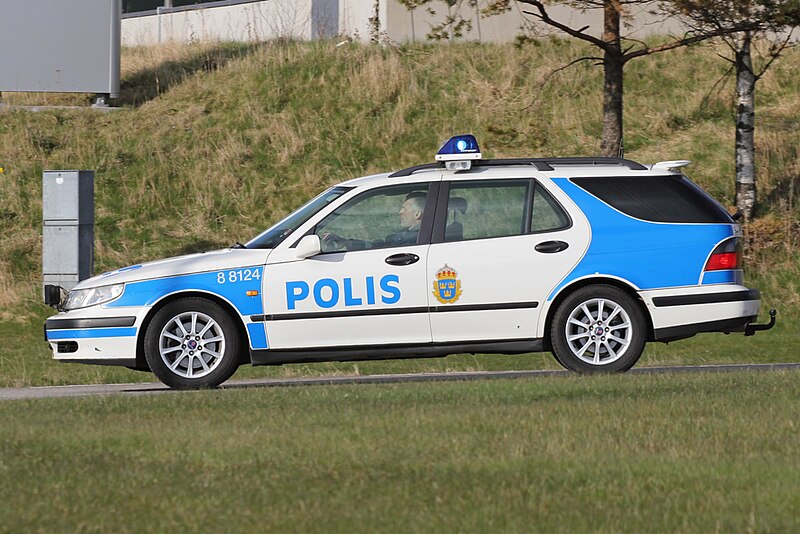


The 9-5 was used as a liveried patrol vehicle, as well as undercover, in several parts of its native Sweden, alongside the Volvo V70. Several police forces in the UK also used the 9-5 in their fleets, mostly in Aero specification. The city of Aspen, Colorado, used Saabs as patrol cars from early 1970s until 2005, when the 9-5 was discontinued in favor of Volvo XC90. The town of Vail, Colorado likewise used Saabs from 1980 onwards, but in 2005, the black 9-5 patrol cars were replaced by Ford Explorers, due to budget reasons.

In 2006, Lothian and Borders Police in Edinburgh, Scotland, began operating three Saab 9-5 Aero 2.3T patrol cars as part of a fleet of 580 vehicles. These 9-5s were customised to police specifications by the Saab, Vauxhall and Chevrolet Special Vehicles Operation (SVO) in Papworth, Cambridgeshire. In undercover guise, these cars were outwardly identical to the Linear Sport models, but featured the 260 bhp Aero drivetrain.

In Poland, an unmarked 9-5 is used as a video-pursuit vehicle, in the Płock area.


A next generation 9-5 built on the Global Epsilon platform was presented at the Frankfurt International Auto Show in September 2009. The vehicle had its North American debut in October 2009 at the South Florida Auto Show in Miami. On November 24, 2009, the first pre-series Saab 9-5 of the new generation rolled off the Trollhättan production line.

With the announcement of the sale of Saab to Spyker on January 26, 2010, it was confirmed that the new generation Saab 9-5 was already taken into production at the Saab plant in Trollhättan. Full production began in April 2010, with the cars appearing in dealerships on June 19. Saab introduced a wagon variant of the new 9-5, dubbed "SportCombi," at the 2011 Geneva Motor Show. The Saab 9-5 Sedan 2.8V6 Turbo was named Car of the Year in Singapore by "Wheels Asia".

As Saab's business issues came to a head, production of 2011 9-5 models essentially ended in March 2011, when the production line in Trollhättan was stopped due to supply chain issues that were related to the company's lack of liquidity. Total production numbers of the Gen II Saab 9-5 ended at 11,280 units.

Although some prototype pilots and a number of production SportCombis were produced, the official variant did not enter serial production prior to Saab's bankruptcy in December 2011, and the vehicles never reached dealerships.

Trim/equipment levels vary from country to country.

In the US Saab 9-5 trim levels were: Turbo4, Turbo4 Premium, Turbo6 XWD, and Aero. Turbo4 models come with a turbocharged four-cylinder and features that included power adjustable driver and passenger’s seats, leather upholstery, five-spoke alloy wheels, fog lamps, and rain-sensing wipers. The Turbo4 Premium added a panoramic sunroof, headlamp washers, Saab parking assistance, keyless entry and start, memory seats, and 18-inch alloy wheels, while the Turbo6 XWD was powered by a turbocharged six-cylinder engine and features an all-wheel-drive system. The top trim Aero featured 15-spoke “Rotor” 18-inch alloy wheels, leather-trimmed sports seats, a multi-color central information display, Bi-Xenon SmartBeam headlamps, dark titanium-effect interior trim, aluminum sports pedals, a sports-tuned suspension system with real-time damping, and Aero exterior elements.

UK equipment levels for the 2012 model year included the Vector SE and Aero and both sedan and estate. The previous base models, Linear and Vector were replaced by the Vector SE model.

In Australia the base trim (Linear) was not part of the line up, only the Vector and Aero trims were available.

In North America, the engine choices were either a turbocharged V6 or an Ecotec I4. Other countries also had an optional turbodiesel I4 engine. Engine performance upgrades that were available from Hirsch Performance (Saab's only factory approved tuner) increased the power of the V6 engine to 330 bhp (246 kW; 335 PS) from 296 bhp (221 kW; 300 PS) and the I4 engine to 260 bhp (194 kW; 264 PS) from 220 bhp (164 kW; 223 PS).

Monday, May 28, 2018

[Look back] review of Saab 9-3 sedan


Image result for saab 9-3 no copyright photo

Likes: Strong turbo engine, comfortable front seats, Swedish design inside out, smooth transmissions.

Dislikes: Choppy ride, can get expensive at the top of the line, more horsepower would be nice.

Saabs have always been quirky left field vehicles for those who choose to stand out in a crowd. They pride themselves in safety and their aircraft heritage. With distinct styling and quirky interior design, can the 9-3 bring a special offering to the competition?

Performance: There's only one engine available for the Saab 9-3, and that's a 2-liter turbocharged four-cylinder with 210hp. There's plenty of pace for both city and motorway driving. You may desire more power however, with the optional all-wheel-drive system which adds extra weight. The engine never feels underpowered, but many rivals offer more power for the same price.

Ride & Handling: The 9-3 isn't the sharpest handling vehicle in its class. But it does hang on to corners well. The steering often feels dull at times, but its nothing to discourage sporty driving. The 9-3 is fun to drive, but ride never feels settled on rough surfaces.

Refinement: The interior can hush out a reasonable amount of road and wind noise. Models with the sport suspension let in more noise than lesser versions, but it's not too intrusive. At motorway speeds, the 9-3 feels very comfortable and relaxed.

Behind the wheel: The driver's environment is superb thanks to comfortable seats, and a no-nonsense dash layout. There's plenty of adjustment in seat and steering wheel. You'll easily find a driving position that suits you best. The instruments are a paragon of clarity.

Space & Practicality: There's plenty of space in the rear for three passengers. Good headroom and decent legroom, although shoulder room is a bit tight. The large boot can hold plenty of luggage, and the rear seat folds 60/40.

Equipment: No matter which trim you choose, all 9-3's come well equipped for the money. You get premium sound system, automatic climate control and rain sensing windshield wipers all come as standard. The range topping Aero trim adds Xenon Headlamps, sporty exterior trim and twin exhaust pipes.

Buying & Owning: The 9-3 is aimed at German rivals. So you get more power and more equipment for far less cash than many German Saloons. The engine is fairly fuel efficient and offers good performance. Resale value isn't the strongest in its class. However, most Saab owners tend to keep their vehicles longer than German rivals.

Quality & Reliability: The 9-3 has improved over the years in terms of reliability. The cabin materials don't look classy, but they have a long lasting feel. JD Power surveys has rated the 9-3 below average in terms of reliability by its owners.

Safety & Security: When it comes to safety, Saab is class leading. There's front and side curtian airbags standard. Anti-whiplash head restraints are also standard. ESP traction control is standard across the range. The 9-3 has an excellent reputation for keeping theives out.

The 9-3 is a distinct sedan with so much personality. There are German rivals that can out class the 9-3, but you'll be missing the point. It's designed for those who don't want a typical German Saloon. A vehicle that stands out where ever it goes, and whenever a owner talks about their Saab they always seem to have a smile on their face. It's not the classiest sedan among rivals, but it sure does offer a huge bang for your buck.

Saturday, April 21, 2018

[Look back] Saab 9-5 sedan review


Image result for saab 9-5 no copyright photo
Likes: Swedish style inside out, roomy well laid out interior, you'll stand out from the crowd, smooth turbo engines.

Dislikes: May induce sticker shock, some wind and road noise on the motorway, head restraints pushed a bit too far forward.

Saab has been in dire times. With a transition of ownership and many financial problems almost leading to the company's death. But somehow the brand manages to stay alive. The 9-5 is one of the newest Saabs to show the future of the brand, and the direction of the company's styling. Jumping right into the competition with the BMW 5-series and Audi A6. Will Saab be able to keep up?

Performance: There are two engines available for the Saab 9-5. A 2-liter turbocharged four-cylinder with 220hp, and a 2.8-liter turbocharged six-cylinder with 300hp. Pick of the bunch is the 2-liter turbo engine. It's the most engaging to drive, offers decent fuel economy and makes the most sense financially. The six-cylinder offers good pace, but comes at a price that's a little too expensive for some tastes.

Ride & Handling: The 9-5 handles and drives well. The base suspension feels rather softly sprung, so there's a bit of bodyroll. The sport suspension handles well, but the ride comfort is overly firm. The steering doesn't offer as much feel as you'd expect, but its far from disappointing. There's a three-mode electronic suspension system as an option.

Refinement: Wind and road noise is well supressed in town. On the highway, there's a bit of wind and road noise that enters the cabin. This is far from intrusive, and you'll enjoy the 9-5 on long distance driving. Especially on curves with the sports suspension.

Behind the wheel: Saab's interior is designed around the driver. The controls are within easy reach of the finger. Some controls are poorly marked, and are blocked by the gearlever on automatic models. The seats are comfortable, but the head restraints are pushed to far forward. This leaves your neck in a uncomfortable angle.

Space & Practicality: The longer wheelbase means more rear seat comfort than the pervious generation. The cabin is truly enormous, entry into through the rear passenger door is rather low. You'll have to stoop your head down to avoid banging it on the door frame. Rear passenger space is excellent, the the boot is massive. The rear seats fold down to increase space.

Equipment: The base 9-5 comes well equipped. Night panel, electric driver's seat, rain sensors and auto-dimming interior mirror is standard. The six-cylinders offer all-wheel-drive, and the top of the range offers a bodykit with Xenon headlamps and leather sport seats.

Buying & Owning: With Saab's near death in 2010, buying a new Saab seems rather risky. Resale value isn't as strong as its rivals, and finding one won't be easy as Saab isn't currently building any vehicles. But when production restarts, you'll find that Saab's long list of standard equipment is well worth the asking price.

Quality & Reliability: The 9-5 feels well put together. Many materials used feel classy, although some plastics feel hard to the touch. Everything feels quirky like all Saabs should feel. Reliability of the 9-5 has always been higher than the 9-3. So we expect reliability to be about average on the 9-5.

Safety & Security: If there's two things you'll never have to worry about with a Saab, that's safety and security. Side curtain airbags, stability control and anti-whiplash head restraints comes standard across the range. Security provisions include top-notch alarm and immobiliser.

Most people who buy Saab are those who want to stand out against German Rivals. It's distinctly styled, and priced well below that of BMW and Audi. You maybe a little disappointed with this irration of the 9-5. It's not as sporty as the previous form, and the sports suspension has a firm ride. But the 9-5 continues to provide that smile on owners faces that no other brand can provide.

Friday, November 17, 2017

Saab Story Part One: The 9-5 of the range.


1997-2001 Saab 9-5 SE sedan 01.jpg

Saab never used to build cars for the conventional person. Most people who bought Saabs were very intelligent people and knew that they didn't want to fall into the cliches of BMW and Audi Drivers. This is why Saab still has the most loyal fan base of any company. Most people take pictures of their cars, people with Saabs take pictures with their cars.  This sense of pride made me wonder why do people love their Saabs so much? Why do people smile whenever they talk about their Saab? Is it true that once you test drive a Saab you buy one? 

 This was the first 9-5 wagon which appeared in 1998. It was the most unique looking wagon I had ever seen during the time. The unique wrap around rear windscreen and the large yet roomy boot made this 9-5 a real alternative to the sport utility vehicle. This was in the era when having a wagon was still considered 'cool' before sport utility vehicles took over and slowly made the wagon look lame. I still have a special place in my heart for wagons and the 9-5 always managed to hit all the sweet spots for me. This version seen had a 3-liter asymmetrical low-pressure turbocharged six-cylinder engine.

This engine is good for about 200hp and is mated to a four-speed automatic transmission. It's not a fire cracker of an engine like you'd expect from Saab, but it was smooth and easy to drive around town and on the motorway. Once the turbo kicks in and you that's when the real joy comes into your heart. This turbo really does push you back in your seat. At some point I forgot I was even driving a wagon. The unique driving experience really does characterize the Saab well.

The interior was what I loved most about Saab, and the central console mounted ignition switch is just about the most awesome thing I've ever seen on a car. I wish other cars had this design. No one understands the benefits of not having to hear your rattling keys from a column based ignition switch. In Saab Eyes if you are in a front collision and the steering wheel is designed to deform away from the driver, the ignition switch will buckle down and intrude into the space where your legs are and potentially cause leg injury. Those Swedes thought of everything when it came to safety! This is why the ignition switch is in the center console away from the areas of the body will cause injury. Not to mention keep theft far - far away, as the trick of having a center console igniton switch is that you can directly lock the transmission. Which means that no one is geting anywhere with your Saab unless they have the key. Clever Saab! Clever!

Unlike most cars, Saab's Interiors have always reflected their Aircraft heritage. The 'Night Panel' function which alloys you to shut off all the instrumental lights that aren't needed to reduce eye strain. Everything within the dashboard is within easy reach of the hand. It's very driver focused, which helps you stay focused on what's most important and that's driving.


I started really paying attention to Saab when they started trying to compete with Audi and Mercedes-Benz. Even though we all knew that Saab's main rival was Volvo. The newest generation of the 9-5 was the one I have shown here. It wasn't really a next generation, more like a facelift and a few changes mechanically and interior wise. If you sat both cars side by side you won't really be able to spot out the difference. In this model year, the 9-5 switched to all four-cylinder engines. One thing that Saab should always stayed true to. Six-cylinders and eight-cylinders are okay but it doesn't have the magic of a turbo four.

Photo provided by Rual 

Something that Saab has always managed to put into their cars. This 9-5 I have here had a 2.3-liter light-pressure turbo engine which produced 185hp. Again, the engine is what won me over with this car, along with all the quirky nature of Saabness. The front seats were a dream to sit in and still remains one of the best I've ever sat in. The interior again is just like the previous 9-5 wagon I test drove, everything is focused towards the driver. It gives you this sense of safety and comfort. I didn't get that feeling from a BMW or Audi. The 9-5 is one of those cars you can just relax and drive smoothly. You know you have a turbo and when you put that turbo into gear it really does come through. In the Saab case it wasn't the turbo, it was the sheer driving exprience and that was what made the car brilliant. I loved how it felt even on the roughest surfaces. The 9-5 managed to feel much more comfortbale than the 5-series that I had test drove which basically had the firmest and roughest suspension I ever test drove on a car.

For the short amount of time that I had the 9-5 wagon, I immediately wanted to buy it right there. It's just an amazing vehicle and it really does put a smile on your face. Which brings me back to the first question that I asked, why do people smile when ever they talk about their Saabs. I sort of get why, but it's really hard to explain it. It's not the fact that you're paying less than a BMW or Audi. It certainly isn't the styling because it doesn't appeal to all. It's the way the car makes you feel when you are behind the wheel. It's a warm and fuzzy feeling, sort of like when you pet a fuzzy cat. It just grows on you and you'd never expect this type of emotion to occur in a car. This is why Saabs will be missed by their fans and those who choose to carry on the Saab Heritage.

Photo provided by Felipe Melecio 
The final facelift for the 9-5 range came around 2006 and it was probably my least favorite version of the 9-5. Well I said that only looking at the pictures. When I seen it in person that's when it quickly warmed on me fast. This 9-5 was refreshed and really did look just as good as when the first one rolled into the scene in 1997. Saab had addressed their complicated climate controls and used simple dials and of course they trimmed down the line-up to one engine and I'll have to say it was the best decision Saab made. This engine produced 260hp from a tiny 2.3-liter four-cylinder engine.

There was a five-speed manual gearbox and a six-speed automatic gearbox. I never had the chance to personally test drive the 9-5 with the five-speed manual gearbox like I did in the 9-3 Viggen. The six-speed automatic was smooth and worked well with the turbo engine. This version shown above was in Aero Trim which of course had the nicer alloy wheels and firmer suspension. Xenon headlamps and a really nicely trimmed leather upholstry. The electric sunshine roof is a welcome add, even though I thought it kind of ate into headroom a little bit. (I don't know why I felt like complaining about headroom. Clearly I'm short and headroom will never be an issue for me.) Moving on. This version of the 9-5 was probably one of the best I've driven compared to the wagon I previously mentioned. It felt more grown up and more sophisticated which I liked a lot. Saab had retuned the suspension so it didn't feel like it was going to run out of grip in the middle of a turn or the ESP had to step in to keep the front wheels from torque steering it's rubber off. (This only occured in the Aero form which of course had the most powerful turbo engine.)

I could talk about the driving impressions all day when it comes to Saab. It really doesn't feel like any other car on the road and I really do like that feeling. It's a great car and it really does what it is aimed to do and does it well. Most people say that it's expensive and the interior is old. In my opinion the interior isn't old, it's a retro throwback to the former quirky days. Also the fact that the 9-5 is way safer than a BMW and Audi shows you where you put your money. If I were to buy this and give it to my kid, I'd know they would be safe and can walk away from a crash. These vehicles are built like tanks and will withstand anything! (Well not literally anything but you get the point.) I only had this 9-5 for a short amount of time and again I wished that I could just buy it right then and there. It's the unique attention to detail and of course the ever exaggerated driving experience that really helps make the Saab unique and I loved it.

Photo provided by Raul 
Sadly the last of the 9-5 ends here. Saab was purchased by Spyker who thought they could save the company from bankruptcy, but then again for a super car company that doesn't know much about mainstream vehicles, this purchase was really a bad one. Saab has always been the company that did things differently and never mainstream compared to rivals, even though with this generation of the 9-5 they ditched the center console power window switches. The center console ignition switch still remained but was replaced by a push button start system. I'm not a huge fan of this technology as it seems rather gimmicky.

This 9-5 had a 2-liter turbo four-cylinder with 220hp and a 2.8-liter twin-turbocharged six-cylinder with 300hp. I was able to test drive both and thought the 2-liter turbo four was the most entertaining to drive. It helped make the 9-5 light on its feet and feel way more driver focused than the six-cylinder which just felt heavy and boring to drive. Even with 300hp it didn't feel like the Saab I grew to love in the past. It really did change to the point where it made me rather sad and disappointed. The interior lay out was still there and the driver focused details were there, just the sheer driving experience was lost. Saab tried too hard to compete in a segment it wasn't really destined to compete with. Saab is a niche brand and appeals to those who don't want a conventional Audi or BMW. The unique styling is there and I applaud Saab for staying true to their unique designs, just the overall impression was rather disappointing, I think Saab could've done a way better job but it felt rushed and unready.

Saab will always have a special place in my heart. I understand why people stand by their cars even if the company no longer builds cars. Saab has that special something words can't describe. It's fun to drive, the engines are excellent and the overall attention to detail is really impeccable. I felt really great to be able to have driven the Saabs that I have driven in my time and hope that one day I can own my own Saab and pass it on to my kids. The company that started the turbo craze and the safety fetish will always be one of the best and will be missed.

Devon M