What's On

Showing posts with label Devon. Show all posts

Saturday, January 28, 2023

(Used) Devon drives to Infiniti and beyond

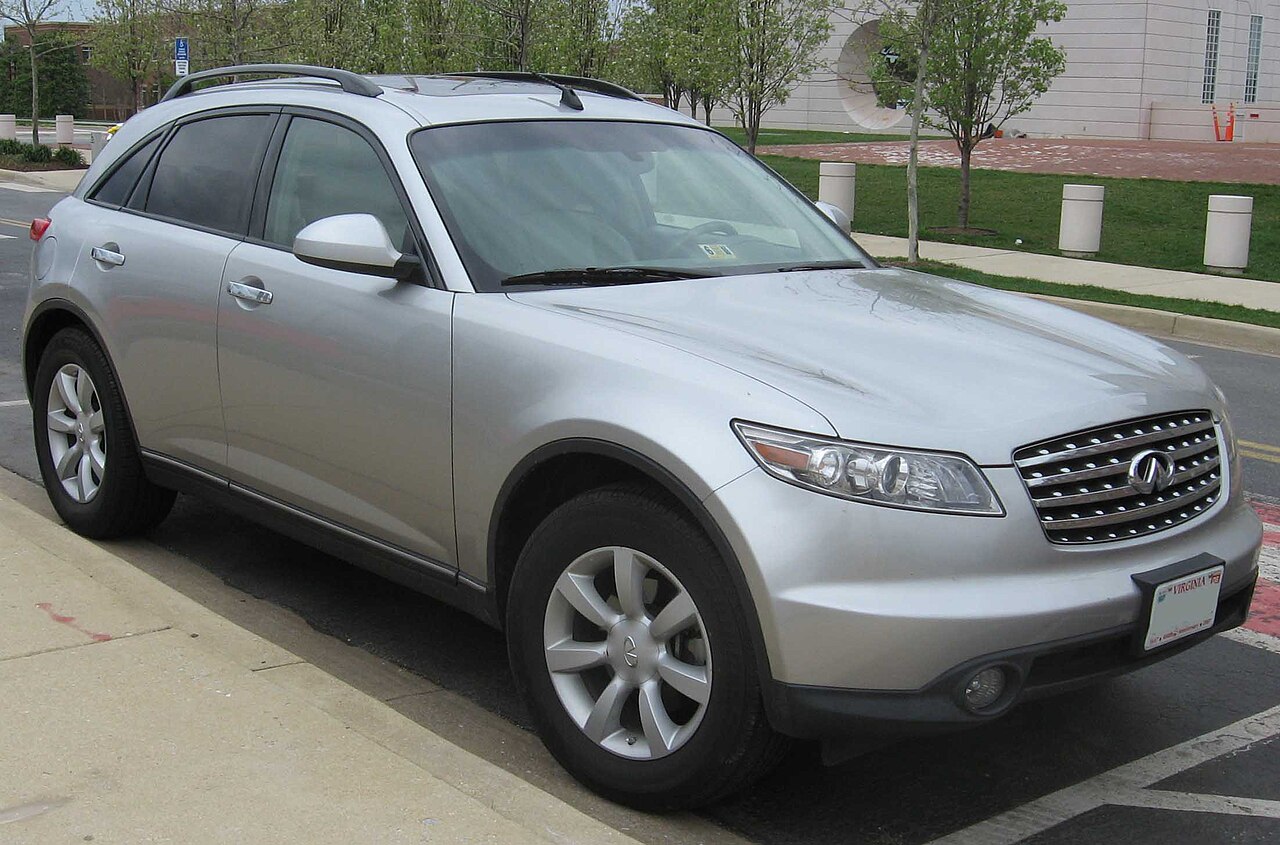
2003-2005 Infiniti FX35.jpg
In your face styling, sports car handling and refinement that can go toe-to-toe with some of the prestige German rivals. The Infiniti FX is one of those 4x4s that really makes you wonder, what is it really made for? Let's find out. 

Likes: In your face styling, powerful range of engines, handles well with decent steering feedback. 

Dislikes: Ride comfort is too firm, interior is on the cramped side and the boot is small. Prices can sky rocket very quickly too. 

Performance: There's two engines offered for the FX. A 3.5-liter six-cylinder with 303hp and a 5-liter eight-cylinder with 390hp. Depending on the depths of your wallet, we'd recommend sticking with the all-wheel-drive six-cylinder engine. It's smooth, flexible and offers decent kit for the money. The eight-cylinder racks in a higher asking price that may seem a bit steep. 

Ride & Handling: The FX can't match the agility of an X5, but it corners really well. Showing good body control and quick steering. Ride comfort is on the firm side. You'll feel way to much surface at all speeds and some bumps sends jolts through out the cabin. 

Refinement: The engines are refined and smooth when traveling at city speeds, extend your foot down on the motorway and you'll be greeted with a lovely snarl from both engines. Wind noise isn't an issue, but with the massive tires you'll hear road noise. If you option for the 21 inch alloys, you'll hear suspension clatter too. 

Behind the wheel: The seats and steering wheel adjust electrically in all version, so you won't have any problem getting comfortable. The multimedia system takes a little getting used to. Visibility at both the front and rear isn't great. The slopping roofline causes blind spots for parking and pulling into merging on to motorways. 

Space & Practicality: The FX is a nicely sized 4x4, so you'd think the cabin would be nice and roomy? Think again! The FX is tight for both front and rear passengers, meaning adults won't be able to spread themselves out. The boot isn't as big as you'd expect, the rear seats fold flat to extend cargo. 

Equipment: The  FX comes well equipped for the money. Push button start, leather appointed interior, Bluetooth connectivity and a rearview parking camera comes standard. Top of the range adds 21 inch alloy wheels, navigation system, heated and cooled leather seats and a quilted leather appointed steering wheel. 

Buying & Owning: Whichever FX you choose, both won't be cheap to buy. Running costs will be high thanks to low fuel economy. However, your investments will be protected thanks to strong resale value and residual value. 

Quality & reliability: Many materials feel posh and high class. Although it can't quite match the prestige of its German rivals. Many of Infiniti mechanical bits are built by Nissan. Which means the FX will be worry free in terms of build quality. 

Safety & Security: Stability control comes across the range to help keep you out of trouble. You'll have to step up to the mid-range and top of the range trim levels to get four-wheel-drive. Front, side and curtain airbags are standard as well as active head restraints. 

The FX offers great road handling and is one cracking car to drive on the motorway. It's quiet, smooth and offers decent pace no matter which engine you choose. However, the interior is cramped and the boot is small. The ride comfort is too firm and the larger alloys generates suspension clatter. If you can ignore a few of these downsides, the FX is a great alternate to the X5 and Volvo XC90.

Devon's Pick: FX37 strikes the perfect balance of performance and equipment. The all-wheel-drive helps aid in traction without sacraficing fuel economy too much. Plus its more affordable than the top of the range. 

Devon M 

Thursday, January 12, 2023

Devon test drives an all-electric Mitsubishi (Used)

2010 Mitsubishi i-MiEV (GA MY10) hatchback (2015-11-11) 01.jpg


Electric cars are the future of green car technology. The whole concept of electric cars may not be new, but they are certainly packing new ways to extend range and make them more practical for everyday driving. With the Mitsubishi i-MiEV, Mitsuhishi is trying to reach out to the buyers who are more budget minded. With the low starting price of the i-MiEV can Mitsubishi justify a reason to buy electric?

Performance: The i-MiEV's electric motor produces 66hp with 145lb-ft of pull, which means its really smooth around town. If you find yourself in stop and go traffic, or feel that you want to boost your range. There's an eco-button which reduces the power of the electric motor and helps extend the range of the battery. The i-MiEV has a top speed of 81mph, so highway driving isn't a 'no-go' for this car.

Ride & Handling: The i-MiEV is best left for urban use, where you can benefit from its tiny dimensions and tight turning circle. However, the steering can be quite heavy at parking speeds and the ride is never settled. Leave the city streets and the car is easily upset by crosswinds. The narrow front tires provide very limited grip and makes highway driving a pain.

Refinement: i-MiEV has a boat load of wind and road noise which makes you wonder if electric cars are as quiet as they say they are. You can hear small amounts of whirr from the electric motor at town speeds, on the highway the whirr turns into an irritating whine.

Behind the wheel: Getting comfortable behind the driver's seat is a rather mixed note. The driver's seat adjusts for height, but the steering wheel is fixed which means it will be difficult for some to get comfortable. The instrumental panel controls are rather fiddly and you'll have to stretch to reach them.

Space & Practicality: The i-MiEV is a strict four-seat vehicle, but it depends on who the four are. Headroom isn't a problem, legroom is the bigger problem if you want to squeeze two adults in the rear seat. Their knees will be in the backs of the front passengers due to the thinly padded seats. With four passengers aboard, the boot is very small.

Equipment: The base trim adds 120V portable charging cable, CD-playe with MP3 compatibility, air-con and regenerative braking system. Top of the range adds alloy-wheels, leather wrapped steering wheel, power windows and an upgraded sound system.

Buying & Owning: The benefits of having an electric car is not having to pay for fuel. Instead you'll be paying very little on your electric bill. The only trade-off is that your range is very limited and the actual use of the i-MiEV is limited unlike the Nissan Leaf.
Buying a i-MiEV isn't a cheap proposition either. A $7,500 tax credit does help take the sting out of the purchase price.

Quality & Reliability: The build quality seems solid enough, some of the materials in the interior feel rather cheap but have a sturdy feel. Mitsubishi has enjoyed average reliability, with the i-MiEV however it is still unknown.

Safety & Security: The i-MiEV comes with front and side airbags with a roof mounted airbag to protect drivers in the event of a rollover. Stability control and traction control are standared to help aid traction due to the narrow front tires. There is a vehicle security system and immobilizer system to help keep theft at bay.

The i-MiEV is fun to drive around town. There's enough space for four passengers and running costs are very low. However, the downsides outweigh the positives. The ride comfort and handling outside of city limits is poor. The front tires are narrow and the range of the battery limits the practicality of the vehicle. Even with the tax credit, the i-MiEV is expensive and way too impractical for what it is. A more conventional hybrid offers better range while a smiliar sized gasoline counterpart offers a lower purchasing price. If a electric car is what you want and you won't have any need to venture outside of the city or drive further than the battery range. The i-MiEV is worth a look.

Devon's Pick: The ES makes the most sense because it's the cheapest. We'd wait for the technology to get cheaper or more sophisticated. 

Likes: Most affordable electric car compared to others. Compact size and abundance of torque means its a breeze to drive around town. There's enough room for four and running costs of course are low.

Dislikes: Expensive to buy. Some of the cabin materials feel cheap. Steering wheel offers no adjustments, ride and handling is awful. The 'can't-go' far battery range limits practicality.

Devon M

Saturday, December 24, 2022

Devon test drives a Smart Car... with a sunroof.


Likes: Small size makes it easy to park in tight parking spaces, one of the cheapest convertibles you can purchase, you'll stand out everywhere you go.

Dislikes: You'll stand out everywhere you go, transmission still jerky and slow to shift, touchy brakes makes smooth stops hard to accomplish, somewhat disappointing gas milage maybe a let down.

Overall: The Fortwo has a charm that no other car has. But it ruins your driving experience with a slow shifting transmission, and oddly modulated brakes that makes stopping smoothly difficult.

Devon M 

Friday, December 2, 2022

(Used) Devon test drives a Scion with IQ


The Smart Fortwo isn't the smallest car that you can buy in the U.S. anymore. The Scion IQ is designed to compete with the Fortwo, but there's one thing the IQ can do that the Fortwo cannot. The Scion IQ can seat up to four people in theory. Being only so much larger than the Fortwo, can Scion lure customers away from larger more comfortable alternates.

Likes: Nimble around town, well equipped and easy to park.

Dislikes: Looks like a toy car, boot space doesn't exist if rear seats are in place. The stereo control is fiddly and the styling is rather dorky.

Performance: There's only one engine available for the IQ, that's a 1.33-liter four-cylinder with 98hp. Performance is spirited around town, but on the motorway you'll need to plan out overtaking other vehicles. Getting up to speed takes a little longer than you desire. But the IQ is much more peppier than the Fortwo.

Ride & Handling: The IQ is more comfortable to drive around town than the Fortwo. Thanks to an incredible turning circle and light controls. On faster roads, the IQ struggles to stay composed. There's a fair bit of body lean in bends and the front end runs out of grip quickly. The steering often feels vague and there's vulnerability to side winds. Making long journeys hard work.

Refinement: There's an incredible amount of refinement inside of the IQ. Although the door mirrors produce a bit of wind noise. Road noise is also very hushed. The CVT transmission makes the engine sound buzzy and thrashes when pushed hard.

Behind the wheel: The single stereo control on the steering wheel is very fiddly to operate. But it means the center console has extra space for the driver. However, comfort would be improved if the seat was height adjustbale and the wheel moved for reach as well. The heater is controlled via chunky buttons and dials.

Space & Practicality: The IQ in theory is a four-seater, but in reality there's only room for two passengers. The rear seat isn't big enough for kids and eats into the cargo space. So you'll have to choose between people space or cargo space. The boot is totally nonexistent with rear seats in place.

Equipment: The IQ offers plenty of kit for the money. You get six-speaker sound system, air-con, keyless entry and a cd-player. You'll have to pay extra for auto headlamps, fog lamps, rain sensing wipers and climate control.

Buying & Owning: The IQ is more expensive than the Fortwo, but the IQ is a more comfortable car to drive and live with. The transmission is smoother and the brakes are easier to modulate. However, the sheer size of the car may scare away some buyers. Residual values and resale values are unknown because the IQ isn't available in all states yet.

Quality & reliability: It's too soon to say how well the IQ will stand up in long term reliability. Most of the cars engineering is done by Toyota. So there's a piece of mind that you'll be buying a dependable vehicle.

Safety & Security: You get stability control, nine airbags including one that inflates across the rear screen in the event of a rear-end collision. Deadlocks and an integrated stereo makes life for thieves hard.

The IQ only strong points are its smooth transmission, good gas mileage and ease of use around town. However, like the Fortwo - the IQ isn't composed on faster roads. There really isn't much space for four passengers and many buyers will be scared away due to the small size of the car. However, if you desire a small car that's a little less crude than the Fortwo. The IQ is the perfect car for you.

Tuesday, September 4, 2018

Devon hops in the smallest minivan you can buy (used)

Mazda5 (II) – Frontansicht, 25. August 2013, Düsseldorf.jpg
The Mazda 5 is living proof that you don't need a large 4x4 to carry a family around in comfort. It's dinky size means that it's a easy to park and good on gas. All while offering a clever six passenger configuration. In the land of the large 4x4, can Mazda convince buyers going small is all the rage?

Likes: Decent amount of space in the cabin, tons of equipment standard for such a low asking price, low running costs and impressive handling.

Dislikes: Firm ride over some surfaces, interior plastics don't feel up to par, may prove to be too small for some families.

Performance: The Mazda 5 comes with a 2.4-liter four-cylinder with 160hp. It does a good job of pulling the 5 around town and on the motorway. Fuel economy is decent too. It's not the sportiest engine, and you'll have to rev it hard to get up to speed with the automatic. We'd stick with the base trim for the manual gearbox.

Ride & Handling: The 5 can handle pretty well for a car of its size and weight. However, the trade-off is the ride is a little too firm for some taste. The pay off is solid body control, which is combined with impressive grip and quick steering. This makes the 5 more engaging to drive than other MPVs.

Refinement: The 2.4-liter engine operates very smoothly. There's some wind noise when you pick up speed on the motorway, road noise however is pretty much subdued. All six passengers will love how refined the cabin feels. It's airy and comfortable on long journeys.

Behind the wheel: There's plenty of adjustments for the steering wheel and front seats, so drivers can get comfortable easily. All-round visibility is pretty good thanks to a high driving position, and many functions that can be controlled by the buttons on the steering wheel. The stereo controls on the dash are a bit confusing.

Space & Practicality: The 5 can carry six passengers in somewhat comfort. The second row passengers will feel comfortable, while third row passengers will feel a bit cramped. Plus the boot isn't massive with all the seats up. You'll have to fold down the third row seat to carry anything more than a few suit cases. Headroom and legroom is generous to all but the third row. Which should be left to the kids.

Equipment: The Mazda 5 comes well equipped. Even the base model will satisfy most buyers. Alloy wheels, climate control, stability control and six speaker sound system come standard. Top of the range adds Xenon headlamps, rain sensing wipers, heated front seats and moonroof.

Buying & Owning: The Mazda 5 comes with a low asking price. You'll have to step up to the higher trims to really get the toys that you want. Resale value is strong so your investments will be well protected. Discounts are available, but aren't anything to brag about. Running costs should be low thanks to decent fuel economy.

Quality & Reliability: Mazda's record on mechanical reliability is pretty impressive. So you shouldn't have any worries on that score. The cabin has a solid feel that inspires confidence that the car will last. While many rivals offer classy, soft touch plastics. The 5's is hard, scratchy and rather dour.

Safety & Security: The Mazda 5 comes with advanced front, side impact airbags and side-impact curtain airbags. Traction control, and stability program are standard as well as sophisticated braking system to help you avoid trouble. On the security, all 5's come with both alarm and engine immobilizer.

The Mazda 5 doesn't look like your conventional minivan. It's smaller than a conventional minivan, but that doesn't mean it's not as good. You get a six passenger seating configuration, sliding doors and a long list of features that justify the low asking price. Although the 5 maybe too small for some families, its still a great MPV all round. With responsive handling and low running cost takes the sting out of owning one. Helping the Mazda 5 one attractive offer too good not to consider.

Devon M 

Thursday, August 23, 2018

Odd Foods (wanna try?)

File:Wikipedia-Bats-001-v01.jpg

Boiled Bat is a much appreciated dish in Asia. Sold at a fairly steep price, it's considered by many a delicacy. It can be found in Fiji, and also other Asian countries. Those who taste it say that it tastes like chicken.


Pork Brains
(Heart attack anyone?)
Pork Brains is another dish that's not common among every restaurant. One company has gone a step further by making available to those who wish to try something different. Offering Pork Brains in a can with Milk Gravy. 150 calories and 5 grams of fat. It has 3,500mg of cholesterol, representing 1170% of the recommended daily allowance.

2017Lutefisk.jpg

Lutefisk is a special kind of cod served in Norway. The food is soaked in alkaline solution to such a degree that it corrodes silverware. Somehow this dish is deemed safe for your intestines.

Bull penis cocktail.jpg

Japan is known for their down weird and odd dishes. So it shouldn't suprise you when you see that one Bull Penis on a Japanese Restaurant Menu. Eating Bull Penis is thought to increase blood flow to the genitals and stamina. Most who actually try the dish say it tastes like beef.


Hotvitlon.jpg

Balut is a fertilized duck (or chicken) eg with a nearly-developed embryo inside that is boiled and eaten in the shell. Considered to be an aphrodisiac and is believed to have high protein. Its commonly sold as streetfood in the Philippines. Its also commonly sold in some countries in Southeast Asia.

Image result for mice wine


Try washing down all that food with some wine from Korea. The wine is made by stuffing three day old mice into the bottle of rice wine and left about a year to combine flavors. Considered a "health tonic" in Korean and Chinese traditions, and has the taste of gasoline. Little mice are plucked from the embrace of their loving mothers and (while still alive) shoved into a bottle of wine. Yum! Mouse Flavor....

Image result for pacha iraq

Sheep head anyone?
Pacha is a traditional Iraqi dish made from sheep's head, trotters and stomach; all boiled slowly and served with bread sunken in the broth. The Cheeks are considered the best parts. Many people prefer not to eat the eyeballs which could be removed before cooking. The stomach lining would be filled with rice and lamb and stitched with a sewing thread.

Devon M

Saturday, July 28, 2018

Odd foods/ drinks you've probably never heard of

Image result for egg loaf

Egg Loaf

You have a recipe that requires eight or ten eggs. However, who wants to go through the trouble of having to boil and crack egg shells? Japan figured that you'd not want to go through the trouble either and invented a machine that separates the egg shell from the egg white and yolk. Then combines the egg white and yolk into one large loaf. That's how you get Egg Loaf. A large lump of eggs that can make any food that requires a large amount of eggs a breeze. Although you may wonder how many foods will you cook that requires this many eggs?


Image result for fizzix yogurt

Carbonated Yogurt

Your kids are 'on the go' and they need food that can match their 'on the go' schedules. Why not pull out some fun carbonated yogurt or Go-Gurt (Fizzix) for breakfast, or maybe a nice little snack before practice. Go-Gurt (Fizzix) has the same nutritional values as yogurt but is more portable and needs no spoon for the 'on the go' kids. Listen parents, if you're kids are so 'on the go' that they need to get their calcium needs from a little pouch of yogurt with soda bubbles in it. Chances are your kids are on drugs, and you should sit them down and possibly talk about going to rehab.

Image result for whole chicken in a can


Whole Chicken in a can

We know what its like to be 'on the go' and so we mentioned that Go-Gurt (Fizzix) is a good way to get your calcium needs from a little pouch with soda bubbles. Now that you've had your fix, its time for a nice little sit down meal with the family. Since you're always 'on the go' cooking a nice home cooked meal is just way too long and doesn't fit your 'on the go' schedule. So why not just grab whole chicken in a can. That's right, you can buy precooked chicken in a can that takes little time to cook. Just look at that mucous that pours right out of the can, it makes for a delicious gravy! Don't worry about salmonella poisoning or the tasty afterbirth that may still be on the chicken. It's precooked and its probably so much easier than getting the real thing. After all you're 'on the go' and don't have time to cook or worry about your family having explosive diarrhea after this tasty meal.


Image result for cheeseburger in a can

Cheeseburger in a can

You're at work and its one of those days where it seems like your lunch break is just so far away. You begin to get the craving for a cheeseburger. What's the most logical thing to do here? Wait for your lunch break and drive to a burger joint? No!! You only get a half hour lunch stupid! (And the nearest burger joint is 20 minutes away) But don't worry, you can always buy a cheeseburger in a can. That's right, cheeseburger in a can is the fastest way you can have a tasty cheeseburger without having to go all the way to a burger joint and get a real burger.

Image result for cheeseburger in a can

Doesn't that look tasty?

 You'd think this tasty almost vomit looking burger would be cheap, but in reality it will set you back six bucks and you don't even get fries and a drink with it. Maybe explosive diarrhea after eating this, after all eating a cheeseburger in a can means that you'll want to get it out as quickly as you eat it.

Image result for edible plates


 Edible Plates

You've just finished a plate full of food and you're still hungry. The most logical thing would be go for seconds. However, you want to eat it all including the plate for some odd reason. Well you're in luck, edible plates are made from cassava, a versatile plant which can be used to feed animals, treat malaria, diarrhea and irritable bowel syndrome and, apparently, to make cookware easier to consume. Some may wonder well you have taco salads where the plate is made of fried tortilla, so why do you need an edible plate? In those cases however, the food is sitting on another plate the way food is meant to. Edible plates however are sitting directly on the table where your roommate does drugs and masturbates on top of and forgot to tell you he didn't clean the table off. Which means you'll need another plate to eat off the plate that you probably don't need because a regular plate isn't edible and you want to eat it all including the plate. Soon you'll be going through a cycle of plates until you go insane and break all the dishes in your house.

Image result for pepsi white

Pepsi White 

Now that you've finished your meal on an edible plate that was eaten off a disgusting table. It's now time for you to wash down all that food with a nice fresh beverage. What's that? You need your carbonated yogurt fix, because you're so 'on the go' and just don't have time for a regular beverage like everyone else. Take you're 'on the go' self over to Japan and buy a Pepsi White. Yes Pepsi white is one of the many odd flavors that Pepsi sells in Japan. It's basically yogurt that's been mixed with Pepsi, so you can have your carbonated yogurt fix. Many describe the taste of Pepsi White as a cream soda with an unusual after taste.

Thursday, July 26, 2018

A bite of the forbidden fruit.


Volkswagen Bluemotion
What is it? An ultra fuel efficient line of vehicles. With emissions ratings lower than a hybrid. With improved aerodynamics to lower drag coefficiency and other fuel efficient technologies used in sports cars to improve fuel economy.
Why is it illegal? U.S. has strict emissions standards on diesel engines. This makes it harder for European Automakers to design diesel engines for the U.S.


Fiat Panda 4X4

What is it? Based upon a small car called the Panda that's sold everywhere but the U.S.

Why it should be sold here? It's a cheap alternate to a Jeep. With better gas mileage. The small size with short overhangs means its great off-road. This car can climb a 35-degree incline. With a few extra horsepower, it can tackle a Land Rover off-road.

2014 Audi A1 (8X MY14) 1.4 TFSI Attraction Sportback 5-door hatchback (2015-07-09) 01.jpg

Audi A1
What is it? Audi's Mini Cooper fighter.

Why should it be sold here? It's a Mini Cooper with a splash of style inside out. The interior is upscale Audi and the price is very low. It's perfect for congested urban areas.

BMW 118i Urban Line (F20) – Frontansicht, 10. März 2012, Düsseldorf.jpg

BMW 1-series
What is it? A hatchback version of the 1 Series coupe.

Why should it be sold here? Other than the affordable base price, the 1-series hatch is rear wheel drive. Making it drive just as good as the other BMWs but with more praticality. A perfect rival to the Volkwagen GTI and Subaru Impreza.

Mercedes-Benz A 180 BlueEFFICIENCY Urban (W 176) – Frontansicht, 3. März 2013, Düsseldorf.jpg

Mercedes A-class
What is it? A hatchback that's as small as a Honda Fit. But has more versatility than a small MPV.

Why should it be sold here? The A-class should've been sold here under the Smart brand. Sold as the Forfour, Smart would've done way better with this hatchback than the Fortwo.

Alfa Romeo MiTo 1.3 JTDm.JPG

Alfa Romeo MiTo
What is it? Alfa Romeo's smallest hatchback.

Why should it be sold here? Alfa Romeo has some of the most stylish Italian cars sold. This Mini Cooper fighter will prove to be popular with buyers that are considering the Mini Cooper. Its tasteful and dashed with performance.

Citroën C1 - Mondial de l'Automobile de Paris 2014 - 003.jpg

Citroen C1
What is it? A car shared with the Toyota Aygo and Peugeot 107.

Why should it be sold here? It's designed to be cheap. All this cost cutting features are unnoticed by the consumer. Its still fun to drive and offers more equipment than a Kia Rio. Plus its stylish a easy to park in the city. High mileage cars should be welcomed in the U.S.

Thursday, May 31, 2018

Devon test drives a budget Mitsubishi (Used)

2015 Mitsubishi Mirage (LA MY15) LS hatchback (22644970463).jpg

Mitsubishi has been on a rocky roller coaster here in the U.S. Many have thought the company would finally disappear like Suzuki did last year. Little did anyone ever think that Mitsubishi still had some fight within the company. They've recently released the new Outlander and are also working on the next the generation Lancer. So it was no surprise that Mitsubishi offered the Mirage here in the U.S. as a volume seller to bring more traffic into their showrooms. It's a cheeky small car that goes toe to toe with the Chevy Spark and Scion IQ. It's a cheap small car with plenty of luxury features to choose from. Is this enough to bring buyers back to the ailing brand? Or is it all just a lost cause?
Performance: The Mirage only comes with one engine and that's a 1.2-liter three-cylinder which produces 74hp. Around town the Mirage feels zippy and light which is what most Mirage owners will use this vehicle for. Take the Mirage outside of the city and you'll have to work the engine hard to get any kind of pace out of it. The standard five-speed manual makes the most of what the engine has to offer. The CVT feels like it saps what little power the engine has and often leaves you cold until the revs build up again.
On the road: The Mirage soft suspension allows it to soak up bumps and some road imperfections. However the car tends to thump over potholes and there's way too much body roll in corners. Steering is light and easy around town while at higher speeds it becomes vague and numb feeling. Part of the whole appeal of the Mirage is the distinct thrum that comes from the three-cylinder engine when you rev it hard. At times it becomes loud and never really settles at highway speeds. This makes long journeys in the Mirage longer and more tiresome than we'd like. The manual gearbox is slick shifting. Wind and road noise will be welcome companions on the highway.
Behind the wheel:  The dashboard has a simple layout. Everything is easy to navigate and easy to use. Drivers will however have a hard time getting comfortable. The steering wheel doesn't adjust for reach and you can only adjust the angle of the seat base not the height. Visibility is so-so thanks to thick side pillars and a small rear windscreen. There's enough space for four inside the cabin. A fifth person would be pushing it. The rear seat is really only designed for two passengers. Boot space isn't great but offers enough for a week's worth of shopping for one. The high load lip makes loading heavy items a little tedious.
Equipment: The Mirage comes standard with power door locks and side view mirrors. A remote keyless entry system comes standard and a rear spoiler. You'll have to step up to the top of the range to get alloy wheels, Bluetooth connectivity and keyless start system. Optional on the top of the range is navigation system, LED illumination package and unique exterior package.
Buying & owning: We aren't really sure if the Mirage offers a convincing case when you look at the Scion IQ and Chevy Spark. The Mirage is obviously a cheap car but it doesn't really scream value when you compare it to its keen rivals. Running costs will be low while resale value is unknown at this time.
Quality & Safety: The Mirage is a budget car and there's no hiding that fact when you sit inside. It's a shame because the Chevy Spark feels a tad bit higher in interior quality along with the Scion IQ.  The plastics used in the interior feel sturdy and long lasting. They don't really look all that eye appealing. Reliability should be average as with most Mitsubishi products. All Mirage vehicles come with stability control and brake assist to help keep you out of harm's way. Side curtain airbags are fitted as standard too in the event of an accident. Security isn't great but you get an immobilizer.
City cars are supposed to be cheap but also offer some kind of redeeming feature to them. Both the Chevy Spark and Scion IQ offer more of an engaging driving experience around town and can hold its own ground on the highway. The Mirage can do the same but it doesn't feel exciting to drive. There's too much body roll and the steering feels almost nonexistent at higher speeds. Wind and road noise enter the cabin at high levels and the overall packaging of the Mirage is rather disappointing. It's not the best city car you can buy but it does offer decent running cost and the price tag is well justifiable. Sadly this won't be the hallow car Mitsubishi desperately needs.  
Likes: Low running costs. Low price of entry. Easy to drive around town with roomy interior for four.
Dislikes: City cars should be fun to drive and sadly this one is not. Wind and road noise at highway speeds. Steering and handling become sloppy beyond city limits. CVT transmission should be avoided at all cost.
Devon's Pick:  Mirage DE MT is the pick of the range. It's the cheapest and offers the best value overall. You get all the features that you'll ever really need in a budget car and with the five-speed manual gearbox you'll be able to really make the most of what the tiny engine has to offer. The ES trim offers a few extra bits but takes the value factor away. It pushes the price to closer to roomier and much better rivals.  


Saturday, May 12, 2018

Devon test drives a Mazda family car (Used)

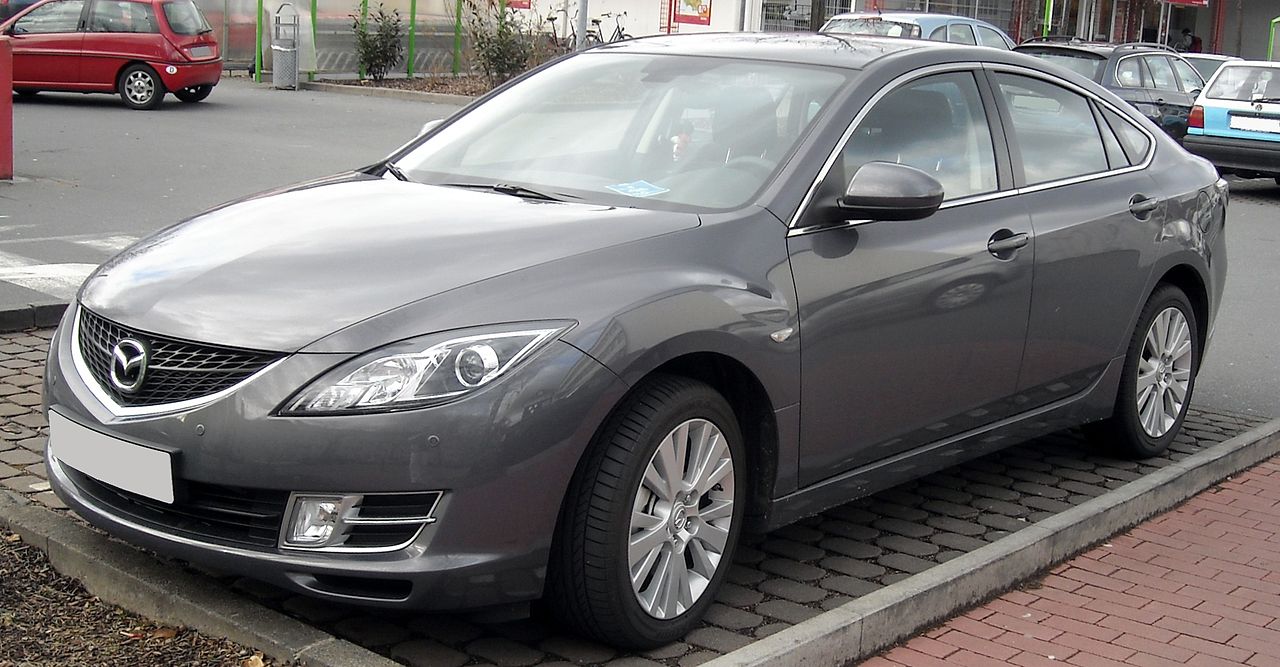
Mazda 6 front 20090212.jpg
When the Mazda 6 was first introduced, it was seen as the sports sedan among family cars. It was stylish, sporty and still had the ability of carrying a small family and their luggage. The new Mazda 6 is bigger, roomier and more practical than the previous generation. Does this mean the Mazda 6 has finally grown up?

Likes: More fun to drive than rivals, roomy interior with a massive boot, large equipment level and sporty exterior looks.

Dislikes: Not as sporty as previous form, some interior trim bits feel cheap, no more wagon option.

Performance: There are two engines available for the Mazda 6. A 2.5-liter four-cylinder with 170hp, and a 3.7-liter six-cylinder with 272hp. Pick of the bunch is the base four-cylinder engine. It's fuel efficient and is very flexible. The six-cylinder is smooth, but commands a premium price.

Ride & Handling: The Mazda 6 has grown a few inches in length, but the sporty nature is still there. The 6 grips really well, and the steering is light yet precise. The ride isn't as comfortable as you might expect, but it's far from uncomfortable.

Refinement: The 6 is a relaxed quiet cruiser. Refinement isn't class-leading, but it's far from cheap. You'll notice a bit of wind noise around the door mirrors, and there's some road noise over rough surfaces. The engines are both very smooth.

Behind the wheel: The 6's cabin feels sporty thanks to the circular air vents and splashes of metallic trim. The dash is user-friendly, although the heater controls are separated from the panel that display their settings. Forward visibility is good, and both the driver seat and steering wheel adjust for reach and height.

Space & Practicality: Front passengers will find the 6 is quite massive. Rear passengers will also feel the same way. There's plenty of head and leg room to go round. The boot also offers tons of space, and the rear seat folds down flat to offer even more space.

Equipment: The base trim comes well equipped. You'll get central locking, air-con, cruise control and traction control. Top of the range trims offer xenon headlamps, back-up camera, dual-zone climate control and blind spot monitoring system.

Buying & Owning: The 6 is priced well among its rivals. You get plenty of kit for the money, and your fuel bill will be low if you stick with the four-cylinder engine. Resale value is strong, and discounts is offered but not anything fantastic.

Quality & reliability: The interior feels like a mixed bag, some plastics look stylish and hardwearing. In some areas though, the plastics feel cheap to the touch. Reliability shouldn't be a worry, as Mazda's reliability record is spotless and the 6 has been rated high in its class.

Safety & Security: Six-airbags, traction control, and anti-lock brakes are all standard across the range. Deadlocks, engine immobiliser and a top-notch alarm make life difficult for thieves.

The Mazda 6 feels like a family car. The sporty dynamics are still there, but the appeal is more grown up. This isn't a bad thing however, the 6 has to compete with the likings of Honda and Toyota. Both offer cars that are popular in the the mid-sized family sedan segment. However, if you want a splash of sportiness, refinement and a more engaging drive. The Mazda 6 is the perfect car for you. It's low base price, large kit level and roomy interior volume makes it a car well worth every cent.

Friday, May 11, 2018

Devon drives the Outlander Sport (Used)

Likes: Low running costs, roomy interior, priced well among rivals, stylish and practical.

Dislikes: CVT brings the buzz out of the engine, needs more power, not as sporty to drive as a Nissan Juke.

Compact crossovers are becoming all the rage. They're the same size as compact hatchbacks, but sit higher off the ground. The raised driving height allows for better vision all-round, and the compact size means they're urban friendly. Mitsubishi decided to jump into the game with the Outlander Sport. It's smaller and just as practical as the larger Outlander, but the price is cheaper. Will this be enough to lure buyers to the brand?

Performance: There's only one engine available with the Outlander-Sport. That's a 2-liter four-cylinder with 148hp. Performance is decent around town, but you'll struggle with it on the motorway. The CVT transmission feels like its robbing the engine of its revs. You'll have to work the engine hard to really get the most of it. Fuel economy however is suprisingly good.

Ride & Handling: The Outlander Sport isn't as sporty as the name suggest. There's a fair bit of body lean in corners. However, if you value comfort over ultimate control, the Outlander Sport is the perfect car for you. The supple suspension and big balloon tires does an effective job at absorbing most ruts and bumps.

Refinement: The CVT transmission really does bring the buzz out of the engine. It's far from intrusive, but can make long journeys tiresome. There's very little wind and road noise. On the motorway however, some wind and road noise will sneak into the cabin.

Behind the wheel: It's easy to find a comfortable driving position. THe steering adjust for reach and height, allowing all to get comfortable. The cabin plastics aren't classy, but the whole design and layout of the dashboard is attractive and user friendly. All-round visibility is good thanks to an elevated driving position.

Space & Practicality: The Outlander Sport offers decent space four five passengers. The boot space is decent, and can be increased thanks to split folding rear seats. There are some practical features too, such as hidden storage under the boot floor. The seats fold flat with no need to move the seat base first.

Equipment: All Outlander Sports come well equipped. The base trim comes with seven airbags, active stability control, Fuse hands-free Link System with USB port. Top of the range offers all-wheel-drive, keyless start and climate control.

Buying & Owning: The Outlander Sport undercuts its main rivals. However, the Nissan Juke offers more horespower for the same price. Resale value should be average, and trying to get an Outlander Sport with a discount shouldn't be hard to comeby. Running costs will be low thanks to decent fuel economy.

Quality & reliability: Some of the plastics in the Outlander Sport don't look flashy, but they feel well put together and long lasting. The mechanicals have been tested and tried, and there should be very little worry about reliability. Mitsubishi has a top-notch record in that department.

Safety & Security: All versions come with anti-whiplash head restraints, seven airbags,  brake assist and stability control standard. An alarm system, engine immobiliser and deadlocks are standard across the range to keep theft at bay.

The Outlander Sport isn't as bold as the Nissan Juke, and isn't as fun to drive as a Mini Countryman. You may find there really is no point to the Outlander Sport, but you'll be surprised when you see all that the Outlander Sport has to offer that the others don't. It's affordable, cheap to run, and is far roomier than the Juke and Countryman combined. The top of the range trim adds all-wheel-drive at a cheap price. It's not the most stylish of the bunch, but it sure does offer great value for the money and is versatile enough for small families. If you need a no-nonsense compact crossover, with plenty of space and kit for the money. Look no further.

Devon M 

Monday, May 7, 2018

Devon Test Drives a Volkwagen Tiguan (used)


The Volkswagen Tiguan is a classy alternate to the likes of the Honda CR-V and Subaru Forester. It's a stylish CUV with the same engine as the GTI. While priced on the steep side, and rivals offer a few tricks at a lower price. Can Volkswagen justify the Tiguan or is it a case of too small too expensive?

Performance: The only engine available from the Tiguan is a 2-liter turbocharged four-cylinder engine which pumps out 197hp. It offers plenty of punch and large amounts of passing power on the highway. A more powerful engine would be desired with the all-wheel-drive models. The heavier weight means acceleration and fuel economy suffers.

Ride and Handling: The Tiguan is the most fun to drive crossover in its class. The sports suspension in our tester car has a firm ride. It can be a bit jittery over some surfaces. The trade-off is well controlled body roll, and responsive handling with lots of grip.

Refinement: The interior is quiet, something you'd expect from a Volkswagen. At highway speeds the engine is barely heard. There's little road noise, but some wind noise can be heard when picking up speed. You'll barely hear a peep out of the suspension.

Behind the wheel: The Tiguan feels very similar to the Golf. All the controls and dials are in easy reach from the driver's seat. The steering wheel adjusts for reach and height. Anyone can get comfortable behind the wheel. The dashboard layout is neat and logical, but feels a bit dull in the more basic trim.

Space & Practicality: The rear seats fold with ease, as well as slide forwards and backwards for more legroom or more cargo space. You won't be able to have both. The rear seats are roomy for four people, adding a fifth person is pushing it.

Equipment: Every Tiguan comes well equipped, depending upon how much money you're willing to dish out. Top trim levels come with rain sensing windshield wipers, Xenon Headlamps and climate control. All-wheel-drive is offered on all but the base trim level, but it comes at a hefty asking price.

Buying and owning: The base Tiguan is priced aggressively with its rivals. However, the Tiguan loses points for the high asking price of its all-wheel-drive. Fuel economy is average and running costs are low. If you stay away from the options lists, you can get a nicely equipped Tiguan well worth the money. All the extra features just make the Tiguan seem overpriced. You're investments will be secured, as Volkwagen have high resale value.

Quality & Reliability: Volkswagen is known for quality and Germanic build quality. The Tiguan's interior won't win any prizes, but the materials used look and feel long lasting. Most mechanicals have been tried and tested, so there should be no fear of major problems. However, owners have rated the car's reliability as average in JD Power Survey.

Safety & Security: ESP, emergency brake assist and six airbags are standard. The high seating position and all-wheel-drive will be seen as a safety advantage. Although some maybe put off by its high asking price. Deadlocks and an alarm are fitted to guard against theft.

Likes: Logical interior design, smooth turbo engine and transmission, a sophisticated option among small crossover vehicles, more fun to drive than its rivals.

Dislikes: Plain Jane looks, interior on basic models look cheap, price can skyrocket with options, more horsepower please! Trims with sports suspension suffer from a firm ride.

Overall: The Tiguan offers better on-road dynamics and has a turbo engine that makes it more fun to drive than rivals. If you're in the market for something a little upscale in terms of looks and feel. The Volkswagen wont' disappoint. However, there are rivals that offer the same tricks for far less money and should be considered before buying a Tiguan.

Devon M 

Saturday, May 5, 2018

(Used) Land Rover Range Rover Sport (Review)


File:Range Rover Sport SDV6 SE (Facelift) – Frontansicht, 5. September 2012, Wuppertal.jpg
Photo provided by M93
The Range Rover Sport isn’t your typical Land Rover. Of course there is the legendary off-road capability and the unmistaken Land Rover looks. What makes the Range Rover Sport so different is the fact that it adds a splash of sport to your typical Range Rover, but is this a good thing?

Performance: There are two engines to choose from, a 5-liter V8 producing 375hp and a supercharged version of the 5-liter V8 producing 510hp. Picking between the two depends on the depths of your wallet. The non-supercharged V8 does a well enough job of propelling the Range Rover Sport around with no difficulty, while the supercharged form offers effortless acceleration.

Ride & Handling: The Range Rover Sport isn’t a sports machine and the hefty curb weight will suggest that. However, driving the Range Rover Sport on twisty narrow roads, you’ll instantly forget that this is a large heavy sport utility vehicle. Handling is good while ride comfort is also very posh and comfortable.

Refinement: There’s virtually no wind and road noise to complain of with the Range Rover Sport. The eight-cylinder engines emit a lovely snarl that sounds contagious when pushed hard on an open highway. The supercharged version sounds almost like a jet plane which is a welcome add to the overall driving experience.

Practicality & Space: If you want a sport utility vehicle that makes you feel like king of the road. The Range Rover Sport will do just that and will do it very well. The driver’s seat feels more like a throne, with oodles of support and adjustments to allow drivers of all sizes to get comfortable with ease. The instrumental panel is fuss free and is very easy to navigate. Rear passengers will enjoy plenty of legroom and headroom. The boot is also very spacious and roomy.

Equipment: The Range Rover Sport comes well equipped no matter what trim you choose. However, the higher the trim levels you climb the more expensive your Range Rover Sport gets. The HSE trim comes with Xenon headlamps, navigation system, 20-inch alloy wheels and full leather interior. Supercharged version offers high performance brakes, sporty exterior trim and of course the silky smooth supercharged engine.

Buying & Running cost: Buying a Range Rover Sport isn’t a cheap proposition. The base trim starts at $60,000 which will be good enough for most buyers; the mid-range adds $5,000 more with a luxury package. Top of the range adds the supercharged engine and few extras for a higher price tag of $76,000. You’ll need deep pockets for running costs, as the eight-cylinders both are gas guzzlers. The supercharged version guzzles gas as fast as it accelerates.

Reliability: The Range Rover Sport interior has many soft touch materials that feel high quality. They look and feel long lasting. However, the biggest question that still remains is reliability. Land Rover’s reliability record is very spotty, long term reliability of the mechanicals and electronics is still rather iffy.

The Range Rover Sport really is a great sport utility vehicle to own. The interior is very well crafted, the seats are very comfortable and the overall driving experience is very rewarding. The supercharged version offers effortless acceleration, all while offering light weight moves in a heavy weight package. However, the downside is you’ll pay a pretty penny to buy one and you’ll need deep pockets for running costs. There is still some concern for reliability and of course the ‘high baller’ image that the Range Rover Sport carries.

Devon's Pick: HSE trim offers a strong eight-cylinder engine and enough equipment to satisfy most buyers. Plus it's the cheapest of the Range Rover Sport range. 

Likes: Strong engines, luxurious interior with comfortable front seats. Handles well for weight and size; king of the road feeling when driving.

Dislikes: High running costs, iffy reliability record, not the vehicle for those who want to be discrete with their wealth.

Devon M
Friday, May 4, 2018

Devon test drives a Kia Rio 5-door


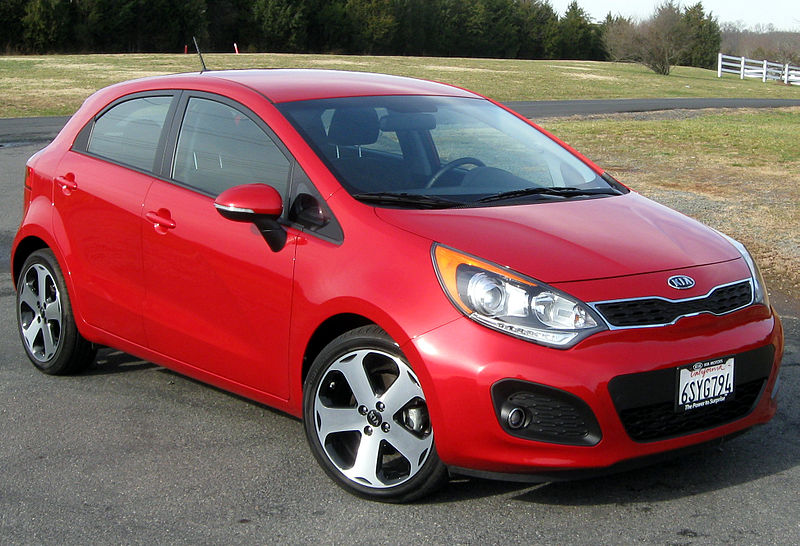
File:2012 Kia Rio SX hatchback -- 12-22-2011.jpg
The Kia Rio for a while carried the image of being a budget car nothing more. Those who needed a cheap means of getting around considered the Rio because of it's ultra low base price. Now times have changed however, and the Kia Rio is far from the cheap car that it used to be. It's still affordable and offers much new technology for such a low asking price. Has Kia finally stepped up their game? Or is it a case of all style no substance?

Performance: The Kia Rio only comes with one engine and that's a 1.6-liter four-cylinder producing 138hp. There's plenty of pace for city and highway driving, and fuel economy is really good as well. The engine is paired with either a six-speed manual gearbox or a six speed automatic gearbox. Picking between the two depends on your tastes.

Ride & Handling: The Kia Rio ride often feels firm and never settled over bumps and potholes. If you get the top of the range trim with the low profile tires, the ride comfort will suffer a bit more. Handling is okay, it's not as sporty as a Fiesta but it does offer a secure feeling. The only downside is the steering can often feel numb at times.

Refinement: Wind noise is well supressed but very little else. Engine noise is often joined by tire noise slapping on the road. The gearshift is a bit notchy too. On long journeys this can make things a bit tiresome unless you turn the radio up a bit to drain out the noise.

Behind the wheel: This car is very easy to get comfortable in because the driving position is adjustable and should suit everyone. The seats are flat and firm. The controls are simple and well placed. The big problem however is the small rear window and thick pillars, which restrict rear visibility.

Space & Practicality: The Rio offers a impressive amount of space for four adults. There's plenty of headroom and legroom to go round. The boot offers plenty of space for its size and the rear seats fold 60/40 for added versatility.

Equipment: The base trim level misses out on power windows and power door locks. But you do get air-con and a CD-player standard. You'll have to step up to the EX trim to get power door locks, windows and Bluetooth connectivity. SX trim adds 17-inch alloy wheels, power folding exterior mirrors, auto headlights with LED day time running lamps and a sports tuned supension.

Buying & Owning: The Kia Rio is one of the most affordable cars on the market. However, the value factor slowly disappears when you climb up the trim levels. The base trim loses out on features that should be standard, while the top of the range seems rather overpriced for what it is. Running costs should be low thanks to good fuel economy, while resale unknown.

Quality & Reliability: The Kia Rio overall interior quality feels good. The quality of the materials used feel sturdy and long lasting. A huge step forward for the brand. Reliability has been average for the Kia brand.

Safety & Security: All Rios come equipped with front and side curtain airbags. Anti-lock brakes and electronic stability control are standard as well. It should also be as thief-proof as other contemporary Kias.

The Kia Rio has really stepped up its game since it was first released in the U.S. No longer is it the car you'd choose because its the cheapest to buy. The new generation of the Rio is stylish, practical and even offers good fuel economy. However, the only disappointing factors is the kit level for the base trim and the disappointing driving experience compared to the Ford Fiesta. If you can ignore these few little faults, you'll find that the Rio is a great car with good value for the money.

Devon's Pick: SX trim may be the most expensive of the Rio range. It's the only version of the Rio that offers the most attractive features such as those LED daytime running lamps and flashy alloy wheels. It's worth spending the extra but loses the value for money factors. 

Likes: Good fuel economy, stylish exterior looks, practical and offers good value for the money.

Dislikes: Not as comfortable or fun to drive as a Ford Fiesta, the base trim is very disappointing.

Devon M

Thursday, May 3, 2018

(Used) Devon test drives a Toyota Corolla

File:2014 Toyota Corolla S in Ontario, Canada.jpg

Toyota has never been known for building fun to drive vehicles. The Corolla is no exception to this. Although you can get a sporty looking S-trim. There really isn't much fun behind the wheel. With stiff competition from Honda and Kia, will Toyota be able to keep up? Or is this another case of old dog - old tricks?

Likes: Excellent fit and finish, fuel economy, smooth ride comfort.

Dislikes: Dull driving experience, base trim feels rather stingy on features.

Performance: There's only one engine available for the Corolla, and that's a 1.8-liter four-cylinder with 138hp. It offers a good amount of pace around town and on the motorway. Fuel economy is also good too. Power hungry may want to look elsewhere, as there's no powerful engine options to match the sporty looks of the S trim.

Ride & Handling: The Corolla feels solid and comfortable when driven gently. Handling isn't sporty, and doesn't encourage you to drive aggressively. The suspension is set more towards comfort rather than agility. So there's bodyroll in turns, but its far from annoying.

Refinement: The Corolla has excellent refinement on the motorway. There's very little wind and road noise. You'll enjoy how smooth and quiet the ride comfort is. The engine operates smoothly, and is quiet at most speeds.

Behind the wheel: The dashboard has a no nonsense layout. Everything feels logically placed and user friendly. The seats adjust for both reach and height. The controls are easy to use and the quality feels rock solid.

Space & Practicality: There's enough room for five adults in the Corolla. There's plenty of head and legroom for both front and rear passengers. There's plenty of boot space as well. The rear seats fold down 60/40 for additional space.

Equipment: The Corolla is priced well among its rivals, but the base trim level loses out on central locking and power windows. You'll have to step up to the higher trims to get features that should be standard across the range. There are rivals that offer them for less than the Corolla.

Buying & Owning: The Corolla holds its value well, so your investments are well secured. The base trim doesn't feel like much of a value, and the sporty looking S trim doesn't feel as sporty as its looks suggest. However, your fuel bill will be low and build quality will be excellent.

Quality & Reliability: All the plastics used feel long lasting. There's a sense of durability behind the interior quality. Reliability should be excellent, as the Corolla has been rated high by its owners in the JD Power survey.

Safety & Security: All Corollas come with an array of safety features standard. ESP, ABS and side curtian airbags come standard across the range. An engine immobiliser comes standard across the range, but you'll have to step up to the higher trims to get deadlocks.

The Corolla has rock solid reliability and feels very well built. It's dependable and offers excellent fuel economy. For those seeking something that's fun to drive may want to venture else where. But for the few that want a car that's aimed at quality and dependability, the Corolla is the car for you.

Wednesday, May 2, 2018

(Used) Devon test drives an Audi Allroad

Photo provided by Devon M 

If you take an Audi A4 raise the suspension slightly and throw on plastic body panels. You get the Audi Allroad, it's designed to compete with the Volvo XC70 and Subaru Outback. With standard Quattro all-wheel-drive and a turbocharged four-cylinder engine, can Audi give a justifiable reason to buy a Allroad over a luxury crossover? 

Performance: The Allroad only comes with a 2-liter turbocharged four-cylinder producing 211hp. Only transmission available is an eight speed automatic gearbox. Which does a good job of helping the engine feel more powerful than the numbers suggest. Pace around town is decent and on the highway there's good punch thanks to the extra torque. 

Ride & handling: Even though the Allroad has a raised driving position for mild off-roading. The downside is that the Allroad is that there's a bit more body roll than the A4 Avant on which its based on. The ride comfort is also a bit of a let down, there's a bit too much thump over poor road surfaces and the steering is overly light with little feedback. 

Refinement: The Allroad is quiet and smooth at highway speeds. There's a bit of wind noise, but it can be easily drained out with the radio. Suspension and road noise are also well supressed. 

Behind the wheel: There's a wide range of adjustments for the driver's seat and steering wheel. The instrumental panel is easy to navigate and visibility is great thanks to large glass area. 

Space & Practicality: There's enough space for four adults and their luggage. Headroom and legroom and plenty and the boot is a good size as well. The rear seats fold down to add more space, but they don't fold completely flat. 

Equipment: The base trim of the Allroad comes with 18-inch alloy wheels, Audi Concert radio, panorama glass roof and leather surfaced seats. Mid-range trim adds Xenon headlamps with LED daytime running lights, power tailgate, three-zone climate control and heated front seats. Top of the range trim adds navigation system, keyless start, Audi side assist blind spot dection warning and a upgraded sound system. 

Buying & Owning: The Allroad comes with a hefty price tag which is similar to the Volvo XC70. Even though the Subaru Outback is much cheaper to buy, it doesn't have the styling appeal of the Audi Allroad. Gas mileage a combined 23 miles to the gallon which is decent for a wagon that has all-wheel-drive and weighs near 4,000lbs. Resale value should be good as with all Audis. 

Reliability & Quality: The interior quality is excellent for its class. All the materials feel upscale and the overall impression is superb. Audi hasn't really enjoyed the best reliability record in the past, but from what we've seen in recent years. The question still remains over the longterm reliability of the mechanicals and electronics. 

Security & Safety: The Allroad comes with lots of safety equipment, including six airbags and stability control. Rear side airbags are optional. Deadlocks and an alarmn are fitted as stanard to guard against theft. 

The Allroad is a nice wagon with plenty of luxury features galore. The engine is decent for the task, and fuel economy is respectable. However the bigger question remains. Why Audi didn't offer the A6 Allroad instead of the A4 based Allroad. The price tag would've been a little more justifiable and overall packaging would've been more convincing seeing that the Volvo XC70 and Subaru Outback are both larger vehicles with more space. However, if you want a splash of style, wagon practicality and desire the Audi Quattro all-wheel-drive, the Audi Allroad is the perfect car that blends all three very well.

Devon's Pick: Premium Plus adds Xenon headlamps which look better on the Allroad than the halogen headlamps that come standard on the base trim. Plus it feels like an alround better deal than both the base trim and top of the range. 

Likes: Stylish exterior with luxurious interior, spacious room for four adults with a decent sized boot. Turbo engine has more pep than the figures suggest. 

Dislikes: Priced rather steeply, steering is overly light. Reliability record is still iffy. Doesn't offer adjustable suspension like previous Allroad. Based on A4 platform rather than A6 to make it a real competitor towards the Volvo XC70. 

Tuesday, May 1, 2018

(Used) Devon drives the cheapest car you can buy.

File:2012 Nissan Versa SL -- 10-28-2011.jpg


Quick! What's the cheapest new car you can buy in the U.S. right now? No its not the Smart Fortwo, and its not a Kia Rio. We're talking about the new Nissan Versa. Taking the crown as the cheapest car in the U.S.  The Versa is the only four-door sedan you can buy that starts well below $11,000. With rivals like Kia and Hyundai moving upmarket for few thousand more. Can Nissan provide a valid reason why basic transportation has a place in this competition? Let's find out.

Performance: There's only one engine and that's a 1.6-liter four-cylinder with 109hp. Around town the Versa feels lively, however on the motorway you'll struggle to get up to pace. The CVT transmission makes the engine scream when revved hard. Only tradeoff is the high gas mileage that helps the Versa serve its purpose as a city car.

Ride & Handling: The Versa feels smooth and comfortable to drive around town. On the highway, you may struggle a little due to the small tires. However, most owners won't venture or try to push the Versa to its limits. This is a good thing because the Versa isn't the best handling of the bunch. But you do get brake assist and four-wheel anti-lock brakes to reduce braking distance.

Refinement: The Versa interior feels hushed and refined for the low asking price. There is some wind and road noise that will sneak into the cabin. It's far from intrusive and annoying. The CVT transmission makes the engine droand loudly when revved hard. This may make long journeys a bit tiresome.

Behind the wheel: The driving position can be a bit awkward for some. The steering wheel only adjust for height, which can be uncomfortable for passengers with short arms. The interior is has a logical layout with all the controls within easy reach of the drivers hand.

Space & Practicality: The Versa has a large roomy rear seat that can really rival larger sedans. There's plenty of space for three passengers. Headroom and legroom are superb for a car that carries the price of a used vehicle. The boot is massive and offers plenty of space.

Equipment: The base Vesra is pretty much a car. You get air-conditioning and very little else. You'll have to step up to the mid-range 1.6SV to get central locking, power windows and cruise control. Top of the range Versa adds Bluetooth, premium audio cd player and cloth door trim accent.

Buying & Owning: The Versa's low base price means that you won't have to pocket too much to buy one, and thanks to high fuel economy. Running costs will be low as well. Residual value won't be the greatest and resale value is about average.

Quality & Reliability: It's too soon to say if the Versa will be reliable in the long run. However, since the Versa is built by Nissan. Reliability should be trouble free for the mechanical parts. The quality of the interior is spotty. There are parts of the interior that feel cheap, but for the price you can't really expect anything special.

Safety & Security: Four-wheel anti-lock brakes and brake assist are both standard. Dynamic stability control and side curtian airbags are standard on all trim levels. Making the Versa one of the biggest bargains in terms of price. There are no deadlocks offered standard and an anti-theft alarm is not offered on the base trim level.

Likes: Low base price and low running costs, biggest rear seat and boot space in class, good amount of kit for the money.

Dislikes: Bland inside out, base trim can be seen as mean, nothing special other than a low price and roomy interior.

The Nissan Versa doesn't really offer much in terms of driving excitement, and that's okay. For the sole purpose of the Versa most buyers will be very satisfied. It may not be the most striking car to look at, and the interior isn't the most lavish. A basic transporation vehicle that can be used as a work horse. Low asking price with low running costs. A good vehicle but offers nothing special other than an attractive low price and roomy interior.

Devon's Pick: 1.6 SV trim adds power windows and door locks which are a few features that you'll want.

Devon M

Monday, April 30, 2018

(Used) Devon test drives the redesigned Beetle

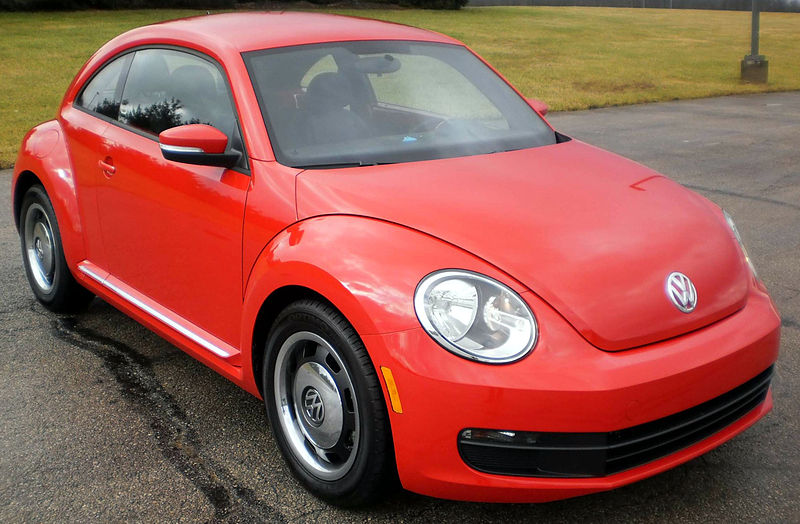
File:2012 Volkswagen Beetle -- NHTSA 2.jpg

The Volkswagen Beetle has always been regarded as a chick car. With a large portion of its buyers being female. Now Volkswagen has decided to change up the Beetle formula. Giving it a more masculine design and a dose of sport to help shape up its new image, but has it worked? Let's find out.

Performance: There's two engines available with the Beetle. A familiar 2.5-liter five-cylinder with 170hp and a 2-liter turbocharged four-cylinder with 200hp. Pick of the bunch is the turbo engine. It's the most fun to drive form of the Beetle. There's plenty of punch and fuel economy isn't that much different than the 2.5. 

Ride & Handling: The Beetle features two different rear supsension setups. The turbo forms offer a multi-link arrangement from the GTI. In this form, body sway is well controlled and there's plenty of sideways grip. The lower trims have a more basic rear suspension set up which doesn't feel as sporty as the turbo forms. Both suspensions however offer a firm ride at low speeds and steering is quite slow to react. 

Refinement: The Beetle is generally refined, although the frameless doors generate quite a bit of wind noise. The turbo engine also generates quite a bit of induction roar. The DSG gearbox is generally smooth, but it can be jerky at low speeds. 

Behind the wheel: The Beetle's dashboard has been inspired by the original. This means its taller than in most modern cars and has a squared off front. You can go even further with the retro vibe and have the dashboard painted the same color as the car. All of the switches and controls are clearly laid out and easy to operate. 

Space & Practicality: The Beetle only has four seats. There's plenty of room in the front for people of all shapes and sizes. The back seats however are cramped. The boot is a decent size, almost as much room as you'd find in a Golf. The sloped bootlid makes it difficult to carry tall items. 

Equipment: The Beetle comes with an array of trim levels to choose from. The base trim offers cd-player, air-con, Bluetooth and electronic stability control. Turbo form offers a rear spoiler, 18 inch alloy wheels and sport cloth seats. Top of the range offers an upgraded sound system, navigation system, leather seating surfaces and a sunroof. 

Buying & Owning: The base trim of the Beetle cost a few thousand more than a two-door Golf. So its not really all that cheap to buy and discounts will be hard to comeby as the Beetle was just redesigned. Resale value is too soon rate. Fuel economy is decent which means running costs shouldn't be too bad. 

Quality and Reliability: The Beetle's interior trim feels a bit cheap in some areas. You'll find softer feeling plastics in a Golf, for example the plastics on the center console and around the front center armrest are hard and scratchy. At least most of the switches and controls feel weighty. Underneath, the Beetle shares most of its parts with the Golf, so reliability should be good. 

Safety & Security: The Beetle comes with side-curtian airbags, electronic stability control and anti-lock brakes. Not to mention the reputation of Volkswagen safety. On the security front, you get an alarm, deadlocks and a visible VIN with plenty of marked parts. 

The redesigned Beetle pushes all the right buttons. The new design is much more sporty, with a more retro interior to match that of the original. However the Beetle once again chooses style over practicality. You can buy a two-door Golf for less money if you want the extra space for rear passengers and boot space. But you'll be missing the point of the Beetle. It's a retro-throw back to the original, offers a nicer interior and is more engaging to drive than the pervious form. If you desire a car that stands out and don't mind the compromised practicality, this car is well worth the look.

Devon's Pick: The Turbo form makes the most sense. It's the most exciting to drive all while being not too much more expensive than the 2.5. Running costs are decent and equipment is also decent. 

Devon M 

Sunday, April 29, 2018

(Used) Devon drives a car with "Bling-Bling" factor

3rd Cadillac Escalade -- 08-16-2010.jpg

Likes: Stylish exterior styling, roomy for eight passegners, available hybrid model, high-class image.

Dislikes: Seriously expensive starting price, and options will send price sky high. Running costs will be high, bulky size makes it a chore to park and live with in urban areas.

The Cadillac Escalade has been popular since its launch in 1999. There has been no other SUV that has gotten as much hype as the Escalade. Appearing in music videos, being mentioned in song lyrics and seen as the vehicle to have by many Hip/Hop Artists and movie stars. But does the Escalade suffer from all style and no substance?

Performance: The Escalade comes with a 6.2-liter eight-cylinder engine. The base trim comes with 403hp, and a two-mode hybrid with 332hp. The pick of the bunch is the base engine output. It's still quite expensive, but is far cheaper compared to the hybrid model. There's effortless power on the motorway and plenty of towing capability. The Hybrid commands a premium price and not much difference in fuel economy. You'll have to do tons of motorway driving to really get your moneys worth.

Ride & Handling: The Escalade has a soft suspension, which does a good job at isolating occupants from most bumps. But it never feels settled on patchy surfaces, and body movements are poorly controlled. The steering has very little feedback, and the sheer size of the car makes driving on narrow city roads hard work.

Refinement: The big engine is hushed at steady motorway speeds. The V8 emits a lovely rumble under heavy acceleration. Road noise isn't a big problem, but the Escalade is about as aerodynamic as a tower block so wind noise intrudes into the cabin at high levels.

Behind the wheel: You sit high in the Escalade, so all round visibility is good. Shorter drivers will have a harder time getting comfortable. Although the pedals adjust for reach, the steering wheel only adjusts for angle. This makes driving position awkward for some. The heater controls are fiddly too.

Space & Practicality: The Escalade has seating up to eight with a well laid out formation. But you won't get three adults in the third row because shoulder room is tight. The boot isn't massive, and the rear seats don't fold flat. You'll have to remove them to get the full cargo capacity.

Equipment: There are four trim levels available. All of them are well equipped, but the options will send the price soaring. Tri-zone climate control, six-disc CD-changer and parking sensors are standard equipment. Satellite navigation system and rear-seat DVD entertainment system are optional.

Buying & Owning: The Escalade has the bling looks that attracts many premier buyers. You'll need their wages to run one, because the Escalade is quite expensive to run. Fuel economy is low, and the price tag is high. Even the hybrid commands a high premium over the the base engine. The V8 engine is thirsty and you'll struggle in large parking lots and tight urban areas. Insurance rates are high, and theft rates are also high for this vehicle. The Escalade won't hold its value as well as its rivals.

Quality & Reliability: The dash plastics feel and look cheap. Some interior fittings feel flimsy and you can hear lots of rattles and creaks when driving over rough surfaces. Reliability of the electronics may be a bit of a worry.

Safety & Reliability: Twin front and side curtain airbags come standard across the range. The side curtain airbags covers all three rows. Stability control helps keep you on the road. Deadlocks and an alarm is fitted as standard.

The Cadillac offers tons of bling in its styling. It's stylish, and has tons of appeal to high class buyers. But one has to ask themself, is it really worth it? There are rivals that are better to drive, easier to manuever and offer far better gas mileage than the Escalade. You'll buy one for the status of wealth, but there are so many drawbacks to consider. High running costs, iffy reliability record all count against it.

Devon M 

Saturday, April 28, 2018

(Used) Devon takes a look at a Nissan Murano

File:2009 Nissan Murano S.jpg

Likes: Well equipped, smooth six-cylinder engine, roomy and comfortable to drive.

Dislikes: A bit strange looking, no base engine offered, not as sporty to drive as its looks suggest.

Crossovers are becoming more and more popular. They sit lower to the ground, and offer better fuel economy than many truck-based sport utility vehicles. The Nissan Murano uses the same engine from the 350Z, but has been detuned to 260hp. With so many other rivals catching up to the Murano, will this be a case of old dog old tricks?

Performance: There's only one engine available for the Murano, and that's a 3.5-liter six-cylinder. It's the same engine used in the 350Z, but only produces 260hp. Acceleration is brisk and effortless on the motorway, but the CVT-transmission is reluctant to allow the engine to rev. A base engine would be nice for those who seek the Murano's size, but better fuel economy.

Ride & Handling: The Murano isn't as sporty as the 350Z. The body leans in corners, because the suspension is softly tuned. The steering feels numb, and discourages sporty driving. Even though the car grips really well.

Refinement: The Murano is impressingly refined. THere's very little wind and road noise. The engine has a nice snarl when revved hard, but its never intrusive or loud. On the motorway, the Murano feels very comfortable and well laid back.

Behind the wheel: The steering wheel adjusts for reach and height, and the seats adjust eletrically. You won't struggle to find a comfortable driving position in the Murano. What's more, the layout of the controls is hard to find fault. Only hefty rear pillars let it down, but you do get two parking cameras as an option for limited the limited vision.

Space & Practicality: There's an impressive amount of space for five passengers. There isn't a third row seat option like in some rivals. This isn't a bad thing, as the boot is impressively large. The rear seats fold almost flat with a tug lever to increase space.

Equipment: The Murano comes well equipped for the price. Even the base trim comes with push button ignition, six-disc CD-changer and dual zone climate control. Higher trims offer a glass roof and leather seats. Top of the range offers Xenon-headlamps, chrome wheels and power lift tailgate.

Buying & Owning: The Murano is well equipped for the price. Even the base trim will satisfy most buyers. Strong resale values will help protect your investments. You'll need deep pockets to satisfy the six-cylinder's thirst for fuel.

Quality & reliability: The interior has a sense of logic behind it. Everything feels well laid out, and all the controls feel classy. Some switchgear feel cheap, but they feel sturdy and long lasting. Nissan has enjoy excellent reliability, with much not much worry of the mechanicals.

Safety & Security: Stability control is standard across the range, as well as side curtain airbags. Deadlocks, alarm and engine immobiliser make life for thieves hard.

The Murano is a decent crossover that's classy and well balanced for small families. It's not sporty, and looks the part. This may disappoint some buyers, and the lack of a base engine will put off some buyers. The six-cylinder is nice but some rivals offer lower powered engines to make the price more attractive. If you can overlook these few negatives, you'll find the Murano is a well suited crossover for small families.
Devon M