What's On

Showing posts with label wagon. Show all posts

Thursday, January 26, 2023

Refreshingly Non-German (used)


The Volvo V90 may be a special order wagon, but it certainly is one of those wagons that if you can get your hands on it. It’s certainly worth every penny.

The standard T5 engine is the only engine that wasn’t available on the dealer lot we found the V90. It was the T6 AWD in Inscription Trim which is both our favorite trim and has our favorite engine. The 2-liter turbocharged & supercharged four-cylinder offers the punch you’d expect from an engine producing 315hp and the torque at low revs so it’s easy to drive around town. What we like the most is that it doesn’t feel out of its depth when you do put your foot down, however we do have to bash the auto gearbox for its somewhat slow responses when upshifting and downshifting. This is far from annoying or a deal breaker.

On the road the V90 is just as comfortable as the S90 and we love the distinct driving characteristics that are associated with it. The steering weighs up nicely and doesn’t feel overly heavy and the handling is more secure than agile, and we are fine with this. It’s refreshingly Non-German and in a segment where everyone is trying to be like BMW we appreciate this, a hell of a lot. The V90 doesn’t feel like a large wagon especially around town. The long hood does feel daunting at first, but after a while you’ll get used to it quite easily. Wind and road noise are very well suppressed.

The interior is another area where Volvo has made huge leaps of improvement in. The infotainment system is easy to navigate through and the overall quality of the materials used feel top-notch and high quality. The front seats shine in terms of comfort and adjustability; it’s quite easy to find an ideal driving position. The rear seat does offer decent space for two, while three maybe pushing it due to the overly large transmission tunnel. The boot space is very generous and is even more generous with the rear seat folded down.

We’re only going to focus on our tester car which came fitted with almost every single option on the options list. It certainly made the V90 induce sticker shock but we understand that this is a vehicle trying to compete with the Mercedes E-class Estate. Full-LED headlights, perforated leather seats, navigation system and a full panoramic sunroof were fitted as well as 20-inch alloy wheels and a four-wheel air suspension. Our favorite option is the Bowers and Wilkins premium sound system provides the most amazing sound quality we have ever heard next to B&O that was fitted on our Audi A6 Allroad. The price of admission is pretty steep we’ll admit that, but compared to its only real rival the E-class Estate we love the V90 a hell of a lot more.

We’re going to keep it short. The V90 is a classy wagon that’s refreshingly Non-German and that should be all the reason to consider one. However, keep in mind that this is a special order wagon or find one that’s available on a dealer lot and we warn you that won’t be as easy.

Likes: Refreshingly Non-German driving dynamics and interior décor; it’s roomy for four and well it’s a wagon with turbo engine and all-wheel-drive.

Dislikes: It’s special order only.

Our pick: We haven’t had the opportunity to drive the T5 FWD, but if it’s anything like the S90 we’d avoid it. The T6 AWD is the sweet spot in the range and offers the flexibility you’d want with the low running costs that are within reason and logic.   We heard there is a Polestar which has 325hp, but when we talked to Volvo they told us that it's even harder to come by than the T5 FWD.

The 3-series Touring is the hidden Gem in BMW's Range (used)


Image result for bmw 3-series touring 2017 no copyright photo

There’s one BMW that really does catch our attention the most and it’s not one of the wicked fast M-cars. It’s the 3-series sports wagon. It’s one of the rarest gems you’ll find in BMW line-up that we think is worth paying the premium for. Even if it means passing up the better X-range of sport utility vehicles; here’s why.

Performance: There are two engines to choose from. The 330i has the 2-liter turbocharged four-cylinder producing 248hp while the 328d has a 2-liter turbo-diesel producing 180hp. If you do tons of highway driving the 328d makes the most sense financially. Otherwise the 330i will suit most buyers.

On the road: We have yet to test drive a BMW with the standard suspension. Our tester car came equipped with the pricey adaptive M Sport Suspension and it really does make the 3-series wagon dreamy to drive. Handling is excellent and steering is responsive with plenty of feedback. The standard xDrive offers traction at the bucket loads. Both engines don’t really sound great at idle. Even the gasoline counterpart sounds like a diesel at idle. Wind and road noise however is well suppressed.

Behind the wheel: There’s plenty of room for the driver to get comfortable. The steering wheel and seat offers plenty of adjustments. Most functions are operated through BMW’s iDrive system which has been vastly improved. It’s much easier to operate and really does beat Mercedes system by a long shot. Passenger space in the rear seat isn’t huge but if you are willing to share the space it is bearable. The boot offers plenty of space but becomes enormous when the rear seats are folded down.

Equipment: Engine stop/start system, auto dimming rearview mirror and electric interior tailgate release all come standard. You’ll have to pay extra for xenon-headlamps, comfort access and the adaptive M Sport Suspension which we think is an option worth having if you want the most engaging driving experience with your 3-series wagon.

Buying & owning: The 3-series wagon is expensive and there’s no hiding that fact. But compared to its rival the Volvo V60, the 3-series offers slightly better fuel economy thanks to the diesel engine and will hold its value well partially thanks to the fact that a 3-series wagon is very hard to find on dealer lots.

Quality & safety: The interior feels very upscale and classy. Much of the materials used feel long lasting and durable. BMW has had a very respectable reliability record with the 3-series. So we see no major issues for it. However we strongly suggest an extended warranty if you are planning to keep the 3-series long after the standard warranty is over. Standard safety kit includes stability control, traction control and anti-lock brakes. Six airbags come standard as well. All 3-series come with theft deterrent system as well as deadlocks to keep theft away. However you want to keep in mind that an alarm system is only offered as an option.

The BMW 3-series wagon is a great alternative to the large range of sport utility vehicles and crossovers out there. If you want an engaging vehicle that’s lighter and much more fun to drive, the 3-series wagon clicks all the right buttons. However you’ll have to pay extra for the adaptive M Sport suspension to make it ride and handle the way it should. You could pick one of the X-range sport utility vehicles, but none of them have the appeal of the 3-series wagon. This is why we think it’s the best of the 3-series range.

Likes: It’s the most practical and stylish 3-series of the range. Turbo-diesel engine option is the way to go.

Dislikes: We have yet to drive a BMW with the standard suspension and from what we’ve heard it’s disappointing; it’s expensive compared to the Volvo V60 the only other real competitor it has.

Devon’s Choice: The 328d makes the most sense because most owners will do tons of highway driving. Thus picking the diesel in this case is a no brainer. Plus it’s much more efficient than the gasoline engine. Only downside is you'll have to pay extra for the adaptive M Sport suspension so it rides and handles the way it should.

Thursday, January 12, 2023

[Tribute] we find a rare Saab 9-5 wagon


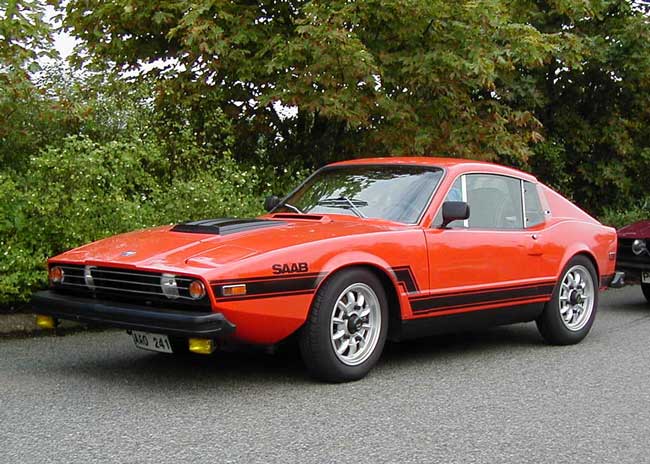
Saab was way ahead of its time and the proof of this is in the sudden rise and appeal of turbocharged engine technology, while everyone else was using non-turbo designs with large engine displacements. Saab used smaller four-cylinder engine which offered similar horsepower and torque to the larger six-cylinders and some eight-cylinder engines. It saddens us that Saab no longer produces vehicles and well this is another tribute to Saab. We managed to find a 2003 Saab 9-5 Linear Wagon and well we couldn’t resist driving it.

The Saab 9-5 wagon has always been a particular favorite of mine. I love way it’s styled inside and out. It’s a bit of an oddball but in a good way. The styling is still fresh even after all these years. Our tester car had a few scrapes here and there but for what is essentially a thirteen year old vehicle it surely doesn’t feel worn out or out of shape.

The engine that’s equipped in our 9-5 is a 2.3-liter light-pressure turbocharged four-cylinder which pumps out 185hp. There were two other engines available, a more potent 2.3-liter turbo pumping out 220hp and the top of the range high-output turbo four with 250hp. We’ve only driven this engine which was called Linear and the mid-range Arc trim. We loved how classy the Arc trim felt with the burled wood interior and fancier leather seats. The Linear trim which we have here has a lighter wood trim and well the leather seats are still fantastic. The ignition switch is in the center console which is a signature Saab design and the overall feel of the cabin is pretty much straight forward.

The engine is the sweet spot for the 9-5 wagon because it has a turbocharged design. It has oodles of torque at low revs which helps make it very smooth to drive around town and on the highway. Surprisingly this engine feels enough, you’d expect us to complain about how 185hp for such a large vehicle isn’t enough but it really does feel enough. It’s such a comfortable car to drive that you’d immediately forget about horsepower figures and you’re more focused on the driving experience at hand. The dashboard sort of wraps around you and everything is within reach of the hand. We even got a few glances from other drivers, because well let’s face the facts here. The 9-5 is so handsome looking and wagons are such a rare sight on the road that you can’t help but stare.

Highway ride comfort is excellent and dare we say better than most BMWs we’ve driven. Handling isn’t a strong point for the 9-5 but it does hold its own well. Steering feedback isn’t the greatest but it does the job good enough. We’ve tried hard to find fault in the 9-5 but it’s pretty hard to especially with such a rare gem like this. Visibility is actually good too thanks to large windows, which helps make the cabin feel airy and the optional sunroof our tester car had equipped makes things even better. What’s also rare is that most 9-5s we’ve driven had halogen headlights, and this one came equipped with factory installed xenon headlamps which both worked properly. Also in Saab tradition is the headlamps and tail lamps stay on the whole time you drive, whether it’s day time or night time. The headlamps also feature a follow-me-home feature which keeps the headlights on for 60-seconds after the engine has been shut off.

Rear seat space is roomy for three and the boot space is very generous. Fold the rear seats down and you’ve practically got yourself a cargo van. If you run out of space in this you need a Chevy Suburban. During our test we were able to fit a few weeks of shopping in the boot and still carry four aboard with no trouble.

Saab is very generous when it comes to standard kit. Along with xenon headlamps, our 9-5 came with climate control, auto-dimming mirrors, and power-folding mirrors as well as heated front seats. We wish that this also came fitted with Saab’s amazing perforated leather seats. The Arc and Aero are worth paying extra for because they trade the plain exterior looks for body-kit and flashier alloy wheels as well as added features.

Comparing the 9-5 wagon to today’s competition, the 9-5 wouldn’t be class leading but it would offer a very compelling package for those who aren’t swayed easily by everything less in the segment. We really do wish that Saab was still producing cars today because their different perspective on vehicles is a breath of fresh air.

2.3-liter turbocharged four-cylinder, 185hp.
5-speed automatic gearbox

History of Saab 9-5


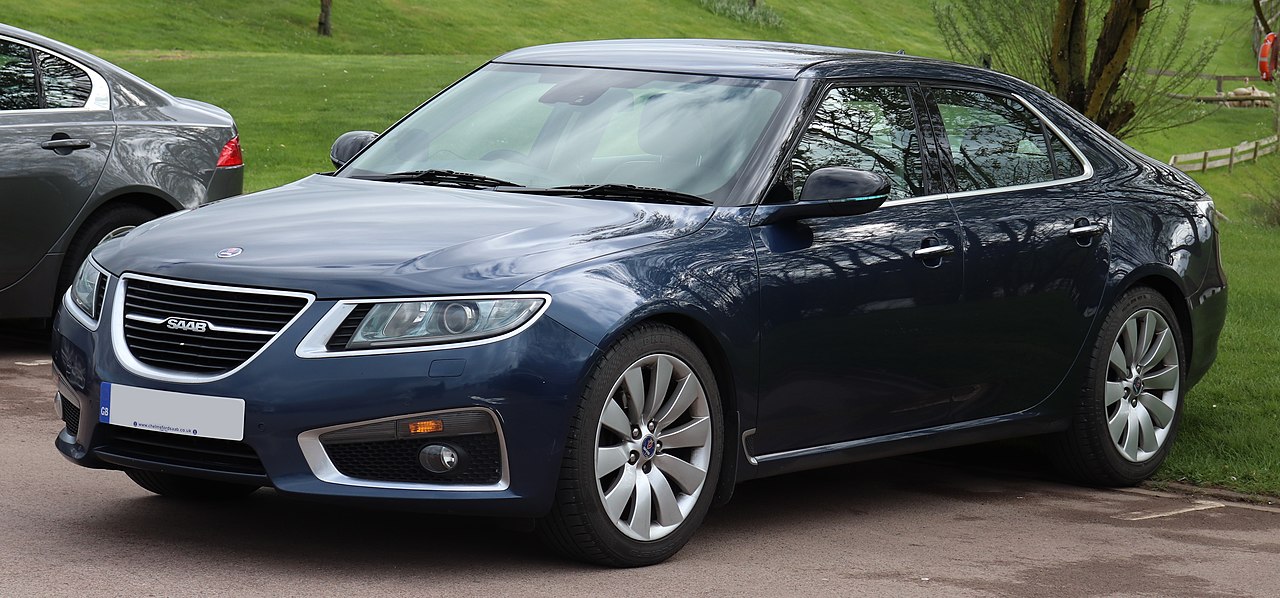
2012 Saab 9-5 Aero Turbo4 Automatic 2.0 Front.jpg


The Saab 9-5 is an executive car that was produced by the Swedish automobile maker Saab.

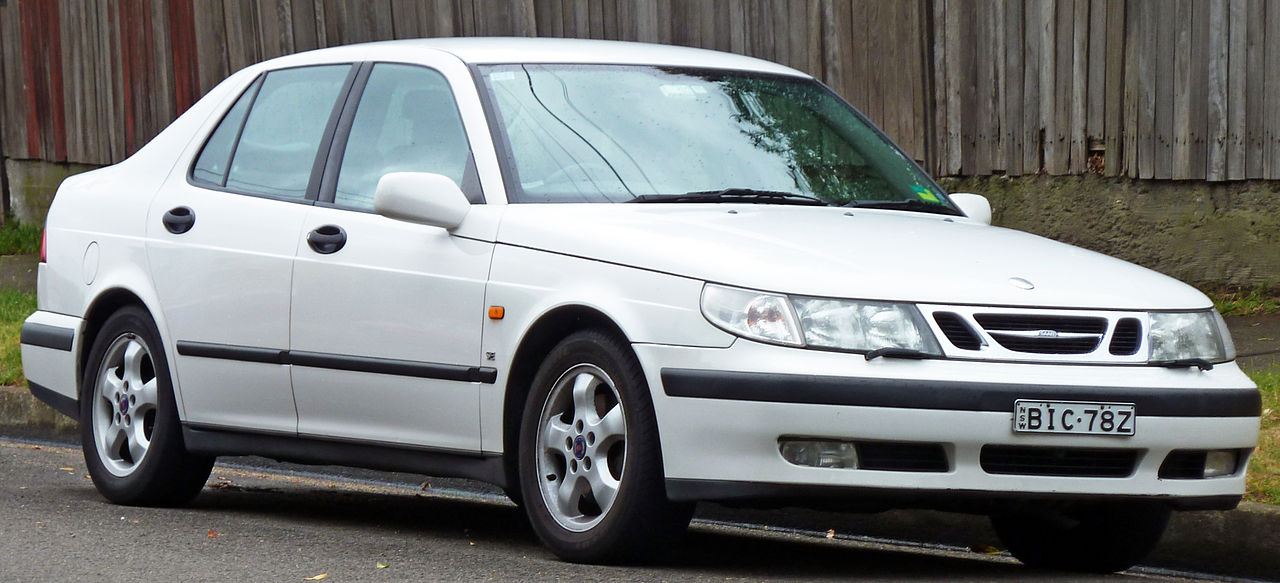
The first generation 9-5 was introduced in 1997, for the 1998 model year, as the replacement to the Saab 9000. At the time, the car represented a significant development for the manufacturer. In the United States, the 9-5 was introduced in the spring of 1998, for the 1999 model year.

On September 15, 2009, the second generation was presented at the Frankfurt Motor Show and production began in June 2010. It was the first Saab to be launched under Spyker Cars' ownership, even though it was developed almost completely under GM's ownership.

Saab badged the model as the Saab 95, but consistently advertised it as the Saab 9-5, pronounced "nine five" rather than "ninety-five". This model should not be confused with the Saab 95, produced from 1959 to 1978.

The first generation 9-5 was available with sedan and station wagon body styles. Aerodynamically, the sedan's drag coefficient is 0.29, and the station wagon's is 0.31 (U.S. version 0.33). Introduced in 1999, the wagon features innovations such as floor tracks to secure cargo and a sliding load floor to make loading easier.

The 9-5 was the first production vehicle to offer ventilated seats, as well as asymmetrical turbocharging in the case of the 3.0L V6 engine.

The last 9-5 sedan of the first generation rolled off the Trollhättan production line at the beginning of July 2009, and the last wagon was assembled on February 1, 2010. Between the summer of 1997, when 9-5 production began, and 2010, 252,236 sedans, and 231,357 wagons were built. The total production 483,593 units, was narrowly beaten by its predecessor, the 9000, of which 503,000 were built.

Production equipment for the first-generation 9-5 was sold by General Motors to BAIC of China in 2009.

1997-2001 Saab 9-5 SE sedan 01.jpg

The first-generation 9-5 was powered by Saab's B205 and B235 straight-4 engines, and from 2002 in Europe by an Opel Ecotec X22DTH 2.2 diesel engine (Saab D223L), replaced in 2006 by Fiat's 1.9 JTD 16V diesel straight-4. A turbocharged version of the GM 54° V6 engine, designated by Saab as B308, had a unique asymmetrical low-pressure turbocharger and was available from 1999 to 2003. This engine was available only with an automatic transmission, and cars with this engine installed are distinguishable by their twin tailpipes. The V6 was only available on Arc, SE, and Griffin models. In 2004, the V6 engine was replaced by a high pressure turbo straight-4 engine producing 220 hp (160 kW). By 2006 this engine was producing 260 hp (190 kW) even in the non-Aero or non-sport models (US models).

The B205 & B235-based 9-5 models have suffered a high rate of engine failures due to engine oil sludge. This primarily affected the 1999–2003 models. Saab refined the engine's positive crankcase ventilation system (PCV) for the 2004 and later model years and required use of fully synthetic oil, virtually eliminating the problem. Additionally, SAAB created update kits to retrofit to the 1999–2003 cars since they cannot be easily modified to accept the 2004 and later system. Mounting complaints by 9-5 owners forced GM to offer an eight-year warranty on the engine in 4-cylinder models for original owners, provided the owner can produce proof that they followed the manufacturer's oil change intervals. Saab recommended the use of fully synthetic or synthetic-blend oil as a preventative measure.

The 9-5 was available with an Aisin AW 4-speed automatic transmission from 1997 until 2001, when a new Aisin AW unit replaced the dated four-speed automatic with a five-speed automatic. A five-speed manual transmission is fitted as standard to the base models and the Aero. Six-speed manual transmission was not offered in first-generation 9-5s.

In 2005, an updated version of the 2.0 L turbocharged I4 was introduced in the European market together with the 2006 9-5. The engine was sold as 2.0T BioPower, optimized to run on E85 producing 132 kW (180 hp) at 5500 rpm. There was also a 2.3T BioPower version sold from 2007. It was also introduced in Australia.

The 9-5 introduced Saab's Active Head Restraints (SAHR), which moved up and forward to prevent whiplash when the car was struck from the rear. This feature won technology and safety awards in Australia, Denmark, and the United Kingdom. The Saab 9-5 also was one of the first cars to have extensive side-crash protection.

The front seats featured torso airbags and head airbags even on even the earliest models, which few contemporary vehicles did in the late 1990s. The basic structure included a robust passenger safety cage, front and rear deformation zones, reinforced door posts and pillars, as well as the "Pendulum B-Pillar", which combined high-strength low-alloy steel at chest and head height with tailored blank steel at the floorpan, designed to direct the crash forces down toward the floor. The design was proven by the Insurance Institute for Highway Safety (IIHS) to protect occupants in side crashes, even without the addition of curtain airbags or rear side airbags. From 2002, ESP (electronic stability control) was included as standard.

Another Saab feature, the "Night Panel", permitted dousing of the instrument panel lighting, except for essential information, for less distraction when driving at night. Once activated, only essential information such as current speed is displayed except, for example, if the car requires fuel or the engine overheats.

In the United States OnStar was available, and provided as standard equipment in selected 9-5's from 2001 onward.

The 9-5 had various comfort features both as standard and cost options over the years.

While early models frequently had dash mounted cassette decks, CD changers were standard features on many cars and in-dash satellite navigation was also available. Factory-fitted phone kits were similarly optional

.

Many models featured leather or part-leather upholstery and both front and rear heated seats were also available. A few models were shipped with the optional ventilated seats.

Cruise control was available on various models and xenon headlamps were fitted as standard on high-end variants.

The performance 9-5 Aero, the earliest versions of which were sometimes referred to as the HOT Aero, was first released in 2000 with a 2.3T B235R engine. The B235R engine of the 9-5 Aero was capable of providing immense torque and, in terms of acceleration, outperformed the contemporary Porsche 911 Turbo from 40-90 mph.

Initially badged as a 230ps engine, Saab later conceded that the 230 hp power figure was quite conservative, with the manual versions rated 250 hp and having more torque than stated. This flagship model had a long list of standard features, a sport tuned suspension, and body side moldings. In 2002 a 253 PS (186 kW; 250 hp) 2.3 turbo engine was made standard, which allowed for more torque after 4500 rev/min. All Aero models from 2002-2005 have an identical engine layout and management system, with the 2002-05 models just having a slightly remapped version of that ECU from factory. The high-powered version of the 9-5 in the final form produces 264 PS (194 kW; 260 hp) and 350 N⋅m (260 lb⋅ft) of torque (370 N⋅m (270 lb⋅ft) with its 20-second overboost function accessible on the manual transmission equipped version.

From model year 2006 to end of production, the 264 PS (194 kW; 260 hp) B235R was the standard engine in the 9-5 in both the 2.3T and Aero trims. 2006 had only one badge designation, the 2.3T and appointments normally found on the Aero could be added via a "Sport Package".

From 2007 onwards, SAAB added an Aero badge to the trunk lid to distinguish from regular 2.3T models. In addition, almost all standard features on the Aero were standard on the 2.3T, the exceptions being sport-tuned chassis, two-tone leather upholstery, "Anniversary" wheels and brushed aluminum interior trim, all of which were standard on Aero and not available on the 2.3T.


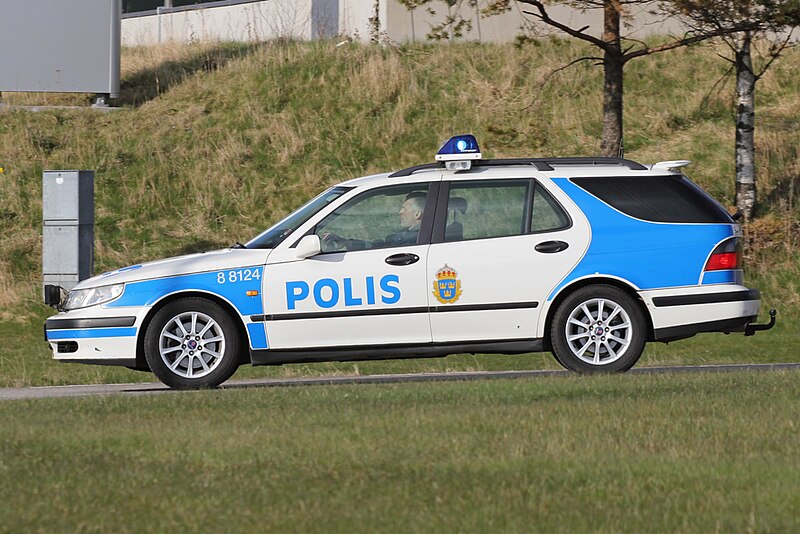
The 9-5 was used as a liveried patrol vehicle, as well as undercover, in several parts of its native Sweden, alongside the Volvo V70. Several police forces in the UK also used the 9-5 in their fleets, mostly in Aero specification. The city of Aspen, Colorado, used Saabs as patrol cars from early 1970s until 2005, when the 9-5 was discontinued in favor of Volvo XC90. The town of Vail, Colorado likewise used Saabs from 1980 onwards, but in 2005, the black 9-5 patrol cars were replaced by Ford Explorers, due to budget reasons.

In 2006, Lothian and Borders Police in Edinburgh, Scotland, began operating three Saab 9-5 Aero 2.3T patrol cars as part of a fleet of 580 vehicles. These 9-5s were customised to police specifications by the Saab, Vauxhall and Chevrolet Special Vehicles Operation (SVO) in Papworth, Cambridgeshire. In undercover guise, these cars were outwardly identical to the Linear Sport models, but featured the 260 bhp Aero drivetrain.

In Poland, an unmarked 9-5 is used as a video-pursuit vehicle, in the Płock area.


A next generation 9-5 built on the Global Epsilon platform was presented at the Frankfurt International Auto Show in September 2009. The vehicle had its North American debut in October 2009 at the South Florida Auto Show in Miami. On November 24, 2009, the first pre-series Saab 9-5 of the new generation rolled off the Trollhättan production line.

With the announcement of the sale of Saab to Spyker on January 26, 2010, it was confirmed that the new generation Saab 9-5 was already taken into production at the Saab plant in Trollhättan. Full production began in April 2010, with the cars appearing in dealerships on June 19. Saab introduced a wagon variant of the new 9-5, dubbed "SportCombi," at the 2011 Geneva Motor Show. The Saab 9-5 Sedan 2.8V6 Turbo was named Car of the Year in Singapore by "Wheels Asia".

As Saab's business issues came to a head, production of 2011 9-5 models essentially ended in March 2011, when the production line in Trollhättan was stopped due to supply chain issues that were related to the company's lack of liquidity. Total production numbers of the Gen II Saab 9-5 ended at 11,280 units.

Although some prototype pilots and a number of production SportCombis were produced, the official variant did not enter serial production prior to Saab's bankruptcy in December 2011, and the vehicles never reached dealerships.

Trim/equipment levels vary from country to country.

In the US Saab 9-5 trim levels were: Turbo4, Turbo4 Premium, Turbo6 XWD, and Aero. Turbo4 models come with a turbocharged four-cylinder and features that included power adjustable driver and passenger’s seats, leather upholstery, five-spoke alloy wheels, fog lamps, and rain-sensing wipers. The Turbo4 Premium added a panoramic sunroof, headlamp washers, Saab parking assistance, keyless entry and start, memory seats, and 18-inch alloy wheels, while the Turbo6 XWD was powered by a turbocharged six-cylinder engine and features an all-wheel-drive system. The top trim Aero featured 15-spoke “Rotor” 18-inch alloy wheels, leather-trimmed sports seats, a multi-color central information display, Bi-Xenon SmartBeam headlamps, dark titanium-effect interior trim, aluminum sports pedals, a sports-tuned suspension system with real-time damping, and Aero exterior elements.

UK equipment levels for the 2012 model year included the Vector SE and Aero and both sedan and estate. The previous base models, Linear and Vector were replaced by the Vector SE model.

In Australia the base trim (Linear) was not part of the line up, only the Vector and Aero trims were available.

In North America, the engine choices were either a turbocharged V6 or an Ecotec I4. Other countries also had an optional turbodiesel I4 engine. Engine performance upgrades that were available from Hirsch Performance (Saab's only factory approved tuner) increased the power of the V6 engine to 330 bhp (246 kW; 335 PS) from 296 bhp (221 kW; 300 PS) and the I4 engine to 260 bhp (194 kW; 264 PS) from 220 bhp (164 kW; 223 PS).

We love the Subaru Outback (used)


Subaru Outback 2.5i Limited 2016.jpg


If you wanted a car with all-wheel-drive you'd have to buy a bulky 4x4 that was inefficient and cumbersome to own. Now a days you can buy just about any car with all-wheel-drive and they come in array of shapes and sizes. The Subaru Outback should be on your short list though if you want all-wheel-drive on the cheap.

The 2.5-liter four-cylinder produces 175hp and is all you'll ever really need with the Outback. Even though it is nice that you can still option for the 3.6-liter six-cylinder which has 256hp on tap. Those looking for the best value and lowest running costs will be much happier with the 2.5 which is also our pick of the range.

Previous generations of the Outback weren't really known for their driving dynamics. It has always but utilitarian first and refinement last. But with this generation of the Outback you'll be surprised at how improved the on road dynamics have become. It still won't be as sharp to drive as the sedan couterpart but it is still engaging to drive and is quite frankly enough for what it is. Handling is secure and the steering offers decent feedback. You'll never hurl this thing into tight corners and bends so for the smooth ride it offers it exceeds our expectations.

The interior has been improved dramatically over the years. Now it controls and dials are attractively designed but are very user friendly. We do love how easy it is to navigate through the infotainment system without all the fussy dials some of its keen rivals have. The front seats are comfortable and offer plenty of support. Rear passengers won't feel short changed for legroom or headroom, both are very good. The boot is massive and when you fold the rear seats down there's even more space. If you run out of space with this you don't need a car you need a transit van.

The 2.5 premium trim is the pick of the range. It offers extra kit the standard 2.5 doesn't have and is still within reason in terms of pricing. Although all forms of the Outback offer decent kit but for our money we'd stay closer towards the middle which offers the best of both worlds. Air-con, CD-player, keyless entry and daytime running lamps are standard. Those wanting leather will have to pay extra or step up to the top of the range 3.6 engine.

Buying one shouldn't break the bank too much and resale value will be through the roof because most Subaru owners don't sell their vehicles as quick as other automakers making the second hand market for Subaru a small catalog to search through.

It's standard all-wheel-drive means that it can make nasty weather feel safe and secure. It handles with confidence and is one of those cars you'll love taking on a camping trip or to the ski resort. It really is a jack of all trade and is our top pick for all-wheel-drive vehicles on the cheap. No other car can blend utilitarian and functionality quite well like Subaru. With the new updated styling and improved quality. It may even be harder not to resist taking a closer look.

Likes: Vastly improved over previous generation. Cheap all-wheel-drive yet its functional, cheap to run thanks to a efficient power-train.

Dislikes: Overly sensitive headlights. The rest are nit picking so we decided not to even bother.


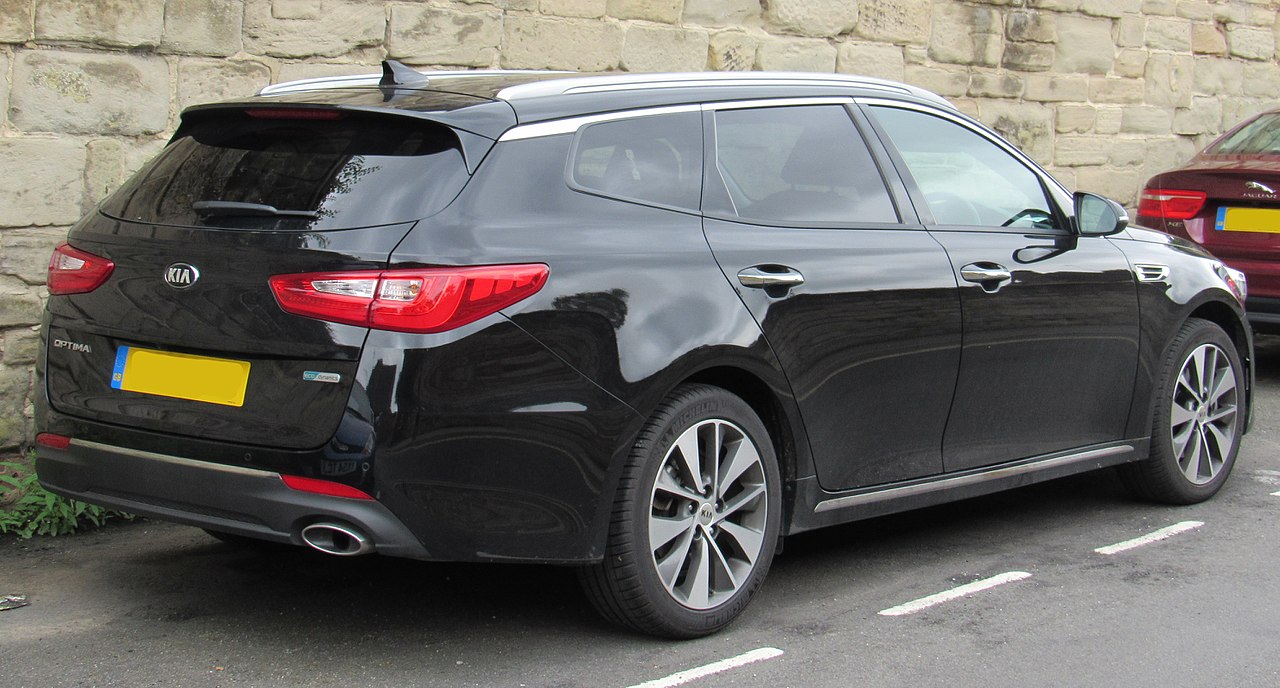
We try to be optimistic with this Optima Estate


When it comes to estates, the Ford Mondeo and Mazda6 seem to be top picks. However, we reckon that the Kia Optima Estate is a worthy contender if you are willing to overlook the shortcomings.

It’s a bit of a strange move on Kia’s part to offer only a single diesel engine in the Optima Estate. The 1.7 turbo-diesel offers decent flexibility but it loses steam quickly once you roam outside of the sweet spot in the rpm band. The torque is high, but you constantly have to change gears to keep that momentum going. We’ve driven diesel engines with similar outputs from Volkswagen and Mazda and they all seem to feel more flexible, but are also quieter and easier to live with. You can option for the seven-speed auto gearbox but low speed refinement is nothing to brag about either, but once you get it going it evens itself out well.

On the road the diesel engine feels a tad unrefined, especially from a cold start up. It’s slightly too clattery for our tastes, and never feels relaxed even at cruising speeds. The engine tends to vibrate a fair bit too which translates into the controls. Steering feedback isn’t all that great like we thought it would be and the handling is good but the ride comfort is slightly too firm and uncomfortable on anything but the smoothest of surfaces. We strongly suggest staying away from the large alloy wheels if ride comfort is top priority on your list. Wind noise isn’t pronounced but there can be some road noise with the larger alloy wheel option and the engine gets loud when revved.

The interior layout is pretty straight forward. The infotainment screen can get a little distracting while on the go, but it’s interface isn’t as confusing as some of its keen rivals. What we love the most about the Optima is the luxury features that you get standard. The driver’s seat moves back slightly to allow easy exiting and the wing mirrors fold in when you lock the vehicle; also there’s LED headlights and ventilated leather seats that really do come handy on those hot summer days. The rear seat offers ample space for two, three will be pushing it slightly due to the large transmission tunnel and the boot space is much more generous on the estate than the sedan counterpart that we get here in the US.

Our rental car came fitted with 18-inch alloy wheels, hands-free boot opening, LED headlights and a panoramic sunroof. The trim level that we had was the top of the range GT-Line S which has a very steep price tag  but many standard features to back up the price. We certainly wouldn’t choose it, but instead the more reasonable 2 or 3 trim seem more feasible for those that do need a large estate such as the Optima but care more about value for money factors.

The Kia Optima has a few shortcomings but they can be ignored if you care about value for money, however the diesel engine is the torn that prevents the Optima from being the exceptional offering it can be.

Likes: The boot space is as generous as the standard kit list, running costs are reasonable and the styling is sleeker than the sedan counterpart.

Dislikes: The diesel engine runs out of puff quickly and is not very refined.

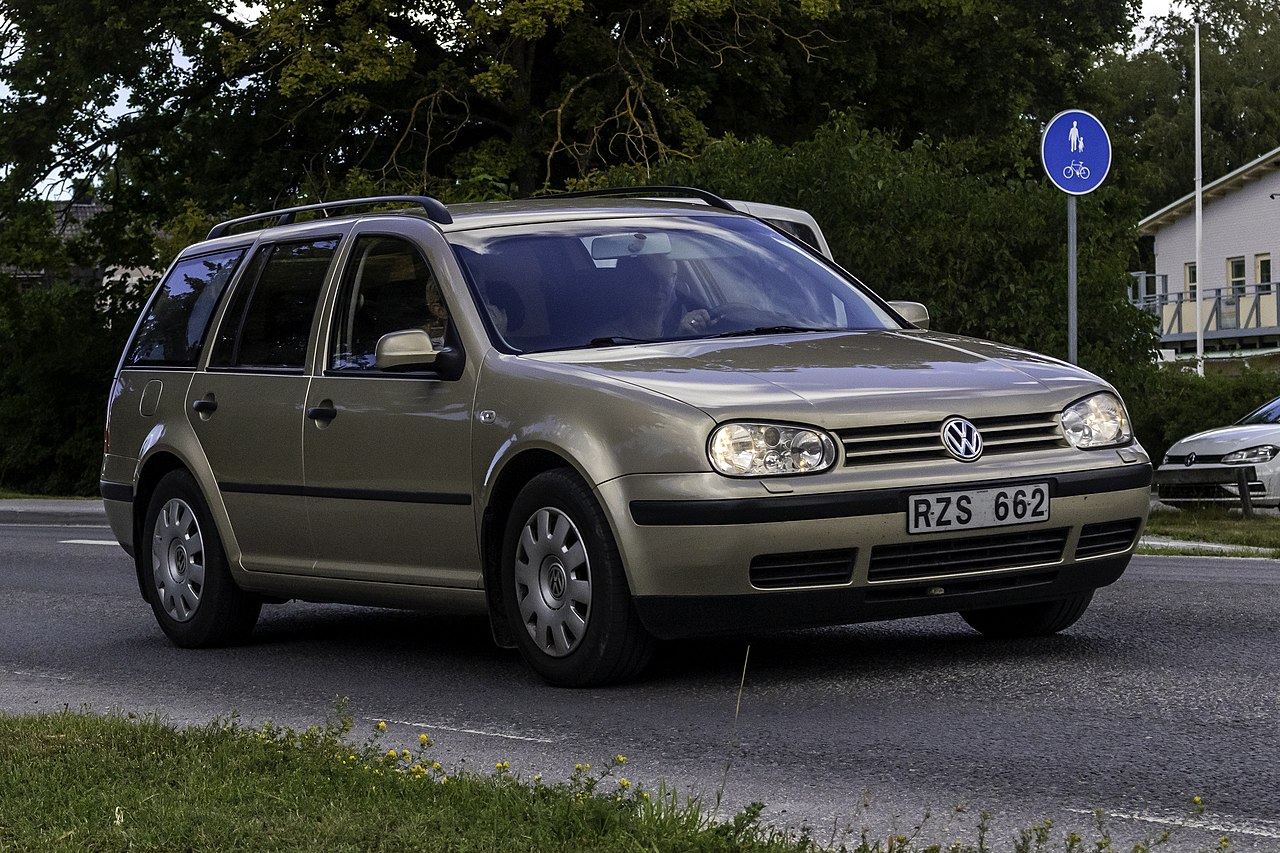
Devon test drives Volkwagen's Golf Wagon (Used)


Compact crossovers maybe all the rage right now but not everyone finds them appealing; and for those few individuals the Golf wagon is the perfect alternate. Here’s why:

The standard 1.8 turbo is the best combo for low running costs and flexibility in performance; plus it is priced within reason too. The 2-liter TDI is also priced within reason too but finding one will be a chore because this is the most popular form of Golf wagon. Both engines can be had with a six-speed manual gearbox or a six-speed DSG auto gearbox.

Whatever wagon stigma you may have in your mind should be immediately thrown to the birds when you look at the Golf Wagon. The steering feedback is good and the ride comfort is excellent; all while offering decent handling and good body control. Most will think that since it is a wagon it will be noisier than a sedan but you’ll be wrong again here because wind and road noise are both kept to a hush and you won’t even hear a peep out of the suspension.

Volkswagen does know a thing or two about infotainment display and user-friendly functionality. Both are well regarded in the Golf Wagon. Front driver and front passengers will be greeted with the most comfortable seats and even the second row passengers won’t complain much about legroom and headroom. The boot space is what makes a wagon a wagon and yes it is generous even with the second row seat folded down. Roof rails are standard as well to add versatility.

S trim comes with 16-inch alloy wheels, V-TEX leatherette seating surfaces, air-con, cd-player and Bluetooth for your mobile phone. SE trim adds panoramic sunroof, keyless start and a rearview camera. Top of the range SEL trim comes with 18-inch alloy wheels, dual-zone climate control, navigation system and power-folding exterior mirrors.

The Golf Wagon is the best choice for anyone refusing to follow the trend of the compact crossover segment. However, the Golf wagon doesn’t offer all-wheel-drive and for those who may want that option will have to venture elsewhere. Everyone else will be happy with the Golf because even the SE trim offers decent value for the money in both the 1.8 turbo and TDI. Discounts should be available and resale value should be strong especially with the TDI.

Volkswagen hasn’t been the best in terms or reliability but we have very little doubt the Golf Wagon reliability will be top notch. Interior materials have been gradually improved over the previous generation and the safety kit is comprehensive; electronic stability control, traction control, anti-lock brakes and electronic brake force distribution all come standard.

Don’t want to follow the trend of compact crossovers and don’t mind the lack of all-wheel-drive. The Golf Wagon hands down is the best choice money can buy. You seriously will not be disappointed here.

Likes: Space for passengers and cargo are both generous. Standard kit is decent too and both engines manage good flexibility and low running costs well.

Dislikes: No all-wheel-drive option; the GTI’s engine would be a nice addition too.

Devon's Pick: SE trim manages to combine decent kit at a decent price in both 1.8T and TDI.

Friday, January 6, 2023

History of Saab


In 1938, the Saab factory was built in Trollhattan Sweden. At this time, they were not an automobile manufacturer. With World War II on the horizon, the Royal Swedish Air Force was in need of aircraft. On September 1, 1939 war broke out and Saab built bombers and fighters.

The Saab factory was prepared for the task with two previous years of modernizing their production methods. These airplanes were mainly copies of German and American design. Saabs first in-house designed aircraft rolled off the line in 1941, the Saab 17. It was far from perfect, but the bugs were worked out quickly. A Bomber, Saab 18 was also produced.

In 1944, seeing the close of World War II Saab began work on non-military aircraft. The Saab 90 and the Saab 91 were introduced, the 90 was a passenger plane seating 25-30, and the 91 was a small plane for private use. The rest of our timeline will outline only Saab's automotive history. However, Saab to this date still makes the highest quality civilian and military aircraft not to mention trucks, buses, spacecraft and the famous jet fighter Viggen and the latest innovation Gripen.

1955saab92b.jpg

The Swedish Ur best translates as original and Ursaab was the Saab's first prototype automobile.

Project 92, so-called as numbers 90 and 91 had already been assigned to civilian aircraft, was agreed in 1945. Saab had decided that, with the Second World War ending, there would be a need to diversify away from military aircraft. Ideas included motorcycles, cars, commercial vehicles and even fitted kitchens! Other Swedish companies, however, had the motorcycle market sewn up, Volvo already produced cars, and trucks were manufactured by Scania-Vabis. A Saab had to be the right size, type, construction and price - a small, affordable car. Thus, Saab had found its niche.

A 1:10 scale model Ursaab was tested in a wind tunnel by the Swedish Royal Institute of Technology and gave a drag coefficient of 0.32, an impressive figure even by today's standards. Sister cars 92.002 and 92.003 were driven on every possible type of road surface and with 92.001; they have clocked up over 530,000km (approx 331,000 miles) - equivalent to 13 journeys around the world and typical of Saab's commitment to thorough testing.

Full-scale production of the Saab 92 commenced in December 1949, 700 of which were made. The engine was a 750cc two-cylinder two-stroke, transversely mounted ahead of the front axle. Saab engineers also created a safety cage for the passengers, to protect them in case of accident, one of the first cars ever designed for safety. 

Production cost was critical to Saab at the time and only 17% of the cost was from imported materials, hence the Henry Ford principle of any color you like as long as it's… green in Saab's case!

Saab entered two cars in the 1950 Monte Carlo rally. Both finished the rigorous event. Saab  continued active in rallying until 1980, when some factories began to spend so much on the sport that little Saab could no longer be competitive. 

The Saab 93 was announced in August 1955 in response to press speculation regarding the development of a three-cylinder two-stroke engine. The Saab 93 was the first modelto be officially exported, primarily to the United States. 
Image result for 1955 saab no copyright image

At the New York Automobile Show of April 1958, Saab exhibited a car that they called the Gran Turismo 750, a sporty and luxurious model that was pitched specifically at the growing US market.

The GT750 had twin carburetors and the engine had been tuned to develop 50hp. It was the first model to have factory fitted seat belts.

Image result for saab sonnet no copyright image
The Saab Sonett was unofficially known as the Saab 94, even though this number had already been assigned to an aircraft project. Only six Sonett were built, the cars being intended as either experimental or competition cars. The Sonett was much in demand by dealers and was shipped to the United States for the Saab introduction in April 1956.

Saab unveiled the Saab 95 Station Wagon in May 1959. The early 95 had the two-stroke engine, but later models carried the Ford V4 engine (the V4 was an instant success). It was equipped with a four-speed gearbox. The last Saab 95 was manufactured in 1978.The Ford 1.5 Liter V4 engine delivered 65hp at 4,700rpm and saw 100 Km/h from rest in just 16 seconds. 

The new Saab 96 was revealed at a Stockholm press conference in February 1960. This model lived on until 1980 equipped with the V4 engine. The Saab 96 was for Swedes what the VW beetle was for Germans.

Diagonally divided brake system with double brake circuits was introduced on all Saabs of 1964 models.

Formula Junior was an international class for single-seat racers with engines from standard road cars. In 1960, some enthusiasts at Saab's combined testing and competition department decided to have a go at Formula Junior, even though the engine was well below the permitted displacement of 1100cc.Taking an approach that was different to the conventional was not unusual for Saab and this case was no different. The engineers at Saab constructed an advanced monocoque car in contrast to the space frame designs of their competitors. 

The Saab 97 project based upon the MFI 13 made good progress. By the winter of 1966, it was on display earlier than expected, and in Stockholm, rather than New York as had been anticipated.

Sonett3.jpg
The Saab Sonett II suffered increasing criticism of its awkward lines by both customers and within Saab itself. After just two years of production, Saab contracted the Italian stylist Sergio Coggiola to redesign the Sonett II. Coggiola had a tough task, forbidden by Saab to redesign the complicated central section.

Saab board passed a resolution in April 1964, to develop a new and larger Saab. The Saab 99 was on its way. Despite widespread enthusiasm within Saab for the two-stroke engine, it was decided that a four-stroke unit was the only real choice. Without the means to embark on its own costly development, a contract was signed for Triumph to deliver a 1.5-liter (later 1.7 liter), engine to Saab. The joint engine design was to be inclined at 45° since Triumph was planning a V8 from the same basic engine design. The Saab engine was essentially half of a V8. 

1970 A milestone is passed in February when Saab turns out Car No. 500,000

The Sonett III, the product of the Swedish-Italian cooperation, was unveiled in spring 1970.

Two unique Saab innovations are presented on the 1972 models: an electrically heated driving seat and self-repairing (up to 8 Km/h, 5 mph) bumpers.

The Saab 98 project began just two years after the production of the Saab 99 started. A new concept termed by Saab as Combi Coupé. Saab 98 never went into production, but the Combi Coupe did as a 99.

1976 The one-millionth Saab car comes off the line at Trollhättan in January. Catalytic converter and a lambda sensor are introduced on cars for the US. 

The first Saab 99 Turbo goes on sale as a 1978 model.

This particular Turbo had great success in the Swedish Rally with Stig Blomquist behind the wheel.

In 1979 the new 900 is released.

Yet another world "first" is introduced with the 1979 Saab 900: the unique compartment air/pollen filter.

Beginning with the 1983 models, Saab fits all its cars with asbestos-free brake linings.

The Saab 900 was a model that spanned the entire 1980s, being in production for some fifteen years! During its lifetime over 900,000 units were produced, almost 50,000 of which were the successful and stylish 900 convertible.

Despite being an evolution of the 99, the 900 was not merely a facelift. It had been given a new front section and Saab wanted to exploit new market sectors. This was especially true of the United States.

Another product of the small but perfectly formed design department at Trollhättan, the EV-1 was a sport Coupé based on the 900 Turbo 16. The EV-1, or Experimental Vehicle Number One, was never destined for production.

The front and rear sections of the EV-1 were constructed from Aramid reinforced fiberglass and had the ability to resume their original shape after impact.

The toughest safety standards are satisfied with the lightweight carbon fiber side impact protection within the doors. Continuing the lightweight theme, the front seats are half the weight of conventional seats but retain electronic functionality including the ability to adjust the side supports. With the 0-100 Km/h in just 5.9 seconds, the performance of the EV-1 is comparable to some of the best sports cars.

The Saab 9000 of the 1987 model becomes the first front-wheel-drive car to offer ABS brakes.

Styled by Italian Giorgetto Giugiaro, the 9000, a front-wheel drive with a transversely mounted engine meant that the interior was more spacious than the Saab 900 despite a slightly shorter external length. 

The combination of the folding rear seat and the estate/saloon opening rear hatch made for superb load-lugging characteristics. The Saab 9000 was the only imported car, bar the Rolls Royce, to be classified by the United States authorities as a "large car". 

Image result for saab 9000 wagon no copyright image
1986 On 7 October, three Saab 9000 Turbo 16s in guaranteed  standard condition get off the mark on the world's fastest racetrack, the Alabama International Motor Speedway in Talladega, U.S.A. 31 drivers take turns at the controls of the three cars, with stops only for refueling and service. In nearly twenty days of uninterrupted driving they break 2 world records and 21 international speed records. The fastest car covers 100,000 km at an average speed of 213 Km/h, the other 2 average around 210 and 208 Km/h.

1987 The two-millionth Saab is manufactured.

1989 At a press conference on 15 December, GM announces that it is buying 50% of Saab's car operation.

The new Saab 900 made its debut in front of the press and 35,000 residents of Trollhättan, in the town's main square, in July 1993. The new 900 was the first completely new model since GM (General Motors) took a 50% stake in Saab Automobile AB in 1990. 

Saab is the first carmaker to present a Freon-free (CFC-free) air-conditioning system.
In 1994, Saab introduces the first V6 engine in its 900 SE model.

1996 Ten years later Saab returns to Talladega, this time with six Saab 900s, absolut standard cars, powered by different engines: a 2-litre turbo, a 2.5-litre V6 and a 2-litre injection engine. They clock up 40 new international speed records. The fastest car, a 900 Turbo, turns in an average speed of 226 Km/h. 

The Saab 9-3 was launched in 1998 essentially as a re badge Saab 900. There was very little to tell them apart externally, except for a redesigned grill and the relocation of the third brake light from the boot ridge to the top of the rear screen. 

Image result for saab active head restraints no copyright image
Internally, the 9-3 acquired the innovative SAHR or Saab Active Head Restraint system - as introduced as an industry first on the Saab 9-5.

It was under the body that the changes had been made on the 9-3. Over 1,100 changes including suspension, in an attempt to tighten up the handling characteristics of its predecessor, the Saab 900.

1997, The new Saab 9-5 is presented in Trollhättan, and the three-millionth Saab is produced that summer. 

The development of the Saab 9-5 retained existing Saabisms such as its world famous attention to safety, the curved C-pillar and the ergonomics of the vehicle - especially in respect of the driver. Saab set out to exceed the already high safety standards of the Saab 9000 and design the safest car possible.

Data from Saabs own tests and surveys from Folksam (the Swedish insurer), Euro NCAP and American HLDI all show that the Saab 9-5 is indeed the safest car that you can drive to date.

Image result for 2000 saab 9-5 sedan no copyright image
Saab reintroduced for the 9-5, the return of the floor mounted ignition and reverse gear lock that was absent from its predecessor, the Saab 9000.

Yet, another Saab innovation: ventilated front seats. It is the first time a passenger car, the new Saab 9-5, is offered with this feature.

2000, GM buys the reminder of Saab.

In 2003, the completely redesigned 9-3 SS is released in US.

The new Saab convertible is scheduled to be introduced to the US market in the Fall of 2003 (Swedes have to wait until Feb 2004). It's manufactured at the Magna-Steyr plant in Graz, Austria. It have automatic rollover bars that pops up from behind the rear seat, and the whole convertible frame is built out of Magnesium.

What the future holds may be within what  concept car 9-3 and prototype 9X shows, or the rumors of a 9-2 based on Subaru Impreza.

First official photo of the new 9-2X planned for release on the US and Canadien market early 2004. The 9-2X is built by Fuji Heavy Industries, Japan; which GM holds a 20 percent stake in.

Saturday, December 3, 2022

The Golf R Estate is best. Period.


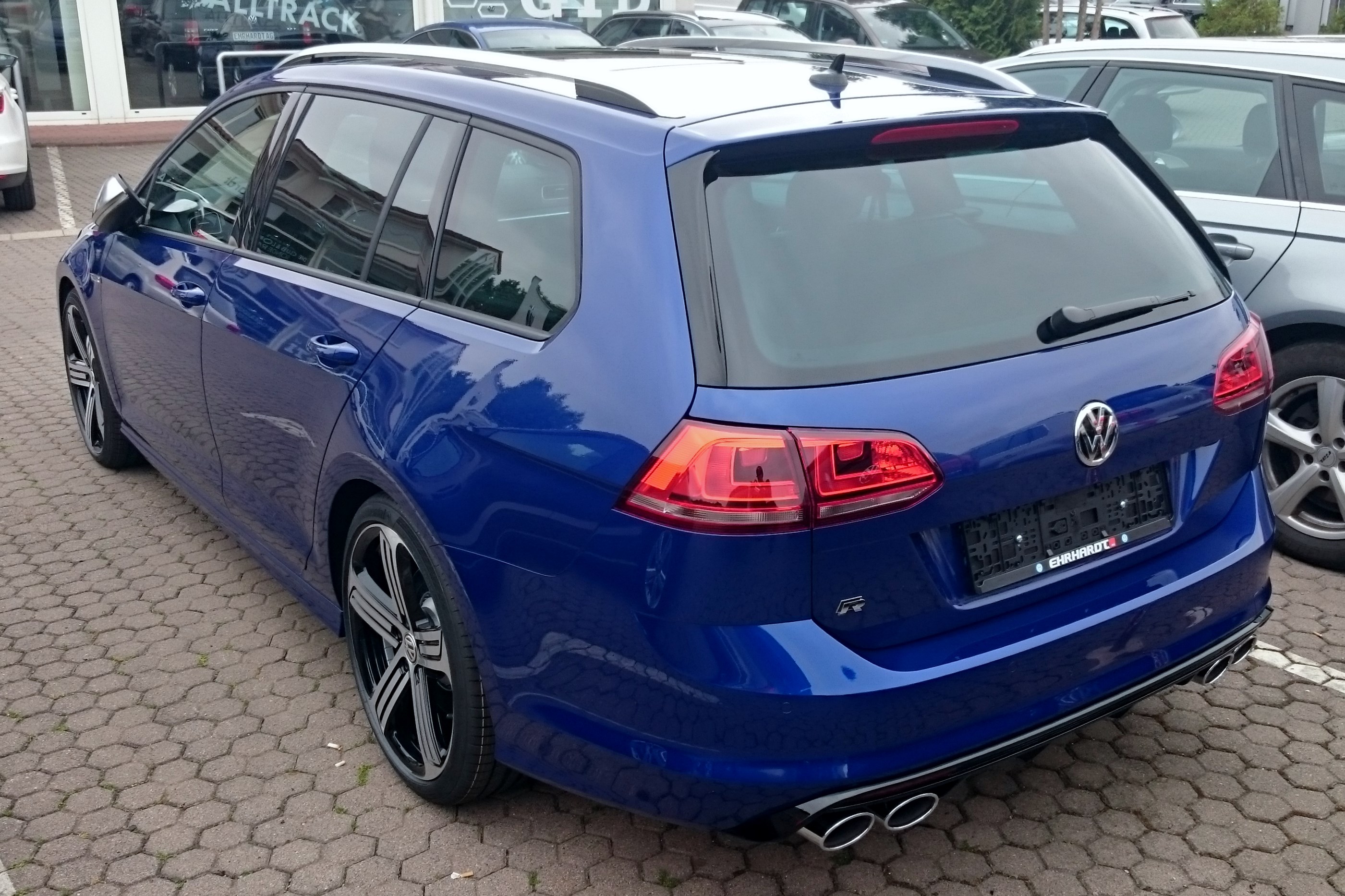
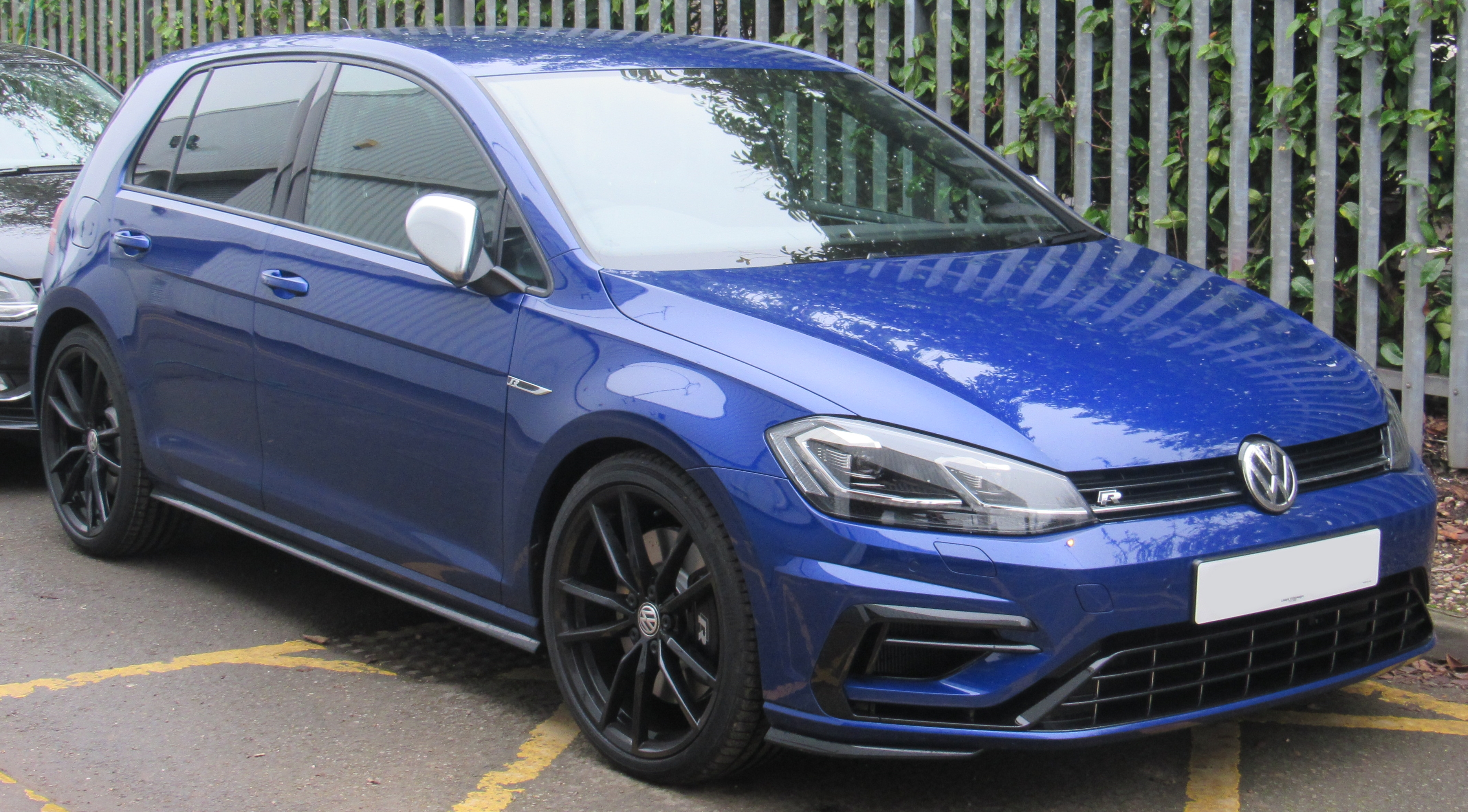
The Volkswagen Golf R is the hot hatch from grownups. But what if you want a hot hatch with a family? Well, there’s the Golf Estate R. 

The Golf Estate R comes with the same engine as the Golf R. A 2-liter turbo petrol four-cylinder which can be had with either a six-speed manual gearbox or a dual-clutch seven-speed auto gearbox. Driving enthusiast will certainly love the six-speed manual, however it does feel notchy at times. Our money certainly goes to the DSG gearbox option. However, even with the auto gearbox it does often feel jerky at low speeds. Both are just nitpicking at best. 

Driving the Golf Estate R is just fantastic. The engine is smooth and effortless and there’s an abundance of comfort and refinement. The large alloys don’t produce tons of road noise, although at times the ride can be a bit stiff. This is to be expected however, since this isn’t a car for leisure driving. It’s a hot hatch in the form of an estate car. You can chug it into corners and bends with sheer confidence and thanks to standard 4motion all-wheel-drive. You won’t have much to fret about when the roads get slippery. 

The front seats are superbly comfortable and those in the second row won’t have much to complain about. The large transmission tunnel may make life for the middleman a tad bit uncomfortable. However, that’s just nitpicking. The boot space is where the Golf Estate R shines. It’s plenty for most small family needs and when you fold down the second row. You’ve got yourself a cargo van. 

The Golf Estate R comes standard with power-folding wing mirrors. LED headlamps with auto operation. Leather trimmed interior and climate control. You also get Driver alert system with fatigue detection. Rain sensors for the front windscreen. Heated front seats, and a handsfree boot operation. 

The Golf R is a fantastic little hatchback. However, the Golf Estate R is the perfect compromise for anyone who wants an estate with hot hatch turn of pace. You better act fast however, as supplies are limited.  

Likes: It’s an estate with hot hatch performance. It handles just as good as the Golf R and looks just as good. 

Dislikes: Supplies are limited. 

Thursday, November 17, 2022

Volkswagen Golf Variant

For the first time an estate was produced, being launched in early 1993, and bringing it into line with key competitors such as the Ford Escort and Vauxhall/Opel Astra, which had long been available as estates. The GT variants included a 2.8LVR6 engine, and a convertible launched as the Cabrio (Type 1E).
The Volkswagen Golf Mk4 Variant was introduced in 1999. It was discontinued in 2006, and succeeded in 2007 by the Volkswagen Golf Mk5 Variant. Unlike the Mk3, it was offered in North America with the "Jetta" name with corresponding front styling. The "Jetta Wagon" was used in North America instead of the "Bora" name.
Volkswagen introduced an estate/station wagon version of the fourth-generation car at the 2001 Los Angeles Auto Show[19] as the first A-segment wagon Volkswagen offered in North America — the body style solely manufactured in Wolfsburg. The wagon offered 963 l (34 ft3) of volume with the rear seat up, and wth rear seats were folded provided 1473 l (52 ft3). In Europe, the estate version was at times marketed as a Golf wagon, either in addition to or instead of the Bora. Other than different front bumpers, fenders, headlights, and hood, the cars were identical. In some countries, VW marketed both Golf Variant and Bora Variant, with the Bora Variant being more upmarket than its counterpart.
The station wagon version of the Golf Mk5 debuted at the International Geneva Motor Show in March 2007 and was marketed as the Golf Variant in the German domestic market, in The United States as the Jetta SportWagen, and in Argentina and Uruguay as the Vento Variant. Designed by Murat Günak, it is more closely related to the Jetta saloon with a shared front fascia design and front doors. It was produced in Puebla, Mexico since April 2007 alongside the similar Jetta with a targeted annual production of 120,000 units. Volkswagen did not intend to release the station wagon/estate version of the Golf Mk5 until later in its life cycle. Initially, Volkswagen expected the Golf Plus and Touran to be able to cover the station wagon segment left by the Golf, however it was reported that dealers and customers were asking for a replacement instead. It was facelifted in late 2009, with changes including the front clip and interior from the Golf Mk6, while the remaining is based on the pre-facelifted model. It is marketed as the station wagon version of the Golf Mk6 as it was sold alongside it. The facelifted model was also marketed as the Golf Wagon and Variant in the Canada and Mexico, while it continued to be sold as the Jetta SportWagen in the United States.
A facelifted variant Mk5 Golf Variant model was introduced in 2009 as the Mk6, despite carrying the front fascia, interior styling, and the powertrain from the new Golf, the body shell and underpinnings are based on its fifth-generation predecessor. It is sold in the US as the Jetta SportWagen, in Mexico and Canada as the Golf Wagon and in South America as the Jetta Variant or Vento Variant.
The estate/station wagon of the Golf was revealed at Geneva Motor Show in March 2013. It is marketed as the Golf Variant in Germany and Golf SportWagen in the United States and Canada, replacing the Jetta SportWagen nameplate previously used in the US. The Golf Estate's loadspace volume has been expanded from the 505 litres of its predecessor to 605 litres (loaded up to the back seat backrest) versus the 380 litres of the Golf hatchback. Loaded up to the front seat backrests and under the roof, the new Golf Estate offers a cargo volume of 1,620 litres (versus the 1,495 litres of the Golf Estate Mk6). The rear seat backrests can be folded remotely via a release in the boot. Four petrol engines and three diesel engines are available, ranging from 85 PS (63 kW; 84 hp) to 140 PS (103 kW; 138 hp) in the petrol and 90 PS (66 kW; 89 hp) to 150 PS (110 kW; 148 hp) for the diesel engines. For the first time, the Golf Estate will also be available as a "full" BlueMotion model (with other modifications, including revised aerodynamics). This model uses a 1.6-litre diesel engine producing 110 PS, has a six-speed manual gearbox, and is expected to achieve a combined fuel consumption of just 85.6 mpg (equivalent to 87 g/km of CO2). The Golf SportWagen is available in S, SE, and GT (Trendline, Comfortline, and Highline in Canada) (GT is SEL in the USA) trim levels. There is also a Golf Estate R, using the same EA888 2.0 engine found in the MkVII Golf R hatchback. The Golf Variant is also built as a rugged version called Alltrack with slightly-raised suspension, body cladding, and all-wheel drive.

Tuesday, December 8, 2020

We get toured in a Mazda 6 Touring

The Mazda6 Tourer is the prime example of an estate without compromises. 

You can choose between one petrol and one diesel. Picking between the two depends upon your needs. We’d personally stick with the 2.2 turbo diesel if you’re planning to do tons of highway driving. Everyone else will be satisfied with the 2.5 petrol four-cylinder. It may not have the torque like the diesel engine, but it certainly is flexible enough for most buyers needs. 

Driving the Mazda6 Tourer is like any other Mazda. It’s quick on its toes when it comes to corners and bends, but most importantly it’s not dullard to drive. Steering feedback is communicative, and the ride comfort is smooth for the most part. However, on some road surfaces the ride comfort can be a little bit firm. Which is a bit disappointing seeing that most drivers will be spending majority of their time on the highway. Wind and road noise aren’t anything to complain of. Although with the larger alloy wheels some road noise can sneak into the cabin. It’s far from being a deal-breaker, however. 

What makes an estate car fantastic is the utilitarian aspects of it. The boot is generous in space and offers tons of versatility. Fold down the rear seats and you’ve got yourself a cargo van. If you find yourself lacking in space with this. You don’t need an estate. You really do need a cargo van. Space in the front seats plenty, while those in the rear won’t have much to complain about either. You can seat three abreast, although life for the middleman may not slightly shortchanged. However, that’s just nitpicking at best. 

Entry-level SE-L Nav+ comes with 17-inch alloy wheels. Auto-dimming rear-view mirror. High beam control for the headlights. Rear privacy glass and Smart City Brake Support. SE-L Lux Nav+ adds black leather trim, 3-stage heated front seats with memory and a reversing camera. Sport Nav+ adds Smart Keyless entry, 19-inch alloy wheels and a 11-speaker Bose premium audio system. Top of the range GT Sport Nav+ adds Nappa Leather trim, 360 View Monitor, ventilated front seats and frameless auto-dimming rear-view mirror. 

Crossovers seem to be the trend that most buyers are going for. However, if you desire a proper estate with decent running costs. One that’s also stylish and engaging to drive. The Mazda6 Tourer is an estate without compromise. 

Likes: The boot space is generous. Standard kit list is generous as well. It’s stylish and engaging to drive. 

Dislikes: The ride comfort can be a tad firm on the highway.

Sunday, June 3, 2018

Devon test drives a gem of a wagon from BMW (Used)


There’s one BMW that really does catch our attention the most and it’s not one of the wicked fast M-cars. It’s the 3-series sports wagon. It’s one of the rarest gems you’ll find in BMW line-up that we think is worth paying the premium for. Even if it means passing up the better X-range of sport utility vehicles; here’s why.
Performance: There are two engines to choose from. The 328i has the 2-liter turbocharged four-cylinder producing 240hp while the 328d has a 2-liter turbo-diesel producing 180hp. If you do tons of highway driving the 328d makes the most sense financially. Otherwise the 328i will suit most buyers.
On the road: We have yet to test drive a BMW with the standard suspension. Our tester car came equipped with the pricey adaptive M Sport Suspension and it really does make the 3-series wagon dreamy to drive. Handling is excellent and steering is responsive with plenty of feedback. The standard xDrive offers traction at the bucket loads. Both engines don’t really sound great at idle. Even the gasoline counterpart sounds like a diesel at idle. Wind and road noise however is well suppressed. 
Behind the wheel: There’s plenty of room for the driver to get comfortable. The steering wheel and seat offers plenty of adjustments. Most functions are operated through BMW’s iDrive system which has been vastly improved. It’s much easier to operate and really does beat Mercedes system by a long shot. Passenger space in the rear seat isn’t huge but if you are willing to share the space it is bearable. The boot offers plenty of space but becomes enormous when the rear seats are folded down.
Equipment: Engine stop/start system, auto dimming rearview mirror and electric interior tailgate release all come standard. You’ll have to pay extra for xenon-headlamps, comfort access and the adaptive M Sport Suspension which we think is an option worth having if you want the most engaging driving experience with your 3-series wagon.
Buying & owning: The 3-series wagon is expensive and there’s no hiding that fact. But compared to its rival the Volvo V60, the 3-series offers slightly better fuel economy thanks to the diesel engine and will hold its value well partially thanks to the fact that a 3-series wagon is very hard to find on dealer lots.
Quality & safety: The interior feels very upscale and classy. Much of the materials used feel long lasting and durable. BMW has had a very respectable reliability record with the 3-series. So we see no major issues for it. However we strongly suggest an extended warranty if you are planning to keep the 3-series long after the standard warranty is over. Standard safety kit includes stability control, traction control and anti-lock brakes. Six airbags come standard as well. All 3-series come with theft deterrent system as well as deadlocks to keep theft away. However you want to keep in mind that an alarm system is only offered as an option.
The BMW 3-series wagon is a great alternative to the large range of sport utility vehicles and crossovers out there. If you want an engaging vehicle that’s lighter and much more fun to drive, the 3-series wagon clicks all the right buttons. However you’ll have to pay extra for the adaptive M Sport suspension to make it ride and handle the way it should. You could pick one of the X-range sport utility vehicles, but none of them have the appeal of the 3-series wagon. This is why we think it’s the best of the 3-series range.
Likes: It’s the most practical and stylish 3-series of the range. Turbo-diesel engine option is the way to go.
Dislikes: We have yet to drive a BMW with the standard suspension and from what we’ve heard it’s disappointing; it’s expensive compared to the Volvo V60 the only other real competitor it has.
Devon’s Choice: The 328d makes the most sense because most owners will do tons of highway driving. Thus picking the diesel in this case is a no brainer. Plus it’s much more efficient than the gasoline engine. Only downside is you'll have to pay extra for the adaptive M Sport suspension so it rides and handles the way it should.

Wednesday, May 9, 2018

History of BMW 3-series

BMW 320i Sport Line (F30) – Frontansicht, 18. Juni 2012, Düsseldorf.jpg

The BMW 3 Series is an entry-level luxury car manufactured by the German automaker BMW since May 1975. It is the successor to the 02 Series and has been produced in six different generations.

The first generation of the 3 Series was only available as a 2-door sedan, however the model range has since expanded to include a 4-door sedan, 2-door convertible, 2-door coupé, 5-door station wagon, 5-door hatchback, and 3-door hatchback body styles. Since 2013, the coupé and convertible models have been marketed as the 4 Series, therefore the 3 Series range no longer includes these body styles.

The 3 Series is BMW's best-selling model, accounting for around 30% of the BMW brand's annual total sales (excluding motorbikes). The BMW 3 Series has won numerous awards throughout its history.

The M version of the 3 series, M3, debuted with the E30 M3 in 1986.
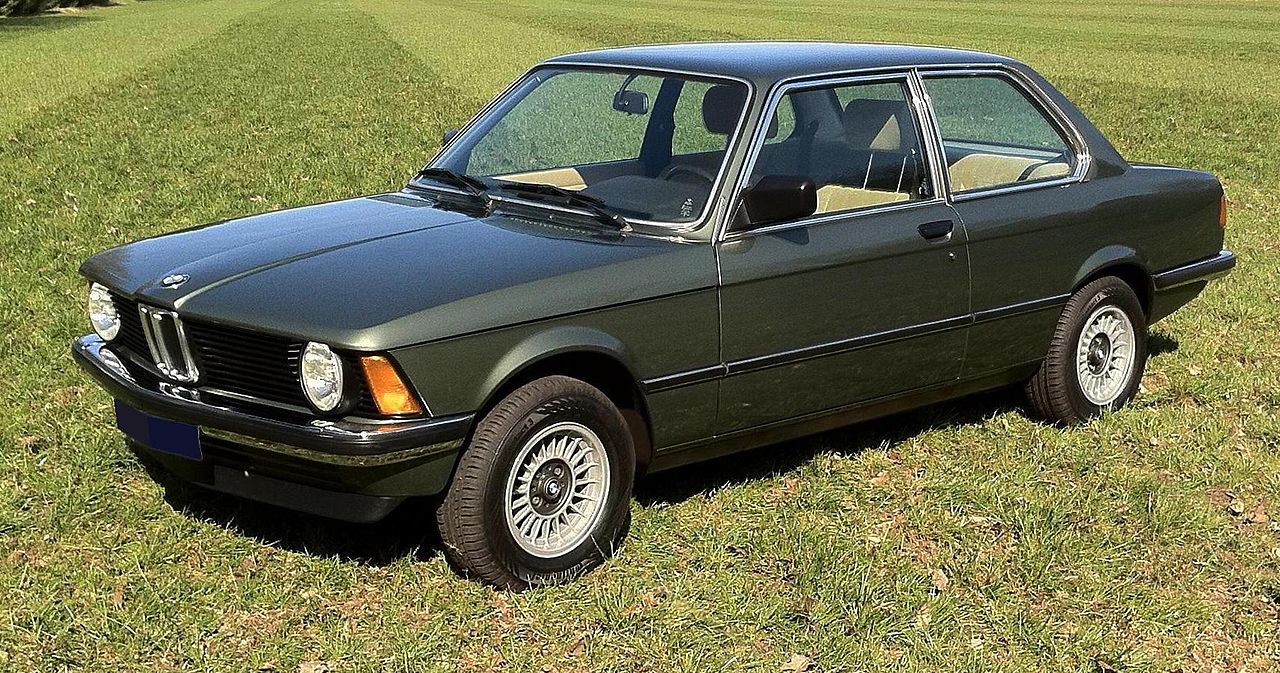
E21 BMW 316.jpg

The BMW E21 is the first generation of the BMW 3 Series compact luxury vehicle and was produced from June 1975 to 1983. It was initially available as a 2-door sedan, to replace the 02 Series. At launch, all models used carburetted 4-cylinder engines, however fuel injected models were introduced in late 1975 and 6-cylinder engines were added in 1977. A cabriolet body style - manufactured by Baur - was available from 1978 to 1981.

The E21 was replaced by the E30 3 Series in 1982.

Under the direction of its majority (51%) shareholder, Herbert Quandt, BMW decided upon a replacement for their aging 02 Series. Paul Bracq, Director of Design at BMW from 1970 to 1974, is credited with setting the design direction of the E21.

In July 1975, BMW’s Board of Management introduced the 3 Series to the public at the Munich Olympic Stadium.

The frontal view of the new car was dominated by the BMW trademark kidney grille standing out clearly from the radiator cover. The styling of the new car bore a resemblance to the BMW E12 5 Series.

The wedge shape of the two-door model was distinctive, extending all the way to the unusually high rear end. In response to criticism of the tail design, a black plastic trim panel between the tail lights was added. Like many other BMW models, the C-pillar of the E21 features a Hofmeister kink.
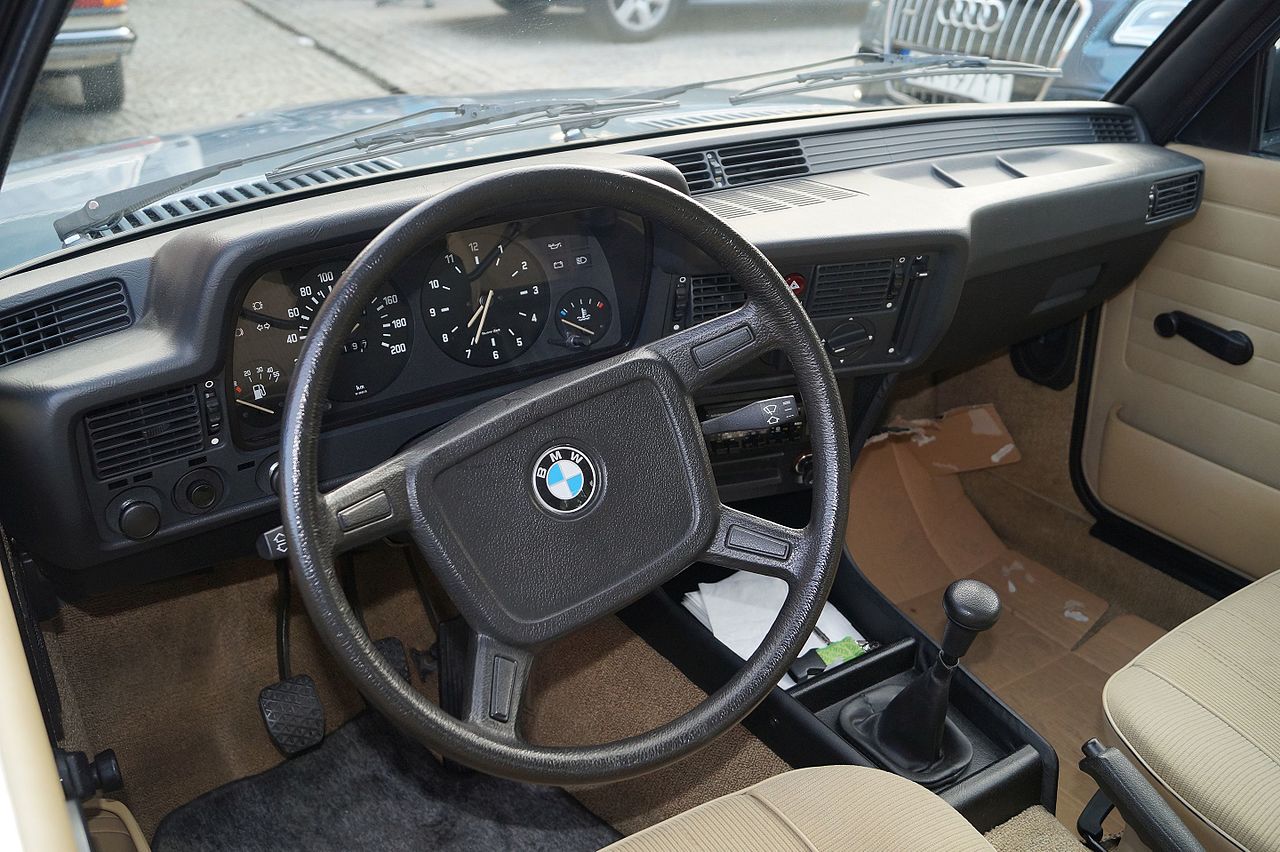


The cockpit design of the E21 marked the introduction of a new design concept, with the center console and central dashboard area angled towards the driver. This feature has become part of BMW’s interior design philosophy for many years. As a sign of passive safety, all edges and control elements within the interior were rounded off and padded.

Measuring 4,355 mm (171 in) long, 1,610 mm (63 in) wide, and 1,380 mm (54 in) high, the E21 continued the tradition of the New Class 2-door sedan models. With the wheelbase measuring 2,563 mm (101 in), there was little body overhang in the rear-wheel-drive design. The track measured 1,364 mm (54 in) at the front, and 1,377 mm (54 in) at the rear.

The suspension incorporated rack and pinion steering and MacPherson strut suspension at the front, and semi-trailing arm type independent suspension at the rear. The rear suspension design causes camber changes, which can introduce "snap oversteer" at the handling limits. The power assisted brakes were discs on the front wheels, while the rear wheels had drum brakes (except the 323i model which had discs all round).

Initially, a Getrag four-speed manual was the standard transmission fitment. Five-speed overdrive Getrag gearboxes were fitted as standard in 1980, but close ratio 'sport' gearboxes were available at the car's release as an option. Alternatively, purchasers could opt for the ZF 3 HP-22 three-speed automatic transmission.

The 315 was the base model for years 1981 to 1983, fitted with a version of the 316's 1.6-litre engine tuned for fuel economy. It accelerates to 100 km/h in 14.8 seconds and has a top speed of 154 km/h (96 mph).


This 316 was the base model for years 1975 to 1981. It accelerates to 100 km/h in 13.8 seconds and has a top speed of 160 km/h (99 mph).

In 1980 the engine size increased to 1.8 litres, however the model remained badged as 316. Acceleration to 100 km/h was reduced to 12.5 seconds and top speed increased to 167 km/h (104 mph).

The 318 was a mid-range model. It accelerates to 100 km/h in 11.9 seconds and has a top speed of 165 km/h (103 mph).

In 1980, the carburetted 318 was replaced by the fuel injected 318i. It accelerates to 100 km/h in 11.5 seconds and has a top speed of 173 km/h (107 mph). In Sweden, the 318i was badged 320i and had twin headlights.
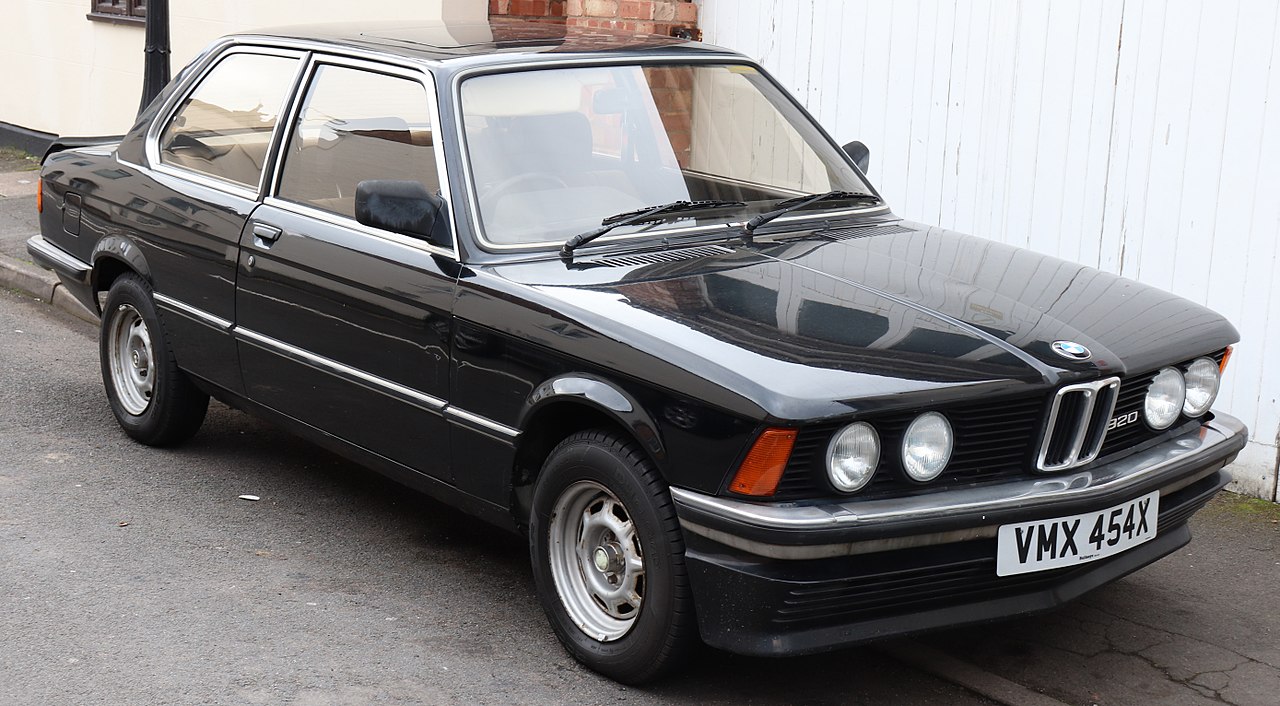


The 320 was a mid-range model, powered by a 2.0 litre engine using a Solex 2-barrel downdraft carburettor. It accelerates to 100 km/h in 11.2 seconds and has a top speed of 170 km/h (106 mph).

The fuel injected 320i was released in late 1975. It accelerates to 100 km/h in 9.9 seconds and has a top speed of 182 km/h (113 mph).

US models are fitted with a thermal reactor as a pollution control device. The 2.0 litre US model (1977-1979) accelerates to 100 km/h in 10.5 seconds and has a top speed of 165 km/h (103 mph). The 1.8 litre US 320i and 320is models (1980-1983) accelerate to 100 km/h in 11.1 seconds and have a top speed of 169 km/h (105 mph).

The 320/6 replaced the 320i. It uses a six-cylinder engine with a Solex 4-barrel downdraft carburetor. It accelerates to 100 km/h in 10.0 seconds and has a top speed of 180 km/h (112 mph).

The 323i was the top E21 model following its introduction in 1979. It is powered by a 2.3 litre six-cylinder engine using K-Jetronic fuel-injection. It accelerates to 100 km/h in 8.7 seconds and has a top speed of 200 km/h (124 mph).

The E21 was sold in the United States from model years 1977 to 1983 as the four-cylinder 320i and 320is. Six-cylinder models were not sold in America, because the E21 versions of the M20 engine did not meet U.S. emissions regulations at the time.


Due to American regulations, the following changes were required:

larger front and rear "diving board" bumper bars
sealed beam headlights, larger indicator lights and side reflectors
speedometer in miles-per-hour
fuel gauge markings changed from litres to "full, ½, reserve"
a detuned version of the M10 engine, initially using a thermal reactor to control exhaust emissions
in 1980, the engine was downsized from 2.0 L to 1.8 L and the thermal reactor was replaced with a catalytic converter.

At the E21's release, three models were available: with 316 (1.6-litre), 318 (1.8-litre) and 320 (2.0-litre) versions of the BMW M10 4-cylinder engine. To differentiate between models, the 320 model came with dual headlights, while the 316 and 318 had single headlights.

The fuel-injected 320i was introduced at the end of 1975. It featured the M10 4-cylinder engine with Bosch K-Jetronic fuel injection, and a limited slip differential was available as an option.

At the 1977 International Auto Show in Frankfurt, BMW unveiled its new variants of the E21, featuring the new straight-6 M20 engines (which were initially called "M60").

The 4-cylinder 320 model was replaced with the 320/6, featuring a 2.0 litre version of the M20 engine. The new range-topping 323i model was introduced, featuring 2.3 L with 105 kW (141 hp), which gave the 323i a top speed of 200 km/h (124 mph). The braking system was also upgraded, with the 323i featuring disc brakes on all wheels. Options include power steering, a 5-speed close-ratio 'dogleg' sport gearbox, and 25% limited slip differential.

For the 1980 model year, the four-cylinder models were upgraded: the 1.8 L carburetted M10 unit was revised to produce 66 kW (89 hp) and entered the market in the updated 316, while a fuel-injected version of the 1.8 L M10 was introduced in the 318i model (which replaced the carburetted 318 as the mid-range model). This fuel-injected 1.8 L M10 was also sold in Sweden with 320i badging (with a higher level of standard equipment to distinguish it from the 318i), because the 320/6 was never certified for sale there

The 320is model (US only) was released in 1980 using a 1.8 litre version of the M10.[21] The "S Package" featured Recaro sport seats, upgraded suspension components that included a rear anti-roll bar and a larger front anti-roll bar, a 5-speed transmission and limited-slip differential, cross-spoke alloy wheels, a larger and more extensive tool kit, a dual operation manual sunroof, an AM/FM Blaupunkt radio with cassette player, fog lights, a 3-spoke leather-wrapped steering wheel and leather shift knob, a front air dam, a "delete" of the alphanumeric 320i markers on the rear trunk lid and a limited color palate of white, silver or black. Just 2,500 320is's were produced.

The economy model 315 was introduced as a reaction to the second "oil crisis" in late 1979. More spartan than the other E21 models, it was the last E21 to be built and produced alongside the early E30 models.


A cabriolet conversion was offered by Karosserie Baur GmbH, based on regular E21 models. The cabriolet conversion was composed of a targa roof and an independent rear soft-top. Production of the Baur TopCabriolet began in 1978, and were sold via the BMW dealership network.

All TopCabriolets included the BMW warranty. A total of 4,595 vehicles were manufactured before production ended in 1981.

Bmw e30.jpg

The BMW E30 is the second generation of BMW 3 Series, which was produced from 1982 to 1994. The initial models used the coupe (two-door sedan) body style, with four-door sedan models introduced in 1983, convertibles introduced in 1985 and wagon/estate models (marketed as "Touring") introduced in 1987.

The E30 was the first 3 Series to be available in wagon and four-door sedan body styles. It was also the first 3 Series to have a diesel engine option. All-wheel drive was introduced to the 3 Series range with the 325iX model. The BMW Z1 roadster was based on the E30 platform.

The E36 replaced the E30 coupe models in 1990. Sedan production concluded on April 30, 1991 at Regensburg, with a white example. Other variants were phased out gradually, until the final E30 model, a Touring, was produced in 1994.

The first BMW M3 was built on the E30 platform. The E30 M3 is powered by the high-revving BMW S14 four-cylinder petrol engine, which produced 175 kW (235 hp) in its final European-only iteration.


Development of the E30 3 Series began in July 1976, with styling being developed under chief designer Claus Luthe. In 1978, the final design was approved, with design freeze (cubing process) being completed in 1979. The car was released at the end November 1982.

Externally, the E30's appearance is very similar to twin headlight versions of its E21 predecessor, however there are various detail changes in styling to the E30. Major differences to the E21 include the interior and a revised suspension, the latter to reduce the oversteer for which the E21 was criticised. Like the E21, a Baur convertible was available.

Initially, the E30 models used the M10 straight-four and the M20 straight-six engines, like its E21 predecessor. Over the production run, the M10 was replaced with the M40 and M42, the M20 received various upgrades and the S14 engine was introduced in the M3.

A six-cylinder diesel was also introduced later, in both naturally aspirated and turbocharged forms.

At the launch of the E30 range in 1982, the 316 used a 1766 cc M10 fed by a carburetor and producing 66 kW (89 hp). The 318i had the same M10 engine, but with Jetronic fuel injection, pushing power to 77 kW (103 hp) while also improving fuel economy.

The 1987 Series 2 update introduced a new four-cylinder engine: the M40, which used Motronic fuel-injection. In the 318i, a 1,796 cc (109.6 cu in) version of the M40 was used. The 316i model replaced the 316, using a 1,596 cc (97.4 cu in) version of the M40.

The 318iS coupe was released in 1989, using the new M42 engine. This is the most modern engine available in the E30 range, incorporating DOHC, the updated Bosch Motronic 1.3, hydraulic valve adjusters and coil-on-plug ignition. In some markets, the M42 engine was used in the 318i (sedan) and 318iC (convertible) models, instead of the M40.


The M3 is powered by the S14 engine, a high-revving motorsport engine with a cylinder head derived from the M88 six-cylinder engine.

At the launch of the E30 range, the six-cylinder models consisted of the 320i, which had a 2.0 L (120 cu in) M20 engine producing 92 kW (123 hp),[22] and the 323i, with a 2.3 L (140 cu in) M20 making 102 kW (137 hp), both using Bosch L-Jetronic fuel injection. These models were not sold in North America, presumably for emissions reasons. In 1985, the 2.3 L engine was replaced with a 2.5 L version of the M20, which produced 126 kW (169 hp) and used Bosch Motronic fuel injection. This engine was available in the 325i variants, including the all-wheel drive 325iX.

An economy version called the 325e was released as a lower revving, more fuel efficient engine. The e is an abbreviation for eta, which is used to represent the thermal efficiency of a heat engine. To maximise low-rev torque, the engine was the largest available in an E30, aside from the South Africa-only 333i model. The 2.7 L (160 cu in) engine had a longer stroke than the 2.5 L, with a more restrictive head, four cam bearings instead of seven (less internal friction), and single valve springs (instead of the dual valve springs used by the 2.5 L engine). This resulted in 90 kW (120 hp) at 4250 rpm and, more importantly, 240 N⋅m (180 lb⋅ft) at 3250 rpm. (without catalytic converter) Peak torque for the 2.5 L (150 cu in) engine is 215 N⋅m (159 lb⋅ft) at 4000&nbp;rpm).

The 1987 Series 2 update boosted the 320i to 95 kW (127 hp) and the 325i to 126 kW (169 hp), and improved fuel economy.

In 1983 the 324td was unveiled at the IAA, Germany. The M21 diesel straight-six engine was turbocharged using a Garrett turbocharger, but without intercooler. The engine has a capacity of 2,443 cc (149 cu in) and uses mechanical (indirect) fuel injection.

In 1985 BMW introduced the 324d, a naturally aspirated version of the same M21 engine, which was popular in countries with a high motor vehicle tax.

In 1987 an electronically controlled fuel pump was used which increased the torque output by 10 N⋅m (7 lb⋅ft). The updated engine has a smaller turbocharger, decreasing turbo lag.


In total, eight transmissions were available for the various models of the E30: five manuals, and two automatics.

The standard gearbox for the 316 and some 318i models is the Getrag 242 4-speed, these models had the option of the 5-speed Getrag 240. The Getrag 242 does not have synchromesh on reverse.

The 5-speed 318i models use the Getrag 240 gearbox. This gearbox is also used on the 320i, however with a different bell housing to suit the M20 engine.

The 323i, 325e, 325es and 325i use the stronger Getrag 260 5-speed.

The M3 was fitted with a Getrag 265 five-speed manual gearbox. This featured a dog-leg shift pattern for European models and a standard H-pattern for North American models.

The 3-speed ZF 3HP22 was available on the M10 316 and 318i models until year 1985.

The 4-speed ZF 4HP22 was available on all models later.

One of the features that added to the roominess of the E30 was the suspension. The front MacPherson struts and rear semi-trailing arm suspension were a compact arrangement that left a lot of cabin and boot space for the car's overall size. The semi-trailing arms have been criticized for the dynamic toe and camber changes inherent to the suspension geometry, causing bump steer in hard cornering situations (such as racing and autocross). Nonetheless, reviewers praised the handling of the E30.

A widened version of the E30 front suspension and the drivetrain from the E30 325i were used in the BMW Z1 roadster. The BMW Z3 (E36/4) and BMW Compact (E36/5) rear suspensions are also very similar to the E30, but utilizing five-lug hubs. The Z3-based BMW M Coupe uses a widened version of the same rear semi-trailing arm suspension.

For the front wheels, all models use disk brakes. For the rear wheels, most models use disk brakes, except for some 4-cylinder models which use drum brakes. Anti-lock braking system (ABS) became available in 1986.


The BMW M3 utilised a widened and heavily redesigned variation of the coupe body style, therefore the M3 shares few body parts with other E30 models. The M3 suspension is also significantly different from regular E30 models, including five-lug wheel bolts.

For Portugal and Italy only, due to considerably higher VAT and vehicle tax for cars with engines exceeding 2000 cc, a special model was created: the 320is. The sedan version appeared in the dealers' showrooms in September 1987 while the coupe version arrived in March 1988. Production of the 320is continued until 1991.

This model was produced both in coupe and sedan versions and was equipped with a 1,990 cc (121 cu in) version of the S14 engine from the M3, with stroke reduced to 72.6 mm (2.86 in). This engine produced 143 kW (192 hp) at 6900 rpm and 155 lb⋅ft (210 N⋅m) at 4,900 rpm. The 320is shared the same dogleg Getrag 265 gearbox of the non-US M3 while it had a limited slip differential with the same 25% lock up rate but with a shorter differential ratio of 3.46:1. All the 320is models were left hand drive and without a catalytic converter. Sports suspension was fitted to all coupes, and to sedans produced from September 1989.

The interior of the 320is was identical to that of other 3 Series models, except an M3 instrument cluster (which features an oil temperature gauge instead of a fuel economy gauge) was used. The 320is was sold for three years, with 1,206 sedans and 2,542 coupes produced.
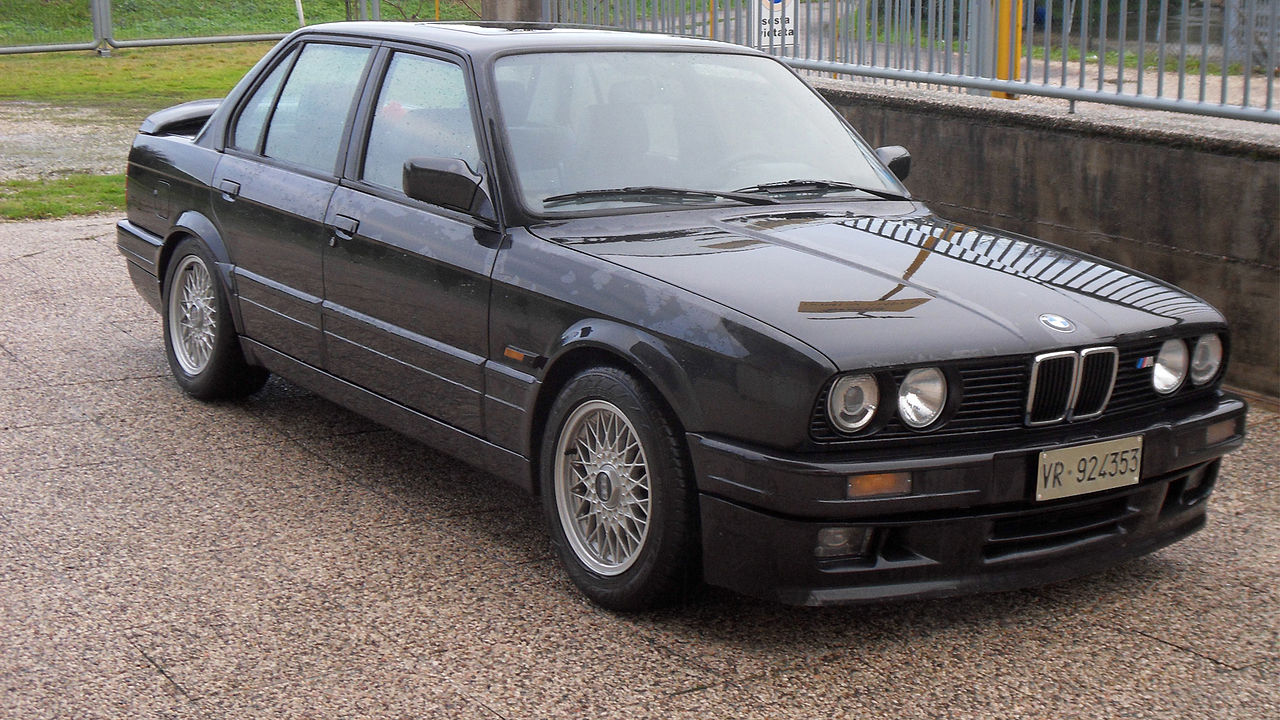


In New Zealand, where the M3 was never sold by BMW, the local importer created a sporting version of the sedan called M325i. About 100 such cars were imported beginning in late 1986 until at least 1990. Fitted with the standard non-catalyzed 126 kW (171 PS) 2.5 litre engine they benefitted from a Motorsport tuned suspension, the M-Technic body package, 15-inch BBS cross-spoke wheels with wide, low profile (225/50) tyres, and a limited-slip differential. The M325i is quite similar to the British market 325i Sport, also developed as a response to the absence of a right-hand-drive M3.

BMW South Africa's Motorsport division created the 333i in 1985 by fitting the 3.2 L M30 "big six" engine to a coupe E30. The resulting 333i was a success in South African saloon car racing. These cars were built with help from Alpina in Buchloe, Germany. Due to the space constraints caused by the large M30 engine, the buyer was forced to choose between air conditioning (vital in South Africa) and power steering. The 333i was produced from 1985 to 1987 and only 204 cars were produced.

The 333i engine produces 145 kW (194 hp) at 5500 rpm and 285 N⋅m (210 lb⋅ft) at 4300 rpm. BMW's official performance claims are 0–100 km/h (0–62 mph) in 7.4 seconds, and a top speed of 228 km/h (142 mph).

The 2.7 litre 325iS, commonly called Evo 1, was created by BMW South Africa to replace the 2.5 litre 126 kW 325i in Group N production car racing, as a response to the introduction of the Opel Kadett 2 litre 16V to the Class A category. It was launched in the first half of 1990 and was powered by an Alpina-fettled, 2.7 litre M20 engine which produced 145 kW (194 hp). Following the introduction of the upgraded Opel Kadett 16V SuperBoss, in 1991 BMW South Africa introduced the 325iS Evolution HP, commonly referred to as the Evo 2. The motor was upgraded to produce 155 kW (208 hp).

The Evolution HP won the Group N Class A title in 1993, winning 20 of the 24 races in the process. The Robbi Smith and Geoff Goddard Evolution HP won the season-ending 9hr race.

The JPS Edition is an Australian-only model built as a tribute to the 635CSi cars competing in local touring car racing. JPS refers to the race sponsor, John Player Special cigarettes. The cars are 323i manual coupes, painted in black with gold pinstripes and gold BBS wheels. They also had Recaro sports seats, JPS badging, a limited slip differential, sports suspension, a sunroof and a body kit. The initial production run was 70 cars, with a small number of additional cars produced afterwards.
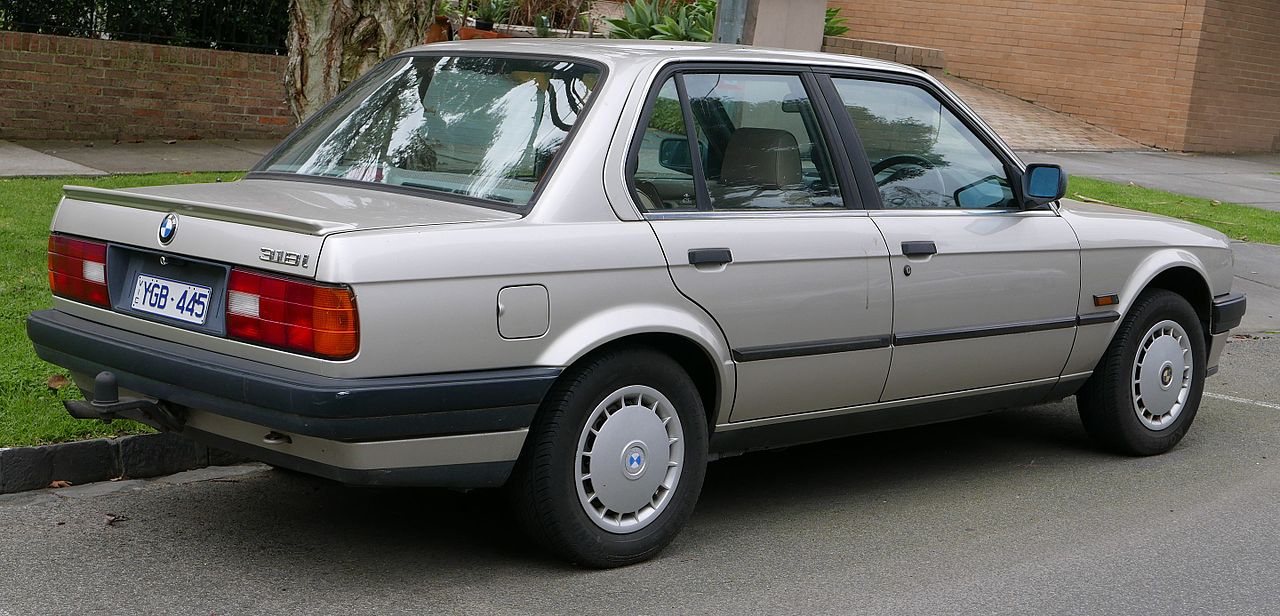


In 1985 the exterior and interior trim were updated. The 323i model was replaced with the 325i at this time and the diesel-engined 324d was introduced. A factory convertible entered the model range. However, the Baur remained on sale, alongside the factory convertible. The M3 convertible was only offered for the European market. The M3 convertible was only sold in Europe.

At the Frankfurt Motor Show in September 1987, BMW introduced a major update to the E30 (often called Series 2). The changes to the lineup were the addition of the Touring (station wagon) variant and removal of the 325e model. The M10 4-cylinder engine was replaced by the M40. External styling changes included a new front bumper, redesigned rear lights, rear apron, headlight reflectors, and licence plate frame, while the window frames lost their chrome trim. Rust protection was improved with the update. Various mechanical changes were made, including updating of the engine range. The 1987 update models remained largely unchanged until the end of production.

1991-1996 BMW 318i (E36) sedan (2011-04-02) 01.jpg

The BMW E36 series is the third generation of the BMW 3 Series range of compact executive cars, and was produced from 1990 to 2000. The initial models were the 4-door sedan body style, followed by the coupe, convertible, wagon ("Touring") and hatchback ("Compact") body styles in later years.

The E36 was the first 3 Series to be offered in a hatchback body style. It was also the first 3 Series to be available with a 6-speed manual transmission (in the 1996 M3), a 5-speed automatic transmission and a four-cylinder diesel engine. The multi-link rear suspension was also a significant upgrade compared with previous generations of 3 Series.

Following the introduction of its E46 successor in 1998, the E36 began to be phased out.

The E36 was named in Car and Driver Magazine's 10Best list for every year it was on sale.

The E36 M3 is powered by the S50 or S52 straight-six engine (depending on country). The E36 M3 was released in 1992 and was available in coupe, sedan and convertible body styles.

Development of the E36 began in 1981 and the exterior design was heavily influenced by aerodynamics- specifically the overall wedge shape, headlight covers and smaller wing mirrors.

The E36 was launched in October 1990.


The saloon, coupe, convertible and Touring models use the "Z-axle" multilink suspension in the rear, which was introduced in the Z1.

The hatchback body style (known as the "E36/5" or "BMW Compact") used a rear semi-trailing arm suspension based on the older E30 (also found in the Z3 and M Coupe), instead of the "Z-Axle" Multilink employed in all other E36's. This was done in order to save space due to its truncated rear end.


The E36 M3 is powered by the S50 and S52 straight-six engines, and was produced in coupe, sedan and convertible body styles.


BMW made an entry level version of the E36 called the "3 Series Compact", a three-door hatchback. This platform is often referred to as the E36/5. In the United States/Canada market the car was sold as the 318ti and was equipped with a 1.8L I4, 139 bhp (104 kW; 141 PS) M42B18 engine and was priced at USD23,000 in 1995. In 1996 the 1.8 liter engine was replaced with 1.9L M44B19 putting out 142 bhp (106 kW; 144 PS) and 133 ft⋅lbf (180 N⋅m) of torque. Ostensibly due to slow U.S. sales of the E36/5 Compact, the E46 Compact was not sold in the United States.
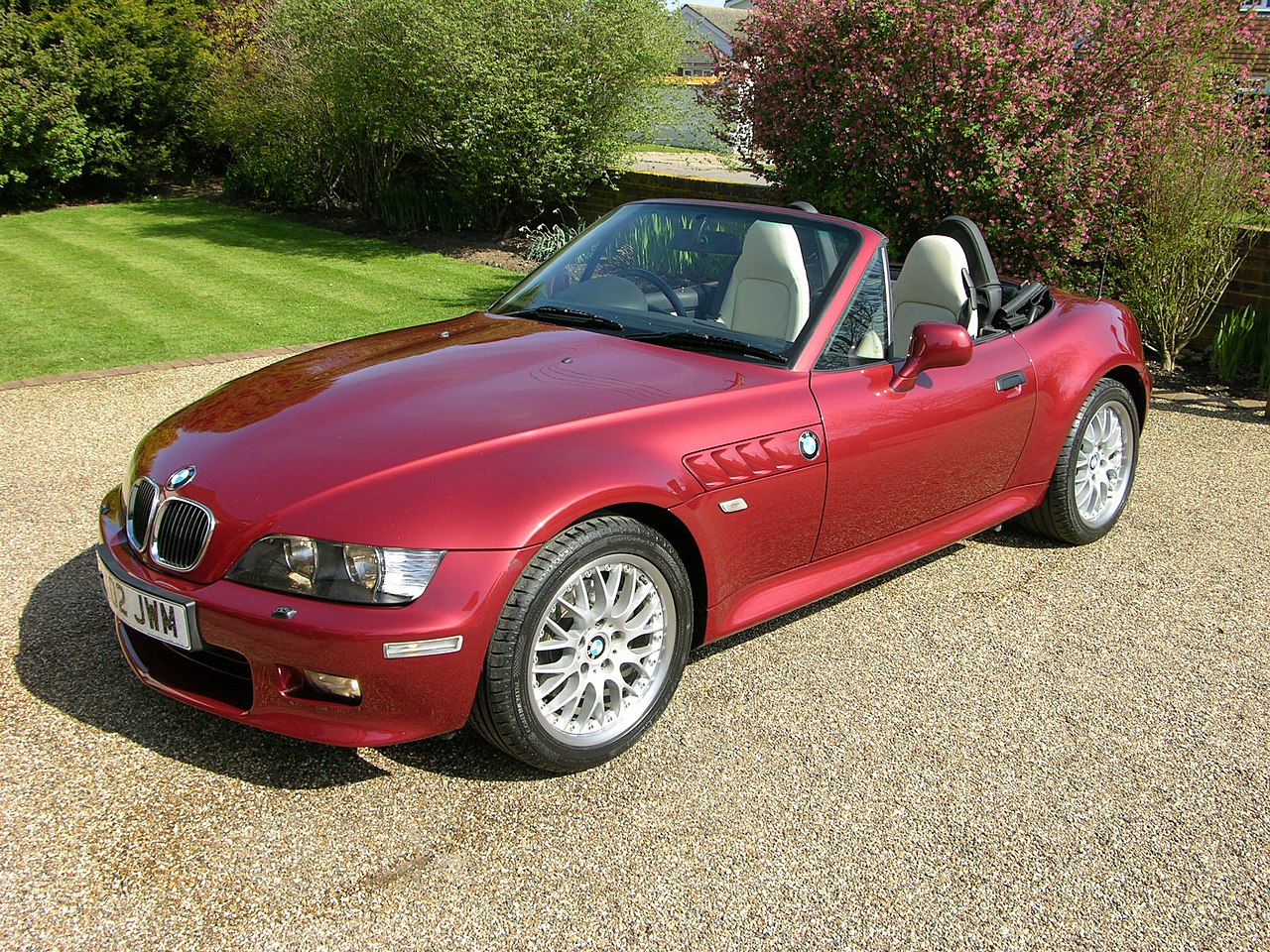


A modified version of the E36 platform designated as E36/7 was used for the Z3 roadster in 1996-2002. The modification for the Z3 Coupe was designed as E36/8.
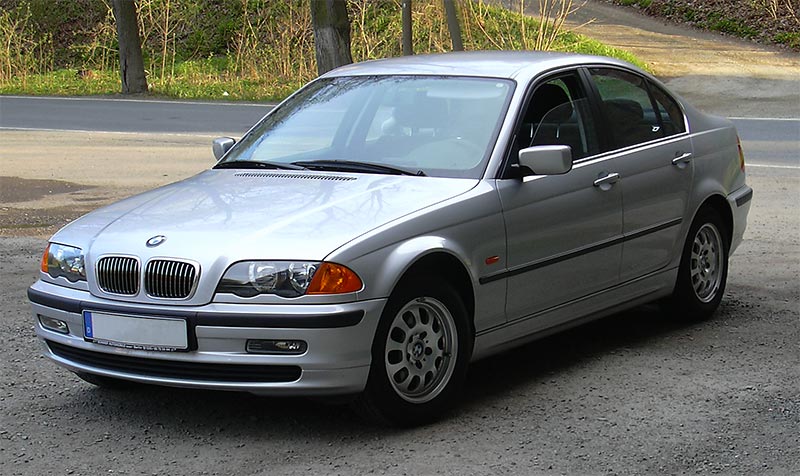
BMW320i E46 Lim.jpg

The BMW E46 is the fourth generation of the BMW 3 Series, which was produced from 1997 to 2006. The body styles of the range are:

4-door sedan, sold from April 1998 to 2005
2-door coupé, sold from June 1999 to 2006
2-door convertible, produced from December 1999 to 2006
5-door estate/wagon (marketed as "Touring"), sold from October 1999 to 2005
3-door hatchback (see BMW 3 Series Compact), sold from June 2001 to 2004
All-wheel drive, last available in the E30 3 Series, was reintroduced for the E46. It was available for the 325xi, 330xi and 330xd sedan/wagon models. The E46 was the first 3 Series to be available with an engine using variable valve lift ("valvetronic"). Various electronic features were also introduced to the 3 Series in the E46 generation, including satellite navigation, electronic brake-force distribution, rain-sensing wipers and LED tail-lights.

Following the introduction of the E90 sedans in late 2004, the E46 began to be phased out. However the E46 coupe and convertible body styles remained in production until 2006.

The M3 version of the E46 was powered by the S54 straight-six engine. The M3 was released in late 2000 and was available in coupé and convertible body styles.

In 1993, the development programme for the E46 began under chief engineer Wolfgang Ziebart, head of R&D Wolfgang Reitzle. In late 1993, design work began under Chris Bangle and continued into 1995. In May 1995, the general exterior design of the E46 by Erik Goplen of DesignworksUSA was approved and as a result DesignworksUSA was contracted by BMW to work alongside BMW Group's in-house design team to create the exterior body work for the 3 Series range in February 1996. The design team put an emphasis on improving aerodynamics and increasing the car's aggressive stance. Design patents were filed in Germany on 16 July 1997 and in the US on 16 January 1998.

Chris Bangle and Dr. Wolfgang Reitzle (BMW Head of R&D) were responsible through 1995 for the production saloon exterior, as evident in the 1997 design patent. Production development of the saloon took 24 months following design freeze and was 31 months from executive board styling approval in 1995 to 1997 start of production. Goplen designed the production coupé and estate during 1996–1997. The E46 sedan was revealed via press release on November 11, 1997 and was launched on the market at the end of April 1998 with customer deliveries. Production of the sedan concluded in May 2005.


The body shell of the E46 was claimed by BMW to be 70% more rigid than its E36 predecessor,[26] and aluminium was used for an increased quantity of suspension components, in order to decrease unsprung mass. However, with a curb weight of 1,450 kg (3,197 lb), the E46 328ci is 55 kilograms (121 lb) heavier than the E36 equivalent.

In tune with BMW's core values regarding handling dynamics, the E46 was released with a front engine rear-wheel drive layout and a 50/50 weight distribution.

The E46 electronics are more integrated than previous generations of 3 Series, including the use of a CAN bus system.[33] Drivetrain information (such as engine, transmission and stability control) is communicated using the CAN bus. Vehicle electronics (such as the radio, navigation, television and telecommunications) can communicate to each other via the K-bus.


The E46 M3, first introduced in October 2000, appeared with the 3.2 L S54 M-tuned engine. It was available in coupe and convertible body styles.

The M3's S54 engine has a redline of 8,000 rpm. As with most M engines, the S54 has 6 individual throttle bodies, in this case electronically operated (drive-by-wire throttle. The transmission options for the M3 were a 6-speed manual or the 6-speed "SMG-II" automated manual transmission.


The Performance Package was an inclusive option sold in North America, which was labelled the ZHP option code in the USA and ZAM in Canada. It was available for sedans from model years 2003 to 2005, and available for coupes and convertibles from 2004 to 2006. It included various aesthetic changes over the regular 3 series, as well as functional and mechanical enhancements.


The ZHP was equipped with sportier camshafts and revised engine tuning to increase power from 225 hp (168 kW) to 235 hp (175 kW) as well as an increase to the rev limiter from 6500 to 6800. Suspension was modified over the standard suspension with firmer springs and dampers, larger anti-roll bars, stronger front control arm ball joints, a lower ride height, heavy duty steering rack, and slightly more negative camber. Car and Driver magazine track-tested the car, which returned a 0–60 mph time of 5.6 seconds and passed through the 1/4 mile in 14.3 seconds.

BMW introduced a super ultra low emission vehicle (SULEV) into the selected regions of the United States to meet stricter emission standards. California, New York, and Massachusetts received the SULEV E46's in 2003, and Vermont in 2004. They received a variant of the M54 engine, the BMW M56. The M56 meets SULEV standards, as well as partial zero emission vehicle (PZEV) and zero evaporative emissions requirements. The M56 is claimed to have identical power as its M54 counterpart.


In order for the M3 GTR race car to compete in the American Le Mans Series, BMW produced 6 examples of the "M3 GTR Straßen Version" road car in 2001. As per the race M3 GTR, the roadgoing Version was powered by the BMW P60B40 4.0 L V8 engine.


2006 BMW 325i -- NHTSA.jpg

The BMW E90/E91/E92/E93 Series is the fifth generation entry-level luxury car of the BMW 3 Series, which was produced from 2004 to 2013. The body styles of the range are:

4-door Sedan/Saloon (E90 Model Code)
Estate/Wagon (E91 Model Code, marketed as "Touring")
Coupé (E92 Model Code)
Cabriolet (E93 Model Code)
Due to the separate model codes for each body style, the term "E9X" is sometimes used to describe this generation of the 3 Series.

The E90/E91 sedans and wagons began to be phased out following the introduction of their F30/F31 successors in 2012. However, the E92/E93 coupes and cabriolets remained in production until 2013, when they were replaced by the F32/F33 models.

The E92 335i coupe, introduced in 2006, was the first 3 Series model to be sold with a turbocharged petrol engine. The E9X family also saw the introduction of run-flat tyres to the 3 Series range. Consequently, cars with run-flats are not equipped with a spare tyre.

The E90/E92/E93 M3 is the only generation of M3 to be powered by a V8 engine. Released in 2007, it uses BMW's S65 engine and was produced in sedan, coupe and cabriolet body styles.

The design for the fifth generation 3 Series was frozen in mid-2002, approximately 30 months before the start of production.

The sedan and Touring were designed by Joji Nagashima, and the coupe and cabriolet were designed by Marc Michael Markefka.


The sedan model was the first model sold of the 5th generation BMW 3 series, being launched on March 5, 2005 (as a 2006 model year) with the 318i, 320i, 320si, 323i, 325i, 325xi, 330i, and 330xi models. In later years, the following sedan models were added: 316i, 320d, 325d, 328i, 330d, 335i, 335xi, 335d and M3.

Optional features (some of which are standard on higher models) include Xenon headlamps, fog lamps, automatic climate control, power-adjustable seats, satellite navigation, premium audio, Dakota leather upholstery, glass sunroof, heated front seats, Bluetooth and USB audio input. In 2011, the BMW 323i Luxury Edition was released, which included an automatic transmission, 17-inch alloy wheels, electric front seats, Bluetooth and USB compatibility, and an electric glass sunroof.

This would be the last 3 Series to offer a naturally aspirated engine with the N52B30 (used in the 328i) and the S65B40 (used in the M3).


The E91 wagon body style is known as the 3 Series Touring or Sports Wagon. Optional equipment included a panoramic sunroof, which extends to the rear passenger area.

Trim levels typically were similar to the E90 sedan, however there was no M3 variant of the E91. As per the E90, powertrains used a range of petrol and diesel I-6 and I-4 engines, paired with RWD and/or xDrive AWD. Markets such as the United States and Canada, however, offered but a small subset of their already limited E90 trims. In these two markets, only the 325xi with AWD was available prior to 2007, and only the 328i in RWD and xDrive AWD forms was offered from 2007 onwards.


The coupe body style of the fifth generation 3 Series became available in August 2006 (as a 2007 model year), one year after the saloon. The E92 is available in the 316i, 318i, 320i, 323i, 325i, 325xi, 328i, 328xi, 330i, 330xi, 335i, 335is, 335xi, 320d, 320xd, 325d, 330d, 330xd, 335d, M3, and M3 GTS. This would be the last model to include the coupe and convertible as a part of the 3 Series; for the sixth generation (F32/F33/F36) onwards, these body styles changed to being marketed as the 4 Series.

The coupe has significant differences to the sedan, compared with previous generations. Differences include the tail-light design (L-shaped on the coupe), more steeply angled headlights and smaller side windows. The coupe door panels are also longer, it seats two passengers in the rear instead of the three-person bench, and also includes a rear centre console tray.

The coupé also features frameless doors like its E46 predecessor. There are also retractable arms that extend from the B-pillar to hand the seat belt to the driver and/or passenger when the key fob is in the ignition and the door is closed.


The 3 Series cabriolet is the first model in BMW's lineup with a 3-piece folding aluminium hard-top roof, instead of the cloth roof used by previous models. The E93 was one of first retractable hardtops in its price range. Other manufacturers have since produced similar retractable hardtop convertibles, such as the Lexus IS C and Infiniti G37 convertible. The "Comfort Access" option allows the roof to be raised and lowered using the key fob.

Overall visibility is up 38 percent, thanks to the side windows which are 30 percent larger, compared to the E46 3 Series Cabriolet.

The BMW 3 Series convertible was often priced higher than direct rivals, however reviewers have praised its passenger/boot space (even with the roof down), driving dynamics, weight and chassis rigidity.

At the front, aluminium MacPherson struts are used. The rear suspension is a steel 5-link Multi-link suspension.

Options could be ordered individually (such as Xenon headlights and audio upgrades) or combined into packages. Optional interior colours, known as BMW Individual, were also available at extra cost.

The contents of the Premium Package varies according to model year and market. It included items such as leather seats with power adjustments, memory seat function, lumbar support, auto-dimming mirrors, a digital compass, auto-folding exterior mirrors, bluetooth and universal garage opener.

The Cold Weather package includes headlight washers, heated front seats and split/folding rear seats.

The Sports package includes a leather 3-prong sports steering wheel, sports front seats, 18-inch wheels, sports suspension and an increase in the speed limiter to 148 mph (238 km/h).

The Technology package includes iDrive, navigation, keyless entry ("Comfort Access"), selectable driving modes ("M Drive"), HD radio and Electronic Damping Control.
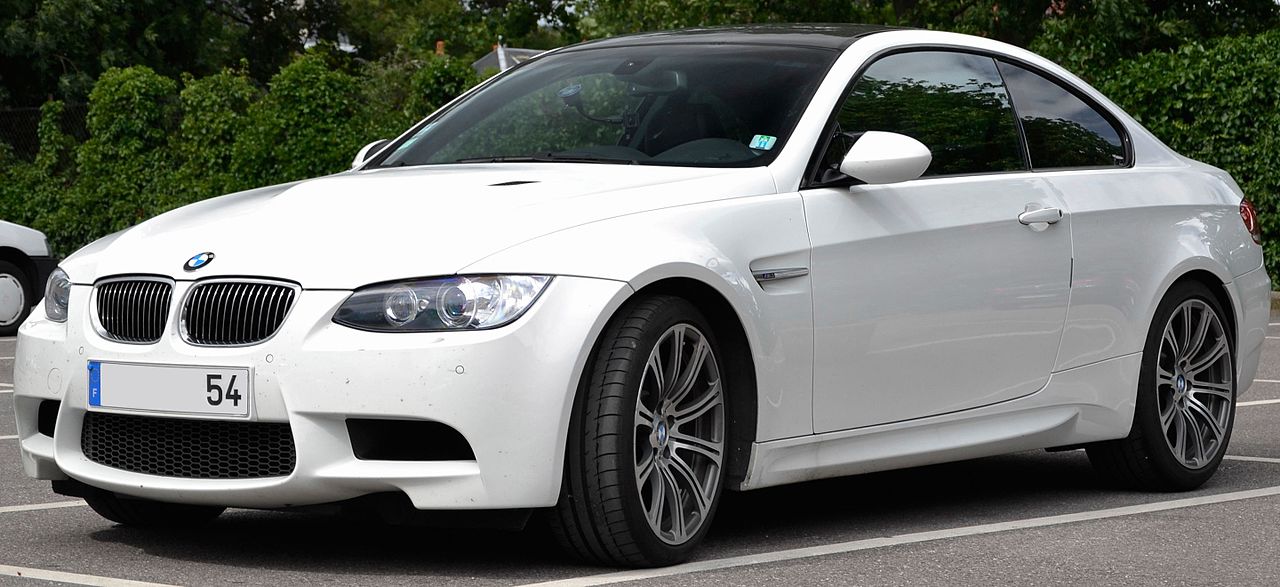


The M3 model was powered by the BMW S65 V8 engine and produced in sedan, coupe and cabriolet body styles.


To satisfy homologation requirements for the FIA World Touring Car Championship (WTCC), BMW built 2600 units of the 320si.

BMW WTCC works driver Andy Priaulx won two of his three consecutive World Championships in the 320si E90 as well as four other drivers achieving over 35 wins in the championship since the cars release. The BMW 320si is used by a few teams in the British Touring Car Championship (BTCC). Colin Turkington won the 2009 BTCC Drivers championship using the BMW 320si.


The 335is was produced in coupé and convertible models for the North American market. It sat between the regular 335i and the M3 in the model line-up, and approximately 6,300 units were produced. The 335is uses a higher performance version (N54T) of the N54 engine from the 2006-2013 335i, which increases boost from 8.7 to 11.6 PSI. This results in 320 horsepower and 332 lb-ft of torque, plus an overboost function raises torque to 370 lb-ft for up to 7 seconds.

The 335is has stiffer engine mounts and an upgraded cooling system, with a heavy-duty radiator fan and two heat exchangers, one an engine oil cooler, the other a secondary coolant radiator. To accommodate these heat exchangers, which are located ahead of each front wheel, the 335is has larger air openings, similar to the M3. Fog lights were removed from the coupé version to allow for the openings, although they remain on the convertible version. In addition, the 335is is equipped with a revised, high-flow exhaust system, with the twin exhaust pipes finished in matte black, and a rear bumper that incorporates a diffuser-style piece.

Transmission options were a 7-speed double clutch transmission (DCT) with launch control (Same DCT transmission as the M3 but with different software programming) or a 6-speed manual transmission controlled by a short-throw "M" stick. The manual transmission has a heavy-duty clutch with more holding power than the regular 335i.

Interior upgrades include a thicker, "M" steering wheel, "M" steel pedals, standard sport seats, "M" door sills, and textured aluminium trim with "335is" badging on dash and in instrument cluster. Exterior differences are black kidney grills, and "Style 313" split-five spoke "M" wheels in 18-inch or 19-inch size, standard Shadowline window trim (instead of chrome), gloss-black side mirrors (instead of body colored mirrors).


In September 2008, the facelift (LCI) versions of the Saloon and Estate were released for the 2009 model year. Compared to typically subtle BMW LCI changes, these changes were relatively extensive.

Mechanical changes included an increase in rear track of 24 mm (0.94 in) for some models, a power increase for the 320d from 177 to 184 PS (135 kW; 181 bhp) and the N57 engine replacing the M57 for the 330d model.

Styling changes included front and rear bumpers, wing mirrors, headlights, taillights, boot lid, wider kidney grilles and revised crease lines for the bonnet.

For the interior, crash-activated head restraints were added to the front seats, the optional "Professional" navigation system was updated, iDrive was updated and the resolution of the display was increased.

For the 2010 model year, the Sport, Lifestyle and Exclusive Edition were introduced for Saloon and Estate models. The 316d estate model was added, as was the 320d EfficientDynamics Edition saloon.

Mechanical changes included compliance with the EU5 emission standard, EU6 emission compliance (optional) for the 320d and 330d models, power increases for the 318d, 320d, 325d and 330d models, the N54 engine in the 335i being replaced by N55 engine, and additional features for BMW ConnectedDrive.

BMW 320d red.jpg

The BMW F30/F31/F34/F35 series is the sixth generation of the BMW 3 Series, which was launched on February 11, 2012 as the successor to the E90 3 Series. The body styles of the range are:

4-door sedan/saloon (F30 model code)
5-door estate/wagon (F31 model code, marketed as "Touring" or "Sports Wagon")
5-door fastback (F34 model code, marketed as 3 Series Gran Turismo)
4-door long-wheelbase sedan/saloon (F35 model code, only sold in China)
For the sixth generation, the coupe and convertible models were spun off to create the new BMW 4 Series nameplate. BMW also introduced a separate hatchback model under the 3 Series nameplate called the Gran Turismo.

The F30 is the first generation of 3 Series to be powered by a range of turbocharged engines exclusively and electric power steering (replacing the hydraulic power steering systems used previously). The F30 also marked the 3 Series' first use of a three-cylinder engine in its 2015 facelift. A new plug-in hybrid F30 model was also introduced in 2016.

The M3 model (designated F80) was released in 2014 and is powered by the S55 twin-turbo straight-6 engine.

The exterior designer for the F30 sedan was Christopher Weil and exterior designer for the F31 Touring was Michael de Bono.

The F30 was unveiled in Munich on 14 October 2011.
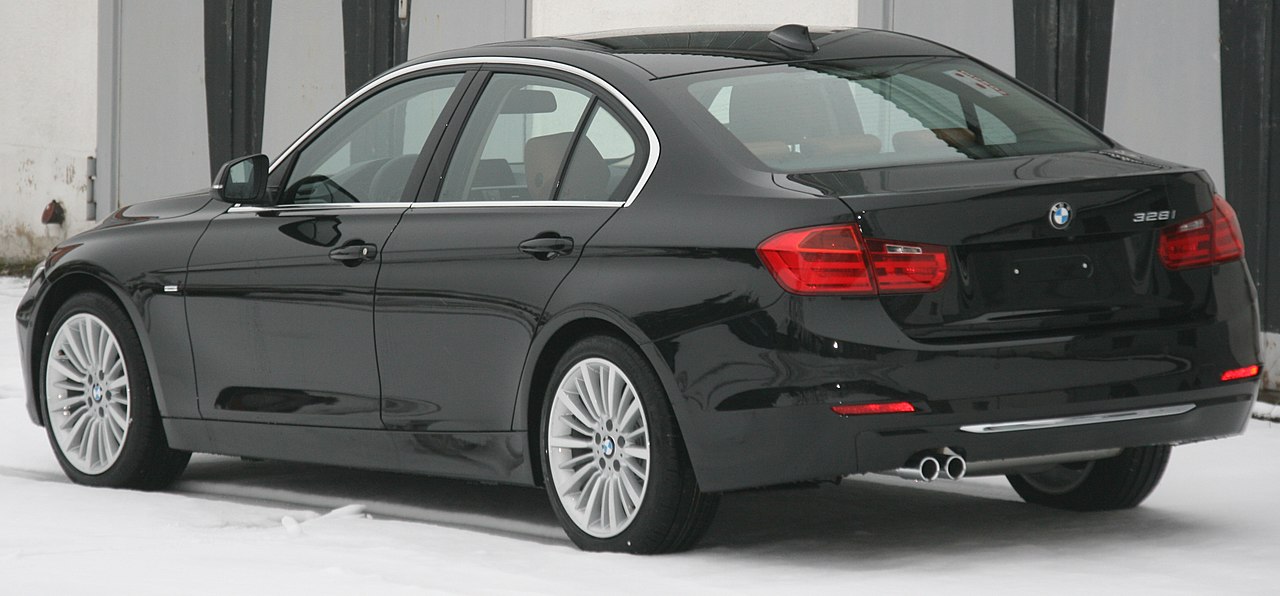


The F30 sedan received its auto show debut at the 2012 Geneva Motor Show in March 2012. It was released on February 11, 2012, being the first of the sixth generation 3 Series models to go on sale.

The 320i, 318d, and 316d sedans were added in March 2012, and the 320i EfficientDynamics Edition and 316i were added in autumn of 2012.

The BMW 320d Efficient Dynamics was the most widely used vehicle in the London 2012 Olympics due to BMW's official partnership.

The arrival of the four-cylinder models in the US was the first 3 Series to be sold with a four-cylinder petrol engine in this market since the E36 318i of the late 1990s. Early models included the 328i and 335i. The 328i xDrive and 335i xDrive went on sale in the summer of 2012.


The station wagon body style (marketed as "Estate", "Sports Wagon" or "Touring") was unveiled in 21st Auto Mobil International Leipzig 2012. This body style is designated as F31, and the launch models consisted of the 328i, 320d and 330d. The 320i, 316d and 318d models were added in autumn of 2012.


The 5-door hatchback body style is designated F34 and was marketed as the 3 Series Gran Turismo, with styling similar to the 5 Series Gran Turismo. At 4,824 mm (190 in), the F34 is 200 mm (8 in) longer than the Sedan and Touring models. This extra length is partly facilitated by the 110 mm (4 in) longer wheelbase of the platform used by the F35. The F34 is also 79 mm (3 in) taller than the F30/F31.

The vehicle was unveiled in the 83rd Geneva International Motor Show 2013. Early models included 320i, 328i, 335i, 318d, 320d, with the later introduction of the 325d. Several models were available with "xDrive" all-wheel drive.
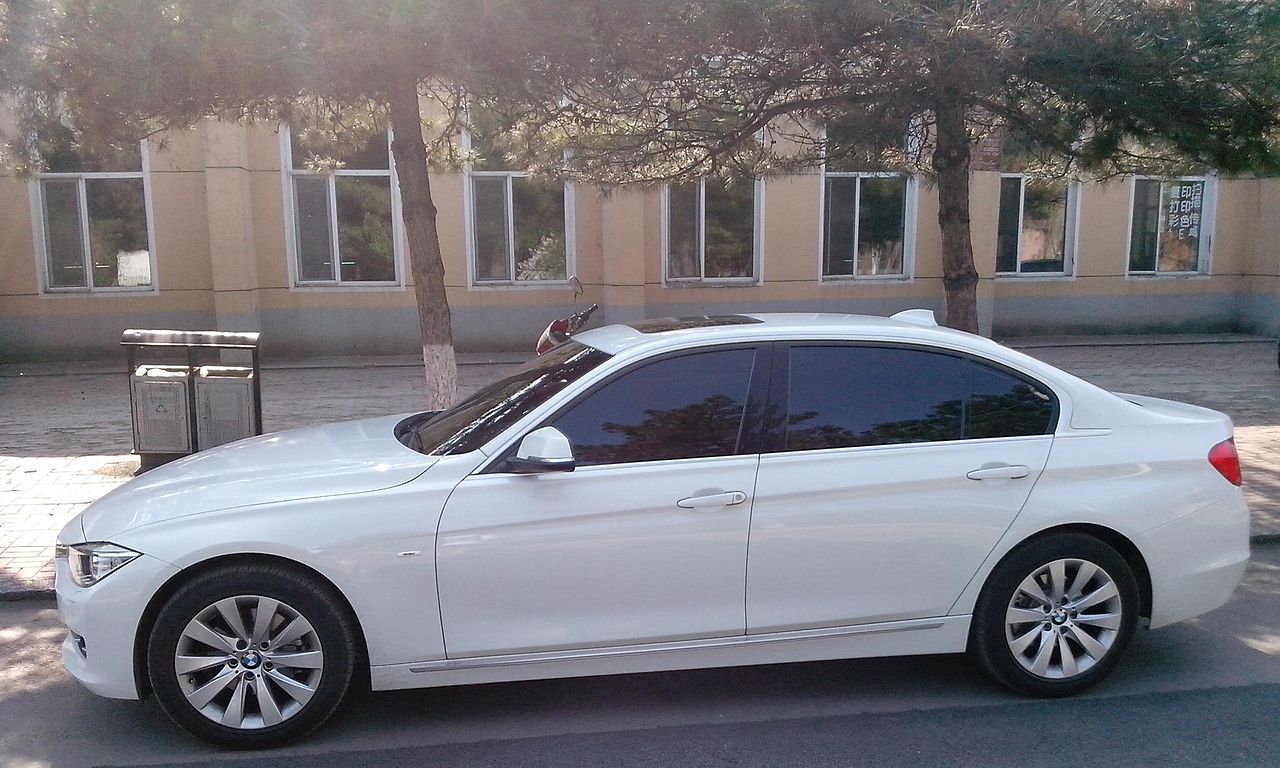


A long-wheelbase sedan, designated F35, was produced for the Chinese market. The wheelbase is increased by 110 mm (4.3 in), which increases rear knee room by 90 mm (3.5 in). This vehicle was produced in BMW's Shenyang production plant, and chrome trim on the doors distinguishes it from the F30 sedans.


The vehicle was unveiled in 2012 Auto China in Beijing. Initial models included the 320Li, 328Li and 335Li. Post-facelift (LCI) models were the 316Li, 320Li, 328Li, 328Li xDrive and 335Li.

Designed by Christopher Weil under design chief Adrian Van Hooydonk, the F30/F31 has grown in all dimensions compared to its predecessor. The styling is similar to previous generations with a sweeping bonnet, short front overhang and long wheelbase typical. Headlamps now connect to a wide kidney grill. Tail lamps sport a wide "L" shape design seen in many BMW models.

The traditional mechanical shift lever was replaced by a Shift by wire shifter, as introduced in the 2007 E70 X5 and the 2008 LCI update of the E60 5 Series. The LCD and iDrive scroll button on the steering wheel became standard equipment. GPS navigation and an 8.8 in (22.4 cm) widescreen display were included in the Technology and Navigation packages. Other options include heated front seats and split-fold rear seats. Rear headroom, leg room and shoulder room has increased, compared with its E90 predecessor.

Three trim options (called "lines" by BMW) have been available for the F30/F31: Modern line, Sports line and Luxury line. These lines form the base packages upon which extra options could be specified.

The Modern line includes a matte-chrome finish for the grille and exhausts, unique wheels and textured wood trim in the interior. The Modern line was discontinued in 2013.

The Sport line is a replacement of the Sports Package previously offered on the E36, E46 and E90. The Sport line included 18" wheels, sports suspension, a Sport Plus driving mode, sports steering wheel and sports seats. Cosmetic features included contrasting stitching and piping, a contrasting "accent strip" and aluminium sill plates.

The Luxury line includes chrome trim around the side windows, aluminium sill plates and a sports steering wheel.

In the US, the lines were discontinued (therefore specifying a car reverted to selecting individual options), however the lines continued in other markets.

The petrol models initially used the 4-cylinder N13, 4-cylinder N20 and 6-cylinder N55 engines, which are all turbocharged. This meant that the 325i and 328i models (traditionally powered by naturally-aspirated 6-cylinder engines) now used the turbocharged 4-cylinder N20 engine.[45] For the 2016 facelift (LCI), the engines were updated to the 3-cylinder B38, the 4-cylinder B48 and the 6-cylinder B58.

The diesel models initially used the 4-cylinder N47 and 6-cylinder N57 turbocharged engines. For the 2016 facelift, the 4-cylinder models were updated to the B47 engine, while the 6-cylinder models retained the N57 engine.


Based on the 335i Sedan, the ActiveHybrid 3 includes a 40 kW (54 hp) synchronous electric motor, a lithium-ion battery integrated underneath the luggage area and a 2-zone climate control system with stationary air conditioning. The electric motor produces 210 N⋅m (150 lb⋅ft). The maximum all-electric driving range is 4 km (2.5 mi), with top speed of 75 km/h (47 mph).

The BMW ActiveHybrid 3 was unveiled at the North American International Auto Show in January 2012.

The US EPA rated the 2013 ActiveHybrid 3 with a combined fuel economy of 28 mpg‑US (8.4 l/100 km), with 25 mpg‑US (9.4 l/100 km) in the city, and 33 mpg‑US (7.1 l/100 km) .


The BMW 330e iPerformance is a plug-in hybrid unveilled at the IAA in Frankfurt in September 2015. Retail sales began in Europe and North America in 2016. Sales in the American market are slated for mid-2016, with a price starting at US$44,695 before any applicable government incentives. The car was initially name 330e Plug-in Hybrid, however, in February 2016 BMW announced the introduction of the "iPerformance" model designation, which will be given to all BMW plug-in hybrid vehicles from July 2016. The aim is to provide a visible indicator of the transfer of technology from BMW i to the BMW core brand.

The 330e features a four-cylinder gasoline engine and an 88-hp electric motor. It produces a total of 252 hp and 310 lb-ft of torque. Under the U.S. Environmental Protection Agency (EPA) tests, the BMW 330e has an all electric range of 14 mi (23 km), with some gasoline consumption, so the actual all-electric range is rated between 0 to 14 mi (0 to 23 km).

The EPA, under its five-cycle tests, rated the 2016 model year 330e energy consumption in all-electric mode at 47 kWh per 100 miles, which translates into a combined city/highway fuel economy of 72 miles per gallon gasoline equivalent (MPG-e) (3.3 L/100 km; 86 mpg-imp gasoline equivalent). When powered only by the gasoline engine, EPA's official combined city/highway fuel economy is 31 mpg‑US (7.6 L/100 km; 37 mpg‑imp).

The first units were registered in Europe by late 2015. A total of 68 units were sold in the Netherlands by the end of 2015.

all-wheel drive became available with the wagon body style for 320i, 328i and 330i models
US sales of wagon body style begin in the Spring of 2013. Models included 328i, 328i xDrive, as well as the 328d xDrive, using the same engine tuning as the 320d elsewhere in the world.
US sales of 320i and 320i xDrive sedans begin late-Spring 2013.

328d is the first four-cylinder diesel BMW to be sold in the United States.

The facelift ("Life Cycle Impulse") versions were released in 2015 for the 2016 model year.[66][67] Changes include:


340i models (using the B58 engine) replace the 335i models (using the N55 engine).
330i model (using the B48 engine) replaces the 328i model (using the N20 engine), except for the United States market
320i engine changes to B48 from N20, except for the United States market
318i engine changes to the 3-cylinder B38 (therefore, for the first time in its 40-year history, the 318i model isn't powered by a 4-cylinder engine)
B47 engine replaces the N47 engine for the 4-cylinder diesel models.
ActiveHybrid 3 model discontinued
330e iPerformance plug-in hybrid model added
revised headlights and tail-lights, with LED replacing Xenon for the headlights
revised shock absorbers and front suspension mounts
revised electronic stability control (called "DSC" by BMW)
rev-matching (called "engine speed adaption" by BMW) for manual transmissions.
GPS-based gear selection (called "ConnectedShift" by BMW) for automatic transmissions.