We hype up our favorite bands; We critique on sports and cars; We opine about pop culture. On occasion, will do some creative writing. This is PATHOLOGICAL HATE. Follow us on Twitter: @pathological_h8
Showing posts with label Volkswagen. Show all posts
Thursday, January 26, 2023
Volkswagen VR6
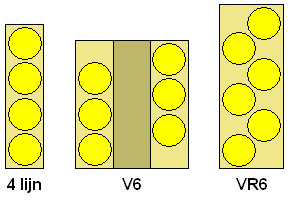
VR6 engines are V6 piston engines with a narrow angle between the cylinder banks and a single cylinder head covering both banks of cylinders.
Volkswagen Group introduced the first VR6 engine in 1991 and VR6 engines currently remain in production. From 1997 to 2006, Volkswagen also produced a five-cylinder VR5 engine based on the VR6.
The name VR6 comes from the German initials for a V engine (German: V-Motor) and a straight (inline) engine (German: Reihenmotor), therefore the VR engine is described as a "Vee-Inline engine" (VR-Motor).
VR6 engines share a common cylinder head for the two banks of cylinders. Only two camshafts are needed for the engine, regardless of whether the engine has two or four valves per cylinder. This simplifies engine construction and reduces costs.
Since the cylinders are not located on the centreline of the combined cylinder head, the lengths of the intake and exhaust ports are different for each bank. Without compensation, these varying port lengths would result in the two banks of cylinders producing different amounts of power at a particular engine RPM. The difference in port lengths are compensated for with the length of the runners in the intake manifold, the camshaft overlap and lift profile, or a combination thereof.
The Volkswagen VR6 engine was designed for transverse engine installations in front-wheel drive vehicles. The narrow angle of 15° between the two cylinder banks reduced the width of the engine, compared to a traditional V6 engine. Therefore, the VR6 engine is easier to fit within an engine bay that was originally designed for a four-cylinder engine.
Early VR6 engines had two valves per cylinder (for a total of twelve valves) and used one camshaft for the intake and exhaust valves of each cylinder bank (without the use of rockers).
The first Volkswagen VR6 engine uses the AAA version. It had a bore of 81.0 mm (3.19 in) and a stroke of 90.3 millimetres (3.56 in), for a total displacement of 2.8 L (171 cu in). In 1994, a 2.9 L (177 cu in) ABV version was introduced in some European countries, with an increased bore of 82.0 mm (3.23 in).
The V angle between the cylinder banks is 15°, and the compression ratio is 10:1. The crankshaft runs in seven main bearings and the journals are offset 22° to one another, in order to accommodate the offset cylinder placement. This also allows the use of a 120° firing interval between cylinders. The firing order is: 1, 5, 3, 6, 2, 4. The centerline of the cylinders are offset from the centerline of the crankshaft by 12.5 mm (0.49 in).
The valve sizes are 39.0 mm (1.54 in) for the intake and 34.3 mm (1.35 in) for the exhaust. Since the two 'rows' of pistons and cylinders share a single cylinder head and head gasket, the piston crown (or top surface) is tilted. The engine management system is Bosch Motronic.
A version with four valves per cylinder (for a total of 24 valves) was introduced in 1999. The 24-valve versions use one camshaft for the intake valves of both banks (using rockers to reach the furthest bank) and the other camshaft for the exhaust valves of both banks (again, through the use of rockers). This operating principle is more akin to a double overhead camshaft (DOHC) design, with one camshaft for intake valves, and one for exhaust valves.
The 1922-1976 Lancia V4 engine was the first narrow angle V engine to be used in a motor vehicle.
The first versions of the VR6 engine were introduced in the 1991 Volkswagen Passat B3 sedan and Volkswagen Corrado coupe. A 2.8 L (171 cu in) AAA version producing 128 kW (172 hp) was used in most Passat models and in the North American version of the Corrado. A 2.9 L (177 cu in) ABV version producing 140 kW (188 hp) was used in the Passat Syncro model and the European version of the Corrado. Both versions used 2 valves per cylinder. Usage of the VR6 engine spread to the Volkswagen Golf Mk3 2.8 VR6 and Volkswagen Vento/Jetta (A3) 2.8 VR6 models in 1992. The 2.8 litre version was also used in the 1996-2003 Mercedes-Benz Vito (W638) commercial vans, where it was designated as 'M104.900'.
In 1997, the VR5 engine was introduced, based on the VR6 engine.
An AQP/AUE version with 4 valves per cylinder was introduced in 2000. This 2.8 L (171 cu in) engine produced 150 kW (201 hp), and mostly replaced the 2 valve engines, except for in North America where an updated version of the 2 valve engine was used in the Golf and Jetta from 2000 to 2002.
A 3.2 L (195 cu in) EA390 version of the 4 valve engine was introduced in the 2001 Volkswagen New Beetle RSi model. This 3.2 litre engine was also used in the 2002-2004 Volkswagen Golf Mk4 R32 model and the 2003-2010 Audi TT 3.2 VR6 quattro models. Peak power output was 177 kW (237 hp) in the New Beetle and Golf (engine code BFH/BML), and 184 kW (247 hp) in the Audi TT (engine code BHE).
The engine size was again increased in 2005, when a 3.6 L (220 cu in) version with gasoline direct injection (FSI) was introduced in the Volkswagen Passat (B6). This BLV version uses a narrower 10.6 degree angle between the cylinder banks and produces 206 kW (276 hp). A 3.2 L (195 cu in) AXZ version producing 184 kW (247 hp) was introduced in 2006.[11] In 2008, an uprated BWS version of the 3.6 litre engine producing 220 kW (295 hp) was introduced in the Volkswagen Passat (B6) R36 model.
The base model Porsche Cayenne (9PA) used 3.2-liter VR6 engine from 2003 to 2006 and then a 3.6-litre VR6 engine from 2008 to 2010. Then the next generation Porsche Cayenne (92A) also used a 3.6-litre VR6 engine from 2010 to 2018.
Volkswagen had started to phase out VR engines in favour of downsized turbocharged engines, however the VR6 currently remains in production for the Volkswagen Passat (NMS) sedan models sold in China. In 2017, the VR6 engines made an unexpected comeback, with versions of the 24-valve VR6 engines being produced for the Volkswagen Atlas. Volkswagen also made brand new VR6 (still EA390) for Chinese market only, it's 2,5Litre Turbocharged 24v VR6 220 kW (295 hp) and 500 nm of torque for Volkswagen Teramont SUV and new Volkswagen Talagon MPV
Labels:
15-degree V-shaped,
Golf,
golf r,
GTI,
Jetta,
Passat,
Porsche Cayenne,
six-cylinder,
Volkswagen,
VR6
Thursday, January 12, 2023
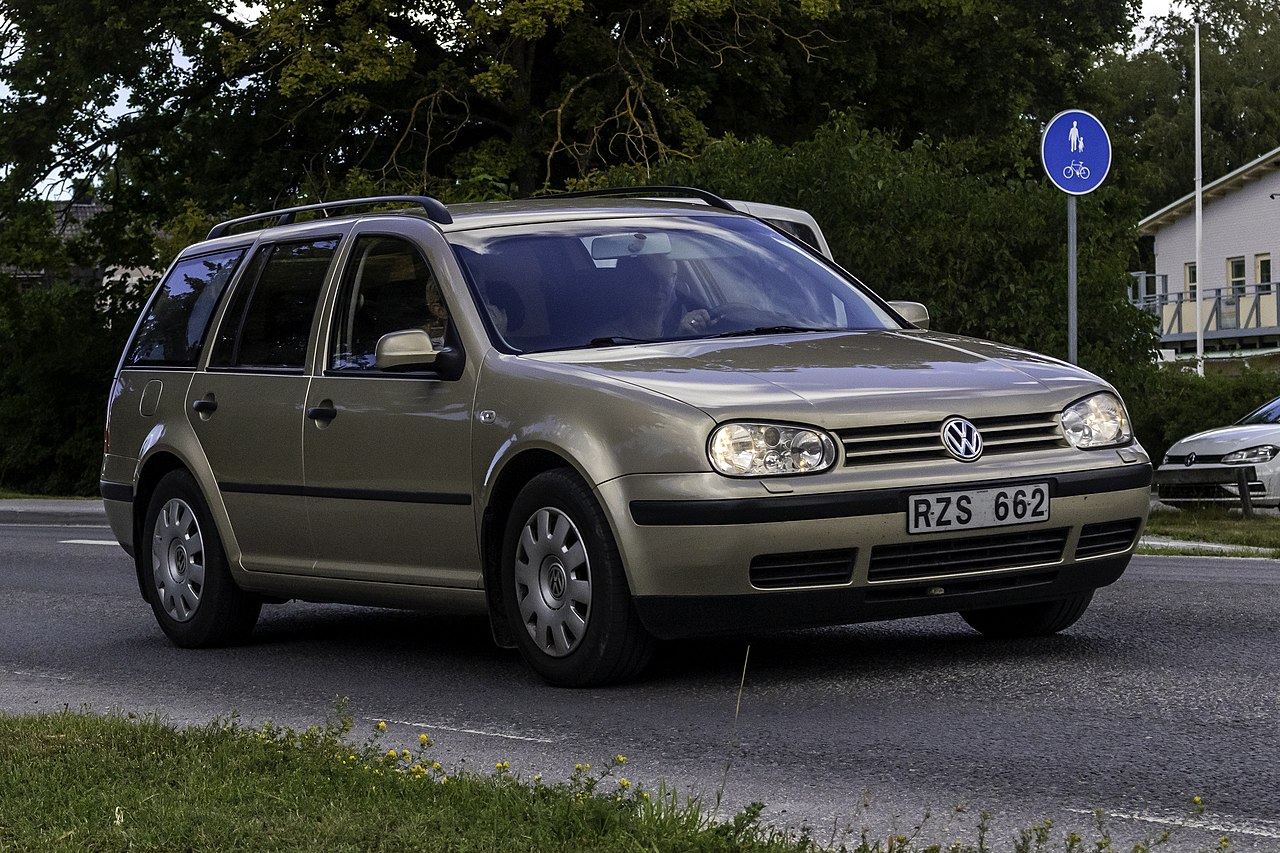
Devon test drives Volkwagen's Golf Wagon (Used)
Compact crossovers maybe all the rage right now but not everyone finds them appealing; and for those few individuals the Golf wagon is the perfect alternate. Here’s why:
The
standard 1.8 turbo is the best combo for low running costs and flexibility in
performance; plus it is priced within reason too. The 2-liter TDI is also
priced within reason too but finding one will be a chore because this is the most
popular form of Golf wagon. Both engines can be had with a six-speed manual
gearbox or a six-speed DSG auto gearbox.
Whatever
wagon stigma you may have in your mind should be immediately thrown to the
birds when you look at the Golf Wagon. The steering feedback is good and the
ride comfort is excellent; all while offering decent handling and good body
control. Most will think that since it is a wagon it will be noisier than a
sedan but you’ll be wrong again here because wind and road noise are both kept
to a hush and you won’t even hear a peep out of the suspension.
Volkswagen
does know a thing or two about infotainment display and user-friendly
functionality. Both are well regarded in the Golf Wagon. Front driver and front
passengers will be greeted with the most comfortable seats and even the second
row passengers won’t complain much about legroom and headroom. The boot space
is what makes a wagon a wagon and yes it is generous even with the second row
seat folded down. Roof rails are standard as well to add versatility.
S
trim comes with 16-inch alloy wheels, V-TEX leatherette seating surfaces,
air-con, cd-player and Bluetooth for your mobile phone. SE trim adds panoramic
sunroof, keyless start and a rearview camera. Top of the range SEL trim comes
with 18-inch alloy wheels, dual-zone climate control, navigation system and
power-folding exterior mirrors.
The
Golf Wagon is the best choice for anyone refusing to follow the trend of the
compact crossover segment. However, the Golf wagon doesn’t offer
all-wheel-drive and for those who may want that option will have to venture
elsewhere. Everyone else will be happy with the Golf because even the SE trim
offers decent value for the money in both the 1.8 turbo and TDI. Discounts
should be available and resale value should be strong especially with the TDI.
Volkswagen
hasn’t been the best in terms or reliability but we have very little doubt the
Golf Wagon reliability will be top notch. Interior materials have been
gradually improved over the previous generation and the safety kit is
comprehensive; electronic stability control, traction control, anti-lock brakes
and electronic brake force distribution all come standard.
Don’t
want to follow the trend of compact crossovers and don’t mind the lack of
all-wheel-drive. The Golf Wagon hands down is the best choice money can buy. You
seriously will not be disappointed here.
Likes:
Space for passengers and cargo are both generous. Standard kit is decent too
and both engines manage good flexibility and low running costs well.
Dislikes: No all-wheel-drive option; the GTI’s
engine would be a nice addition too.
Devon's Pick: SE
trim manages to combine decent kit at a decent price in both 1.8T and TDI.
Thursday, November 17, 2022
Volkswagen Golf Variant
For the first time an estate was produced, being launched in early 1993, and bringing it into line with key competitors such as the Ford Escort and Vauxhall/Opel Astra, which had long been available as estates. The GT variants included a 2.8LVR6 engine, and a convertible launched as the Cabrio (Type 1E).
The Volkswagen Golf Mk4 Variant was introduced in 1999. It was discontinued in 2006, and succeeded in 2007 by the Volkswagen Golf Mk5 Variant. Unlike the Mk3, it was offered in North America with the "Jetta" name with corresponding front styling. The "Jetta Wagon" was used in North America instead of the "Bora" name.
Volkswagen introduced an estate/station wagon version of the fourth-generation car at the 2001 Los Angeles Auto Show[19] as the first A-segment wagon Volkswagen offered in North America — the body style solely manufactured in Wolfsburg. The wagon offered 963 l (34 ft3) of volume with the rear seat up, and wth rear seats were folded provided 1473 l (52 ft3).
In Europe, the estate version was at times marketed as a Golf wagon, either in addition to or instead of the Bora. Other than different front bumpers, fenders, headlights, and hood, the cars were identical. In some countries, VW marketed both Golf Variant and Bora Variant, with the Bora Variant being more upmarket than its counterpart.
The station wagon version of the Golf Mk5 debuted at the International Geneva Motor Show in March 2007 and was marketed as the Golf Variant in the German domestic market, in The United States as the Jetta SportWagen, and in Argentina and Uruguay as the Vento Variant. Designed by Murat Günak, it is more closely related to the Jetta saloon with a shared front fascia design and front doors. It was produced in Puebla, Mexico since April 2007 alongside the similar Jetta with a targeted annual production of 120,000 units.
Volkswagen did not intend to release the station wagon/estate version of the Golf Mk5 until later in its life cycle. Initially, Volkswagen expected the Golf Plus and Touran to be able to cover the station wagon segment left by the Golf, however it was reported that dealers and customers were asking for a replacement instead.
It was facelifted in late 2009, with changes including the front clip and interior from the Golf Mk6, while the remaining is based on the pre-facelifted model. It is marketed as the station wagon version of the Golf Mk6 as it was sold alongside it. The facelifted model was also marketed as the Golf Wagon and Variant in the Canada and Mexico, while it continued to be sold as the Jetta SportWagen in the United States.
A facelifted variant Mk5 Golf Variant model was introduced in 2009 as the Mk6, despite carrying the front fascia, interior styling, and the powertrain from the new Golf, the body shell and underpinnings are based on its fifth-generation predecessor. It is sold in the US as the Jetta SportWagen, in Mexico and Canada as the Golf Wagon and in South America as the Jetta Variant or Vento Variant.
The estate/station wagon of the Golf was revealed at Geneva Motor Show in March 2013. It is marketed as the Golf Variant in Germany and Golf SportWagen in the United States and Canada, replacing the Jetta SportWagen nameplate previously used in the US.
The Golf Estate's loadspace volume has been expanded from the 505 litres of its predecessor to 605 litres (loaded up to the back seat backrest) versus the 380 litres of the Golf hatchback. Loaded up to the front seat backrests and under the roof, the new Golf Estate offers a cargo volume of 1,620 litres (versus the 1,495 litres of the Golf Estate Mk6). The rear seat backrests can be folded remotely via a release in the boot.
Four petrol engines and three diesel engines are available, ranging from 85 PS (63 kW; 84 hp) to 140 PS (103 kW; 138 hp) in the petrol and 90 PS (66 kW; 89 hp) to 150 PS (110 kW; 148 hp) for the diesel engines.
For the first time, the Golf Estate will also be available as a "full" BlueMotion model (with other modifications, including revised aerodynamics). This model uses a 1.6-litre diesel engine producing 110 PS, has a six-speed manual gearbox, and is expected to achieve a combined fuel consumption of just 85.6 mpg (equivalent to 87 g/km of CO2).
The Golf SportWagen is available in S, SE, and GT (Trendline, Comfortline, and Highline in Canada) (GT is SEL in the USA) trim levels. There is also a Golf Estate R, using the same EA888 2.0 engine found in the MkVII Golf R hatchback. The Golf Variant is also built as a rugged version called Alltrack with slightly-raised suspension, body cladding, and all-wheel drive.
Thursday, July 19, 2018
Volkswagen Tiguan Limited
The sole 2-liter turbocharged four-cylinder engine isn’t the upgraded 2-liter turbo from the GTI but it still makes a respectable 200hp. You can have it with either front-wheel-drive or all-wheel-drive if you desire the extra traction. We hadn’t had the opportunity to test drive the front-wheel-drive form but instead had the Sport trim with 4-motion all-wheel-drive. The combo together doesn’t feel sluggish at all thanks to high torque at low revs and a smooth six-speed automatic. It really is a GTI on stilts because not only is it fast but it feels very agile where it matters most. It’s not GTI athletic but you’ll get our point here. Steering feedback isn’t as crisp as that of a GTI but it does the job better than some of its keen rivals. Where the Tiguan might fall short is on ride comfort, with the large alloy wheels it did feel a bit more firm than we’d like but the tradeoff is always decent handling and in our books that’s not really something to complain much of. Wind and road noise are well suppressed and the engine is mainly hushed at relaxed speeds.
The interior doesn’t feel up to par with some of its keen rivals but it still feels classy. The touch-screen infotainment system while it is easy to use, it still is distracting to use because of all the various menus. (We’ve said this about several infotainment systems and we will still think that they’re distracting while on the go.) The front seats offer plenty of support while the rear seat offers plenty of space for three abreast. The boot space isn’t as versatile as the Golf’s but it is a decent size and offers plenty of versatility when the rear seat is folded down.
We’d say it’s best to skip the S trims and the Wolfsburg trims as well and go right for the Sport trims. It comes with Bi-Xenon headlights, panorama sunroof, 18-inch alloy wheels and dual-zone climate control. You may pay a slight premium for it but we think that it is well worth it. The interior materials are much improved and the overall appearance makes the Tiguan feel like a classy package.
It’s hard trying to find the right compact crossover that fits you the best, especially with so many of them to choose from. But we’ve broken it down with this statement. Buy the Tiguan Sport or SEL because those are the classiest forms, everyone else is better off looking elsewhere because the Tiguan is less than average among heavy hitters like the Honda CR-V and Hyundai Tucson.
Likes: Turbo engine offers the flexibility we love. The interior is classy VW and the standard kit list is pretty good too.
Dislikes: The more expensive trims feel the classiest. The new Tiguan is around the corner and has three-rows of seats.
Our pick: Go right for the Sport or SEL trims. You may have to pay extra for them but they feel well worth the premium.
Tuesday, August 29, 2017
Poor Build Quality (Old)

Jaguar XF ($51,000)
Jaguar has replaced the aging S-type with the new XF. The XF displays sleek new styling and a more advanced technology that has never been offered in previous Jaguars. Although its styling is pretty, reliability is not up to par. In fact, Jaguars consistently score low in initial quality surveys. Unless you have deep pockets. You're better off buying from BMW or Mercedes-Benz.
Land Rover Range Rover Sport ($59,000)
Land Rovers are known for their ability to provide luxury both on road and off. Although the average buyer won't take these machines off-road. Many of these vehicles will spend most of their lives in the repair shop. That is if you find that one Land Rover that actually is reliable. Just like Jaguar, Land Rovers suffer from poor reliability ratings. To sum it up, you buy a Land Rover as a status symbol.
Volkswagen Beetle ($17,000)
The Volkswagen Beetle is known for its cute iconic design. With a 2.5liter five-cylinder rated at 150hp and a six-speed automatic transmission. Fuel economy is so-so, but interior quality is typical Volkswagen. When you buy a New Beetle, make sure that you get rid of it after the warranty is over. Many owners have complained of electrical problems and even major mechanical problems well after the warranty is over. Even though its cute, the build quality is terrifying.

Automatic BMWs
BMWs are dream cars for many. Most people lease them and trade them in for newer models. Once traded in, people flock to buy them used. This is where all the problems begin. Even if certified pre-owned, these automatics should be avoided at all costs. Most customers complain that the transmission hesitates or won't go in reverse at all. German cars aren't cheap to fix. BMW tends to be a little pricier to fix than the average German vehicle.
Devon M
Subscribe to:
Posts (Atom)