What's On

Showing posts with label Porsche Cayenne. Show all posts

Thursday, January 26, 2023

Devon is impressed with the Volvo XC90 (Used)


WMC P JAIA17 Volvo XC90 1.jpg

The previous generation XC90 was our favorite luxury 4x4. It wasn’t as sharp to drive as a BMW X5 and the interior wasn’t classy like an Audi Q7 but it had a charm that was hard to ignore. Now the newer XC90 really does have a lot to live up to; not only in terms of helping Volvo stay afloat but also stamping it’s mark in the ever crowded ever serious luxury 4x4 segment. Tough gig!

Volvo does start off on the right notes with the new XC90 because both the exterior and interior looks are absolutely stunning; both help the XC90 leap light years ahead of the previous generation. Dare we say the XC90 is the most handsome 4x4 in this segment? But how does this all translate onto the road?

The sole engine choice for now is a 2-liter turbocharged and supercharged four-cylinder pumping out a hearty 315hp with standard all-wheel-drive. You might think that a tiny four-cylinder isn’t up to the job in the XC90 but you’ll be pleasantly surprised at how flexible the engine really is. We haven’t tested the XC90 fully laden but we are pretty sure that it won’t struggle thanks to a maximum tow rating of 5,000lbs.

Our tester car came equipped with air suspension and 20-inch alloys and the ride quality is actually good. Large bumps won’t even send shutters into the cabin. Handling is okay it won’t defy logic like a BMW X5 or Porsche Cayenne but it holds its own well. Steering is smooth and offers excellent feedback. Refinement is good in the XC90, when at relaxed speeds you can barely hear a peep out of the engine and road noise is virtually unheard of. There is a bit of wind noise around the side mirrors but it’s far from intrusive or annoying.

Volvo has the best seats in the auto industry hands down. These seats provide enough comfort for drivers of all sizes. The infotainment system is actually quite easy to use and of course you get a full nine-inch display which adds a bit of class to the overall look and feel. All the controls are within easy reach and your view forwards and backwards is good. Boot space is okay with the third row seat in place. Fold the third row seat down and you’ve got even more space, fold down both rows and you have so much space that you would need a transit van if you find the space lacking.
The third row seat is actually quite roomy for adults, even though most will only tolerate it for short journeys. The second row space is generous too, in fact this is one of the few seven-seat 4x4s we’ve ever driven where the balance between utility and people carrier is so good that we have to give it a standing ovation.

T6-AWD gets navigation system, rain sensing windshield wipers and lane departure warning. T6 R-design adds integrated body-kit with 20-inch alloys and full-LED headlights. T6 AWD Inscription adds Nappa leather seating, ventilated seating surfaces and keyless entry with hands-free tailgate opening system. The amount of kit you get standard for the money is actually much more generous then what you would typically get standard on a BMW X5 and Mercedes ML.

We challenge you to find a BMW X5 or Porsche Cayenne with the same equipment for similar money and what you’ll find is all the reasons why the XC90 is the better buy. It may not have the resale value of both brands yet but this XC90 looks promising and we do predict that the value will hold very well. Running costs are similar to that of the BMW and Porsche and even though Volvo doesn’t offer a diesel engine it will eventually offer a plug-in hybrid option which is predicted to be one of the greenest seven-seat 4x4s on sale until the Tesla Model-X arrives of course.

Interior quality is superb and many of the plastics feel classy and upmarket; a far departure from the previous generation. Volvo has scored above-average in reliability and we do see this being a new trend for years to come. If Volvo had a middle name it would be safety and everything that you could ever possibly want in terms of safety kit Volvo has it. The most notable of these systems is the city braking which works at speeds up to 30mph, by slowing you down and bring you to a complete stop if the driver so happens to take his or her eyes off the road.

When you think of luxury 4x4s most will venture to the BMW X5 and Porsche Cayenne because well both are good in their own right. However, the XC90 is better than both in its own way. It may not be as sharp to drive or defy logic, but it is a comfortable cruiser with an outstanding interior and can really fit seven people aboard. Plus it is one of the most handsome looking 4x4s we have ever seen in a while. Volvo really did tick all the right buttons and play all the right notes with the new XC90. Hopefully the new looks and well equipped trim-levels will lure buyers in because passing one up without giving it a real gander is a real shame because this 4x4 is a gem.

Devon’s pick: T6 AWD R-design is where our money would go. It feels like you get a lot of car for your money and still somehow you undercut the X5 and you’re still way below what you would have to pay if you picked the Cayenne. It’s classy and stylish plus we just love those LED headlights.

Like: The XC90 is the most handsome 4x4 in the segment and that style carries inside too. Infotainment system is easy to use and those seats are the best. It can really fit seven people aboard and somehow manages to undercut the heavy hitters in kit and price.

Dislikes: The auto gearbox is a little sluggish to react.

Volkswagen VR6

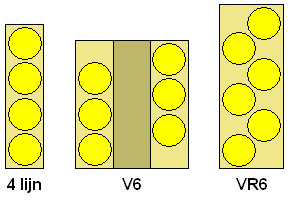
VR6 engines are V6 piston engines with a narrow angle between the cylinder banks and a single cylinder head covering both banks of cylinders. Volkswagen Group introduced the first VR6 engine in 1991 and VR6 engines currently remain in production. From 1997 to 2006, Volkswagen also produced a five-cylinder VR5 engine based on the VR6. The name VR6 comes from the German initials for a V engine (German: V-Motor) and a straight (inline) engine (German: Reihenmotor), therefore the VR engine is described as a "Vee-Inline engine" (VR-Motor). VR6 engines share a common cylinder head for the two banks of cylinders. Only two camshafts are needed for the engine, regardless of whether the engine has two or four valves per cylinder. This simplifies engine construction and reduces costs. Since the cylinders are not located on the centreline of the combined cylinder head, the lengths of the intake and exhaust ports are different for each bank. Without compensation, these varying port lengths would result in the two banks of cylinders producing different amounts of power at a particular engine RPM. The difference in port lengths are compensated for with the length of the runners in the intake manifold, the camshaft overlap and lift profile, or a combination thereof.
The Volkswagen VR6 engine was designed for transverse engine installations in front-wheel drive vehicles. The narrow angle of 15° between the two cylinder banks reduced the width of the engine, compared to a traditional V6 engine. Therefore, the VR6 engine is easier to fit within an engine bay that was originally designed for a four-cylinder engine. Early VR6 engines had two valves per cylinder (for a total of twelve valves) and used one camshaft for the intake and exhaust valves of each cylinder bank (without the use of rockers). The first Volkswagen VR6 engine uses the AAA version. It had a bore of 81.0 mm (3.19 in) and a stroke of 90.3 millimetres (3.56 in), for a total displacement of 2.8 L (171 cu in). In 1994, a 2.9 L (177 cu in) ABV version was introduced in some European countries, with an increased bore of 82.0 mm (3.23 in). The V angle between the cylinder banks is 15°, and the compression ratio is 10:1. The crankshaft runs in seven main bearings and the journals are offset 22° to one another, in order to accommodate the offset cylinder placement. This also allows the use of a 120° firing interval between cylinders. The firing order is: 1, 5, 3, 6, 2, 4. The centerline of the cylinders are offset from the centerline of the crankshaft by 12.5 mm (0.49 in). The valve sizes are 39.0 mm (1.54 in) for the intake and 34.3 mm (1.35 in) for the exhaust. Since the two 'rows' of pistons and cylinders share a single cylinder head and head gasket, the piston crown (or top surface) is tilted. The engine management system is Bosch Motronic.
A version with four valves per cylinder (for a total of 24 valves) was introduced in 1999. The 24-valve versions use one camshaft for the intake valves of both banks (using rockers to reach the furthest bank) and the other camshaft for the exhaust valves of both banks (again, through the use of rockers). This operating principle is more akin to a double overhead camshaft (DOHC) design, with one camshaft for intake valves, and one for exhaust valves. The 1922-1976 Lancia V4 engine was the first narrow angle V engine to be used in a motor vehicle. The first versions of the VR6 engine were introduced in the 1991 Volkswagen Passat B3 sedan and Volkswagen Corrado coupe. A 2.8 L (171 cu in) AAA version producing 128 kW (172 hp) was used in most Passat models and in the North American version of the Corrado. A 2.9 L (177 cu in) ABV version producing 140 kW (188 hp) was used in the Passat Syncro model and the European version of the Corrado. Both versions used 2 valves per cylinder. Usage of the VR6 engine spread to the Volkswagen Golf Mk3 2.8 VR6 and Volkswagen Vento/Jetta (A3) 2.8 VR6 models in 1992. The 2.8 litre version was also used in the 1996-2003 Mercedes-Benz Vito (W638) commercial vans, where it was designated as 'M104.900'.
In 1997, the VR5 engine was introduced, based on the VR6 engine. An AQP/AUE version with 4 valves per cylinder was introduced in 2000. This 2.8 L (171 cu in) engine produced 150 kW (201 hp), and mostly replaced the 2 valve engines, except for in North America where an updated version of the 2 valve engine was used in the Golf and Jetta from 2000 to 2002. A 3.2 L (195 cu in) EA390 version of the 4 valve engine was introduced in the 2001 Volkswagen New Beetle RSi model. This 3.2 litre engine was also used in the 2002-2004 Volkswagen Golf Mk4 R32 model and the 2003-2010 Audi TT 3.2 VR6 quattro models. Peak power output was 177 kW (237 hp) in the New Beetle and Golf (engine code BFH/BML), and 184 kW (247 hp) in the Audi TT (engine code BHE). The engine size was again increased in 2005, when a 3.6 L (220 cu in) version with gasoline direct injection (FSI) was introduced in the Volkswagen Passat (B6). This BLV version uses a narrower 10.6 degree angle between the cylinder banks and produces 206 kW (276 hp). A 3.2 L (195 cu in) AXZ version producing 184 kW (247 hp) was introduced in 2006.[11] In 2008, an uprated BWS version of the 3.6 litre engine producing 220 kW (295 hp) was introduced in the Volkswagen Passat (B6) R36 model.
The base model Porsche Cayenne (9PA) used 3.2-liter VR6 engine from 2003 to 2006 and then a 3.6-litre VR6 engine from 2008 to 2010. Then the next generation Porsche Cayenne (92A) also used a 3.6-litre VR6 engine from 2010 to 2018. Volkswagen had started to phase out VR engines in favour of downsized turbocharged engines, however the VR6 currently remains in production for the Volkswagen Passat (NMS) sedan models sold in China. In 2017, the VR6 engines made an unexpected comeback, with versions of the 24-valve VR6 engines being produced for the Volkswagen Atlas. Volkswagen also made brand new VR6 (still EA390) for Chinese market only, it's 2,5Litre Turbocharged 24v VR6 220 kW (295 hp) and 500 nm of torque for Volkswagen Teramont SUV and new Volkswagen Talagon MPV

Wednesday, November 2, 2022

Porsche Cayenne (History)

The Porsche Cayenne is a series of mid-size luxury crossover sport utility vehicles manufactured by the German automaker Porsche since 2002 (Type 9PA or E1), with North American sales beginning in 2003. It is the first V8-engined vehicle built by Porsche since 1995, when the Porsche 928 was discontinued. It is also Porsche's first off-road variant vehicle since its Super and Junior tractors of the 1950s, and the first Porsche with four doors. The second-generation Cayenne (Type 92A or E2) was unveiled at the 2010 Geneva Motor Show in March following an online reveal. The Cayenne shares its platform, body frame, doors and electronics with the similar Volkswagen Touareg and Audi Q7. It received a facelift in 2014 with minor external changes, and introduced a new plug-in E-Hybrid version, with its public launch at the Paris Motor Show. Since 2008, all engines have featured direct injection technology. The third generation (Type PO536) was unveiled in 2017 at Stuttgart. The Cayenne is the first Porsche assembled outside of Europe, in Kulim, Kedah, Malaysia. Only the base model 3 liter V6 is assembled in Malaysia, while other models are imported from Slovakia. The Porsche Cayenne entered the market to a mixed reception, but it proved itself to have excellent performance for an SUV and had comparably good handling as well as powerful engines. The lineup initially consisted of the V8-powered Cayenne S and Cayenne Turbo. Later in the model cycle, VR6 and diesel-powered versions joined the lineup. The base model is powered by a VW 3.2-L VR6 engine producing 250 PS (184 kW; 247 hp). The intake manifold is unique to Porsche, but otherwise the engine is largely the same as the VW engine. Acceleration from 0–100 km/h (0–62 mph) is 9.1 seconds with the manual transmission and 9.7 seconds with the Tiptronic S.
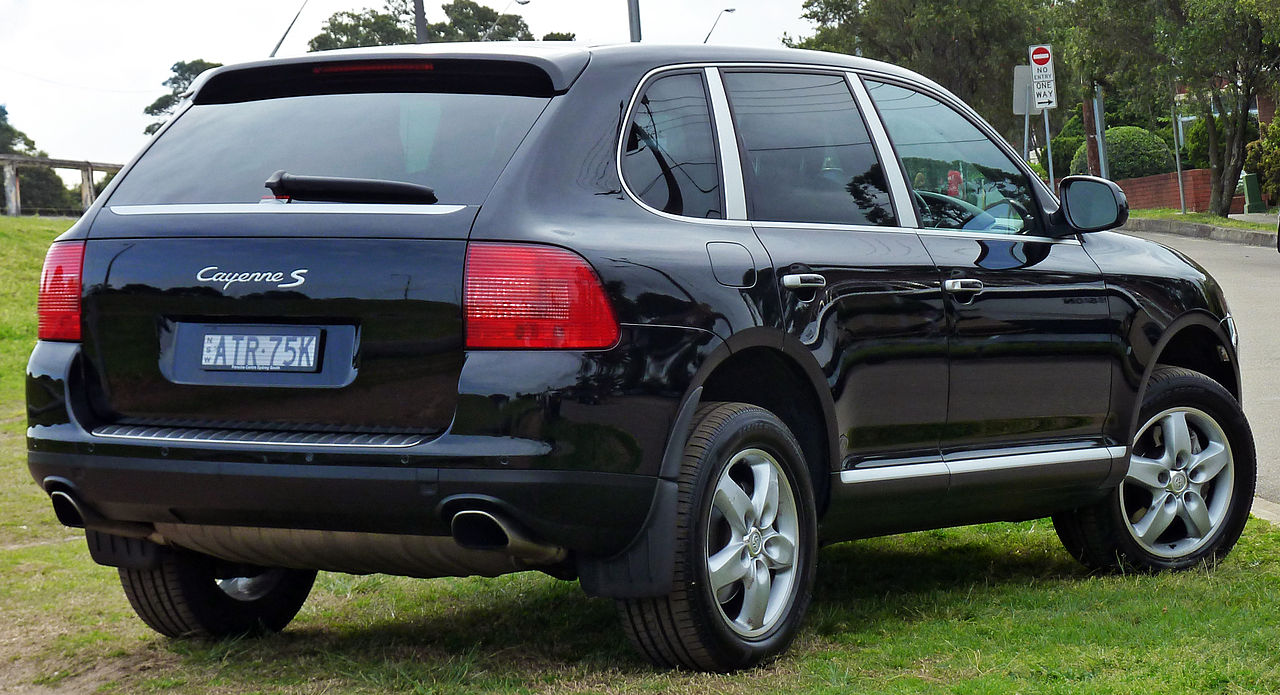
The S is powered by a 4.5L V8 engine with a dry-sump lubrication system and variable valve timing. It produces 340 hp (254 kW; 345 PS) and 310 lb⋅ft (420 N⋅m) of torque. Acceleration from 0–60 mph (0–97 km/h) takes 6.9 seconds and the top speed is 150 mph (241 km/h). Introduced only for 2006 (as a pre-GTS concept), the Cayenne S Titanium Edition was a one-year exclusive, limited production SUV featuring a lightweight steel body, featuring an aluminium hood (lighter than the one equipped on the Cayenne S), titanium-painted accented body parts, side lower rocker body panels, Sport-Quad Tip Exhaust chrome tailpipes, 19" titanium painted alloy wheels, bi-xenon headlights, two-tone interior upholstery, Porsche PCM 2.0 w/ trip computer navigation, MP3 audio and Bose cabin surround sound. Under the hood, improvements included sport-tuned suspension, an aerodynamic body package, low-range transfer case, locking differential and a 6-speed automatic Tiptronic transmission. The Cayenne S Titanium Edition is powered by the same 4.5L V8 engine that powered the Cayenne S - still producing 340 hp (254 kW; 345 PS) and 310 lb⋅ft (420 N⋅m) of torque. Acceleration is even quicker than the regular Cayenne S from 0–60 mph (0–97 km/h) at sub 6.2 seconds and the top speed is 150 mph (241 km/h)+. The GTS is powered with a 405 PS (298 kW; 399 hp) 4.8 L V8 and features a sport suspension and 21-inch (533 mm) wheels. It is lighter than the Cayenne S and has an aerodynamic body kit. The Porsche Cayenne GTS has a 0–100 km/h (62 mph) time of 5.7 seconds. A six-speed manual transmission is also offered. The first-generation Cayenne Turbo has 450 PS (331 kW), and can accelerate from 0–100 km/h (62 mph) in 5.6 seconds.[5] A Turbo S version was built in 2006 to compete with the Mercedes-Benz ML 63 AMG. The Cayenne Turbo and Turbo S include a low-range case, a locking differential, and height-adjustable, off-road suspension. The Turbo S is powered by a twin-turbocharged 4.5 L V8 that produces 521 PS (383 kW; 514 hp) and 720 N⋅m (530 lb⋅ft) of torque; Acceleration from 0–60 mph (97 km/h) takes 5.0 seconds and the top speed is 167 mph (269 km/h); It features a six-speed automatic Tiptronic transmission. In 2008 an updated Turbo model, featuring a larger 4.8-L engine, was revealed at the Beijing Auto Show. It produces 500 PS (368 kW; 493 hp) more power, and can accelerate from 0–60 mph (97 km/h) in 4.9 seconds.[7] Also revealed with the new Turbo, was a new 550 hp (410 kW) Turbo S model. Acceleration from 0–60 mph (97 km/h) for that car takes 4.7 seconds and it can be had with optional ceramic composite brakes. Porsche has sold a diesel version of the Cayenne, powered by a 3.0-L V6 VW TDI engine, since February 2009. The engine is rated at 240 PS (177 kW; 237 hp) and 550 N⋅m (410 lb⋅ft) of torque. The car was unveiled at the 2009 Geneva Motor Show. The diesel can accelerate from 0–60 mph (97 km/h) in 8.2 seconds. The Cayenne S Transsyberia was originally a racing vehicle designed for Transsyberia rally, only 26 were built. The street version was later built to commemorate Porsche's victory in the Transsyberia rally. It is a variant with the 399 hp (298 kW) direct-inject 4.8-L V8 from the Cayenne GTS. Sales began in January 2009, with a targeted production run of 600 road vehicles worldwide (285 for North America), but far fewer were actually built (102 for USA, 17 for Canada including 3 which were 6spd manual). In May 2009, a limited edition version based on the Cayenne GTS was introduced, designed by Porsche Design Studio and included a Porsche Design chronograph Type P’6612. Production was limited to 1000 units, 100 in the USA.
The second-generation Porsche Cayenne went on sale in April–May 2010 as a 2011 model, with an official debut at the 2010 Geneva Motor Show. In preparation for the unveiling, the Cayenne production facility in Leipzig, Germany, closed in December 2009 to commence factory retooling for the new model, a process that took 2–3 months. The 2011 Porsche Cayenne is larger than its predecessors, but features a more slanted rear window, less upright windshield, a more sloping roofline, door-mounted mirrors, smaller windows at the rear of the vehicle, headlights inspired by the Carrera GT, taillights that extend onto the car's tailgate, LED daytime running lights and a vastly redesigned interior much like the Panamera. The 2011 Cayenne is almost 250 kg (551 lb) lighter than the previous models due to removing the low-range transfer case making it slightly more fuel efficient than the previous lineup. More use of aluminium and magnesium too helped shave weight. Despite its lower stance, the new vehicle's off-road capabilities have been retained without compromising the street performance-oriented layout and design. In addition to a diesel offering, a hybrid version is available. Also, model year 2013 - 2016 diesel Porsche Cayennes are included in the Volkswagen emissions scandal. Standard features of the 2011 Porsche Cayenne include air conditioning with dual-zone climate controls, interior air filter, tilt/telescopic leather-wrapped steering wheel with radio controls, cruise control, leather upholstery, eight-way power front seats, outside-temperature indicator, and universal garage door opener in the base model. The Cayenne S adds a power sunroof and memory for the driver's seat. The Cayenne GTS added an optional rearview camera, keyless access and start, and memory system. Finally, the most upscale Cayenne Turbo and Turbo S added a navigation system with voice recognition, optional four-zone climate controls, heated rear seats, premium sound system with six-disc CD changer. The Cayenne's naturally aspirated and turbocharged V8 engines are shared with the Panamera and have been upgraded for faster acceleration times with more horsepower and torque, as well as more powerful direct-injection technology to improve efficiency. The base Cayenne model Cayenne is tuned to offer 300 hp (224 kW). The Cayenne comes powered by a 3.6-L VR6 engine producing 300 PS (221 kW; 296 hp), the Cayenne S features the same 4.8-L V8 in the Panamera S models producing 400 PS (294 kW; 395 hp) and the Cayenne Turbo comes with Panamera Turbo's 4.8 L twin turbo V8 producing 500 PS (368 kW; 493 hp). The Cayenne S Hybrid uses an Volkswagen-sourced 3.0-L V6 engine producing 333 PS (245 kW; 328 hp), paired with a nickel metal hydride battery capable of 47 PS (35 kW; 46 hp), for a total of 380 PS (279 kW; 375 hp). A manual gearbox serves as the standard transmission system on the base Cayenne, with all other models featuring an eight-speed Tiptronic as standard equipment. The low-range transfer case found in the previous generation has been removed. All vehicles will feature about 10% less weight than their predecessors, 70 kg worth of standard equipment in excess of that found on the current model and a more heavily contoured rear bench. Available Porsche Dynamic Chassis Control (PDCC) active anti-roll bars, Adaptive air suspension and Porsche Active Suspension Management (PASM). In September 2012 Porsche announced the Cayenne S Diesel. This model is fitted with the Volkswagen 4.1-L V8 TDI engine. In October 2012, Porsche confirmed the addition of a new Cayenne Turbo S. In July 2014, Porsche launched a facelifted Cayenne range, with minor exterior alterations and new power-train options, including a plug-in E-Hybrid and downsizing of the S model's 4.8-L V8 to a turbocharged 3.6-L V6. At the IAA 2005, Porsche announced it would produce a hybrid version of the Cayenne before 2010 (Porsche Cayenne Hybrid). Two years later, at the IAA 2007, Porsche presented a functioning Cayenne Hybrid and demonstration model of the drivetrain. Notable modifications to this car include an electric vacuum pump and hydraulic steering pump, allowing the car to function even when the engine is deactivated. A 288-volt nickel metal hydride battery is placed under the boot floor, occupying the space normally used for a spare tire. The production version, called the 'S' Hybrid, was launched in 2010, with a 3.0-L petrol V6 linked with an electric motor to achieve CO2 emissions of 193 g/km. The S Hybrid was launched in the U.S. market in November 2010. In July 2014, Porsche announced the launch of the Porsche Cayenne S E-Hybrid, a plug-in hybrid with an all-electric range between 18 and 36 km (11 and 22 mi) under the New European Driving Cycle (NEDC) standard. The plug-in model displaced the Cayenne S Hybrid from the line up, and it is part of the revised range. The Cayenne S E-Hybrid is the first plug-in hybrid in the premium SUV segment, allowing Porsche to become the first automaker with three production plug-in hybrid models. Deliveries in Germany were scheduled to begin in October 2014. Sales in the U.S. began in November 2014. On 1 May 2017, a 2017 Porsche Cayenne S Diesel set the Guinness World Record for heaviest aircraft pulled by a production car. The Cayenne towed a 265-ton Air France Airbus A380 to a distance of 42 meters, breaking the previous 2013 record of a Nissan Patrol towing a 170-ton Ilyushin Il-76 to a distance of 50 meters. After the attempt Porsche repeated the test using a petrol-powered Cayenne Turbo S with 800 Nm of torque, 50 Nm less than the S Diesel, in an effort to prove the Cayenne's remarkable ability.
The third-generation Porsche Cayenne, which was redesigned from front to back and now bears more of a resemblance to the 911, was revealed on August 29, 2017, as a 2019 model, based on the Volkswagen Group MLB platform. A model with a more rakish roofline called the Cayenne Coupé became available in 2019. It was revealed during the 2019 Shanghai Auto Show in April 2019. At launch, there were two models, the Cayenne Coupé and Cayenne Turbo Coupé. In June 2021, a Porsche Cayenne Turbo GT lapped 7:38:925 at Nürburgring Nordschleife. The car was driven by test driver Lars Kern. On June 30, 2021, Porsche introduced the Cayenne Turbo GT version. It uses a 4.0-litre twin-turbo V8 engine and claimed 0–100 km/h (62 mph) in 3.3secs/0–60 mph (97 km/h) in 3.1secs. It is equipped with 22-inch wheels with Pirelli P Zero Corsa tyres.[38] Ride height is 18mm lower and total vehicle height is 30mm lower.

Wednesday, November 15, 2017

Top picks for luxury 4x4s

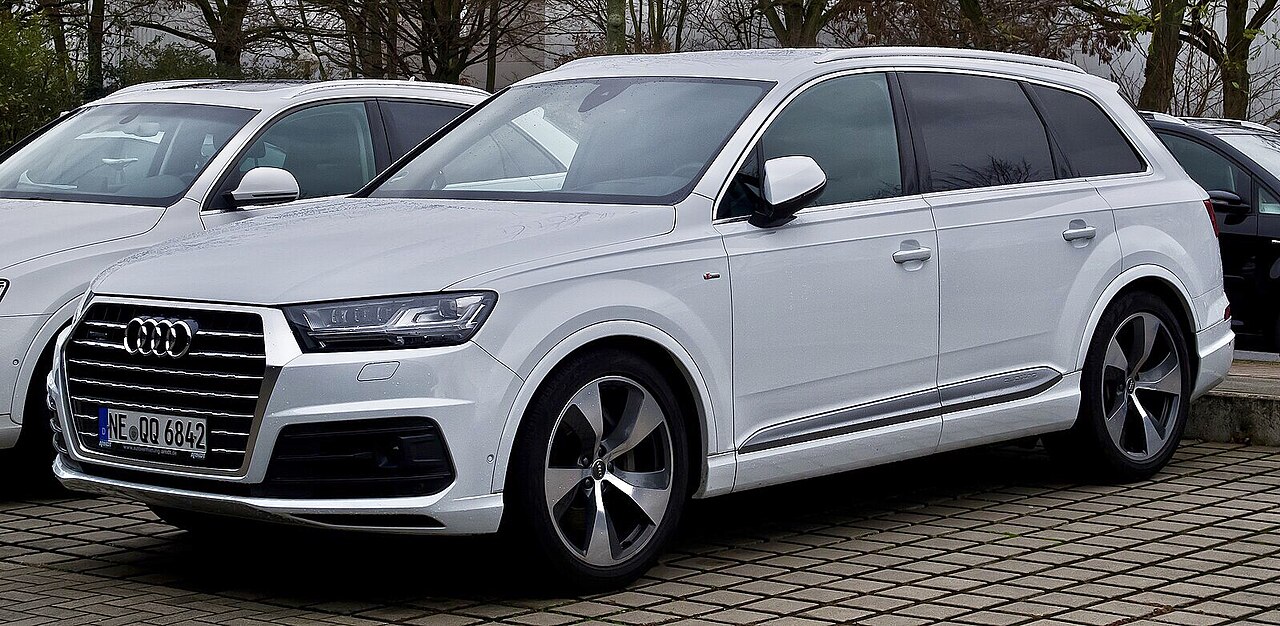
Audi Q7 3.0 TDI quattro S-line (II) – Frontansicht, 3. Januar 2016, Düsseldorf.jpg

Audi Q7

Likes: The interior has been vastly improved along with on-road dynamics and seating space for seven.

Dislikes: Typical bland Audi design cues. The TDI is greatly missed.

Overall: It drives way better than it looks.


Jaguar F-Pace

Likes: It's striking to look at and to drive. The supercharged six-cylinders are fast but the diesel makes the most sense financially.

Dislikes: The infotainment system is dreadful.

Overall: Jaguar is moving into a direction that we are loving.

2014 BMW X5 (F15) xDrive30d wagon (2015-06-27) 01.jpg

BMW X5

Likes: This crossover quite literally defies logic with its excellent road holding manners and powerful range of engines.

Dislikes: It can get expensive very quickly. Volvo has BMW beat in the style department.

Overall: Wait for the next generation of the X5 which should be around the corner.

Lexus RX 450h F Sport (IV) – Frontansicht, 14. Februar 2016, Düsseldorf.jpg

Lexus RX

Likes: Refined and powerful range of engines. Interior is very refined and the overall build quality is top notch.

Dislikes: Styling is a little off-putting. It's not all that engaging to drive, hybrid premium over the rest of the range.

Overall: It's all style and dull everything else, but at least it's super reliable and well built.

FoS20162016 0624 132759AA (27608360690).jpg

Maserati Levante

Likes: Sleek styling with an interior that's classy in its own right. The turbo engines offer the oomph you'd expect from Maserati but the practicality of a crossover body style.

Dislikes: It doesn't have the flamboyancy that Maserati is known for. Build quality and some materials used in interior look iffy and feel it too.

Overall: FCA iffy quality ruins what is essentially an excellent crossover.

2014 Porsche Cayenne (92A MY14) GTS wagon (2015-08-07) 01.jpg

Porsche Cayenne

Likes: Dare we say the benchmark of performance crossovers? Dynamically and performance wise it defies logic like crazy! Plus the interior is top notch in quality.

Dislikes: There's so to choose from and the best ones start at the GTS and higher. Porsche is stingy on standard kit but the price of admission is seriously expensive.

Overall: The GTS and turbo versions are the creme de la creme of the range.


Tesla Model X

Likes: The styling inside out is a is futuristic and we love it. Comfortable for seven and you can also option for a five-seat version. Insanely quick acceleration and on-road dynamics.

Dislikes: We have yet to test drive one.

Overall: It's expensive to buy but so worth it if you have the means to keep it recharged overnight.

Saturday, October 14, 2017

Crossovers we can't wait to test drive (Part one)

Volvo XC40

Volvo XC40 

The XC40 is just a smaller version of the XC90 and we absolutely love the way it looks from every angle. The engine that will be offered at launch will be a T5 pumping out 248hp and standard all-wheel-drive. We haven't heard much information about whether or not front-wheel-drive will be the standard form, but the starting price is very attractive ($35k) and competitive towards the Audi Q3 and BMW X1. 

Jaguar E-Pace IMG 0813.jpg

Jaguar E-Pace 

Jaguar/ Land Rover have been on a bit of a design home run marathon. The new Disco and Velar are both outstanding looking 4x4s. What we loved the most is the F-Pace which took elements of the F-Type and made it work in the form of a crossover. The E-Pace, which will compete with cars like the BMW X1 and Volvo XC40 will have a very heavily competitive segment to fight in, but the 2-liter turbo four standard with 248hp and 296hp should have no trouble luring buyers who seek performance and still care about style. 

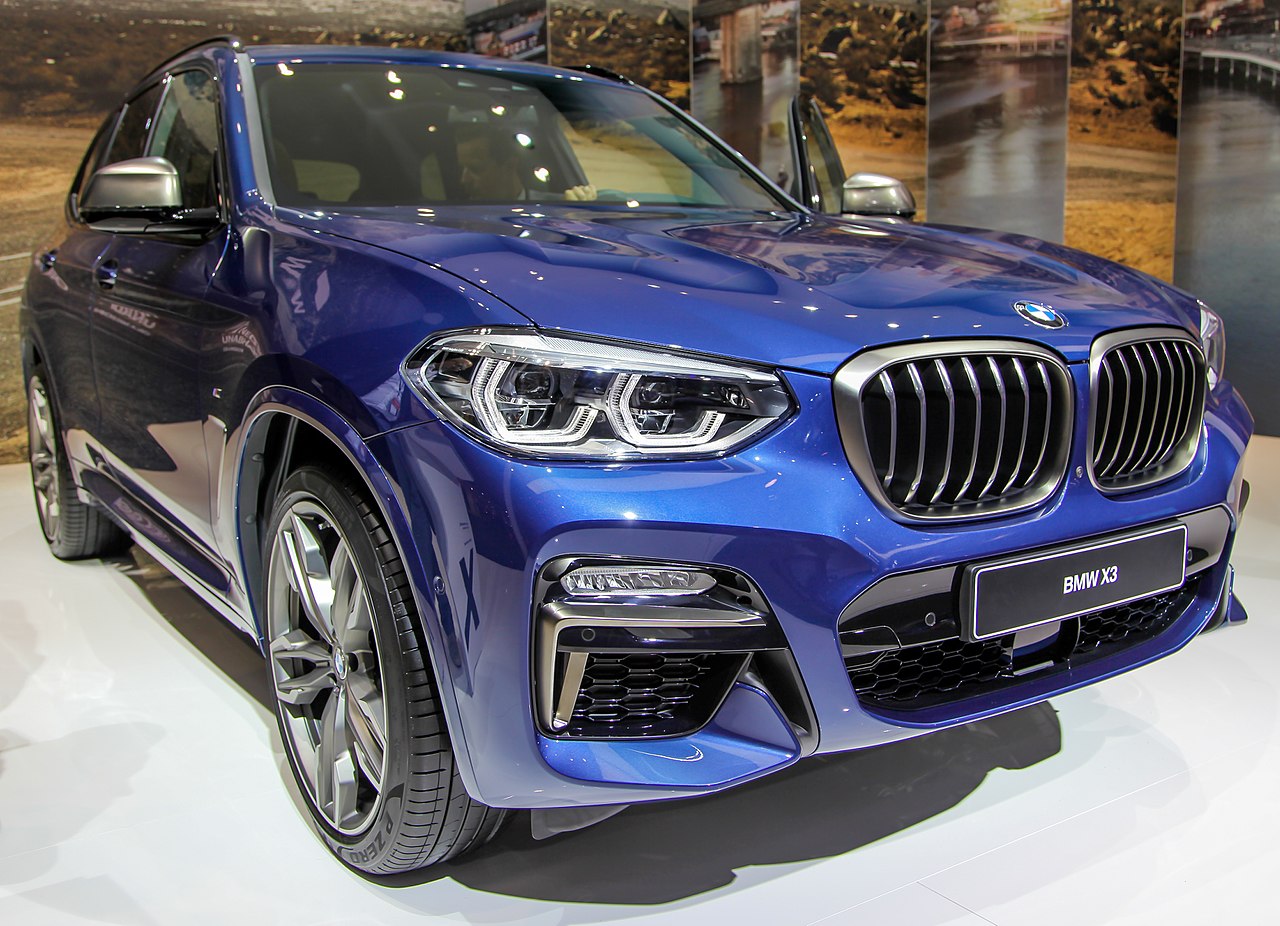
BMW X3 M40i IMG 0377.jpg

BMW X3 

The next generation of the X3 has finally made an appearance. It's been quite literally seven-years since the second generation appeared and it's been long overdue despite the few updates the X3 has received over the years. The new X3 will use the updated 2-liter turbo four pumping out 248hp (this seems to be the average horsepower) and an optional 3-liter turbo six-cylinder pumping out 355hp which will be dubbed the M version of the X3. We love the way the M-package looks on the new X3 and can't wait to test drive one when it goes on-sale. 

Maserati Levante S (01).jpg

Maserati Levante S

We still haven't had the opportunity to test drive this crossover. We are working with someone (sources we can't name) to get our hands on the Levante. We've been told to wait for the new 3.8 twin-turbo eight-cylinder that should be arriving sometime next year. However, our goal is to test drive the more mainstream versions first prior to the high performance so we can see what buying a cheaper Levante would be like. We love the sleek styling and the interior seems to be a hit and miss on quality (we've only been able to sit in one). 

2014 Porsche Cayenne (92A MY14) GTS wagon (2015-08-07) 01.jpg

Porsche Cayenne Turbo/ Turbo S/ GT-S 

We'd love the opportunity to test drive one of the high-performance versions of the Cayenne. We've only managed to get our hands on a entry-level Cayenne with a 3.6 six-cylinder pumping out 300hp. It seems very hard to find places willing to let us test drive one, even if it's just around the corner and back. The next generation of the Cayenne is around the corner, and it looks light years better inside out. We hope that it lives up to the hype that we've read about in several reviews. 


Ford Eco Sport 

We know that it's just a crossover version of the Fiesta, but we do find the styling rather cute. The 1-liter ecoboost three-cylinder engine is the one that sparks our curiosity the most. It has less horsepower than an HRV but running costs should be lower also thanks to a turbo and high torque at low revs. This pint sized crossover should be urban friendly and has a very attractive starting price under $20k. (Sourced from Ford USA website.)