What's On

Showing posts with label Smart Fortwo. Show all posts

Saturday, December 24, 2022

Devon test drives a Smart Car... with a sunroof.


Likes: Small size makes it easy to park in tight parking spaces, one of the cheapest convertibles you can purchase, you'll stand out everywhere you go.

Dislikes: You'll stand out everywhere you go, transmission still jerky and slow to shift, touchy brakes makes smooth stops hard to accomplish, somewhat disappointing gas milage maybe a let down.

Overall: The Fortwo has a charm that no other car has. But it ruins your driving experience with a slow shifting transmission, and oddly modulated brakes that makes stopping smoothly difficult.

Devon M 

Thursday, February 3, 2022

Fun facts about Smart Fortwo

1. The concept for the Smart car started in the early 1970’s.smart car facts Mercedes-Benz engineer Johann Tomforde began to explore city car concepts and designs. He created the first concept sketch, but it wasn’t until the 1990’s that Mercedes assembled a team to start the design process. They studied how to make the vehicles efficient based on how people would use them in and around the city, and how they could improve their overall driving experience. They were all about innovation and driver experience from the very beginning. 2. The “timing” is right for Smart cars The Smart brand was officially born when successful Swiss watchmaker Swatch and established German automaker Mercedes Benz joined forces. Daimler-Benz agreed to manufacture the vehicles, helping the watchmaker get into the auto business. Their microcar name, Smart, is an acronym for “Swatch Mercedes Art.” 3. Smart cars have been around longer than you realize. The first Smart brand microcar was in production by 1994, but not made for sale in the United States until 2008. The United States was the 37th country to sell Smart cars and sold just under 25,000 units their first year of sales. 4. These cars have city smarts. Since microcars were created to be city vehicles, the small size was a huge part of the design. The original Smart car sketch measures 8.8 feet long, and the current models manufactured measure in at 101.6″ which is just under 8.5 feet in length. They are also very narrow measuring in at 65.5″ wide which is just under 5.5 feet. 5. Smart keeps it simple. The Smart car brand offers limited vehicle models, two of which are named after their passenger capabilities; The Fortwo, the Forfour, and the Brabus. They come in a coupe or a cabriolet body style and have different tiers such as pure, passion, prime, or proxy. Their Proxy model is the highest option level you can get, and their most expensive Twofor model is still under $30,000 making them very affordable for such a trendy car. Unfortunately, the only models available in the U.S currently are the Fortwos. 6. The Smart car takes a cue from the VW Beetle. The Smart car is a rear-engine, rear wheel drive car, and the package level and price have an impact on horsepower; the higher the cost, the more power you will have available. If you get the newly released fully electric version, it will come with a three-phase synchronous motor that has 80hp and goes a top speed of 81mph for a full range of 58 miles. 7. Smart is tougher than it looks.smart car facts Microcars have to have excellent safety features in place, and the Tridion Safety Cell frame is Smart car’s claim to fame. They once had a commercial featuring a large SUV placed on top of the frame in the middle of the street. While consumers were shocked to see how sturdy the Smart car frame was, the brand was later accused of photoshopping their commercials. Smart fought back with this youtube behind the scenes video to show that their Tridion Safety Cell frames are in fact that tough:

Friday, June 15, 2018

Smart Fortwo (first generation brief history)


Smart Fortwo passion front.JPG


The first generation, build series W450, debuted in 1998 and received a facelift in 2002.

Engine
The engines are turbocharged with three cylinders. Originally the basic petrol engine was 599 cc, and came in three versions—45 hp (33 kW), 51 hp (41 kW) and 61 hp (45 kW). The engine displacement was increased to 698 cc with the facelift in 2002, in 37 kW (50 hp) and 45 kW (61 hp) variants. The turbo-diesel engine had 799 cc displacement giving 30 kW (41 hp).

Models
The Fortwo is available as a coupe or cabriolet, originally called the "city coupe" & "city cabrio", now the "Fortwo" & "Fortwo cabrio", introduced in 2000 and restyled in 2002. Trim levels include the Pure, Pulse, and Passion. Pure models are fitted with the standard audio system but nothing else, Pulse models are fitted with alloy wheels, panoramic glass roof and paddle-shifters on the steering wheel (2004+), and finally, the Passion models are fitted with air-conditioning and ability to select between fully automatic and sequential gearbox.

Limited 1: The first limited edition of which 7500 were made. All left-hand drive. Released at the original launch in 1998. Black Tridion cell and White body panels. Alloy wheels, Limited 1 insignia, blue interior with beige leather finishings. Supplied with certificate showing which number out of the 7500, and a plaque with this number below the windshield on the inside.

SE: This was the second limited edition that smart made, it was sold in mid 2001 (Mk5) and all were left hand drive. They were all Pulse specification with a redesigned steering wheel, soft touch, air conditioning, CD Multichanger and drinks holder as standard. The engine power was upped to 61BHP from the standard 55BHP normally applied to the Pulse in the 600cc G1 cars. It was designated by a SE badge on the boot and was sold in Bay Grey with grey interior and dark blue twist fabric.

Cdi: has the world's smallest production common-rail direct injection diesel engine. With a consumption of 3.3 litres (NEDC) per 100 kilometres (71.2 mpg) and CO2 emissions of just 88 grams per kilometre, it has the lowest current production car CO2 emissions worldwide, since Audi and Volkswagen retired its 3-cylinder cars, the A2 1.2 TDI and the Lupo 1.2 TDI respectively.


Crossblade: a 2002 limited-edition variant of the city cabrio, a roadster without a windshield, roof or conventional doors. Its weight was still 740 kilograms (1,630 lb). The Brabus-tuned engine developed 52 kW (71 PS) from its 599 cc engine. After Robbie Williams purchased Crossblade number 008, Smart began a marketing association with him, using him to promote the brand and the new Forfour.

IAA2005-smart-crosstown-frontohne.jpg

Crosstown: a convertible with a foldable windshield based on the Fortwo, was presented at IAA Frankfurt in 2005. No plans have yet been announced to bring this model to market.
Nightrun: includes instrument panels, steering wheel, paddles, shifter, Monoblock VI alloy wheels, leather seats and engine upgrade from Brabus. Edition Nightrun is only available with the Fortwo coupé/cabrio.

Truestyle: painted in metallic ruby red, available in pure trim.

i-move: a special edition run of 70 Fortwo cabrios, based on the Passion cabrio specs with Brabus Monobloc VI wheels, leather interior trim, Lite White panels, an iPod cradle with special edition 20Gb 3G iPod, and an aluminium name plate on the dash confirmed its special edition status.

Forfun2 Concept: an off-road version of the Fortwo introduced at the 2005 Athens Motor Show by Greek 4x4 Rally Champion Stefan Attart. It combines the body of a Fortwo with the chassis and drivetrain of a Unimog. It sports monster truck-like 26-inch (66 cm) wheels wrapped in 1.4-metre (4.6 ft) diameter tires and winding keys where the Fortwo's rear wheels are supposed to be.


Brabus: In 2003 Smart and Brabus introduced the jointly developed version of the Fortwo with the 698cc engine. It had 75 PS (55 kW; 74 hp) of power and 110 Nm of torque. It was available in both coupe and convertible versions. It also featured wider wheels, revised front spoiler and grille, and a revised rear exhaust.


K: launched in October 2001, exclusively for the Japanese market. It was designed to fit the Japanese kei car regulations by adopting specially developed rear fenders and narrowing the track width and tire dimensions and the width reduced to 1.47 m. The engine displacement remains unchanged at 598 cc, as specified in the standard. Safety features include ESP (Electronic Stability Program) and BAS (Brake Assist System) as standard. The Smart K also facilitates the starting procedure with the Hill Start Assist that makes a starts on slopes easier. The Smart K was discontinued in November 2004.

Fortwo Edition Limited One: Featured special metallic grey body panels; silver Tridion cell; brown leather for the seating, steering wheel, and shift lever—along with matching floor mats. The model marked the launch of the W451 build series.

Sunday, May 6, 2018

Devon tries again with the Smart Fortwo

(Photo provided by Devon M) 

The Smart Fortwo is the smallest car you can buy in the U.S. The last time I test drove the car it was just very short and I really didn't get the chance to test the car and get the real potential of the vehicle. This time however I was given the Smart Fortwo as a lender car for half a day and was able to really explore and see what this car was all about. What is it like to drive a car smaller than a golf-kart? Well let's find out. 

On the road: The Smart Fortwo only comes with one engine and that's a Mitusbishi sourced 1-liter three-cylinder with 70hp. This won't wow the power hungry and surely won't wow the econo crowd either. One thing for sure about this engine is that it has enough oomph to keep this little car going. On the highway it didn't feel out of its element which was actually quite shocking. The only thing I wished was the horrible semi-automatic gearbox went away. A proper manual gearbox or even an automatic gearbox would've been more suitable. The Smart Fortwo I was given was the Brabus edition which had the funky alloy wheels and firmer suspension. The Fortwo already has a firm suspension and is quite uncomfortable due to the ultra short wheelbase. Adding a sports suspension just made things a lot worst, but at least it grabbed onto corners better than the previous version which felt like a pogo stick going to tip over. 

While in stop and go traffic the brakes also take some getting used to. If you don't push too hard the car doesn't feel like it's going to come to a complete stop. You'll have to give a firm push on the brake pedal to feel anything happen. This is an uneasy feeling for me personally because often I felt like I was going to literally roll the car forward. Eventually as you drive the car you'll get used to this.

Behind the wheel: The steering wheel is fixed and the driving position is obviously raised for better visibility. This is quite annoying because I found myself sitting closer to the steering wheel than I liked. The interior feels very airy and roomy, two passengers could sit inside without feeling like they are sitting on each other's laps. The passenger seat is pushed back from the driver's seat which is both a good and bad thing. If you are on a date and want to put your arm around that special someone you could potentially punch the person in the face. The instrumental panel is clearly labeled and easy to read. The dashboard has a no-nonsense layout and is easy to navigate. The seats were trimmed in a special leather and were quite comfortbale to sit in for long journeys. Visibility alround is very good, and this is only due to the fact that you are basically surrounded by the entire car. You could literally reach from one end with one hand and the windshield with the other. 

Overall: This is obviously a niche vehicle and it does haev its audience. Some people won't like it because it's deemed too small. While others will enjoy the easy to park size, the charming interior and the ability to grab more atteniton than a BMW. It's a great car and for what it is, it serves it's purpose well. Now if only Smart gave a proper gearbox and brakes. The Smart would be a better car to drive overall.

Saturday, October 21, 2017

Pathological hate test drives the tiny Smart Fortwo


Smart fortwo (Baureihe 453).jpg
The Smart Fortwo, the cheapest rear-wheel-drive coupe you can buy.

The sole engine choice in the Smart Fortwo is a turbocharged three-cylinder engine pumping out 89hp. It doesn't sound like much but you have to remember the Fortwo isn't a large car to begin with, and well this is just enough. The previous 1-liter three-cylinder only had 70hp and was a non-turbo, and that engine felt weak on faster paced roads, and with the sequential gearbox it didn't really help make things any better. Luckily for us, this generation comes with either a five-speed manual gearbox or a six-speed automatic. We haven't had the chance to test the manual gearbox but we did have the auto gearbox which we found it to be light years better than the old automated manual. It still isn't as great as it should be but it does the intended job well. Back to the engine, it does come with a turbo which does give you decent torque at low revs but it's a bit of an odd ball here. It has turbo lag at low revs and it does hesitate off the line.

The benefits of having the engine at the rear is that the turning circle is one of the tightest we've seen on any production car. The only other vehicle that can match the Fortwo is the Renault Twingo that's sold in Europe. It's quite easy to drive the Fortwo around town, in fact you'll enjoy zipping it around thanks to the dinky dimensions. It's slightly bigger than the outgoing version which helps make the ride comfort more real car-like. The previous Fortwo ride was way too firm and the one before that felt like it had a suspension composed of a pogo stick. When you take the Fortwo outside of city limits, it doesn't feel as composed due to the short wheelbase. It does feel composed at relaxed speeds but the seats are so comfy that you'll forget that you drove a long distance.

The interior is designed for just two people and well, the accommodations for those two people aren't bad at all. You'll find that both head room and legroom are in the bucket loads. The infotainment system isn't the best in the world, but it is easy to navigate through once you've gotten used to the interface and the menus. We do love the Euro-chic design that the Fortwo has this time around, the previous versions were more on the style rather than functionality side. But the materials used were decent quality, which we can't diss this version with either.

There are four trims to choose from. Standard Pure is the entry-level trim and is the cheapest. You do get bluetooth connectivity, power windows and door locks as well as air-con. You'll have to pay extra for alloy wheels or step up to the Pure trim which adds powered and heated mirrors, height adjustable seat  and retractable cargo cover. Passion trim gets fog lights, leather seats, panoramic sunroof, rain sensing wipers with auto headlights. Top of the range Prime adds premium sound system, paddle shifters, sports suspension and chrome exhaust tip.

The Fortwo is one of those vehicles that is perfect if you live in a congested urban area and street parking is a premium. You'll love the scratch and dent resistant body panels and also the dinky dimensions makes parking and squeezing around the city a breeze. Outside the city the Fortwo can hold its own but it feels more of a chore to drive than many of it's larger more comfortable rivals.

Likes: Euro-chic styling inside out. Improved engine and transmission as well as ride comfort. Decent space for two (no pun intended).

Dislikes: Gas mileage isn't anything to brag about. Some of the quirky charm we loved about the previous generation is gone.

Sunday, September 17, 2017

Part one of four: Cars that are best avoided (used)


Cars we feel are best avoided. Part one of four.

Jeep Compass -- 03-21-2012 2.JPG
Jeep Compass
This little Jeep was dreadful to drive. The standard 2-liter engine is sluggish with the automatic, while the 2.4 offers a bit more oomph off the line. Interior plastics were cheap feeling and the overall package the Compass offers isn’t compelling enough in our eyes. Unless you get one of these heavily discounted, you’re better off paying extra for its much better rivals. We highly suggest looking elsewhere.


Nissan Versa
Nissan prides itself in having the most inexpensive new car you can buy with the biggest rear seat in class. We do applaud Nissan for the roomy rear seat and low running costs, but those two features don’t really make up for how unappealing the styling of the Versa is. The 1.6 offers decent pace around town but you’ll struggle with it on faster paced roads. The standard trim offers an antiquated four-speed automatic and the higher trims don’t even feel worth the price tag. Paying more than $16k for is a false economy.
2008 Smart ForTwo Passion convertible -- 04-22-2011 2.jpg

Smart Fortwo
The Smart Fortwo actually isn’t a bad concept. A small two-seat vehicle with dent resistant body panels for tight urban areas. We really do like that idea, but the execution of the car is appalling even for standards set by Mercedes. The gearbox is the biggest let down. Up shifts are woefully slow and jerky unless you ease your foot off the accelerator pedal between each shift. Ride comfort is firm due to the small wheelbase and yet the handling is sloppy if you push it anywhere near its limits. Running costs aren’t low either because the engine requires premium fuel. We strongly suggest waiting for the next generation Fortwo which will get a proper gearbox and hopefully a smoother ride.
BMW 316i (F30) registered May 2013 1598cc 02.JPG

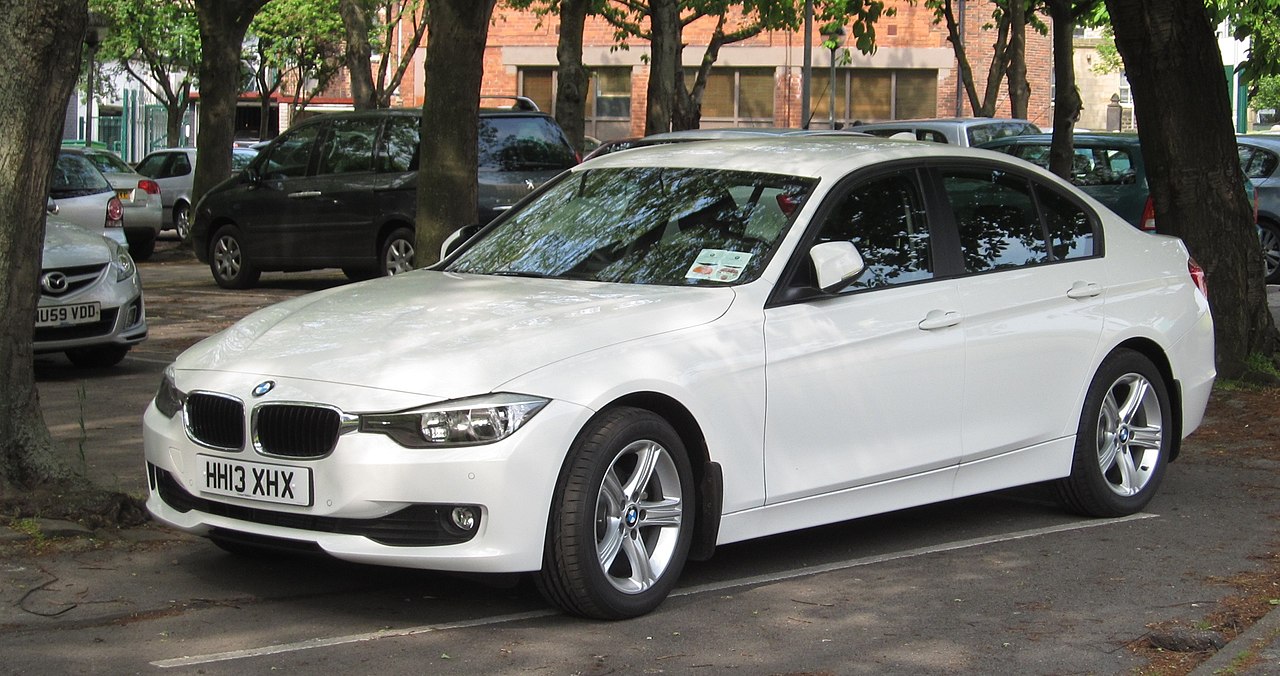
BMW 320i
We have nothing against the idea of a cheap BMW. In fact we love the idea of a cheap BMW but not when it comes in the package of a 320i. It’s not the engine that we dread because it’s smooth and flexible with decent running costs. It’s the standard kit list which disappoints. Bluetooth doesn’t even come standard. You’ll have to pay extra to remove the halogen headlights and of course it doesn’t come standard with real leather. Driving this without the adaptive M suspension is disappointing too and that option isn’t cheap either. Plus you’ll want to leave the stop/start system off because there is no smooth transition when the engine reengages. Unless you have to have the BMW badge we strongly suggest looking at its indirect rivals first because you get more money for similar money and maybe even less.

Thursday, July 13, 2017

Devon drives a Smart Fortwo for a day (Used)

2008 Smart ForTwo Passion convertible -- 04-22-2011 2.jpg


The Smart Fortwo has been sold in Europe for many years and has finally graced our roads here in the U.S. It's not the largest of cars and it certainly does turn heads no matter where it goes. The Smart Fortwo is here to show that small cars are just as cool as larger vehicles. But is the Smart Invasion all just a hype?

Performance: There's only one engine available, its a 1-liter three-cylinder with 70hp. It's not the most refined engine, and isn't the most powerful. Performance is only so-so, but then you'll be missing the point. This car is aimed more towards urban use not highway driving. The Fortwo makes the most of its engine output, but a more powerful engine option would be desired.

Ride & Handling: The Fortwo has an overly firm ride. Things get even worse when you hit a bump. The suspension does very little to soak anything up, giving the passengers an unforgiving ride. Handling isn't good either for such a small car. The front wheels lose grip very quickly.

Refinement: The three-cylinder engine emits a distinct thrum whenever you touch the accelerator. The sound is far from unpleasant, but can make long highway journeys. The semi-automatic gearbox is the biggest let down. Shifting between gears is jerky and slow to respond, unless you ease your foot off the accelerator between shifts.

Behind the wheel: The interior is very well laid out. All the controls and dials are within easy reach of the driver seat. There are plenty of user-friendly buttons and dials. However, the driving position isn't for everyone because there's no seat height adjustment. The steering wheel is fixed, making the driving position awkward for some drivers.

Space & Practicality: Wide opening doors means getting in and out of the Fortwo is a breeze. There's plenty of room for two passengers, but cargo space is limited. The boot isn't massive, but there's plenty of room for a few bags. You'll have to fold down the passenger seat to squeeze anything more. The cabriolet roof retracts at the touch of a button. But you'll have to remove the roof bars for a full cabriolet experience.

Equipment: The Fortwo comes with a very large safety kit. The cabriolet adds power windows, ESP, and traction control to help keep the Fortwo stable under mixed driving. The Rev gauge and clock are a nice addition but cost extra. Optional leather seats and automatic headlights are reasonably priced and worth considering.

Buying & owning: The Fortwo fuel economy isn't all that impressive. There are rivals that are bigger and offer more in everything the Fortwo falls short in. Since the Fortwo requires premium fuel, your fuel bill may be higher than you'd desire. Resale value should be a worry, as Smart doesn't have much of a image in the U.S.

Quality & Reliability: Smart is built by Mercedes Benz. Most materials used are designed to last long wear and tear. However, the gearbox may cause some problems. Most owners have complained frequent gearbox faults in the JD Power Survey.

Safety & Security: The Fortwo has the most elaborate safety kit. Many features you'd have to pay extra for, or not even ask for are standard. An engine immobilizer means thieves won't be able to drive away with your Fortwo. However, Mercedes rejects deadlocks on safety grounds.

Likes: Small size means its easy to park, stylish inside out, cheapest cabriolet in the U.S.

Dislikes: Touchy brakes, jerky transmission, handling is sloppy, and the engine requires premium fuel.

The Fortwo doesn't have many strong points. The brakes are touchy, the transmission is jerky, and there's the engine that requires premium fuel. Even though there are rivals that are bigger, roomier and offer better fuel economy. The Fortwo has a charm that no other city car offers. It's stylish, easy to park and makes the most sense in tight urban areas. If your trip doesn't evolve highway driving, and want a car that stands out everywhere you go. The Smart Fortwo is the perfect car for you.

Devon M

Monday, February 21, 2011

Devon's Coverage of the Auto Show (Part Two)


Dodge Charger
Likes: Bold new exterior design, interior has a higher quality feel to it, Challenger-inspired tail lamp design.
Dislikes: Styling may appear too 'in your face' for some, even in the sportiest form, there are still better alternatives out there.
Overall: If you desire big American V8 muscle. This is the car for you.


Mitsubishi i-MiEV
Likes: An all electric vehicle, offers plenty of space for such a small car, designed for urban city traffic.
Dislikes: Range limits practicality, hard to justify high asking price for such a small car, futuristic styling isn't for everyone.
Overall: The future of electric cars is here.


Volkswagen Passat
Likes: More affordable than previous generation, tons of interior space, trunk space is very good.
Dislikes: Design is just bland, interior lacks Volkswagen's high quality feel, looks like an oversized Jetta.
Overall: The Americanized Passat just doesn't feel like a Volkswagen.


Saab 9-5 Sedan
Likes: Very handsome styling inside out, drastic change from the previous generation, still quirky - still Saab.
Dislikes: No more center console ignition switch, feels more like a luxury sedan.
Overall: Saab is moving in the right direction.


BMW 5 Series GT
Likes: Rear tailgate that can be opened like a sedan or hatchback, command seating in the rear, simple minimalistic approach to instrumental panel design.
Dislikes: Too expensive for what it is - by the way what is it supposed to be?
Overall: A BMW that creates a niche car that's creative, but just a tad over-priced.


Smart Fortwo ED
Likes: Fully electric motor, interior is oddly spacious for such a small car.
Dislikes: Still too small for some taste, can only be leased not purchased.
Overall: The Smart car should've been electric to begin with!


Porsche Panamera
Likes: Upscale interior, very distinct exterior design, plenty of power to satisfy hardcore Porsche Fans.

Dislikes: Some angles aren't very appealing, may induce sticker shock, options can sky rocket the price.

Overall: If you desire a roomy Porsche but dislike the Suv. This maybe the Porsche for you.


Volkswagen Tiguan
Likes: Very stylish exterior design, very spacious interior, rear seats can slide back to increase legroom.
Dislikes: Volkswagen premium pricing, interior is bland and lacks the high quality feel you'd expect.
Overall: The Jetta Wagon offers the same cargo space, but is far less expensive.

Devon M