What's On

Wednesday, August 9, 2023

Quick facts - USA

Chesapeake is an independent city in Virginia, United States. At the 2020 census, the population was 249,422, making it the second-most populous city in Virginia, the tenth-largest in the Mid-Atlantic, and the 90th-most populous city in the United States. Chesapeake is included in the Hampton Roads metropolitan area.
Richmond, the capital of Virginia, is among America’s oldest major cities. Patrick Henry, a U.S. Founding Father, famously declared “Give me liberty or give me death” at its St. John's Church in 1775, leading to the Revolutionary War. The White House of the Confederacy, home of Confederate President Jefferson Davis during the Civil War, is now a museum in Court End, a neighborhood known for Federal-style mansions.
Washington, DC, the U.S. capital, is a compact city on the Potomac River, bordering the states of Maryland and Virginia. It’s defined by imposing neoclassical monuments and buildings – including the iconic ones that house the federal government’s 3 branches: the Capitol, White House and Supreme Court. It's also home to iconic museums and performing-arts venues such as the Kennedy Center.
Baltimore is a major city in Maryland with a long history as an important seaport. Fort McHenry, birthplace of the U.S. national anthem, “The Star-Spangled Banner,” sits at the mouth of Baltimore’s Inner Harbor. Today, this harbor area offers shops, upscale crab shacks and attractions like the Civil War–era warship the USS Constellation and the National Aquarium, showcasing thousands of marine creatures.
New York City comprises 5 boroughs sitting where the Hudson River meets the Atlantic Ocean. At its core is Manhattan, a densely populated borough that’s among the world’s major commercial, financial and cultural centers. Its iconic sites include skyscrapers such as the Empire State Building and sprawling Central Park. Broadway theater is staged in neon-lit Times Square.
Boston, officially the City of Boston, is the capital and largest city of the Commonwealth of Massachusetts and the cultural and financial center of the New England region of the Northeastern United States. The city boundaries encompass an area of about 48.4 sq mi and a population of 675,647 as of 2020.
Los Angeles is a sprawling Southern California city and the center of the nation’s film and television industry. Near its iconic Hollywood sign, studios such as Paramount Pictures, Universal and Warner Brothers offer behind-the-scenes tours. On Hollywood Boulevard, TCL Chinese Theatre displays celebrities’ hand- and footprints, the Walk of Fame honors thousands of luminaries and vendors sell maps to stars’ homes.
Oakland is a city on the east side of San Francisco Bay, in California. Jack London Square has a statue of the writer, who frequented the area. Nearby, Old Oakland features restored Victorian architecture and boutiques. Near Chinatown, the Oakland Museum of California covers state history, nature and art. Uptown contains the art deco Fox and Paramount theaters, restaurants, bars and galleries.
Portland, Oregon’s largest city, sits on the Columbia and Willamette rivers, in the shadow of snow-capped Mount Hood. It’s known for its parks, bridges and bicycle paths, as well as for its eco-friendliness and its microbreweries and coffeehouses. Iconic Washington Park encompasses sites from the formal Japanese Garden to Oregon Zoo and its railway. The city hosts thriving art, theater and music scenes.
Seattle, a city on Puget Sound in the Pacific Northwest, is surrounded by water, mountains and evergreen forests, and contains thousands of acres of parkland. Washington State’s largest city, it’s home to a large tech industry, with Microsoft and Amazon headquartered in its metropolitan area. The futuristic Space Needle, a 1962 World’s Fair legacy, is its most iconic landmark.
Las Vegas, often known simply as Vegas, is the 25th-most populous city in the United States, the most populous city in the state of Nevada, and the county seat of Clark County. The Las Vegas Valley metropolitan area is the largest within the greater Mojave Desert, and 2nd-largest in the Southwestern United States.
Phoenix is the capital of the southwestern U.S. state of Arizona. Known for its year-round sun and warm temperatures, it anchors a sprawling, multicity metropolitan area known as the Valley of the Sun. It's known for high-end spa resorts, Jack Nicklaus–designed golf courses and vibrant nightclubs. Other highlights include the Desert Botanical Garden, displaying cacti and numerous native plants.
Denver, the capital of Colorado, is an American metropolis dating to the Old West era. Larimer Square, the city’s oldest block, features landmark 19th-century buildings. Museums include the Denver Art Museum, an ultramodern complex known for its collection of indigenous works, and the mansion of famed Titanic survivor Molly Brown. Denver is also a jumping-off point for ski resorts in the nearby Rocky Mountains.
Detroit is the largest city in the midwestern state of Michigan. Near Downtown, the neoclassical Detroit Institute of Arts is famed for the Detroit Industry Murals painted by Diego Rivera, and inspired by the city’s ties to the auto industry, giving it the nickname "Motor City." Detroit is also the birthplace of Motown Records, whose chart-topping history is on display at their original headquarters, Hitsville U.S.A.
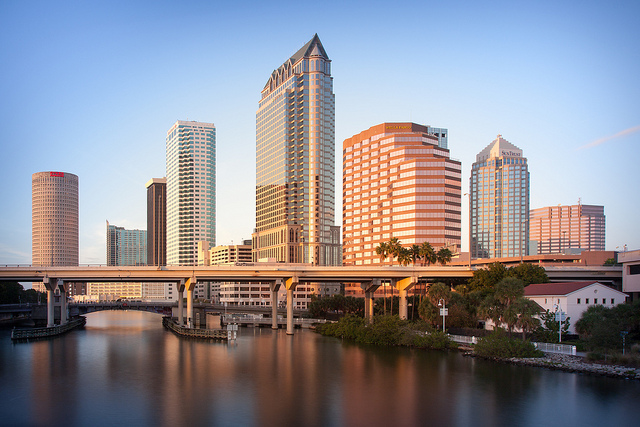
Tampa is a city on Tampa Bay, along Florida’s Gulf Coast. A major business center, it’s also known for its museums and other cultural offerings. Busch Gardens is an African-themed amusement park with thrill rides and animal-viewing areas. The historic Ybor City neighborhood, developed by Cuban and Spanish cigar-factory workers at the turn of the 20th century, is a dining and nightlife destination.

Thursday, July 6, 2023

Geomagnetic storm

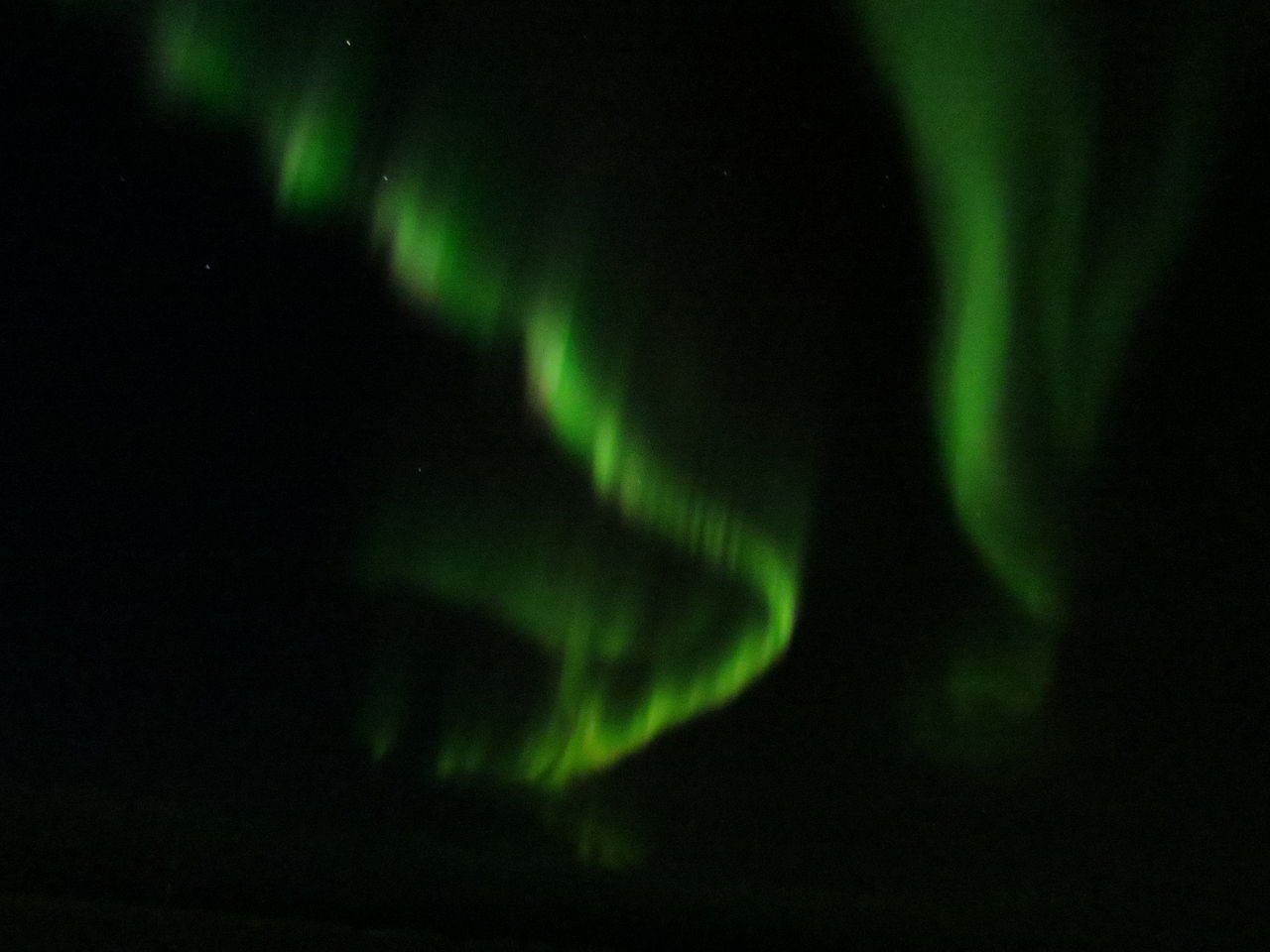
A geomagnetic storm, also known as a magnetic storm, is a temporary disturbance of the Earth's magnetosphere caused by a solar wind shock wave and/or cloud of magnetic field that interacts with the Earth's magnetic field. The disturbance that drives the magnetic storm may be a solar coronal mass ejection (CME) or (much less severely) a co-rotating interaction region (CIR), a high-speed stream of solar wind originating from a coronal hole. The frequency of geomagnetic storms increases and decreases with the sunspot cycle. During solar maximum, geomagnetic storms occur more often, with the majority driven by CMEs. The increase in the solar wind pressure initially compresses the magnetosphere. The solar wind's magnetic field interacts with the Earth's magnetic field and transfers an increased energy into the magnetosphere. Both interactions cause an increase in plasma movement through the magnetosphere (driven by increased electric fields inside the magnetosphere) and an increase in electric current in the magnetosphere and ionosphere. During the main phase of a geomagnetic storm, electric current in the magnetosphere creates a magnetic force that pushes out the boundary between the magnetosphere and the solar wind. Several space weather phenomena tend to be associated with or are caused by a geomagnetic storm. These include solar energetic particle (SEP) events, geomagnetically induced currents (GIC), ionospheric storms and its disturbances that cause radio and radar scintillation, disruption of navigation by magnetic compass and auroral displays at much lower latitudes than normal. The largest recorded geomagnetic storm, the Carrington Event in September 1859, took down parts of the recently created US telegraph network, starting fires and electrically shocking telegraph operators. In 1989, a geomagnetic storm energized ground induced currents that disrupted electric power distribution throughout most of Quebec and caused aurorae as far south as Texas.
A geomagnetic storm is defined by changes in the Dst (disturbance – storm time) index. The Dst index estimates the globally averaged change of the horizontal component of the Earth's magnetic field at the magnetic equator based on measurements from a few magnetometer stations. Dst is computed once per hour and reported in near-real-time. During quiet times, Dst is between +20 and −20 nano-Tesla (nT). A geomagnetic storm has three phases: initial, main and recovery. The initial phase is characterized by Dst (or its one-minute component SYM-H) increasing by 20 to 50 nT in tens of minutes. The initial phase is also referred to as a storm sudden commencement (SSC). However, not all geomagnetic storms have an initial phase and not all sudden increases in Dst or SYM-H are followed by a geomagnetic storm. The main phase of a geomagnetic storm is defined by Dst decreasing to less than −50 nT. The selection of −50 nT to define a storm is somewhat arbitrary. The minimum value during a storm will be between −50 and approximately −600 nT. The duration of the main phase is typically 2–8 hours. The recovery phase is when Dst changes from its minimum value to its quiet time value. The recovery phase may last as short as 8 hours or as long as 7 days. The size of a geomagnetic storm is classified as moderate (−50 nT > minimum of Dst > −100 nT), intense (−100 nT > minimum Dst > −250 nT) or super-storm (minimum of Dst < −250 nT). Geomagnetic storm intensity is reported in several different ways, including: K-index A-index The G-scale used by the U.S. National Oceanic and Atmospheric Administration, which rates the storm from G1 to G5 (i.e. G1, G2, G3, G4, G5 in order), where G1 is the weakest storm classification (corresponding to a Kp value of 5), and G5 is the strongest (corresponding to a Kp value of 9). In 1931, Sydney Chapman and Vincenzo C. A. Ferraro wrote an article, A New Theory of Magnetic Storms, that sought to explain the phenomenon. They argued that whenever the Sun emits a solar flare it also emits a plasma cloud, now known as a coronal mass ejection. They postulated that this plasma travels at a velocity such that it reaches Earth within 113 days, though we now know this journey takes 1 to 5 days. They wrote that the cloud then compresses the Earth's magnetic field and thus increases this field at the Earth's surface. Chapman and Ferraro's work drew on that of, among others, Kristian Birkeland, who had used recently-discovered cathode ray tubes to show that the rays were deflected towards the poles of a magnetic sphere. He theorised that a similar phenomenon was responsible for auroras, explaining why they are more frequent in polar regions.
In early August 1972, a series of flares and solar storms peaks with a flare estimated around X20 producing the fastest CME transit ever recorded and a severe geomagnetic and proton storm that disrupted terrestrial electrical and communications networks, as well as satellites (at least one made permanently inoperative), and spontaneously detonated numerous U.S. Navy magnetic-influence sea mines in North Vietnam. The March 1989 geomagnetic storm caused the collapse of the Hydro-Québec power grid in seconds as equipment protection relays tripped in a cascading sequence. Six million people were left without power for nine hours. The storm caused auroras as far south as Texas. The storm causing this event was the result of a coronal mass ejected from the Sun on March 9, 1989. The minimum Dst was −589 nT. On July 14, 2000, an X5 class flare erupted (known as the Bastille Day event) and a coronal mass was launched directly at the Earth. A geomagnetic super storm occurred on July 15–17; the minimum of the Dst index was −301 nT. Despite the storm's strength, no power distribution failures were reported. The Bastille Day event was observed by Voyager 1 and Voyager 2, thus it is the farthest out in the Solar System that a solar storm has been observed. Seventeen major flares erupted on the Sun between 19 October and 5 November 2003, including perhaps the most intense flare ever measured on the GOES XRS sensor—a huge X28 flare, resulting in an extreme radio blackout, on 4 November. These flares were associated with CME events that caused three geomagnetic storms between 29 October and 2 November, during which the second and third storms were initiated before the previous storm period had fully recovered. The minimum Dst values were −151, −353 and −383 nT. Another storm in this sequence occurred on 4–5 November with a minimum Dst of −69 nT. The last geomagnetic storm was weaker than the preceding storms, because the active region on the Sun had rotated beyond the meridian where the central portion CME created during the flare event passed to the side of the Earth. The whole sequence became known as the Halloween Solar Storm. The Wide Area Augmentation System (WAAS) operated by the Federal Aviation Administration (FAA) was offline for approximately 30 hours due to the storm. The Japanese ADEOS-2 satellite was severely damaged and the operation of many other satellites were interrupted due to the storm. The solar wind also carries with it the Sun's magnetic field. This field will have either a North or South orientation. If the solar wind has energetic bursts, contracting and expanding the magnetosphere, or if the solar wind takes a southward polarization, geomagnetic storms can be expected. The southward field causes magnetic reconnection of the dayside magnetopause, rapidly injecting magnetic and particle energy into the Earth's magnetosphere. During a geomagnetic storm, the ionosphere's F2 layer becomes unstable, fragments, and may even disappear. In the northern and southern pole regions of the Earth, auroras are observable.
Magnetometers monitor the auroral zone as well as the equatorial region. Two types of radar, coherent scatter and incoherent scatter, are used to probe the auroral ionosphere. By bouncing signals off ionospheric irregularities, which move with the field lines, one can trace their motion and infer magnetospheric convection. Spacecraft instruments include: Magnetometers, usually of the flux gate type. Usually these are at the end of booms, to keep them away from magnetic interference by the spacecraft and its electric circuits. Electric sensors at the ends of opposing booms are used to measure potential differences between separated points, to derive electric fields associated with convection. The method works best at high plasma densities in low Earth orbit; far from Earth long booms are needed, to avoid shielding-out of electric forces. Radio sounders from the ground can bounce radio waves of varying frequency off the ionosphere, and by timing their return determine the electron density profile—up to its peak, past which radio waves no longer return. Radio sounders in low Earth orbit aboard the Canadian Alouette 1 (1962) and Alouette 2 (1965), beamed radio waves earthward and observed the electron density profile of the "topside ionosphere". Other radio sounding methods were also tried in the ionosphere (e.g. on IMAGE). Particle detectors include a Geiger counter, as was used for the original observations of the Van Allen radiation belt. Scintillator detectors came later, and still later "channeltron" electron multipliers found particularly wide use. To derive charge and mass composition, as well as energies, a variety of mass spectrograph designs were used. For energies up to about 50 keV (which constitute most of the magnetospheric plasma) time-of-flight spectrometers (e.g. "top-hat" design) are widely used. Computers have made it possible to bring together decades of isolated magnetic observations and extract average patterns of electrical currents and average responses to interplanetary variations. They also run simulations of the global magnetosphere and its responses, by solving the equations of magnetohydrodynamics (MHD) on a numerical grid. Appropriate extensions must be added to cover the inner magnetosphere, where magnetic drifts and ionospheric conduction need to be taken into account. At polar regions, directly linked to the solar wind, large-scale ionospheric anomalies can be successfully modeled, even during geomagnetic super-storms. At smaller scales (comparable to a degree of latitude/longitude) the results are difficult to interpret, and certain assumptions about the high-latitude forcing uncertainty are needed. It has been suggested that a geomagnetic storm on the scale of the solar storm of 1859 today would cause billions or even trillions of dollars of damage to satellites, power grids and radio communications, and could cause electrical blackouts on a massive scale that might not be repaired for weeks, months, or even years. Such sudden electrical blackouts may threaten food production.
When magnetic fields move about in the vicinity of a conductor such as a wire, a geomagnetically induced current is produced in the conductor. This happens on a grand scale during geomagnetic storms (the same mechanism also influenced telephone and telegraph lines before fiber optics, see above) on all long transmission lines. Long transmission lines (many kilometers in length) are thus subject to damage by this effect. Notably, this chiefly includes operators in China, North America, and Australia, especially in modern high-voltage, low-resistance lines. The European grid consists mainly of shorter transmission circuits, which are less vulnerable to damage. The (nearly direct) currents induced in these lines from geomagnetic storms are harmful to electrical transmission equipment, especially transformers—inducing core saturation, constraining their performance (as well as tripping various safety devices), and causing coils and cores to heat up. In extreme cases, this heat can disable or destroy them, even inducing a chain reaction that can overload transformers. Most generators are connected to the grid via transformers, isolating them from the induced currents on the grid, making them much less susceptible to damage due to geomagnetically induced current. However, a transformer that is subjected to this will act as an unbalanced load to the generator, causing negative sequence current in the stator and consequently rotor heating. According to a study by Metatech corporation, a storm with a strength comparable to that of 1921 would destroy more than 300 transformers and leave over 130 million people without power in the United States, costing several trillion dollars. The extent of the disruption is debated, with some congressional testimony indicating a potentially indefinite outage until transformers can be replaced or repaired. These predictions are contradicted by a North American Electric Reliability Corporation report that concludes that a geomagnetic storm would cause temporary grid instability but no widespread destruction of high-voltage transformers. The report points out that the widely quoted Quebec grid collapse was not caused by overheating transformers but by the near-simultaneous tripping of seven relays. Besides the transformers being vulnerable to the effects of a geomagnetic storm, electricity companies can also be affected indirectly by the geomagnetic storm. For instance, internet service providers may go down during geomagnetic storms (and/or remain non-operational long after). Electricity companies may have equipment requiring a working internet connection to function, so during the period the internet service provider is down, the electricity too may not be distributed. By receiving geomagnetic storm alerts and warnings (e.g. by the Space Weather Prediction Center; via Space Weather satellites as SOHO or ACE), power companies can minimize damage to power transmission equipment, by momentarily disconnecting transformers or by inducing temporary blackouts. Preventive measures also exist, including preventing the inflow of GICs into the grid through the neutral-to-ground connection. High frequency (3–30 MHz) communication systems use the ionosphere to reflect radio signals over long distances. Ionospheric storms can affect radio communication at all latitudes. Some frequencies are absorbed and others are reflected, leading to rapidly fluctuating signals and unexpected propagation paths. TV and commercial radio stations are little affected by solar activity, but ground-to-air, ship-to-shore, shortwave broadcast and amateur radio (mostly the bands below 30 MHz) are frequently disrupted. Radio operators using HF bands rely upon solar and geomagnetic alerts to keep their communication circuits up and running. Military detection or early warning systems operating in the high frequency range are also affected by solar activity. The over-the-horizon radar bounces signals off the ionosphere to monitor the launch of aircraft and missiles from long distances. During geomagnetic storms, this system can be severely hampered by radio clutter. Also some submarine detection systems use the magnetic signatures of submarines as one input to their locating schemes. Geomagnetic storms can mask and distort these signals. The Federal Aviation Administration routinely receives alerts of solar radio bursts so that they can recognize communication problems and avoid unnecessary maintenance. When an aircraft and a ground station are aligned with the Sun, high levels of noise can occur on air-control radio frequencies.[citation needed] This can also happen on UHF and SHF satellite communications, when an Earth station, a satellite and the Sun are in alignment. In order to prevent unnecessary maintenance on satellite communications systems aboard aircraft AirSatOne provides a live feed for geophysical events from NOAA's Space Weather Prediction Center. allows users to view observed and predicted space storms. Geophysical Alerts are important to flight crews and maintenance personnel to determine if any upcoming activity or history has or will have an effect on satellite communications, GPS navigation and HF Communications. Telegraph lines in the past were affected by geomagnetic storms. Telegraphs used a single long wire for the data line, stretching for many miles, using the ground as the return wire and fed with DC power from a battery; this made them (together with the power lines mentioned below) susceptible to being influenced by the fluctuations caused by the ring current. The voltage/current induced by the geomagnetic storm could have diminished the signal, when subtracted from the battery polarity, or to overly strong and spurious signals when added to it; some operators learned to disconnect the battery and rely on the induced current as their power source. In extreme cases the induced current was so high the coils at the receiving side burst in flames, or the operators received electric shocks. Geomagnetic storms affect also long-haul telephone lines, including undersea cables unless they are fiber optic. Damage to communications satellites can disrupt non-terrestrial telephone, television, radio and Internet links. The National Academy of Sciences reported in 2008 on possible scenarios of widespread disruption in the 2012–2013 solar peak. A solar superstorm could cause large-scale global months-long Internet outages. A study describes potential mitigation measures and exceptions – such as user-powered mesh networks, related peer-to-peer applications and new protocols – and analyzes the robustness of the current Internet infrastructure.
The Global Navigation Satellite System (GNSS), and other navigation systems such as LORAN and the now-defunct OMEGA are adversely affected when solar activity disrupts their signal propagation. The OMEGA system consisted of eight transmitters located throughout the world. Airplanes and ships used the very low frequency signals from these transmitters to determine their positions. During solar events and geomagnetic storms, the system gave navigators information that was inaccurate by as much as several miles. If navigators had been alerted that a proton event or geomagnetic storm was in progress, they could have switched to a backup system. GNSS signals are affected when solar activity causes sudden variations in the density of the ionosphere, causing the satellite signals to scintillate (like a twinkling star). The scintillation of satellite signals during ionospheric disturbances is studied at HAARP during ionospheric modification experiments. It has also been studied at the Jicamarca Radio Observatory. One technology used to allow GPS receivers to continue to operate in the presence of some confusing signals is Receiver Autonomous Integrity Monitoring (RAIM). However, RAIM is predicated on the assumption that a majority of the GPS constellation is operating properly, and so it is much less useful when the entire constellation is perturbed by global influences such as geomagnetic storms. Even if RAIM detects a loss of integrity in these cases, it may not be able to provide a useful, reliable signal.
Geomagnetic storms and increased solar ultraviolet emission heat Earth's upper atmosphere, causing it to expand. The heated air rises, and the density at the orbit of satellites up to about 1,000 km (600 mi) increases significantly. This results in increased drag, causing satellites to slow and change orbit slightly. Low Earth orbit satellites that are not repeatedly boosted to higher orbits slowly fall and eventually burn up. Skylab's 1979 destruction is an example of a spacecraft reentering Earth's atmosphere prematurely as a result of higher-than-expected solar activity. During the great geomagnetic storm of March 1989, four of the U.S. Navy's navigational satellites had to be taken out of service for up to a week, the U.S. Space Command had to post new orbital elements for over 1000 objects affected, and the Solar Maximum Mission satellite fell out of orbit in December the same year. The vulnerability of the satellites depends on their position as well. The South Atlantic Anomaly is a perilous place for a satellite to pass through, due to the unusually weak geomagnetic field at low Earth orbit. Rapidly fluctuating geomagnetic fields can produce geomagnetically induced currents in pipelines. This can cause multiple problems for pipeline engineers. Pipeline flow meters can transmit erroneous flow information and the corrosion rate of the pipeline can be dramatically increased. Earth's atmosphere and magnetosphere allow adequate protection at ground level, but astronauts are subject to potentially lethal radiation poisoning. The penetration of high-energy particles into living cells can cause chromosome damage, cancer and other health problems. Large doses can be immediately fatal. Solar protons with energies greater than 30 MeV are particularly hazardous. Solar proton events can also produce elevated radiation aboard aircraft flying at high altitudes. Although these risks are small, flight crews may be exposed repeatedly, and monitoring of solar proton events by satellite instrumentation allows exposure to be monitored and evaluated, and eventually flight paths and altitudes to be adjusted to lower the absorbed dose. Ground level enhancements, also known as ground level events or GLEs, occur when a solar particle event contains particles with sufficient energy to have effects at ground level, mainly detected as an increase in the number of neutrons measured at ground level. These events have been shown to have an impact on radiation dosage, but they do not significantly increase the risk of cancer. There is a large but controversial body of scientific literature on connections between geomagnetic storms and human health. This began with Russian papers, and the subject was subsequently studied by Western scientists. Theories for the cause include the involvement of cryptochrome, melatonin, the pineal gland, and the circadian rhythm. Some scientists suggest that solar storms induce whales to beach themselves. Some have speculated that migrating animals which use magnetoreception to navigate, such as birds and honey bees, might also be affected.

Wednesday, July 5, 2023

Solar maximum

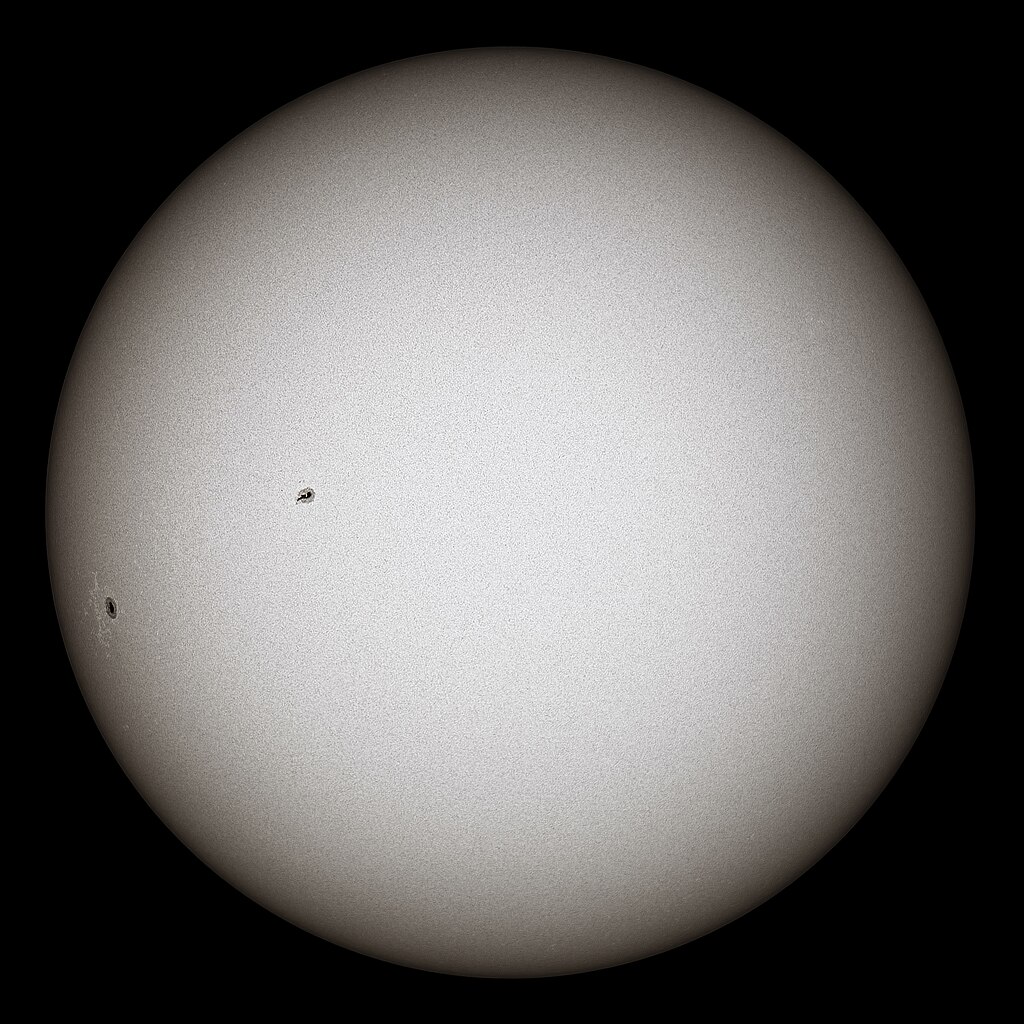
Solar maximum is the regular period of greatest solar activity during the Sun's 11-year solar cycle. During solar maximum, large numbers of sunspots appear, and the solar irradiance output grows by about 0.07%. On average, the solar cycle takes about 11 years to go from one solar maximum to the next, with duration observed varying from 9 to 14 years. Large solar storms often occur during solar maximum. For example, the Carrington Event, which took place a few months before the solar maximum of solar cycle 10, was the most intense geomagnetic storm in recorded history and widely considered to have been caused by an equally large solar storm. Predictions of a future maximum's timing and strength are very difficult; predictions vary widely. There was a solar maximum in 2000. In 2006, NASA initially expected a solar maximum in 2010 or 2011, and thought that it could be the strongest since 1958. However, the solar maximum was not declared to have occurred until 2014, and even then was ranked among the weakest on record. In addition to the ~11 year solar cycle, the intensity of the solar maxima can vary from cycle to cycle. When several solar cycles exhibit greater than average activity for decades or centuries, this period is labelled "Grand solar maximum". Solar cycles still occur during these grand solar maximum periods, but the intensity of those cycles is greater. Likewise, extended periods in which the solar maximum is lower than average are labeled "grand solar minima". Some researchers suggest that grand solar maxima have shown some correlation with global and regional climate changes, although others dispute this hypothesis (e.g., see Medieval Warm Period). Following the advent of telescopic solar observation with Galileo's 1611 observations, the intensity of solar maxima is typically measured by counting numbers and size of sunspots; for periods previous to this, isotope ratios in ice cores can be used to estimate solar activity. The table below shows the approximate dates of some of the proposed solar minima in historical times.
A proposed list of historical Grand minima of solar activity[7] includes also Grand minima ca. 690 AD, 360 BC, 770 BC, 1390 BC, 2860 BC, 3340 BC, 3500 BC, 3630 BC, 3940 BC, 4230 BC, 4330 BC, 5260 BC, 5460 BC, 5620 BC, 5710 BC, 5990 BC, 6220 BC, 6400 BC, 7040 BC, 7310 BC, 7520 BC, 8220 BC, 9170 BC.

Saturday, July 1, 2023

Global catastrophic risk

A global catastrophic risk or a doomsday scenario is a hypothetical future event that could damage human well-being on a global scale, even endangering or destroying modern civilization. An event that could cause human extinction or permanently and drastically curtail humanity's potential is known as an "existential risk." Over the last two decades, a number of academic and non-profit organizations have been established to research global catastrophic and existential risks, formulate potential mitigation measures and either advocate for or implement these measures.
The term global catastrophic risk "lacks a sharp definition", and generally refers (loosely) to a risk that could inflict "serious damage to human well-being on a global scale". Humanity has suffered large catastrophes before. Some of these have caused serious damage but were only local in scope—e.g. the Black Death may have resulted in the deaths of a third of Europe's population, 10% of the global population at the time. Some were global, but were not as severe—e.g. the 1918 influenza pandemic killed an estimated 3–6% of the world's population. Most global catastrophic risks would not be so intense as to kill the majority of life on earth, but even if one did, the ecosystem and humanity would eventually recover (in contrast to existential risks). Similarly, in Catastrophe: Risk and Response, Richard Posner singles out and groups together events that bring about "utter overthrow or ruin" on a global, rather than a "local or regional", scale. Posner highlights such events as worthy of special attention on cost–benefit grounds because they could directly or indirectly jeopardize the survival of the human race as a whole. Existential risks are defined as "risks that threaten the destruction of humanity's long-term potential." The instantiation of an existential risk (an existential catastrophe) would either cause outright human extinction or irreversibly lock in a drastically inferior state of affairs. Existential risks are a sub-class of global catastrophic risks, where the damage is not only global but also terminal and permanent, preventing recovery and thereby affecting both current and all future generations. While extinction is the most obvious way in which humanity's long-term potential could be destroyed, there are others, including unrecoverable collapse and unrecoverable dystopia. A disaster severe enough to cause the permanent, irreversible collapse of human civilisation would constitute an existential catastrophe, even if it fell short of extinction. Similarly, if humanity fell under a totalitarian regime, and there were no chance of recovery then such a dystopia would also be an existential catastrophe. Bryan Caplan writes that "perhaps an eternity of totalitarianism would be worse than extinction". (George Orwell's novel Nineteen Eighty-Four suggests an example.) A dystopian scenario shares the key features of extinction and unrecoverable collapse of civilisation—before the catastrophe, humanity faced a vast range of bright futures to choose from; after the catastrophe, humanity is locked forever in a terrible state.
Potential global catastrophic risks are conventionally classified as anthropogenic or non-anthropogenic hazards. Examples of non-anthropogenic risks are an asteroid impact event, a supervolcanic eruption, a natural pandemic, a lethal gamma-ray burst, a geomagnetic storm from a coronal mass ejection destroying electronic equipment, natural long-term climate change, hostile extraterrestrial life, or the predictable Sun transforming into a red giant star engulfing the Earth. Anthropogenic risks are those caused by humans and include those related to technology, governance, and climate change. Technological risks include the creation of artificial intelligence misaligned with human goals, biotechnology, and nanotechnology. Insufficient or malign global governance creates risks in the social and political domain, such as global war and nuclear holocaust, biological warfare and bioterrorism using genetically modified organisms, cyberwarfare and cyberterrorism destroying critical infrastructure like the electrical grid, or radiological warfare using weapons such as large cobalt bombs. Global catastrophic risks in the domain of earth system governance include global warming, environmental degradation, extinction of species, famine as a result of non-equitable resource distribution, human overpopulation, crop failures, and non-sustainable agriculture. Research into the nature and mitigation of global catastrophic risks and existential risks is subject to a unique set of challenges and, as a result, is not easily subjected to the usual standards of scientific rigour. For instance, it is neither feasible nor ethical to study these risks experimentally. Carl Sagan expressed this with regards to nuclear war: "Understanding the long-term consequences of nuclear war is not a problem amenable to experimental verification". Moreover, many catastrophic risks change rapidly as technology advances and background conditions, such as geopolitical conditions, change. Another challenge is the general difficulty of accurately predicting the future over long timescales, especially for anthropogenic risks which depend on complex human political, economic and social systems. In addition to known and tangible risks, unforeseeable black swan extinction events may occur, presenting an additional methodological problem. Humanity has never suffered an existential catastrophe and if one were to occur, it would necessarily be unprecedented. Therefore, existential risks pose unique challenges to prediction, even more than other long-term events, because of observation selection effects. Unlike with most events, the failure of a complete extinction event to occur in the past is not evidence against their likelihood in the future, because every world that has experienced such an extinction event has no observers, so regardless of their frequency, no civilization observes existential risks in its history. These anthropic issues may partly be avoided by looking at evidence that does not have such selection effects, such as asteroid impact craters on the Moon, or directly evaluating the likely impact of new technology. To understand the dynamics of an unprecedented, unrecoverable global civilizational collapse (a type of existential risk), it may be instructive to study the various local civilizational collapses that have occurred throughout human history. For instance, civilizations such as the Roman Empire have ended in a loss of centralized governance and a major civilization-wide loss of infrastructure and advanced technology. However, these examples demonstrate that societies appear to be fairly resilient to catastrophe; for example, Medieval Europe survived the Black Death without suffering anything resembling a civilization collapse despite losing 25 to 50 percent of its population.
There are economic reasons that can explain why so little effort is going into existential risk reduction. It is a global public good, so we should expect it to be undersupplied by markets. Even if a large nation invests in risk mitigation measures, that nation will enjoy only a small fraction of the benefit of doing so. Furthermore, existential risk reduction is an intergenerational global public good, since most of the benefits of existential risk reduction would be enjoyed by future generations, and though these future people would in theory perhaps be willing to pay substantial sums for existential risk reduction, no mechanism for such a transaction exists. Numerous cognitive biases can influence people's judgment of the importance of existential risks, including scope insensitivity, hyperbolic discounting, availability heuristic, the conjunction fallacy, the affect heuristic, and the overconfidence effect. Scope insensitivity influences how bad people consider the extinction of the human race to be. For example, when people are motivated to donate money to altruistic causes, the quantity they are willing to give does not increase linearly with the magnitude of the issue: people are roughly as willing to prevent the deaths of 200,000 or 2,000 birds.[28] Similarly, people are often more concerned about threats to individuals than to larger groups. Eliezer Yudkowsky theorizes that scope neglect plays a role in public perception of existential risks: Substantially larger numbers, such as 500 million deaths, and especially qualitatively different scenarios such as the extinction of the entire human species, seem to trigger a different mode of thinking... People who would never dream of hurting a child hear of existential risk, and say, "Well, maybe the human species doesn't really deserve to survive". All past predictions of human extinction have proven to be false. To some, this makes future warnings seem less credible. Nick Bostrom argues that the absence of human extinction in the past is weak evidence that there will be no human extinction in the future, due to survivor bias and other anthropic effects. Sociobiologist E. O. Wilson argued that: "The reason for this myopic fog, evolutionary biologists contend, is that it was actually advantageous during all but the last few millennia of the two million years of existence of the genus Homo... A premium was placed on close attention to the near future and early reproduction, and little else. Disasters of a magnitude that occur only once every few centuries were forgotten or transmuted into myth." Defense in depth is a useful framework for categorizing risk mitigation measures into three layers of defense: Prevention: Reducing the probability of a catastrophe occurring in the first place. Example: Measures to prevent outbreaks of new highly infectious diseases. Response: Preventing the scaling of a catastrophe to the global level. Example: Measures to prevent escalation of a small-scale nuclear exchange into an all-out nuclear war. Resilience: Increasing humanity's resilience (against extinction) when faced with global catastrophes. Example: Measures to increase food security during a nuclear winter. Human extinction is most likely when all three defenses are weak, that is, "by risks we are unlikely to prevent, unlikely to successfully respond to, and unlikely to be resilient against". The unprecedented nature of existential risks poses a special challenge in designing risk mitigation measures since humanity will not be able to learn from a track record of previous events.
Some researchers argue that both research and other initiatives relating to existential risk are underfunded. Nick Bostrom states that more research has been done on Star Trek, snowboarding, or dung beetles than on existential risks. Bostrom's comparisons have been criticized as "high-handed". As of 2020, the Biological Weapons Convention organization had an annual budget of US$1.4 million. Some scholars propose the establishment on Earth of one or more self-sufficient, remote, permanently occupied settlements specifically created for the purpose of surviving a global disaster. Economist Robin Hanson argues that a refuge permanently housing as few as 100 people would significantly improve the chances of human survival during a range of global catastrophes. Food storage has been proposed globally, but the monetary cost would be high. Furthermore, it would likely contribute to the current millions of deaths per year due to malnutrition. In 2022, a team led by David Denkenberger modeled the cost-effectiveness of resilient foods to artificial general intelligence (AGI) safety and found "∼98-99% confidence" for a higher marginal impact of work on resilient foods. Some survivalists stock survival retreats with multiple-year food supplies. The Svalbard Global Seed Vault is buried 400 feet (120 m) inside a mountain on an island in the Arctic. It is designed to hold 2.5 billion seeds from more than 100 countries as a precaution to preserve the world's crops. The surrounding rock is −6 °C (21 °F) (as of 2015) but the vault is kept at −18 °C (0 °F) by refrigerators powered by locally sourced coal. More speculatively, if society continues to function and if the biosphere remains habitable, calorie needs for the present human population might in theory be met during an extended absence of sunlight, given sufficient advance planning. Conjectured solutions include growing mushrooms on the dead plant biomass left in the wake of the catastrophe, converting cellulose to sugar, or feeding natural gas to methane-digesting bacteria. Insufficient global governance creates risks in the social and political domain, but the governance mechanisms develop more slowly than technological and social change. There are concerns from governments, the private sector, as well as the general public about the lack of governance mechanisms to efficiently deal with risks, negotiate and adjudicate between diverse and conflicting interests. This is further underlined by an understanding of the interconnectedness of global systemic risks. In absence or anticipation of global governance, national governments can act individually to better understand, mitigate and prepare for global catastrophes.
In 2018, the Club of Rome called for greater climate change action and published its Climate Emergency Plan, which proposes ten action points to limit global average temperature increase to 1.5 degrees Celsius. Further, in 2019, the Club published the more comprehensive Planetary Emergency Plan. There is evidence to suggest that collectively engaging with the emotional experiences that emerge during contemplating the vulnerability of the human species within the context of climate change allows for these experiences to be adaptive. When collective engaging with and processing emotional experiences is supportive, this can lead to growth in resilience, psychological flexibility, tolerance of emotional experiences, and community engagement. Space colonization is a proposed alternative to improve the odds of surviving an extinction scenario. Solutions of this scope may require megascale engineering. Astrophysicist Stephen Hawking advocated colonizing other planets within the solar system once technology progresses sufficiently, in order to improve the chance of human survival from planet-wide events such as global thermonuclear war. Billionaire Elon Musk writes that humanity must become a multiplanetary species in order to avoid extinction. Musk is using his company SpaceX to develop technology he hopes will be used in the colonization of Mars. In a few billion years, the Sun will expand into a red giant, swallowing the Earth. This can be avoided by moving the Earth farther out from the Sun, keeping the temperature roughly constant. That can be accomplished by tweaking the orbits of comets and asteroids so they pass close to the Earth in such a way that they add energy to the Earth's orbit. Since the Sun's expansion is slow, roughly one such encounter every 6,000 years would suffice. Psychologist Steven Pinker has called existential risk a "useless category" that can distract from real threats such as climate change and nuclear war. The Bulletin of the Atomic Scientists (est. 1945) is one of the oldest global risk organizations, founded after the public became alarmed by the potential of atomic warfare in the aftermath of WWII. It studies risks associated with nuclear war and energy and famously maintains the Doomsday Clock established in 1947. The Foresight Institute (est. 1986) examines the risks of nanotechnology and its benefits. It was one of the earliest organizations to study the unintended consequences of otherwise harmless technology gone haywire at a global scale. It was founded by K. Eric Drexler who postulated "grey goo". Beginning after 2000, a growing number of scientists, philosophers and tech billionaires created organizations devoted to studying global risks both inside and outside of academia. Independent non-governmental organizations (NGOs) include the Machine Intelligence Research Institute (est. 2000), which aims to reduce the risk of a catastrophe caused by artificial intelligence, with donors including Peter Thiel and Jed McCaleb. The Nuclear Threat Initiative (est. 2001) seeks to reduce global threats from nuclear, biological and chemical threats, and containment of damage after an event. It maintains a nuclear material security index. The Lifeboat Foundation (est. 2009) funds research into preventing a technological catastrophe. Most of the research money funds projects at universities. The Global Catastrophic Risk Institute (est. 2011) is a US-based non-profit, non-partisan think tank founded by Seth Baum and Tony Barrett. GCRI does research and policy work across various risks, including artificial intelligence, nuclear war, climate change, and asteroid impacts. The Global Challenges Foundation (est. 2012), based in Stockholm and founded by Laszlo Szombatfalvy, releases a yearly report on the state of global risks. The Future of Life Institute (est. 2014) works to reduce extreme, large-scale risks from transformative technologies, as well as steer the development and use of these technologies to benefit all life, through grantmaking, policy advocacy in the United States, European Union and United Nations, and educational outreach. Elon Musk, Vitalik Buterin and Jaan Tallinn are some of its biggest donors. The Center on Long-Term Risk (est. 2016), formerly known as the Foundational Research Institute, is a British organization focused on reducing risks of astronomical suffering (s-risks) from emerging technologies. University-based organizations include the Future of Humanity Institute (est. 2005) which researches the questions of humanity's long-term future, particularly existential risk. It was founded by Nick Bostrom and is based at Oxford University. The Centre for the Study of Existential Risk (est. 2012) is a Cambridge University-based organization which studies four major technological risks: artificial intelligence, biotechnology, global warming and warfare. All are man-made risks, as Huw Price explained to the AFP news agency, "It seems a reasonable prediction that some time in this or the next century intelligence will escape from the constraints of biology". He added that when this happens "we're no longer the smartest things around," and will risk being at the mercy of "machines that are not malicious, but machines whose interests don't include us." Stephen Hawking was an acting adviser. The Millennium Alliance for Humanity and the Biosphere is a Stanford University-based organization focusing on many issues related to global catastrophe by bringing together members of academia in the humanities. It was founded by Paul Ehrlich, among others. Stanford University also has the Center for International Security and Cooperation focusing on political cooperation to reduce global catastrophic risk. The Center for Security and Emerging Technology was established in January 2019 at Georgetown's Walsh School of Foreign Service and will focus on policy research of emerging technologies with an initial emphasis on artificial intelligence. They received a grant of 55M USD from Good Ventures as suggested by Open Philanthropy. Other risk assessment groups are based in or are part of governmental organizations. The World Health Organization (WHO) includes a division called the Global Alert and Response (GAR) which monitors and responds to global epidemic crisis. GAR helps member states with training and coordination of response to epidemics. The United States Agency for International Development (USAID) has its Emerging Pandemic Threats Program which aims to prevent and contain naturally generated pandemics at their source. The Lawrence Livermore National Laboratory has a division called the Global Security Principal Directorate which researches on behalf of the government issues such as bio-security and counter-terrorism.

Friday, June 30, 2023

Tartarian Empire (conspiracy theory)

Tartary or Tartaria is a historical name for Central Asia and Siberia. Ignorance surrounding Tartary's use as a place name has spawned conspiracy theories including ideas of a "hidden past" and "mud floods". Such theories assert that Tartary (or the "Tartarian Empire") was a lost civilization with advanced technology and culture. This ignores the well-documented history of Asia, which Tartary refers to. In the present day, the Tartary region covers a region spanning from central Afghanistan to northern Kazakhstan, as well as areas in present Mongolia, China and the Russian Far East in "Chinese Tartary".
The theory of Great Tartaria as a suppressed lost land or civilization originated in Russia, with aspects first appearing in Anatoly Fomenko’s New chronology, and then popularized by the racial occult history of Nikolai Levashov. In Russian pseudoscience, known for its nationalism, Tartaria is presented as the "real" name for Russia, which was maliciously "ignored" in the West. The Russian Geographical Society has debunked the conspiracy theory as an extremist fantasy, and far from denying the existence of the term, has used the opportunity to share numerous maps of "Tartary" in its collection. Since about 2016, conspiracy theories about the supposed lost empire of "Tartaria" have gained popularity on the Internet, divorced from its original Russian nationalist frame.
The globalized version of the conspiracy theory is based on an alternative view of architectural history. Adherents propose that demolished buildings such as the Singer Building, the original New York Penn Station, or the temporary grounds of the 1915's World's Fair were actually the buildings of a vast empire based in Tartary that has been suppressed from history. Sumptuously styled Gilded Age buildings are often held out as really having been built by the supposed Tartaria. Other buildings, such as the Great Pyramids and the White House, are further held out as Tartarian buildings. The conspiracy theory only vaguely describes how such a supposedly advanced civilization which had reputedly achieved world peace could have fallen and been hidden.
In the conspiracy theory, the idea that a "mud flood" wiped out much of the world via depopulation and thus old buildings is common, supported by the fact that many buildings across the world have architectural elements like doors, windows and archways submerged many feet below "ground level". Both World War I and II are cited as a way in which Tartaria was destroyed and hidden, reflecting the reality that the extensive bombing campaigns of World War II did destroy many historic buildings. The general evidence for the theory is that there are similar styles of building around the world, such as capitol buildings with domes, or star forts. Also many photographs from the turn of the 20th century appear to show deserted city streets in many capital cities across the world. When people do start to appear in the photographs there is a striking contrast between the horse and cart dwellers in the muddy streets and the elaborate, highly ornate stone mega-structures which tower above the inhabitants of the cities, which is seen even in modern cities where extreme poverty is contrasted with skyscrapers. Zach Mortice writing for Bloomberg believes that the theory reflects a cultural discontent with modernism, and a supposition that traditional styles are inherently good and modern styles are bad. He describes the theory as "the QAnon of architecture".

Late Ordovician mass extinction

The Late Ordovician mass extinction (LOME), sometimes known as the end-Ordovician mass extinction or the Ordovician-Silurian extinction, is the first of the "big five" major mass extinction events in Earth's history, occurring roughly 443 Mya. It is often considered to be the second-largest known extinction event, in terms of the percentage of genera that became extinct. Extinction was global during this interval, eliminating 49–60% of marine genera and nearly 85% of marine species. Under most tabulations, only the Permian-Triassic mass extinction exceeds the Late Ordovician mass extinction in biodiversity loss. The extinction event abruptly affected all major taxonomic groups and caused the disappearance of one third of all brachiopod and bryozoan families, as well as numerous groups of conodonts, trilobites, echinoderms, corals, bivalves, and graptolites. Despite its taxonomic severity, the Late Ordovician mass extinction did not produce major changes to ecosystem structures compared to other mass extinctions, nor did it lead to any particular morphological innovations. Diversity gradually recovered to pre-extinction levels over the first 5 million years of the Silurian Period. The Late Ordovician mass extinction is traditionally considered to occur in two distinct pulses. The first pulse, known as LOMEI-1, began at the boundary between the Katian and Hirnantian stages of the Late Ordovician Period. This extinction pulse is typically attributed to the Late Ordovician glaciation, which abruptly expanded over Gondwana at the beginning of the Hirnantian and shifted the Earth from a greenhouse to icehouse climate. Cooling and a falling sea level brought on by the glaciation led to habitat loss for many organisms along the continental shelves, especially endemic taxa with restricted temperature tolerance and latitudinal range. During this extinction pulse there were also several marked changes in biologically responsive carbon and oxygen isotopes. Marine life partially rediversified during the cold period and a new cold-water ecosystem, the "Hirnantia fauna", was established. The second pulse of extinction, referred to as LOMEI-2, occurred in the later half of the Hirnantian as the glaciation abruptly receded and warm conditions returned. The second pulse was associated with intense worldwide anoxia (oxygen depletion) and euxinia (toxic sulfide production), which persisted into the subsequent Rhuddanian stage of the Silurian Period. Some researchers have proposed the existence of a third distinct pulse of the mass extinction during the early Rhuddanian, evidenced by a negative carbon isotope excursion and a pulse of anoxia into shelf environments amidst already low background oxygen levels. Others, however, have argued that Rhuddanian anoxia was simply part of the second pulse, which according to this view was longer and more drawn out than most authors suggest.
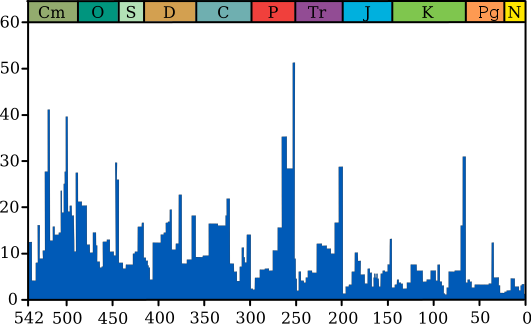
The Late Ordovician mass extinction followed the Great Ordovician Biodiversification Event (GOBE), one of the largest surges of increasing biodiversity in the geological and biological history of the Earth.[19] At the time of the extinction, most complex multicellular organisms lived in the sea, and the only evidence of life on land are rare spores from small early land plants. At the time of the extinction, around 100 marine families became extinct, covering about 49%[20] of genera (a more reliable estimate than species). The brachiopods and bryozoans were strongly impacted, along with many of the trilobite, conodont and graptolite families. The extinction was divided into two major extinction pulses. The first pulse occurred at the base of the global Metabolograptus extraordinarius graptolite biozone, which marks the end of the Katian stage and the start of the Hirnantian stage. The second pulse of extinction occurred in the later part of the Hirnantian stage, coinciding with the Metabolograptus persculptus zone. Each extinction pulse affected different groups of animals and was followed by a rediversification event. Statistical analysis of marine losses at this time suggests that the decrease in diversity was mainly caused by a sharp increase in extinctions, rather than a decrease in speciation. Following such a major loss of diversity, Silurian communities were initially less complex and broader niched. Nonetheless, in South China, warm-water benthic communities with complex trophic webs thrived immediately following LOME. Highly endemic faunas, which characterized the Late Ordovician, were replaced by faunas that were amongst the most cosmopolitan in the Phanerozoic, biogeographic patterns that persisted throughout most of the Silurian. LOME had few of the long-term ecological impacts associated with the Permian–Triassic and Cretaceous–Paleogene extinction events. Furthermore, biotic recovery from LOME proceeded at a much faster rate than it did after the Permian-Triassic extinction. Nevertheless, a large number of taxa disappeared from the Earth over a short time interval, eliminating and altering the relative diversity and abundance of certain groups. The Cambrian-type evolutionary fauna nearly died out, and was unable to rediversify after the extinction.
Brachiopod diversity and composition was strongly affected, with the Cambrian-type inarticulate brachiopods (linguliforms and craniiforms) never recovering their pre-extinction diversity. Articulate (rhynchonelliform) brachiopods, part of the Paleozoic evolutionary fauna, were more variable in their response to the extinction. Some early rhynchonelliform groups, such as the Orthida and Strophomenida, declined significantly. Others, including the Pentamerida, Athyridida, Spiriferida, and Atrypida, were less affected and took the opportunity to diversify after the extinction. The extinction pulse at the end of the Katian was selective in its effects, disproportionally affecting deep-water species and tropical endemics inhabiting epicontinental seas. The Foliomena fauna, an assemblage of thin-shelled species adapted for deep dysoxic (low oxygen) waters, went extinct completely in the first extinction pulse. The Foliomena fauna was formerly widespread and resistant to background extinction rates prior to the Hirnantian, so their unexpected extinction points towards the abrupt loss of their specific habitat. During the glaciation, a high-latitude brachiopod assemblage, the Hirnantia fauna, established itself along outer shelf environments in lower latitudes, probably in response to cooling. However, the Hirnantia fauna would meet its demise in the second extinction pulse, replaced by Silurian-style assemblages adapted for warmer waters. The brachiopod survival intervals following the second pulse spanned the terminal Hirnantian to the middle Rhuddanian, after which the recovery interval began and lasted until the early Aeronian. Brachiopod survivors of the mass extinction tended to be endemic to one palaeoplate or even one locality in the survival interval in the earliest Silurian, though their ranges geographically expanded over the course of the biotic recovery. The region around what is today Oslo was a hotbed of atrypide rediversification. Brachiopod recovery consisted mainly of the reestablishment of cosmopolitan brachiopod taxa from the Late Ordovician. Progenitor taxa that arose following the mass extinction displayed numerous novel adaptations for resisting environmental stresses. Although some brachiopods did experience the Lilliput effect in response to the extinction, this phenomenon was not particularly widespread compared to other mass extinctions. Trilobites were hit hard by both phases of the extinction, with about 70% of genera and 50% of families going extinct between the Katian and Silurian. The extinction disproportionately affected deep water species and groups with fully planktonic larvae or adults. The order Agnostida was completely wiped out, and the formerly diverse Asaphida survived with only a single genus, Raphiophorus. A cool-water trilobite assemblage, the Mucronaspis fauna, coincides with the Hirnantia brachiopod fauna in the timing of its expansion and demise. Trilobite faunas after the extinction were dominated by families that appeared in the Ordovician and survived LOME, such as Encrinuridae and Odontopleuridae. Over a third of bryozoan genera went extinct, but most families survived the extinction interval and the group as a whole recovered in the Silurian. The hardest-hit subgroups were the cryptostomes and trepostomes, which never recovered the full extent of their Ordovician diversity. Bryozoan extinctions started in coastal regions of Laurentia, before high extinction rates shifted to Baltica by the end of the Hirnantian. Bryozoan biodiversity loss appears to have been a prolonged process which partially preceded the Hirnantian extinction pulses. Extinction rates among Ordovician bryozoan genera were actually higher in the early and late Katian, and origination rates sharply dropped in the late Katian and Hirnantian. About 70% of crinoid genera died out. Early studies of crinoid biodiversity loss by Jack Sepkoski overestimated crinoid biodiversity losses during LOME. Most extinctions occurred in the first pulse. However, they rediversified quickly in tropical areas and reacquired their pre-extinction diversity not long into the Silurian. Many other echinoderms became very rare after the Ordovician, such as the cystoids, edrioasteroids, and other early crinoid-like groups. Stromatoporoid generic and familial taxonomic diversity was not significantly impacted by the mass extinction. Sponges thrived and dominated marine ecosystems in South China immediately after the extinction event, colonising depauperate, anoxic environments in the earliest Rhuddanian. Their pervasiveness in marine environments after the biotic crisis has been attributed to drastically decreased competition and an abundance of vacant niches left behind by organisms that perished in the catastrophe. Sponges may have assisted the recovery of other clades, doing so by helping stabilise sediment surfaces, enabling bryozoans, brachiopods, corals, and other sessile suspension feeders to recolonise the seafloor.
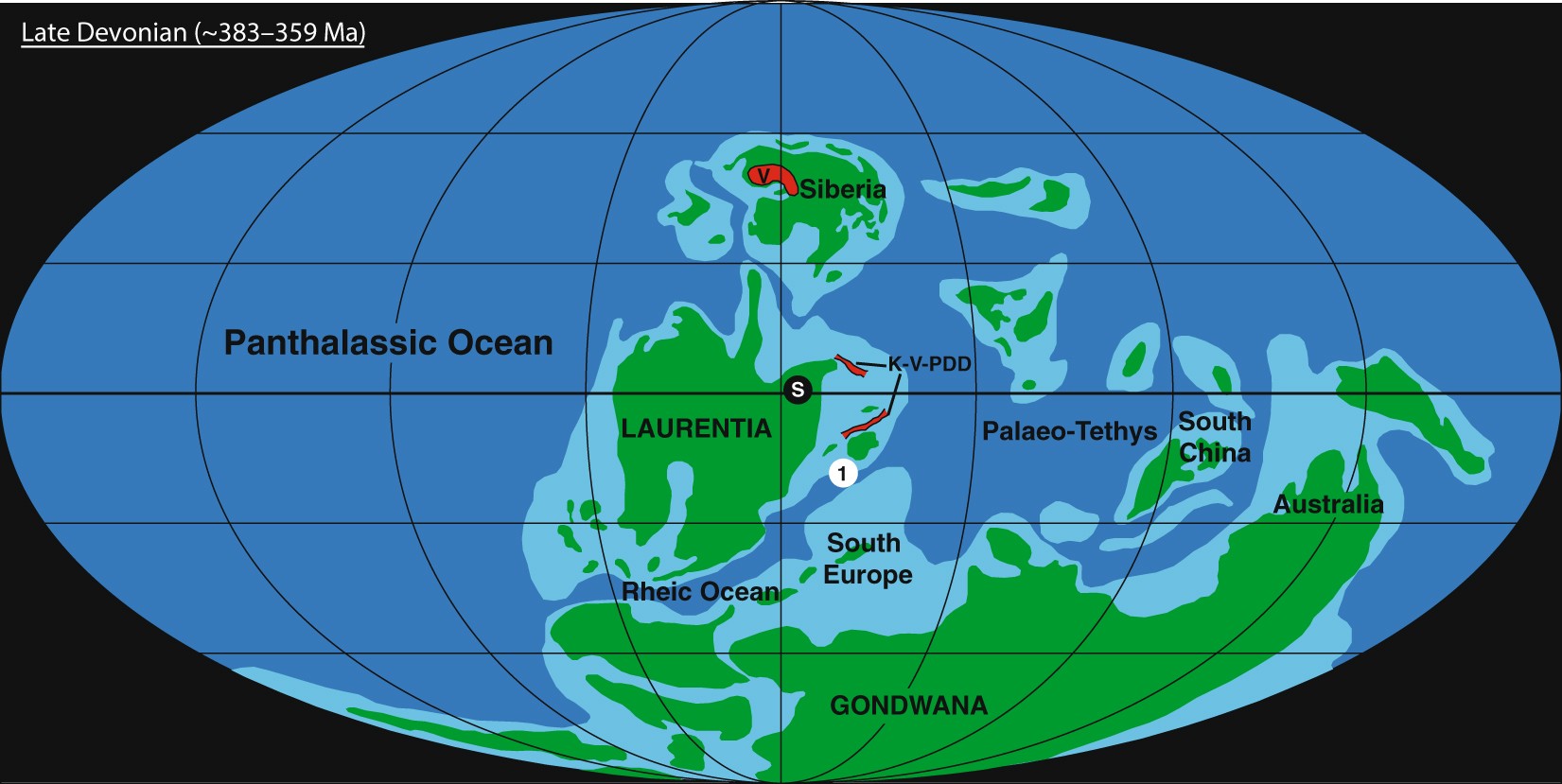
The first pulse of the Late Ordovician Extinction has typically been attributed to the Late Ordovician Glaciation. Although there was a longer cooling trend in Middle and Lower Ordovician, the most severe and abrupt period of glaciation occurred in the Hirnantian stage, which was bracketed by both pulses of the extinction. The rapid continental glaciation was centered on Gondwana, which was located at the South Pole in the Late Ordovician. The Hirnantian glaciation is considered one of the most severe ice ages of the Paleozoic, which previously maintained the relatively warm climate conditions of a greenhouse earth. The cause of the glaciation is heavily debated. The appearance and development of terrestrial plants and microphytoplankton, which consumed atmospheric carbon dioxide, may have diminished the greenhouse effect and promoting the transition of the climatic system to the glacial mode. Though more commonly associated with greenhouse gasses and warming, volcanism may have induced cooling. Volcanoes can supply cooling sulfur aerosols to the atmosphere or deposit basalt flows which accelerate carbon sequestration in a tropical environment. In addition, volcanic fertilisation of the oceans with phosphorus may have increased populations of photosynthetic algae and enhanced biological sequestration of carbon dioxide from the atmosphere. Increased burial of organic carbon is another method of drawing down carbon dioxide from the air that may have played a role in the Late Ordovician. Two environmental changes associated with the glaciation were responsible for much of the Late Ordovician extinction. First, the cooling global climate was probably especially detrimental because the biota were adapted to an intense greenhouse, especially because most shallow sea habitats in the Ordovician were located in the tropics. Second, sea level decline, caused by sequestering of water in the ice cap, drained the vast epicontinental seaways and eliminated the habitat of many endemic communities. Falling sea levels may have acted as a positive feedback loop accelerating further cooling; as shallow seas receded, carbonate-shelf production declined and atmospheric carbon dioxide levels correspondingly decreased, fostering even more cooling. Ice caps formed on the southern supercontinent Gondwana as it drifted over the South Pole, possibly due to true polar wander. Correlating rock strata have been detected in Late Ordovician rock strata of North Africa and then-adjacent northeastern South America, which were south-polar locations at the time. Glaciation locks up water from the world-ocean, and the interglacials free it, causing sea levels repeatedly to drop and rise; the vast shallow mediterranean Ordovician seas withdrew, which eliminated many ecological niches, then returned, carrying diminished founder populations lacking many whole families of organisms. Then they withdrew again with the next pulse of glaciation, eliminating biological diversity at each change. In the North African strata, five pulses of glaciation from seismic sections are recorded. This incurred a shift in the location of bottom-water formation, shifting from low latitudes, characteristic of greenhouse conditions, to high latitudes, characteristic of icehouse conditions, which was accompanied by increased deep-ocean currents and oxygenation of the bottom-water. An opportunistic fauna briefly thrived there, before anoxic conditions returned. The breakdown in the oceanic circulation patterns brought up nutrients from the abyssal waters. Surviving species were those that coped with the changed conditions and filled the ecological niches left by the extinctions.
Another heavily-discussed factor in the Late Ordovician mass extinction is anoxia, the absence of dissolved oxygen in seawater. Anoxia not only deprives most life forms of a vital component of respiration, it also encourages the formation of toxic metal ions and other compounds. One of the most common of these poisonous chemicals is hydrogen sulfide, a biological waste product and major component of the sulfur cycle. Oxygen depletion when combined with high levels of sulfide is called euxinia. Though less toxic, ferrous iron (Fe2+) is another substance which commonly forms in anoxic waters. Anoxia is the most common culprit for the second pulse of the Late Ordovician mass extinction and is connected to many other mass extinctions throughout geological time. It may have also had a role in the first pulse of the Late Ordovician mass extinction, though support for this hypothesis is inconclusive and contradicts other evidence for high oxygen levels in seawater during the glaciation. Some geologists have argued that anoxia played a role in the first extinction pulse, though this hypothesis is controversial. In the early Hirnantian, shallow-water sediments throughout the world experience a large positive excursion in the δ34S ratio of buried pyrite. This ratio indicates that shallow-water pyrite which formed at the beginning of the glaciation had a decreased proportion of 32S, a common lightweight isotope of sulfur. 32S in the seawater could hypothetically be used up by extensive deep-sea pyrite deposition. The Ordovician ocean also had very low levels of sulfate, a nutrient which would otherwise resupply 32S from the land. Pyrite forms most easily in anoxic and euxinic environments, while better oxygenation encourages the formation of gypsum instead. As a result, anoxia and euxinia would need to be common in the deep sea to produce enough pyrite to shift the δ34S ratio. A more direct proxy for anoxic conditions is FeHR/FeT. This ratio describes the comparative abundance of highly reactive iron compounds which are only stable without oxygen. Most geological sections corresponding to the beginning of the Hirnantian glaciation have FeHR/FeT below 0.38, indicating oxygenated waters. However, higher FeHR/FeT values are known from a few deep-water early Hirnantian sequences found in Nevada and China. Thallium isotope ratios can also be used as indicators of anoxia. A major positive thallium isotope excursion in the late Katian, just before the Katian-Hirnantian boundary, likely reflects a global enlargement of oxygen minimum zones. During the late Katian, thallium isotopic perturbations indicating proliferation of anoxic waters notably preceded the appearance of other geochemical indicators of the expansion of anoxia. Glaciation could conceivably trigger anoxic conditions, albeit indirectly. If continental shelves are exposed by falling sea levels, then organic surface runoff flows into deeper oceanic basins. The organic matter would have more time to leach out phosphate and other nutrients before being deposited on the seabed. Increased phosphate concentration in the seawater would lead to eutrophication and then anoxia. Deep-water anoxia and euxinia would impact deep-water benthic fauna, as expected for the first pulse of extinction. Chemical cycle disturbances would also steepen the chemocline, restricting the habitable zone of planktonic fauna which also go extinct in the first pulse. This scenario is congruent with both organic carbon isotope excursions and general extinction patterns observed in the first pulse. However, data supporting deep-water anoxia during the glaciation contrasts with more extensive evidence for well-oxygenated waters. Black shales, which are indicative of an anoxic environment, become very rare in the early Hirnantian compared to surrounding time periods. Although early Hirnantian black shales can be found in a few isolated ocean basins (such as the Yangtze platform of China), from a worldwide perspective these correspond to local events. Some Chinese sections record an early Hirnantian increase in the abundance of Mo-98, a heavy isotope of molybdenum. This shift can correspond to a balance between minor local anoxia and well-oxygenated waters on a global scale. Other trace elements point towards increased deep-sea oxygenation at the start of the glaciation. Oceanic current modelling suggest that glaciation would have encouraged oxygenation in most areas, apart from the Paleo-Tethys ocean. Deep-sea anoxia is not the only explanation for the δ34S excursion of pyrite. Carbonate-associated sulfate maintains high 32S levels, indicating that seawater in general did not experience 32S depletion during the glaciation. Even if pyrite burial did increase at that time, its chemical effects would have been far too slow to explain the rapid excursion or extinction pulse. Instead, cooling may lower the metabolism of warm-water aerobic bacteria, reducing decomposition of organic matter. Fresh organic matter would eventually sink down and supply nutrients to sulfate-reducing microbes living in the seabed. Sulfate-reducing microbes prioritize 32S during anaerobic respiration, leaving behind heavier isotopes. A bloom of sulfate-reducing microbes can quickly account for the δ34S excursion in marine sediments without a corresponding decrease in oxygen. A few studies have proposed that the first extinction pulse did not begin with the Hirnantian glaciation, but instead corresponds to an interglacial period or other warming event. Anoxia would be the most likely mechanism of extinction in a warming event, as evidenced by other extinctions involving warming. However, this view of the first extinction pulse is controversial and not widely accepted.
The late Hirnantian experienced a dramatic increase in the abundance of black shales. Coinciding with the retreat of the Hirnantian glaciation, black shale expands out of isolated basins to become the dominant oceanic sediment at all latitudes and depths. The worldwide distribution of black shales in the late Hirnantian is indicative of a global anoxic event, which has been termed the Hirnantian ocean anoxic event (HOAE). Molybdenum, uranium, and neodymium isotope excursions found in many different regions also correspond to widespread anoxia. At least in European sections, late Hirnantian anoxic waters were originally ferruginous (dominated by ferrous iron) before gradually becoming more euxinic. In the Yangtze Sea, located on the western margins of the South China microcontinent, the second extinction pulse occurred alongside intense euxinia which spread out from the middle of the continental shelf.[ Mercury loading in South China during LOMEI-2 was likely related to euxinia. However, some evidence suggests that the top of the water column in the Ordovician oceans remained well oxygenated even as the seafloor became deoxygenated. On a global scale, euxinia was probably one or two orders of magnitude more prevalent than in the modern day. Global anoxia may have lasted more than 3 million years, persisting through the entire Rhuddanian stage of the Silurian period. This would make the Hirnantian-Rhuddanian anoxia one of the longest-lasting anoxic events in geologic time. The cause of the Hirnantian-Rhuddanian anoxic event is uncertain. Like most global anoxic events, an increased supply of nutrients (such as nitrates and phosphates) would encourage algal or microbial blooms that deplete oxygen levels in the seawater. The most likely culprits are cyanobacteria, which can use nitrogen fixation to produce usable nitrogen compounds in the absence of nitrates. Nitrogen isotopes during the anoxic event record high rates of denitrification, a biological process which depletes nitrates. The Nitrogen-fixing ability of cyanobacteria would give them an edge over inflexible competitors like eukaryotic algae. At Anticosti Island, a uranium isotope excursion consistent with anoxia actually occurs prior to indicators of receding glaciation. This may suggest that the Hirnantian-Rhuddanian anoxic event (and its corresponding extinction) began during the glaciation, not after it. Cool temperatures can lead to upwelling, cycling nutrients into productive surface waters via air and ocean cycles. Upwelling could instead be encouraged by increasing oceanic stratification through an input of freshwater from melting glaciers. This would be more reasonable if the anoxic event coincided with the end of glaciation, as supported by most other studies. However, oceanic models argue that marine currents would recover too quickly for freshwater disruptions to have a meaningful effect on nutrient cycles. Retreating glaciers could expose more land to weathering, which would be a more sustained source of phosphates flowing into the ocean. There were few clear patterns of extinction associated with the second extinction pulse. Every region and marine environment experienced the second extinction pulse to some extent. Many taxa which survived or diversified after the first pulse were finished off in the second pulse. These include the Hirnantia brachiopod fauna and Mucronaspis trilobite fauna, which previously thrived in the cold glacial period. Other taxa such as graptolites and warm-water reef denizens were less affected. Sediments from China and Baltica seemingly show a more gradual replacement of the Hirnantia fauna after glaciation. Although this suggests that the second extinction pulse may have been a minor event at best, other paleontologists maintain that an abrupt ecological turnover accompanied the end of glaciation. There may be a correlation between the relatively slow recovery after the second extinction pulse, and the prolonged nature of the anoxic event which accompanied it.
Toxic metals on the ocean floor may have dissolved into the water when the oceans' oxygen was depleted. An increase in available nutrients in the oceans may have been a factor, and decreased ocean circulation caused by global cooling may also have been a factor. Hg/TOC values from the Peri-Baltic region indicate noticeable spikes in mercury concentrations during the lower late Katian, the Katian-Hirnantian boundary, and the late Hirnantian. The toxic metals may have killed life forms in lower trophic levels of the food chain, causing a decline in population, and subsequently resulting in starvation for the dependent higher feeding life forms in the chain. A minority hypothesis to explain the first burst has been proposed by Philip Ball, Adrian L. Melott, and Brian C. Thomas, suggesting that the initial extinctions could have been caused by a gamma-ray burst originating from a hypernova in a nearby arm of the Milky Way galaxy, within 6,000 light-years of Earth. A ten-second burst would have stripped the Earth's atmosphere of half of its ozone almost immediately, exposing surface-dwelling organisms, including those responsible for planetary photosynthesis, to high levels of extreme ultraviolet radiation. Under this hypothesis, several groups of marine organisms with a planktonic lifestyle were more exposed to UV radiation than groups that lived on the seabed. It is estimated that 20% to 60% of the total phytoplanktonass on Earth would have been killed in such an event because the oceans were mostly oligotrophic and clear during the Late Ordovician. This is consistent with observations that planktonic organisms suffered severely during the first extinction pulse. In addition, species dwelling in shallow water were more likely to become extinct than species dwelling in deep water, also consistent with the hypothetical effects of a galactic gamma-ray burst. A gamma-ray burst could also explain the rapid expansion of glaciers, since the high energy rays would cause ozone, a greenhouse gas, to dissociate and its dissociated oxygen atoms to then react with nitrogen to form nitrogen dioxide, a darkly-coloured aerosol which cools the planet. It would also cohere with the major δ13C isotopic excursion indicating increased sequestration of carbon-12 out of the atmosphere, which would have occurred as a result of nitrogen dioxide, formed after the reaction of nitrogen and oxygen atoms dissociated by the gamma-ray burst, reacting with hydroxyl and raining back down to Earth as nitric acid, precipitating large quantities of nitrates that would have enhanced wetland productivity and sequestration of carbon dioxide. Although the gamma-ray burst hypothesis is consistent with some patterns at the onset of extinction, there is no unambiguous evidence that such a nearby gamma-ray burst ever happened.
The late Ordovician glaciation was preceded by a fall in atmospheric carbon dioxide (from 7,000 ppm to 4,400 ppm). The dip is correlated with a burst of volcanic activity that deposited new silicate rocks, which draw CO2 out of the air as they erode. A major role of CO2 is implied by a 2009 paper. Atmospheric and oceanic CO2 levels may have fluctuated with the growth and decay of Gondwanan glaciation. Increased volcanic activity during the early late Katian and around the Katian-Hirnantian boundary is also implied by heightened mercury concentrations relative to total organic carbon. Marine bentonite layers associated with the subduction of the Junggar Ocean underneath the Yili Block have been dated to the late Katian, close to the Katian-Hirnantian boundary. Through the Late Ordovician, outgassing from major volcanism was balanced by heavy weathering of the uplifting Appalachians and Caledonides, which sequestered CO2. In the Hirnantian stage the volcanism diminished, and the continued weathering caused a significant and rapid draw down of CO2 coincident with the rapid and short ice age. A hypothetical large igneous province whose existence is unproven has been speculated to have been the sink that absorbed carbon dioxide and precipitated Hirnantian cooling. More recently, in May 2020, a study suggested the first pulse of mass extinction was caused by volcanism which induced global warming and anoxia, rather than cooling and glaciation. Higher resolution of species diversity patterns in the Late Ordovician suggest that extinction rates rose significantly in the early or middle Katian stage, several million years earlier than the Hirnantian glaciation. This early phase of extinction is associated with large igneous province (LIP) activity, possibly that of the Alborz LIP of northern Iran, as well as a warming phase known as the Boda event. Volcanic activity could also provide a plausible explanation for anoxia during the first pulse of the mass extinction. A volcanic input of phosphorus, which was insufficient to enkindle persistent anoxia on its own, may have triggered a positive feedback loop of phosphorus recycling from marine sediments, sustaining widespread marine oxygen depletion over the course of LOMEI-1. Also, the weathering of nutrient-rich volcanic rocks emplaced during the middle and late Katian likely enhanced the reduction in dissolved oxygen. Other papers have criticised the volcanism hypothesis, claiming that volcanic activity was relatively low in the Ordovician and that superplume and LIP volcanic activity is especially unlikely to have caused the mass extinction at the end of the Ordovician. A 2022 study argued against a volcanic cause of LOME, citing the lack of mercury anomalies and the discordance between deposition of bentonites and redox changes in drillcores from South China straddling the Ordovician-Silurian boundary. Mercury anomalies at the end of the Ordovician that some researchers have attributed to large-scale volcanism have been reinterpreted by some to instead result from the presence of mercury-rich sulphides, concluding that Late Ordovician mercury enrichments provide no evidence for extensive volcanism.
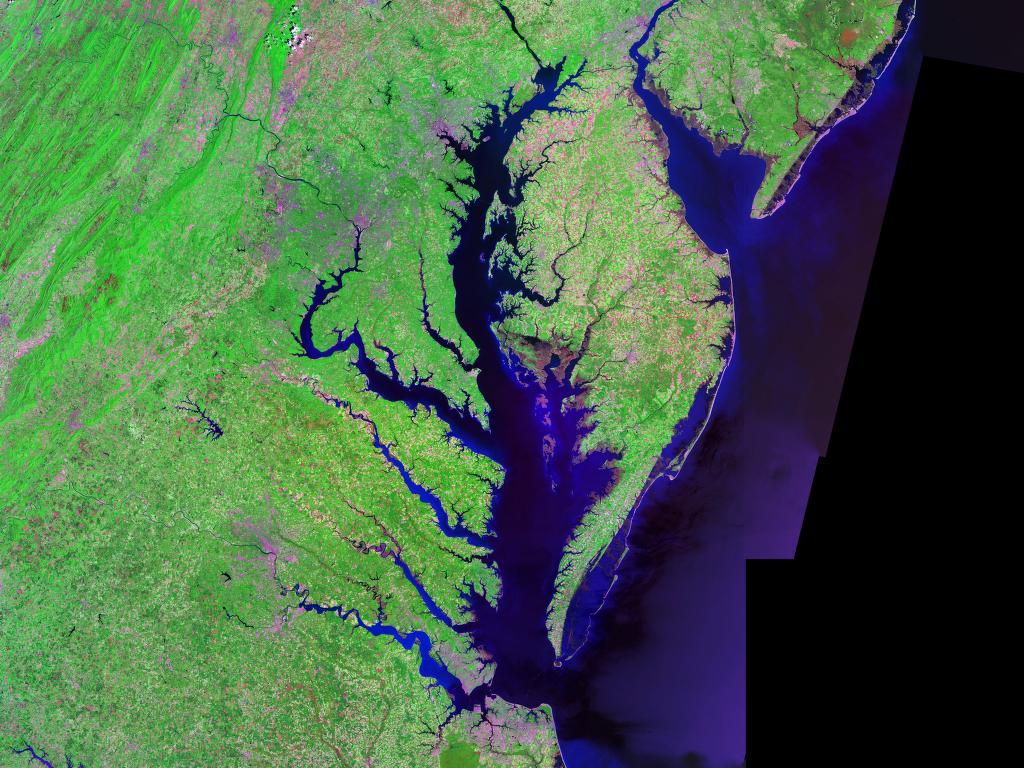
Thursday, June 29, 2023

Cars we think should be sold in US (Part one)

Kia XCeed would make a very interesting alternate to the Subaru Crosstrek. Crossovers are red hot here in the U.S. Which makes it very odd that Kia hasn't brought this here.
Volkswagen sells a cabriolet version of their T-Cross crossover overseas. I know, crossover convertibles don't generally sell well. However, it would be really cool if Volkswagen sold this here. Even, if it were just one year only. I'd love to see quirky cars make a comeback. This one is on my list of cars I'd love to see sold here.
Volkswagen Saveiro is a tiny little pick-up. Selling it here will probably be a false economy. However, it's such a cute little pick-up. Volkswagen could easily add the GTI engine and call it a Rabbit Pick-up. It may not haul much compared to other pick-ups. However, it certainly would be quirky and fun to have one. We need more quirky cars and this one certainly should be sold here.
I promise this is the last Volkswagen on this list. However, this could easily be a four-door "coupe" version of the Taos. It's cute and would be perfect for those who love that four-door "coupe" styling, but are on a budget. Why not?
Daihatsu Rocky is the tiny crossover we didn't think we'd want. However, with the body-kit and large alloy wheels. It certainly does ooze "cuteness". Toyota shouldn't have any problem selling this here as a cheap little crossover for those who want a crossover small and easy to park in the city. We won't be getting the new CH-R. How about something like this to replace it?
Toyota Yaris Cross would be a nice alternative to the no longer available CH-R. Tiny crossovers are cool. They are cheap to buy and offer very low running costs. Plus,
Honda Jazz Cross-Star is just a slightly raised up Jazz. However, it's still cute regardless. Honda should add it to their line-up anyways. Hyundai sells a ton of Venues here and that doesn't have all-wheel-drive at all. Why not offer some competition?